Chinese Zodiac: The Dog and the Ethics of Loyalty
The core dynamic: an instinct for moral integrity
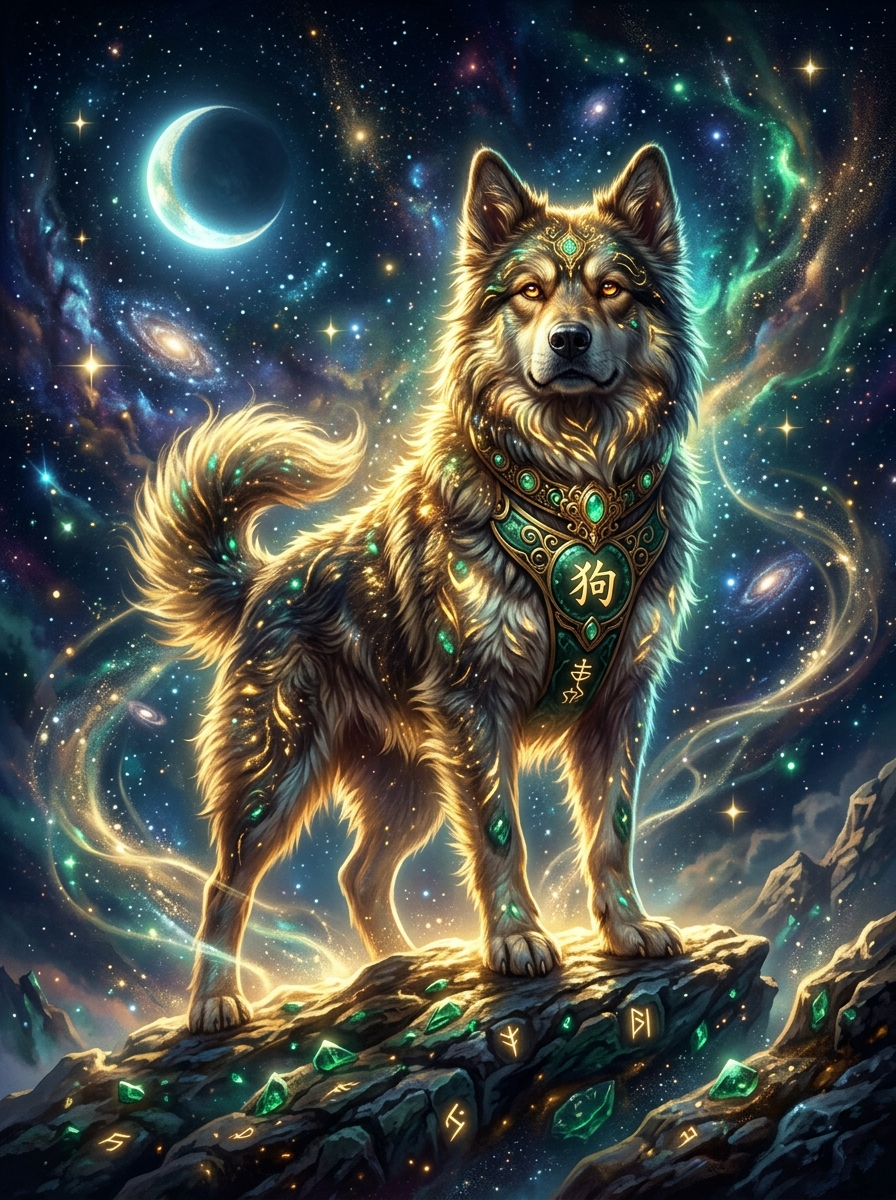
The Dog is not the zodiac’s pet; it is its conscience. In the Chinese zodiac’s system of animal archetypes, the Dog represents the point where instinct merges with ethics. It does not simply sense danger—it senses what is unfair, disloyal, or spiritually crooked, and it reacts with the force of a guardian who would rather stand alone than stand with a lie. This is not a “nice” sign. It is a discerning one, and its discernment is the engine behind every strength and every shadow.
The Dog’s central thesis is simple but not shallow: trust is a sacred contract, and any violation registers as a physical disturbance. This places the Dog in a specific role within the larger architecture of the zodiac meaning, where each animal is a mode of life. The Dog occupies the position where duty, loyalty, and moral vigilance converge. It is the figure who keeps the circle honest.
Psychological roots: how vigilance becomes a worldview
A Dog person usually notices tone before content. They hear the hesitation under the promise, the selfishness under the compliment, the missing obligation under the polished explanation. This is not paranoia in its mature form; it is a finely tuned verification instinct. The Dog treats every new relationship the way a watchman treats a dark corridor—not because it expects the worst, but because it refuses to be the one who looked away.
The earthly branch of the Dog is Xu, associated with the late-autumn threshold. In the zodiac wheel, that placement means the Dog belongs to a time when comfort is no longer enough and what matters must prove itself. The season is tightening; the year is closing. That symbolism fits the psyche well. The Dog is not built for careless spring or expansive summer; it is built for the boundary season, when every choice carries weight. Its psychological formation favors those who learned early that trust must be earned, that promises can break, and that the people who stay when conditions get ugly are the only ones worth calling allies.
Maturation and shadow: the same beam, different loads
The Dog’s strengths and liabilities are welded to the same beam. Integrity, devotion, and courage come from a single source: an unwillingness to betray one’s own sense of what is right. That produces exemplary character under pressure—and rigidity when nuance is required.
Mature Dog energy is protective without being punitive. It can read a room and identify who is vulnerable, who is bluffing, and where the ethical fault line runs. In a crisis, the Dog shows up, remembers, and keeps promises after the room gets cold. It is not seduced by appearance. This makes the Dog a formidable ally in relationships, work, and community. The Dog’s loyalty is not conditional on convenience; it is a form of fidelity that asks only that the other person be real.
Shadow Dog energy is what happens when protection calcifies into defense. The shadow Dog starts expecting disappointment as a form of wisdom. It becomes suspicious of ease, impatient with ambiguity, and quietly offended by people who do not share its seriousness. The Dog can also become loyal to the wrong thing: a broken institution, a stale role, a painful promise kept out of duty rather than truth. The psychological cost is self-reproach. Many Dog natives are hardest on themselves—not because they lack compassion, but because they assume they should have seen the danger sooner or held the line better. Their challenge is to distinguish responsibility from over-responsibility.
That tension between mature guardianship and shadow suspicion plays out vividly in relationships. For a broader framework on how animal instincts interact, the zodiac sign compatibility guide maps the terrain; here, the Dog is the traveler who needs to know whether the road is honest.
How the dynamic plays out in a life: love, work, and daily ethics
Because the Dog’s core is a single beam, every domain of life expresses the same dynamic. Love, career, friendships, and even luck are not separate compartments; they are applications of the same moral vigilance.
Love and partnership
In romantic relationships, the Dog asks one question above all others: Can I trust the floor under us? It does not need constant novelty or theatrical romance. It needs coherence. The Tiger and the Horse often make strong partners because they respect the Dog’s need for candor without trying to dismantle its guard. The Rabbit softens the Dog’s edges with tact and warmth; the Dog in turn gives the Rabbit a sense of safety. With more friction-prone signs like the Dragon or the Rooster, the Dog must learn not to treat every difference in style as a moral failure. A Libra partner can help the Dog refine fairness into diplomacy rather than verdicts—diplomacy that still holds the line but does not mistake judgment for connection. For a deeper look at that relational tempering, the Libra profile shows how the scales balance truth with grace.
Work and vocation
At work, the Dog thrives in roles that require ethical discernment: watchdog positions, compliance, counseling, advocacy, or any field where integrity is the product. The Dog is poor material for corporate theater or industries that reward performative charm over substance. It can succeed in leadership, but its leadership style is quiet, principled, and earned through consistency rather than charisma. The Dog often works best when given clear boundaries and honest feedback. It does not need praise; it needs to know the mission is real. A Capricorn-type temperament can complement the Dog well, because both value discipline and responsibility—though Capricorn works through ambition and structure while the Dog works through loyalty and principle. The Capricorn guide illuminates that shared gravitational pull.
Friendships and community
Friendship with a Dog is not light or frequent; it is deep and durable. The Dog rarely has a wide circle, but the people inside that circle are known and trusted. The Dog will remember your birthday, your allergies, and the time you were let down by someone else. It will show up without being asked. The shadow side is that the Dog can become possessive of its people, reading distance or disagreement as betrayal. Mature Dog energy learns that loyalty does not mean ownership.
Lucky elements and timing
The Dog’s lucky factors are not superstitious trimmings; they are the environmental conditions that help its virtues stay coherent. The Dog is associated with the Earth branch, which gives steadiness, sobriety, and a sense of duty. Traditional lucky colors include red, green, and purple—colors that support courage, growth, and discernment. Lucky numbers 3, 4, and 9 suggest expansion, structure, and completion. The Dog flourishes in stable surroundings: honest contracts, clear routines, and relationships where promises are kept. A glamorous but unstable life drains it quickly. This is why the Dog’s luck improves when its environment matches its inner demand for coherence.
Living the Dog well: devotion without martyrdom
To live the Dog well is to let loyalty become wisdom rather than a cage. The mature Dog protects what is worthy, but it does not confuse guarding with controlling, and it does not keep suffering simply because suffering feels morally serious. Its deepest gift is not suspicion; it is the ability to recognize what deserves fidelity in a world full of noise.
That gift often makes Dog natives the emotional backbone of families, teams, and friendships. They know when things are off, and they know how to remain present when others retreat. But the lesson is not to carry everything. It is to refine loyalty until it includes the self. A Dog who trusts its own perception without becoming imprisoned by it becomes one of the zodiac’s most reliable forms of love: principled, clear-eyed, and unromantic in the best sense.
For a contrast in how care can manifest differently, compare the Dog’s ethics-driven realism with the steady sensuality of Taurus or the protective emotional intelligence of Cancer. Those signs illuminate other ways of staying loyal. The Dog’s path is distinct: it cares by refusing to lie about what it sees.
Related
- Dream About Dog: Loyalty, Instinct, and the Truth Your Psyche Is Protecting
- Chinese Zodiac: The Ox and the Intelligence of Endurance
- Chinese Zodiac: The Pig and the Art of Generous Fortune
- Dream About a Dog Biting: Loyalty Turned Sharp
- Chinese Zodiac Goat: The Graceful Soul, the Quiet Strategist, and the Art of Soft Power
Comments
Loading comments…