Dream About Dog: Loyalty, Instinct, and the Truth Your Psyche Is Protecting
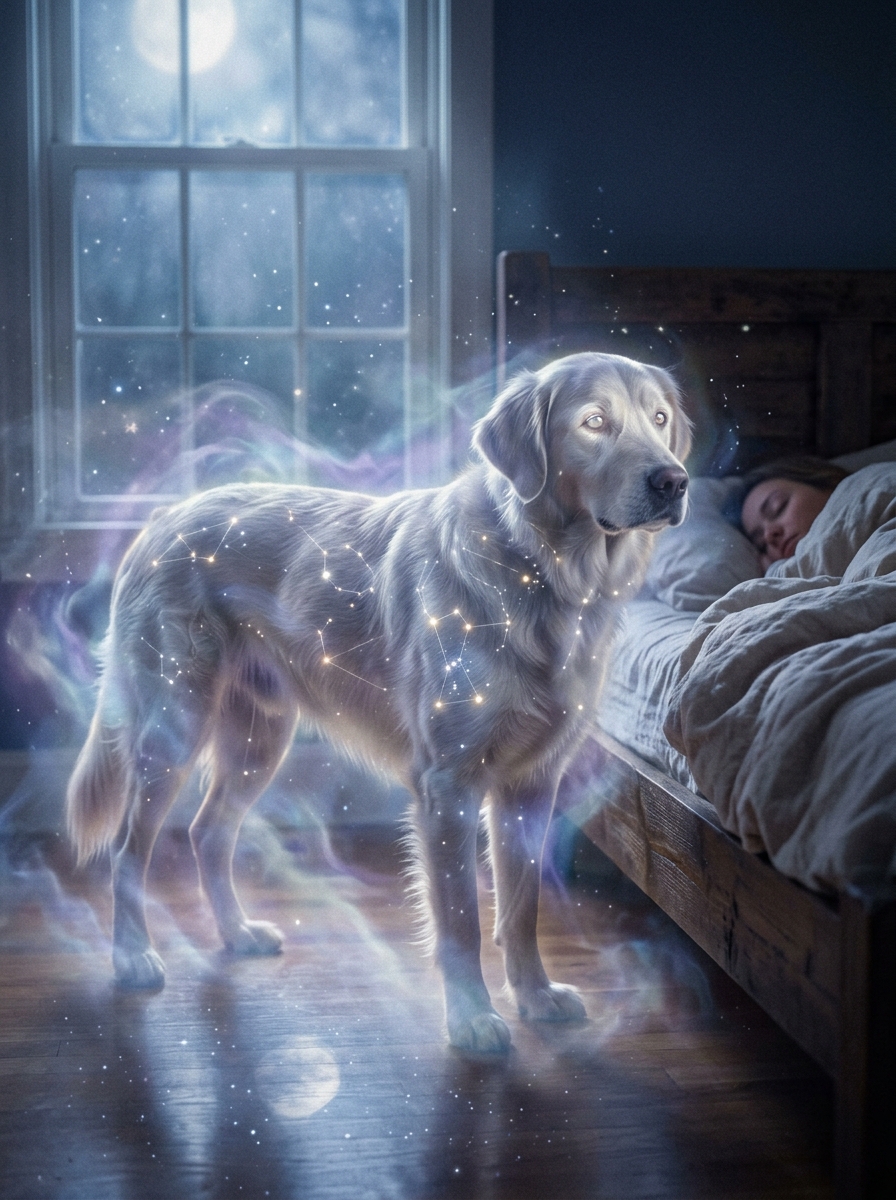
The core dynamic: a dog dream is a report on the state of trust
A dog in a dream never appears by accident. It walks in when the psyche needs to assess the quality of loyalty in your life — not just the loyalty of others, but your own capacity to trust instinct, to remain faithful to a bond, and to recognize when that bond has frayed. The symbol is relational before it is symbolic. A friendly dog signals a healthy attachment; an aggressive one marks a boundary violation; a stray or injured one points to neglected care. Everything else — color, breed, size — filters that primary message.
The dream is not a riddle. It is a diagnostic. It asks: Where is your trust alive, where is it wounded, and where have you trained yourself out of it? That single question contains the whole interpretation. The rest is detail.
What the dog’s behavior reveals about your instinctual life
A friendly or following dog: trust that still has breath
When the dog approaches calmly, wags its tail, or stays at your side, the dream confirms that a reliable bond exists. That bond may be to a person, a place, a practice, or an inner sense of self-worth. In Jungian terms, the animal represents the instinctual ally — the part of you that knows, without logic, who is safe. A friendly dog often appears after a stretch of loneliness or suspicion, as if the psyche wanted to remind you that not all connection has soured. If the dog follows you, the emphasis is on allegiance: someone or something has chosen you, and the feeling is reciprocal.
A dog that plays or brings an object (a stick, a toy) shifts the tone toward reciprocal care. The dream may be reflecting a relationship where devotion flows both ways, or it may be urging you to offer what you have been withholding. Play is not trivial in dream logic; it is the form trust takes when it is free of fear.
Barking, growling, or biting: the boundary alarm
A dog that barks insistently, snarls, or bites is rarely a symbol of bad intentions. It is defensive intelligence speaking in the only language the dreamer will hear. The animal is marking a line. In waking life, something is pressing too close — a manipulative person, an overdrawn obligation, a demand that violates your limits. The dream amplifies the feeling until you attend to it.
A bite deserves especially close reading because the location of the wound carries meaning. A bite on the hand suggests you are using your hands for something that betrays your instinct: reaching where you should not, helping when you are being used. A bite on the leg or foot points to movement — you are walking into a situation that your gut already rejects. The bite is not punishment; it is a signal that you are overriding your own warning system. In some cases, the biting dog is the warning system itself, and the dream is showing you what happens when you ignore it.
Stray, lost, or injured: instinct without a home
A stray dog often appears when a part of your emotional life has been left homeless. You may be over-functioning — taking care of everyone else while your own needs wander unclaimed. Or the dream may reflect a relationship that once felt secure but now drifts without anchor. The stray image asks: What have you abandoned that still needs care?
An injured or sick dog deepens that message. This is not instinct in the abstract; it is vulnerable instinct. The psyche shows you an aspect of your emotional life that cannot perform loyalty at full strength. If you felt pity or guilt in the dream, those emotions belong to the symbol. A wounded dog often appears after you have been hard on your own tenderness, or after you have ignored strain on a bond until it became impossible to overlook. The dream does not judge that neglect; it documents it.
The emotional tone reveals protection, grief, or self-betrayal
Comfort and companionship
A dream with a calm dog at your side carries the emotional signature of companionship. This is the psyche confirming that you are not alone, even when waking life feels empty. In tarot language, the motif echoes the steady faithfulness of the Knight of Pentacles — not glamorous, but grounded and service-oriented. The comparison is useful only because it clarifies the mood: what the dream wants is recognition of a stable bond, not further analysis.
Fear, loss, and mourning
When the dream feels tense, the dog often carries the residue of betrayal or grief. People dream of dogs after a breakup, a family rupture, or the death of a trusted friend. The animal embodies the ache of loyalty that has nowhere to go. A dead dog is especially significant because it points to a finished bond — not always literal death, but the end of naivety, the end of trusting too quickly, or the recognition that a once-reliable relationship has gone cold. If you woke sad, the sadness is part of the message. The psyche is not only interpreting loss; it is mourning it.
At our site, we treat such dreams as direct communications from the instinctual self, and encourage readers to sit with the feeling rather than rush to interpretation. For more on that framework, see our approach to dream symbolism and tarot.
Shame and the problem of obedience
Sometimes a dog dream has nothing to do with other people. It is about how obedient you have become. A trained dog, a caged dog, or one performing tricks can reflect the ways you have conditioned yourself to be acceptable — at the cost of your own instinct. The question is not “Who is controlling me?” but “Where have I trained myself to ignore my own signal?” A loyal animal is beautiful. A domesticated psyche that has forgotten how to refuse is not.
If that interpretation lands with a sting, the dream is likely exposing a pattern of self-betrayal. You may confuse loyalty with endurance. You may have learned to be easygoing when what you really need is discernment. The dream of a dog challenges that confusion directly, without comfort.
How to read your own dog dream without flattening it
The most useful interpretation begins with the simplest question: what was the dog trying to do? Protect, follow, warn, play, bite, beg, die, or be rescued? Action reveals function. Next, ask how you felt toward it. Relief, affection, fear, annoyance, guilt, responsibility, or sorrow will tell you whether the dream is about trust, damage, obligation, or grief.
Context matters. A dog dream after spending time with a beloved pet may be emotionally meaningful but not necessarily symbolic. A dog dream that arrives during a relationship crisis, a move, a new job, or a period of loneliness is much more likely to be compensatory or diagnostic. The unconscious speaks most loudly where waking life has become unstable.
In practical terms, the dream is likely asking one of three things: trust more carefully, protect what matters, or stop betraying your own signal. That is the dog’s territory. It lives at the boundary between civilization and instinct, which is why it shows up when you need to know whether your loyalty is alive, compromised, or overdue for repair.
The clearest reading is usually the one that makes you feel both recognized and corrected. A dog dream rarely flatters. It tends to tell the truth about attachment: where it is generous, where it is wounded, and where it is pretending to be fine. If that truth stings a little, the dream has done its work. For deeper exploration of how instinct and symbol interact, explore the site’s core methodology.
Comments
Loading comments…