Dream About a Dog Biting: Loyalty Turned Sharp
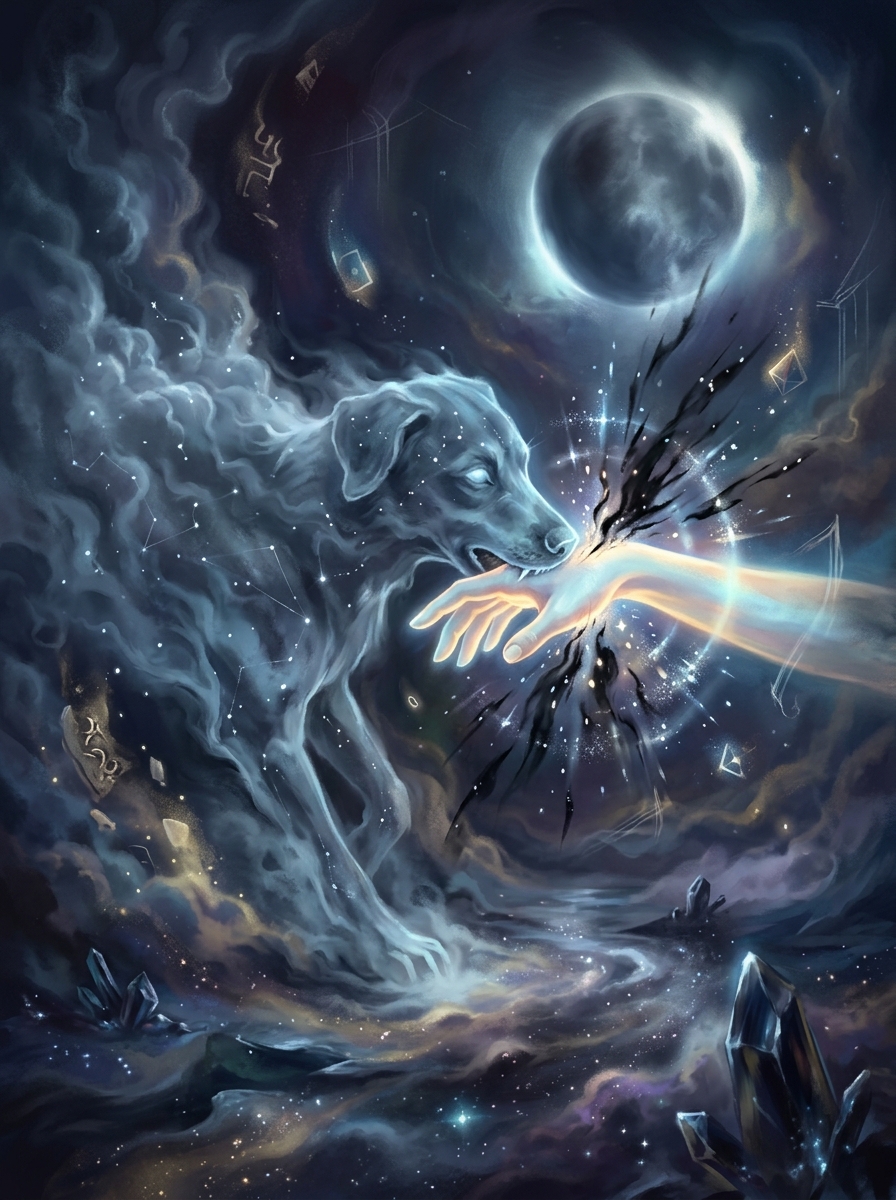
The Bite That Breaks Trust
A dog is the archetype of the guardian made familiar. In waking life, its loyalty is the premise of the bond. In a dream, when that same animal turns its teeth on you, the violation is not about a random predator but about a relationship where the rules of safety have been rewritten. The bite does not announce a threat from the unknown; it insists that something trusted has become dangerous.
This is why the dream rarely arrives as a straightforward warning about a hostile person. More often, it surfaces after a subtle erosion of trust—a friendship that has quietly become conditional, a partnership where affection is weaponized, a family role that demands you absorb harm. The dog bite makes the erosion visible. It transforms an abstract unease into a sharp, tactile image that cannot be ignored. The dream’s power lies in that intimacy: the wound comes from what you believed was on your side.
The symbol is relational. A dog bite in a dream is not a generic symbol of danger; it is a specific signal about a bond that has turned sharp. The psyche uses the dog because it represents the whole spectrum of loyalty—from devotion to domination. When the bite occurs, loyalty itself has become the source of pain.
For a deeper understanding of how Aurora Arcana approaches dream symbols and their psychological resonance, our about page explains the editorial lens behind this kind of interpretation.
The Instinct That Refuses to Be Managed
The dog is not only an external figure; it also mirrors the dreamer’s own instinctual life. In a Jungian framework, the dog often represents the natural, untamed part of the psyche that has been domesticated—trained to behave, to please, to suppress its own aggressive or defensive responses. When that part bites, the dream is staging a rebellion. The bite is the instinct’s refusal to stay compliant.
This layer is especially relevant when the dreamer has been overaccommodating. If you have been saying yes when you mean no, maintaining harmony at the cost of self-respect, or ignoring a growing resentment, the dog bite can be the first visible sign that your inner life no longer consents to being managed. The bite is not an attack; it is a return of the repressed. The dog that bites is the part of you that refuses to stay gentle.
The Known Dog and the Stranger Dog
The precise quality of the rebellion depends on whether the dog is familiar or unknown. A known dog—your own pet, a family dog, a friend’s dog—typically represents a specific relationship or a stable pattern in your life. The bite suggests that something trusted has become unpredictable: a parent’s help feels invasive, a partner’s devotion feels possessive, a friend’s concern feels controlling. It may also reflect the “good dog” persona you have learned to inhabit. When that figure bites, the dream dramatizes resentment built under years of compliance.
An unknown dog carries a different charge. It tends to symbolize instinct that has not been integrated—a social situation you do not fully read yet, a defensive reaction that feels impersonal and sudden. The stray dog bite often occurs during transitions: a new job, a new romance, a move, or a phase of psychological unrest. Here the unconscious is testing the dreamer with a contact that goes wrong before there is enough trust to interpret the signals correctly. The bite is a raw vulnerability made tangible.
Where the Bite Lands: Body, Intensity, and Scene
Dreams speak through mechanics, and the location of the bite modifies the message with precision. A bite on the hand concerns action, work, and agency. Since hands make, hold, and reach, a hand bite suggests that your efforts are being obstructed—or that your own way of handling a situation is backfiring. If the hand is dominant, the dream may be about the very capacity to act.
A bite on the leg or foot points toward movement and direction. These dreams often arise when you know, even dimly, that a path is unstable. The bite says: proceed carefully, because the support beneath your decisions may not be as solid as you think. If the dreamer is taken down, the question becomes: where in your life has it become easier to talk about progress than to actually move?
A bite on the face or neck is more intimate and socially charged. The face is identity, visibility, and presentation; the neck is the vulnerable bridge between mind and body. A bite there can suggest humiliation, exposure, or an attack on how you are seen. In emotionally loaded dreams, it may also blur the line between affection and aggression—pointing to a relationship where tenderness and threat are too close together.
Blood, Pain, and the Signal’s Intensity
If the bite draws blood, the unconscious is making the problem harder to dismiss. Blood is life-force, and in dream language it marks a cost. A bleeding bite indicates a relationship, habit, or emotional pattern that is draining you in a tangible way. If there is pain but no blood, the issue may be real but less acute: a warning, not yet a wound.
If you feel no pain, the dream can be stranger still. That absence can mean dissociation, emotional numbness, or a situation that should hurt more than it does. The psyche may be flagging a delayed reaction. The dream is not asking whether you were injured; it is asking why you have not fully registered the injury yet.
Reading the Dream as a Boundary Report
A dog biting dream is best understood as a report from your boundary system. It tells you where trust, instinct, and self-protection are no longer in harmony. Instead of asking “Who will hurt me?” ask “Where am I already uneasy, already overextended, already pretending something is fine?” That question usually gets closer to the dream’s center.
You do not need to take the dream literally to take it seriously. If a person in your life has been eroding your trust, the dream may be naming that erosion before your waking mind is ready. If no outside person fits, then the dream may be identifying your own capacity for pressure and resentment. Either way, the bite is a diagnostic image: contact has become costly.
The practical response is not to fear the dog but to trace the bite back to the relationship or pattern it points to. Ask yourself: Which bond in my life has become a site of tension? Where am I giving loyalty but receiving harm? Or where have I been so loyal to a role that I abandoned my own instincts? The dog bite is a pain that demands investigation, not avoidance. It reminds you that love without boundaries can become dangerous, and instinct without expression can turn feral.
For readers who want to sit with symbolism more deliberately, the about page at Aurora Arcana emphasizes interpretation as a way of sharpening perception rather than flattening mystery—a lens that fits this kind of dream particularly well.
The Loyalty Paradox
A dog bite dream leaves a lasting unease because it exposes a paradox central to human relationships: loyalty can become a cage, protection can become control, and trust can become a liability. The dog that bites is not a traitor; it is a figure caught between its nature and its training. In the same way, the dreamer is caught between the need for closeness and the need for autonomy, between the desire to be good and the truth of what one actually feels.
This paradox is not something to solve but to hold. The dream asks you to acknowledge that loyalty is not inherently safe. It must be balanced with boundaries, and instinct must be respected even when it is inconvenient. The dog bite is painful because it is precise. Something loyal is hurt, or something hurt is trying to stay loyal. That tension is the dream’s real subject, and it is worth respecting.
If the dream has stayed with you, treat it as a call to examine the places where your loyalty has become lopsided. The bite is not the end of the relationship—it is the beginning of a more honest one, whether with another person or with the part of yourself that has been too quiet for too long.
Comments
Loading comments…