September Birthstone: Sapphire Meaning, History, and Symbolism
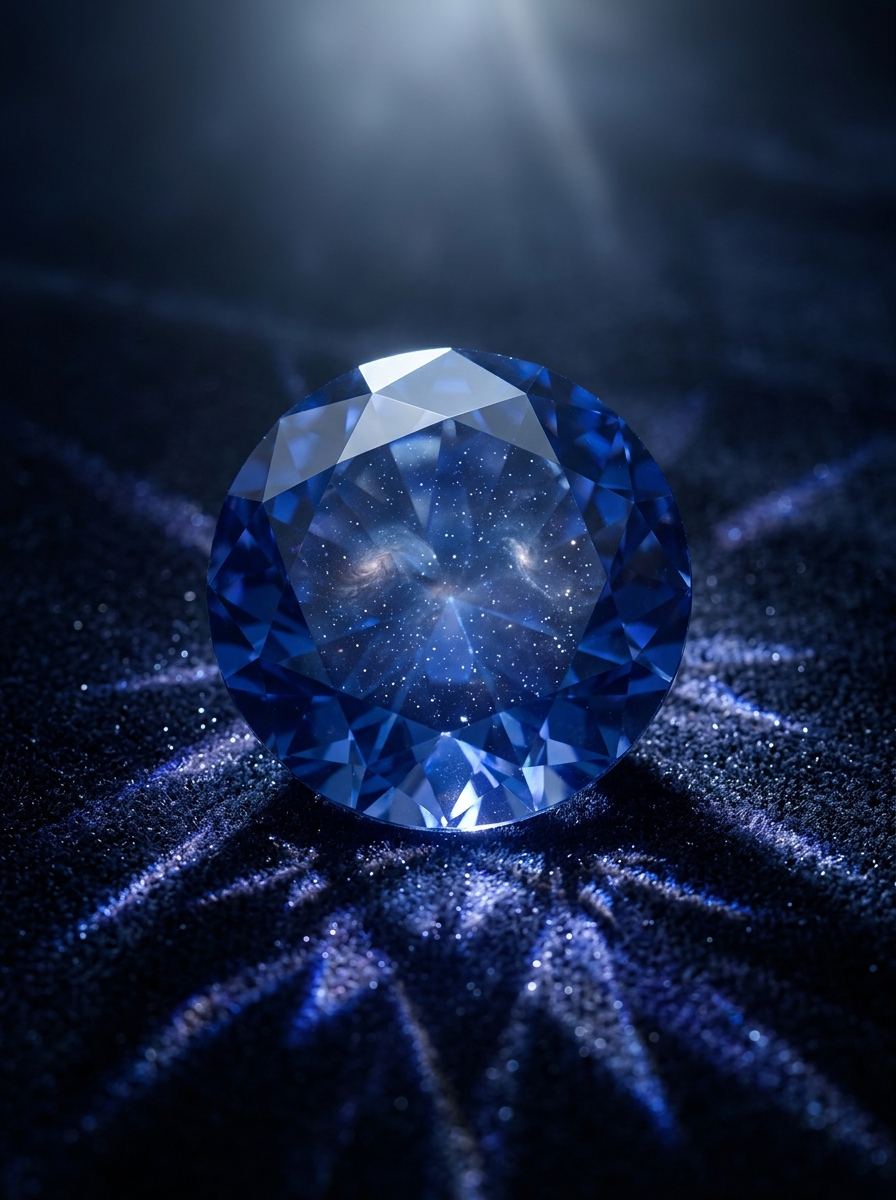
September Birthstone: Sapphire Meaning, History, and Symbolism
Sapphire is the September birthstone because it answers a specific human need: the wish for truth to be beautiful, durable, and difficult to corrupt. Its signature blue is not merely a color. It is the visual grammar of constancy—the gem equivalent of a clear mind under pressure. That is the core of sapphire’s meaning: not sweetness, but steadiness. Not escape, but discernment. The stone does not promise abundance for its own sake; it promises coherence.
The historical logic of sapphire: why authority needed a blue stone
The story of sapphire is inseparable from the history of human institutions that wanted their power to look principled. Ancient and medieval cultures prized it not only for rarity but for the sense that it could organize meaning around itself. Blue stones were linked to the heavens because they resembled distance made visible—a saturation that seemed to carry sky inside the mineral. That material fact invited associations with the divine, the lawful, and the protected.
In Europe, sapphire became the gem of clergy, kings, and judges because blue could suggest both devotion and order. A crown set with sapphire did not merely announce wealth; it implied restraint. Unlike the flash of a red gemstone, sapphire’s power is cooler, more internalized. It reads as control rather than conquest, intelligence rather than appetite. That is why sapphire so often appears in regalia, ceremonial rings, and tokens of office. It lends dignity without spectacle.
This historical role answers a deeper psychological need: the desire for a symbol that makes integrity visible. Sapphire in a seal or a bishop’s ring said, “What is done under this stone is binding.” Medieval lapidaries loaded it with moral meaning—the stone was said to reveal deceit, encourage honesty, protect chastity. We do not need to treat those claims literally to see their intelligence. Sapphire has always symbolized the capacity to hold a line. Its legend makes sense because it corresponds to an inner human function: the ability to distinguish what is real from what is merely persuasive.
The symbolic architecture of blue: how sapphire creates clarity
The color blue is psychologically cooling. It recedes. It makes space. In sapphire, blue becomes a disciplined inwardness: a mind that does not need to be everywhere at once. That is one reason the stone has long been connected with meditation, study, and the quiet confidence of people who know what they know. Sapphire symbolizes a mental climate in which noise loses authority.
This gives the September birthstone a distinctly adult quality. If ruby is heat and emerald is growth, sapphire is structure. It organizes desire rather than amplifying it. The gem’s value lies in how it refines attention. That is why sapphire has such a strong association with honesty, loyalty, and moral spine: it suggests that a life can be beautiful without being loose.
As a birthstone, sapphire mirrors the energy of early autumn—the season of sorting, pruning, and preparing for what comes next. September is not an emotional haze; it is a threshold month. Days shorten, routines harden, attention becomes more selective. Sapphire captures that mood precisely. Its symbolism belongs to people who are learning that refinement is not deprivation. It is the art of making fewer choices, more cleanly.
Because September spans both Virgo and Libra territory, sapphire’s symbolism plays across two signs with one question: what is fitting? Virgo asks it through craft and precision; Libra asks it through proportion and fairness. In both, the stone answers with cool intelligence. Sapphire is not an excess stone. It is an alignment stone—a companion for the part of the psyche that wants to become more exact, more honest, and less manipulable.
Beyond blue: the corundum family and what it tells us
Most people imagine sapphire as blue, but the gem’s meaning deepens when you account for its wider spectrum. Sapphire is the gem variety of corundum, and corundum appears in many colors. Pink sapphires, yellow sapphires, green sapphires, and even colorless sapphires exist. Ruby is also corundum, but red corundum is classified separately by tradition. This mineral fact matters: sapphire is not one note, but one family.
Even so, the classic blue sapphire remains the archetype because blue carries the strongest symbolic charge. Deep blue evokes night skies, deep water, and the contemplative mind. Unlike opaque stones that conceal their structure, a fine sapphire often seems to contain light rather than merely reflect it. That optical depth is part of its spell—the eye senses interior weather.
The lesser-known colors expand the meaning without breaking it. Pink sapphire brings in tenderness while keeping the disciplined core. Yellow sapphire shifts toward solar intelligence and alertness. Green sapphire suggests growth that has been clarified by experience rather than idealism. These variations show that sapphire’s essential meaning is not “blue” alone. It is ethical luminosity: the capacity of beauty to remain structured.
When choosing a sapphire, aesthetic judgment becomes psychological. A well-cut stone should feel controlled rather than merely bright. The appeal often lies in depth, not fire. That is why cabochons, step cuts, and classic oval or cushion cuts preserve the impression of inner concentration. Clarity is meaningful but not in the way it is for a diamond—many sapphires are valued for character, not sterile transparency. A slight silkiness or natural zoning can remind you that real wisdom is not polished into emptiness. It has texture. It has history.
Sapphire in life: the stone of decisions that hold
The true test of a birthstone is not how it decorates a life but how it steadies one. Sapphire does not flatter the ego. It steadies it. Worn daily, it becomes a private discipline—a reminder to speak precisely, hold your boundaries, and resist the temptation to decorate confusion.
In relationships, sapphire does not promise passion. It promises fidelity as an act of choice, not sentiment. A sapphire ring says, “I am not interested in a dazzling moment; I am interested in what survives the weather.” That is why the stone has been so durable in engagement rings and heirloom jewelry. It stands for a loyalty that is uncompromising because it is clear-eyed.
In work and creative life, sapphire supports the kind of attention that separates real work from busyness. It suits the negotiator, the editor, the surgeon, the designer—anyone whose craft depends on clean seeing. Its strongest tarot parallels are Justice and Judgment: cards of proportion, consequence, and awakening to what has been true all along. Sapphire lives in that territory. It does not intensify emotion; it brings emotional material into a frame where it can be evaluated.
For someone born in September, sapphire is less a lucky charm than a mirror of temperament at its best: composed, lucid, trustworthy, hard to rattle. For everyone else, it offers the same invitation. Let your life become clear enough to sustain its own weight.
Related
- Amethyst in February: The Violet Stone of Clarity, Devotion, and Night Vision
- Topaz in November: Meaning, History, and the Fire Beneath the Calm
- March Birthstone Aquamarine: Meaning, History, and Symbolism
- October Birthstone: Opal and the Art of Living in Color
- December Birthstone Turquoise: Meaning, History, and Symbolism
Comments
Loading comments…