Venus Square Uranus: The Voltage of Unruly Desire
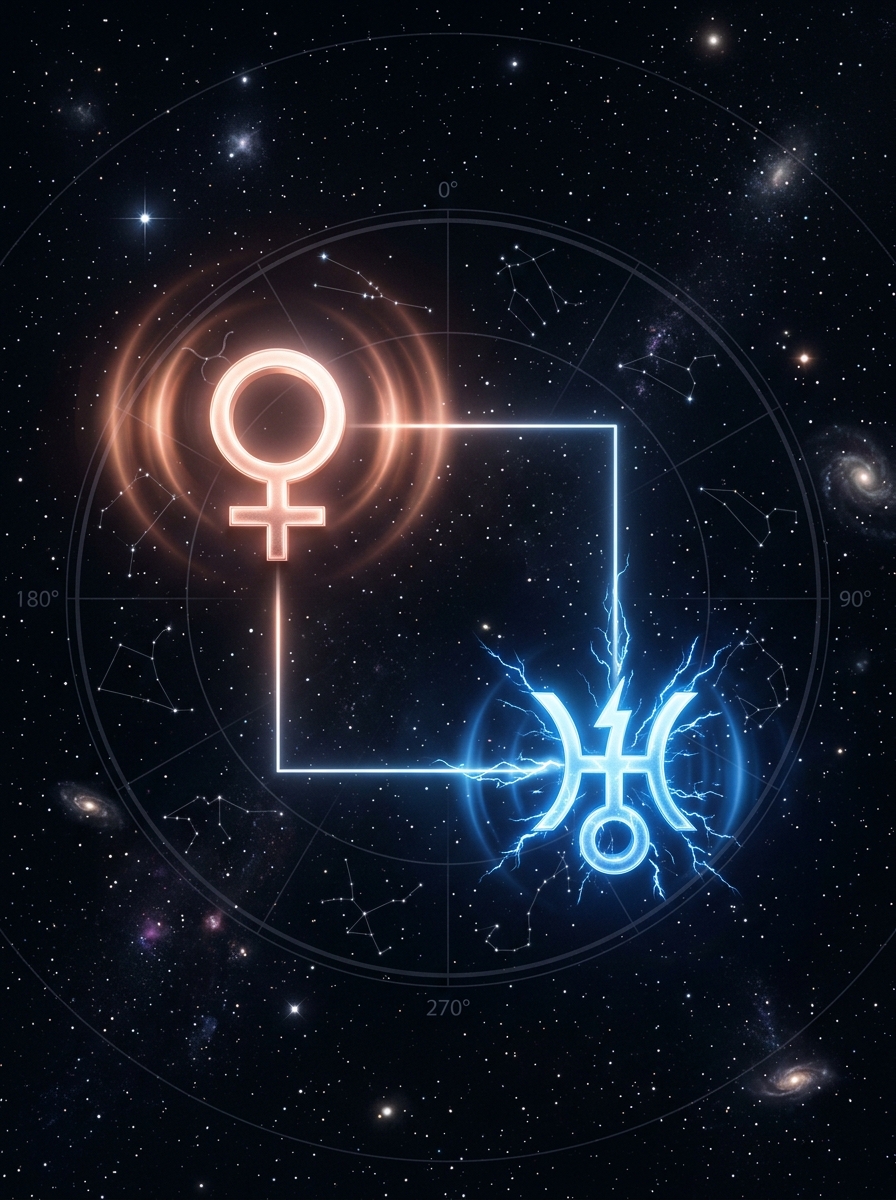
The Core Dynamic: Two Drives That Refuse to Merge
Venus square Uranus is not a problem to be solved; it is a voltage to be managed. Venus wants closeness, rhythm, reciprocal pleasure—the slow architecture of being chosen. Uranus wants air, rupture, the right to remain unowned. When they meet at a square, they do not blend; they interrupt each other. The result is a psyche that experiences attachment and autonomy not as complementary needs but as competing loyalties.
This is not “commitment issues” dressed in astrological language. The person does not fear closeness because of past wounding (that would be Pluto or Saturn territory). They fear closeness because it threatens the very thing Uranus exists to protect: the soul’s electrical integrity. The moment a bond feels predictable, something inside twitches. The moment freedom feels lonely, Venus pulls back toward warmth. The square does not let the native settle into either pole comfortably. It demands a third thing—a form of love flexible enough to contain both the desire to be met and the insistence on remaining self-created.
The square aspect is friction by design. Here, the friction is between continuity and rupture. The native does not need to choose one; they need to learn how desire behaves when freedom is not treated as a threat.
Why the Electricity Feels Unavoidable
The voltage comes from Uranus being the principle of awakening through disruption. It does not just dislike monotony; it experiences monotony as a form of death. Venus, by contrast, experiences harmony as nourishment. So the square creates a nervous system that is chronically alert: Is this still alive? Am I still myself in this? A relationship that is merely stable may feel dead on arrival; a relationship that is a little risky may feel honest. That bias can be a gift—it keeps the native from settling for emotional anesthesia—but it can also confuse intensity with intimacy.
The Psychological Architecture: Fear of Psychic Foreclosure
Underneath the push-pull lies a specific fear: that love will demand the surrender of the very thing that makes the self interesting. Uranus does not tolerate identity being flattened by role. When a partner says “we,” the native may hear “you will disappear.” When a relationship starts to feel like a script, the Uranian part rebels. This is not immaturity; it is a preverbal refusal to let attachment foreclose becoming.
The person often tests love without meaning to—flirting when things get serious, withdrawing when a partner becomes dependent, preferring bonds that stay partly improvisational. Some are drawn to brilliant, eccentric, or unavailable partners because those people externalize the inner pattern. Others choose conventional relationships and then feel caged inside them, as if the soul had signed a contract the rest of the psyche never agreed to.
When this square is embedded in a T-square, the volatility becomes more structured and fated. The question shifts from “Why can’t I settle?” to “What inner agenda keeps forcing me to renegotiate the meaning of attachment?” The tension is not random; it is the psyche’s method of refusing premature resolution.
The Hidden Bargain: Intensity as Authenticity
One of the most common mistakes with this placement is treating electrical charge as truth. Because the square generates vivid chemistry, the native may assume that what feels exhilarating is therefore right. But Uranus can also seduce through instability. A relationship may feel more alive because it is unpredictable, not because it is healthy. The deeper lesson is discernment: learning to tell the difference between a bond that is alive and one that is merely volatile.
The Mature Expression: Relational Sovereignty and Creative Voltage
The highest expression of Venus square Uranus is not chaos—it is invention. These natives bring fresh air into stale emotional environments. They have unusual style, unconventional tastes, an instinct for forms of beauty that are ahead of their time. Their charm is disarming because it is not polished in the expected way. It has voltage.
In relationships, the mature expression is relational sovereignty: two lives that meet by choice, not by captivity. The native does well with partners who value autonomy as much as they do—people who can tolerate unpredictability without turning it into abandonment. When both parties understand that closeness must be refreshed by space, the bond stays electric without becoming destructive. This is a different model than the one Venus in Libra idealizes; it is closer to the detached warmth of Venus in Aquarius, though the square is more personal and volatile.
Creative work often becomes the outlet for this tension. The native may produce sudden inspiration, discontinuous style shifts, a refusal to reproduce the same aesthetic for too long. Venus supplies form and elegance; Uranus supplies rupture and surprise. Together they can generate a signature that refuses to fossilize. This gift strengthens when the person stops apologizing for being hard to predict.
The Shadow: Sudden Detonation
The shadow side is not drama for its own sake; it is nervous system overload. When Venus feels deprived of harmony, it may try to smooth over what Uranus is trying to expose. When Uranus feels constrained, it may suddenly detonate the entire arrangement instead of negotiating change. The person oscillates between craving connection and making it impossible to maintain. Attractions can begin with instant chemistry, only to lose momentum once the relationship asks for maintenance. Or they may stay too long in a habitual bond, then leave in a flash when inner pressure becomes unbearable.
The pattern often shows up in timing: surprise endings preceded by long internal disaffection that nobody noticed because Venus was still smiling. Context matters. If this square ties into a pattern of Uranus in the seventh house, the relational volatility becomes a central life theme—the native is here to learn how to stay whole while staying close.
How It Plays Out in a Life: Love, Money, Style, Work
Because the core dynamic is already established, these applications do not need re-explanation—they are concrete expressions of the same tension.
Love. The native prefers partners who are intelligent, self-directed, and not emotionally adhesive. Dependency can feel erotic at first and claustrophobic later. A bond that respects separateness—two sovereign selves meeting by choice—is more sustainable than one that demands fusion. When the square is active, the relationship may need periodic structural change: more space, less performance, better honesty, or a social form that fits the pair’s actual nature.
Money and possessions. Income often arrives in waves; spending follows sudden impulses. The native may dislike being financially trapped by conventional security arrangements, yet resent instability when it bites. The task is to make room for freedom without confusing it with impulsivity. A self-authored rhythm is not the same as reactivity.
Style and aesthetics. Even when the native appears polished, something in the presentation is off-center—modern, ironic, defiantly individual. They are drawn to beauty that combines elegance with edge. Uranus is the crack in the porcelain that makes the object feel alive.
Creative work. The native thrives in fields that reward innovation over consistency. They may dislike being branded or over-explained. Their taste moves in flashes. The strongest work often comes when they stop trying to be normal and let the tension between form and rupture become the style itself. This can manifest powerfully when Uranus touches the fifth house—see Uranus in the 5th House for how romance and creativity merge through this same voltage.
The Long Apprenticeship: Learning to Love Without Self-Erasure
The developmental arc of Venus square Uranus is not about becoming more predictable. It is about learning to let love be interrupted without letting it be destroyed. Venus says beauty needs form. Uranus says form must breathe. When those truths integrate, the person no longer has to choose between devotion and freedom. The relationship itself becomes a vessel for individuation.
This requires discernment—the ability to recognize when the electricity in a bond is a sign of life and when it is a sign of unresolved fear. It also requires the courage to build a life where intimacy is refreshed by intellectual candor, creative risk, and deliberate space. The native may need partners who understand that closeness is a practice, not a possession. They may need to forgive themselves for the moments when the Uranian part detonated something they actually wanted.
The gift, when the integration holds, is a rare one: the capacity to stay alive in contact. The person no longer confuses stability with safety or volatility with aliveness. They have learned that love does not have to be tame to be real. For those undergoing a Uranus transit that activates this square, the lesson becomes externalized: life will force the renegotiation until the native learns to welcome it.
Desire stops asking to be saved from its own electricity. It becomes the current that carries both the need for closeness and the right to remain unowned. That is the voltage of unruly desire, finally mastered.
Related
- Venus Conjunct Uranus: Electric Love, Unruly Desire, and the Need to Stay Free
- Venus Opposes Uranus: The Electric Heart and the Problem of Freedom
- Venus Trine Uranus: The Grace of the Unpredictable Heart
- Venus Sextile Uranus: The Elegant Shock of Love and Style
- Moon Square Uranus: The Disrupted Heart and the Need to Break Free
Comments
Loading comments…