January Birthstone Garnet: Meaning, History, and Symbolism
The Living Ember – What Garnet Actually Is
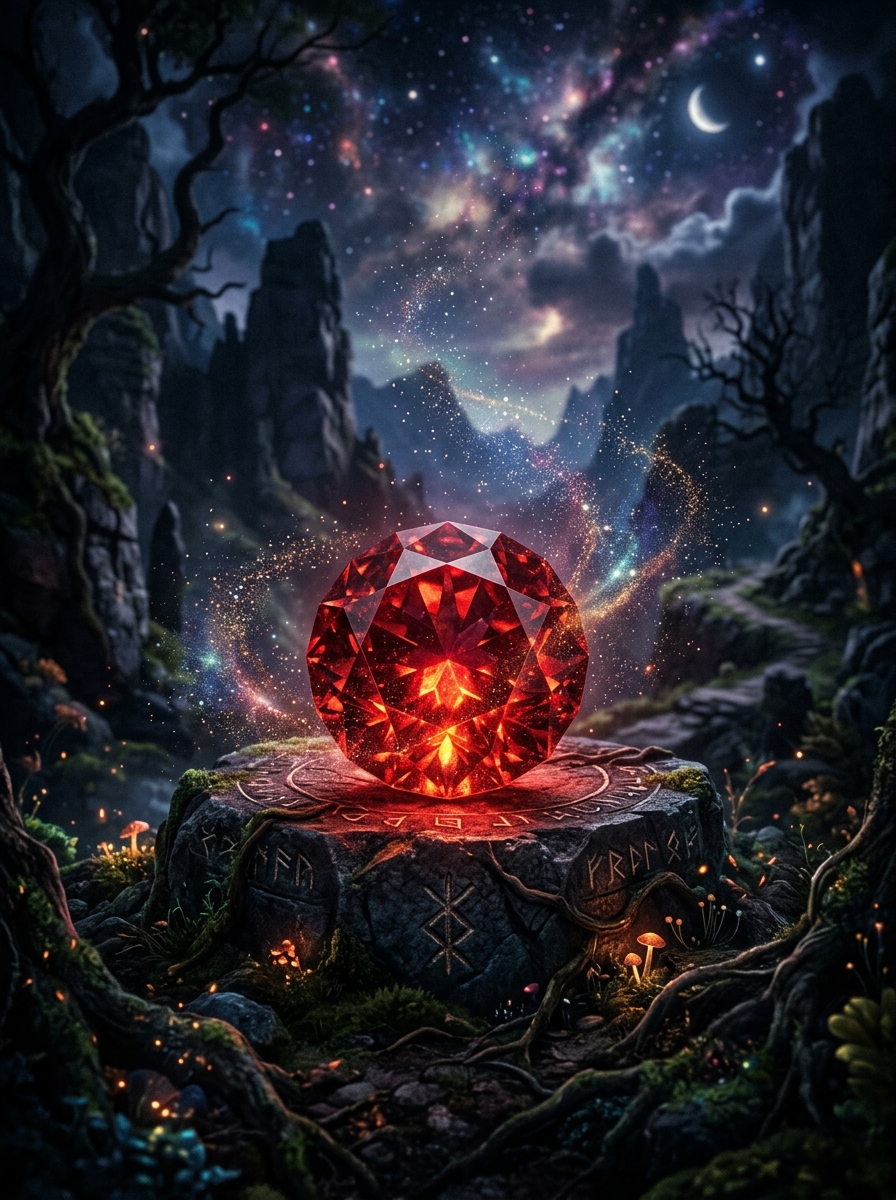
Garnet, the January birthstone, is not a stone of surface flash. It is a mineral of depth: a coal-bed ember hidden inside the winter ground, carrying warmth, continuity, and the pressure of staying true to what matters. Its core dynamic can be stated in a single image: contained fire. The stone does not imitate snow; it counterbalances cold with inner heat, and that paradox—heat held, not wasted—is the key to everything it symbolizes.
Garnet names a family of silicate minerals that share an isometric crystal structure but vary widely in chemistry and color. The most familiar garnets are deep red, but the family also includes orange, green, yellow, brown, pink, and rare color-changing varieties. That range matters because it prevents garnet from reducing to a single emotional register. Red garnet carries the oldest charge—blood, wine, pomegranate seed—but green garnets like tsavorite and demantoid suggest regeneration and clarity. The family resemblance is concentrated life, regardless of the specific tone.
Visually, garnet differs from many gems in that it glows from within rather than flashing from the surface. The best specimens appear dense, almost liquid, as if a fire were sealed under the stone’s skin. This optical quality is the physical analog of its psychological meaning: the stone does not broadcast; it holds. Historically, that depth made garnet feel substantial in the hand—less a decorative trinket than a piece of concentrated substance.
The Long Arc – Garnet in Human Hands
Ancient Amulets and Sacred Associations
The historical trail of garnet is among the longest of any birthstone. Ancient Egyptians, Greeks, Romans, and Persians used garnets in jewelry, seals, and protective objects long before the birthstone calendar existed. The reason was simple: red garnet resembled both blood and flame, two substances that every culture has treated as carriers of life and power. A stone that evoked blood could stand for vitality, kinship, sacrifice, and the body’s hidden resilience. In the ancient Mediterranean world, warriors and travelers valued stones that seemed to preserve the wearer through peril—not because they promised invulnerability, but because they looked like life preserved in a sealed drop.
Medieval Protection and the Language of Return
By the medieval period, garnet had become strongly associated with protection during travel. That association was not arbitrary. A dark red stone that resembles a banked coal or a sealed vein of blood naturally lends itself to ideas of carrying one’s existence safely through distance and danger. In a world where journeys were physically uncertain, such a gem became a portable emblem of home’s continuity. The symbolic nuance matters: garnet did not promise that the world would be kind; it suggested that the traveler might remain intact enough to return. That is protection as loyalty to the self, not as magical immunity.
How Garnet Became January’s Birthstone
The modern birthstone tradition emerged through a long layering of cultural custom, trade preference, and later standardization. January’s garnet became entrenched because its character suited the month’s atmosphere: post-holiday austerity, winter darkness, and the inward turn of the year. As the calendar settled, garnet’s match with January felt inevitable. It is a winter gem that answers cold with contained heat. The stone does not pretend winter is spring; it teaches that the human spirit can remain warm even when the world is cold.
The Architecture of Symbolism – What Garnet Means
Protection and Devotion
The most enduring symbolism of garnet is protection, but protection here should not be reduced to superstition. Symbolically, garnet represents the capacity to safeguard what is vital: energy, loyalty, memory, and direction. Its color evokes the heart’s hidden chamber—the part of a person that stays steady under strain. That is why garnet is often treated as a stone of devotion, where devotion means not dramatic enthusiasm but the slow work of showing up. The emotional lesson is quiet but serious: real loyalty is not intensity; it is continuity.
Passion with Structure
Because garnet is so often red, people assume it symbolizes raw eroticism. That is only half the picture. Garnet carries heat, desire, and embodied life—but its deeper message is that passion needs structure if it is to endure. The stone is not flames licking upward in a gust; it is heat stored in a body that knows how to hold it. This gives garnet a particular value in metaphysical work: it is chosen not to amplify emotion indiscriminately, but to refine desire into commitment. For someone who feels scattered or overextended, garnet’s symbolism is less “turn up the fire” than “build a hearth.” That is a far more mature kind of passion, and one that fits January’s sober atmosphere.
The Color Spectrum of Meaning
The variety of garnet colors shifts its symbolic emphasis without breaking the family bond. Red garnet remains the classic stone of vitality, courage, and protection. Green garnets lean toward growth, renewal, and visible life returning after winter. Orange stones feel more creative and outward-moving, while rare pink or purple-tinged varieties soften garnet’s usual severity. Still, each expresses concentrated life. Whether the emphasis is heart, courage, recovery, or maturation, the stone’s essential idea is energy that does not leak away. That consistency is what makes it a trustworthy talisman for January’s threshold.
Wearing the Stone – Choice and Practice
Choosing a Garnet for Daily Life
If you are selecting garnet as a January birthstone gift or personal stone, color and cut matter more than generic symbolism. Deep red garnets are classic and traditionally aligned with the month, but a piece should feel alive under changing light rather than simply dark. A well-cut garnet reveals a subtle inner glow that distinguishes it from flat maroon glass. For collectors, the rarer green or color-changing stones offer a different layer of fascination because they reveal the family’s range rather than repeating the expected red. In jewelry, garnet carries best in settings that allow its depth to show—simple metals, minimal decoration. The stone’s power lies in concentration, not spectacle.
Spiritual Use Without Vague Generalities
In metaphysical practice, garnet is often used as a stone of grounded vitality. That phrase becomes meaningful only when it is specific. Garnet is useful when energy needs containment, not just amplification. People reach for it when they want to restore follow-through, recover a sense of embodied presence, or honor a commitment that has become blurred by fatigue. It is especially resonant for work involving boundaries, endurance, and the refusal to abandon oneself. Used symbolically, garnet does not seduce with fantasy; it fortifies with memory.
Reading Garnet Honestly
A mature relationship with garnet means accepting what it does not offer. It does not promise quick manifestation or easy luck. It does not pretend that winter is spring. Instead, it teaches a more useful truth: the human spirit can remain warm even when external conditions are hostile. That psychological realism is the stone’s deepest gift. Garnet does not inflate the ego; it reminds the wearer of what they have already endured and what they have chosen to carry forward.
The Winter Heart – Why It Still Resonates
The continuing appeal of January birthstone garnet lies in its honesty. In a culture that often confuses brightness with depth, garnet offers a different ideal: concentrated energy, loyal fire, and a heart that knows how to endure. Its history, from ancient amulet to modern birthstone, is really the history of people wanting to carry life forward intact. Its symbolism is therefore less about adornment than about preservation. If January is the month of beginning again, garnet is the stone that reminds us beginnings must be inhabited, not merely announced. The ember under ash is a small thing, but it is enough to rekindle a fire.
Related
- Ruby in July: The Birthstone of Fire, Blood, and Unblinking Desire
- August Birthstone Peridot: Meaning, History, and Symbolism
- Emerald for May: The Birthstone of Green Fire, Love, and Clear Seeing
- Amethyst in February: The Violet Stone of Clarity, Devotion, and Night Vision
- Topaz in November: Meaning, History, and the Fire Beneath the Calm
Comments
Loading comments…