I Ching Hexagram 14: Great Possession — The Discipline of Abundance
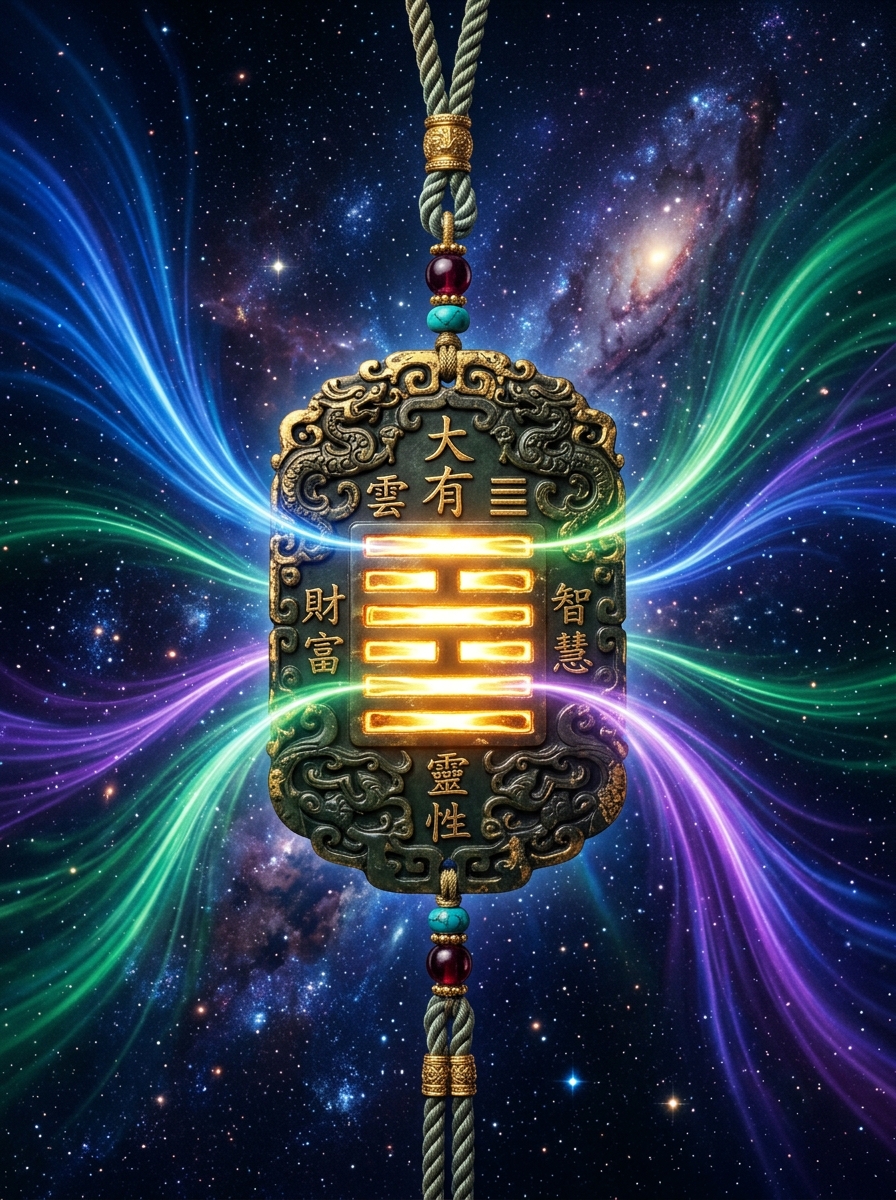
The nature of Great Possession: stewardship, not ownership
Hexagram 14, Great Possession is not a celebration of having much. It is an examination of what happens when life hands you a fullness that can no longer be hidden. The image is Fire over Heaven — radiance suspended above boundless creative force. Fire illuminates, reveals, and orders; Heaven generates without limit. Together they describe a condition where abundance becomes visible and therefore answerable.
The core idea is severe: possession is great only when it is held without greed and used without self-deception. To possess something in the ordinary sense is to own it. To possess it in the sense of this hexagram is to steward it under a higher law. The thing you hold — wealth, talent, authority, love, insight — is not yours in any ultimate way. It is a loan that comes with an implicit contract: use it rightly or it will curdle. That contract is the hidden spine of the hexagram, and it is why the judgment reads simply “Supreme success” without a trace of giddiness. The success is real, but it is contingent on virtue.
The burden of being seen: why abundance attracts scrutiny
Fire above Heaven makes everything legible. There is no shadow in which to hide your motives. Great Possession exposes you. The more you have, the more your choices are lit from below — by observers, by the weight of expectation, by the quiet judgement of your own conscience. This is not a paranoid condition; it is the natural consequence of holding power in a world that notices.
Most people respond to that exposure in one of two ways: they inflate, mistaking the spotlight for proof of their own specialness, or they contract, trying to make the abundance invisible so they can avoid the burden. Both responses violate the hexagram. Inflation leads to the corruption of arrogance; contraction leads to the corruption of hoarding. The oracle asks for a third path: to be seen and remain steady.
This is why Great Possession often appears when a person has received recognition, resources, or influence they did not fully anticipate. The test is not whether you can handle the thing itself, but whether you can handle being seen handling it. The psychological root of the challenge is narcissism — the ego that takes credit for what was given. The antidote is humility, but not the false kind that disowns the gift. True humility under this hexagram means accepting the abundance while remembering that you did not create it from nothing. You are its custodian, not its author.
Fire as exposure
The fire in this hexagram is not merely warmth or inspiration; it is the capacity to make distinctions. It burns away excuses. When Fire over Heaven appears in a reading, it suggests that the situation is transparent. Hidden flaws will surface. Hidden assets will be called into service. For those who have built their sense of self on what they conceal, this can feel terrifying. For those ready to be known, it is liberation.
The test of character
Abundance reveals character more reliably than scarcity does. Scarcity makes people desperate and reactive, but those reactions often pass when conditions improve. Great Possession tests a different threshold: what do you do when you have enough? The answer shows whether your soul is large enough to hold plenty without distorting. If you become smaller, stingier, or more anxious as your resources grow, the possession has already begun to possess you.
The discipline of right use: how abundance matures or corrupts
Great Possession has two trajectories: one leads toward grace, the other toward decay. The difference is the principle of circulation. The hexagram’s classic image is of a noble who shares wealth with others and thereby protects it. This is not sentimental generosity; it is a metaphysical law. What is withheld tightly becomes spiritually sick — the money that never moves, the talent that never expresses itself, the love that is guarded into sterility. What is circulated according to right measure remains alive and multiplies.
This is the discipline of abundance. It requires a constant act of release. You do not give away everything; you give away what needs to go, when it needs to go, to whom it needs to go. The discipline is hard because it demands both attunement and nerve. You must feel the pulse of the situation and act without hesitation. The hexagram’s central lines, which are the most balanced, show this capacity for integrated action: the person who can lead, give, decide, and still stay centered.
Virtuous circulation
In practical terms, virtuous circulation means that your resources — time, attention, money, skill — serve a wider order than your own comfort. It does not require poverty. It requires that you treat what you have as a river, not a reservoir. A reservoir stagnates; a river carries life downstream and is replenished from the source. The source, in Great Possession, is Heaven — the creative power that gave you the endowment in the first place. To keep the channel open is to remain aligned with that source.
The shadow of inflation
When the discipline fails, abundance degenerates into inflation. The ego mistakens the gift for its own merit. The person becomes grandiose, entitled, or defensive of their position. They may hoard resources out of fear that the supply will run out, forgetting that the supply was never theirs to control. Or they may display their wealth — literal or symbolic — in a way that invites envy and division. The shadow of Great Possession is always the same: possession without relation. The thing held becomes an island, cut off from the currents that gave it life.
Great Possession in practice: work, love, and inner life
The same dynamic plays out across every domain of life. In each, the question is the same: can you hold what you have without being held by it?
Work and status
When Great Possession appears in a career reading, it indicates that your skills, reputation, or position are substantial. You have what you need to succeed. The danger is making prestige the point. Leadership under this hexagram succeeds when it is visibly just — when your authority makes the whole system healthier, not just your own resume. If you manage people or money, ask yourself whether you are treating your position as a trust or a trophy. The difference will determine whether the success lasts.
Love and family
In love, Great Possession points to a bond rich in warmth, loyalty, or shared resources. The blessing is real, but the hexagram warns against emotional monopoly. Affection becomes a possession only when it is treated as property — when entitlement, jealousy, or the need to control creeps in. The highest expression of relational abundance is the ability to let the other person be free while still being committed. In family dynamics, the hexagram often speaks to inheritance in the broad sense: traditions, names, gifts, expectations passed down. You honor what you inherit by using it, not by being used by it.
Inner life and spiritual practice
For questions of psyche and spirit, Great Possession can indicate a heart endowed with real resources — courage, insight, endurance. But it also asks whether you can host that largeness without becoming self-important. Clarity, like wealth, is a form of power. It increases accountability. The more you know, the less innocent your choices become. The hexagram’s gift here is the opportunity to become a trustworthy container for awareness itself — to let insight flow through you without clinging to it as identity.
The moving lines: stages of possession
The six lines of Hexagram 14 trace how abundance behaves at different stages of maturity. They are not predictions; they are diagnostics for where you stand.
Early lines: possession before integration
When the lower lines move, abundance is real but unstable. You may have gifts or opportunities before you have the inner structure to manage them. The oracle counsels restraint. Better to consolidate than to broadcast. Better to protect the treasure than to advertise it. This is the stage where Great Possession becomes almost monastic: not every fullness is ready for public use.
Central lines: the heart of the hexagram
The middle lines show possession integrated. The person acts, gives, leads without collapsing into self-importance. This is the ideal — not luxury, but composure. The abundance is used cleanly. The lines here also imply social intelligence: true wealth often expresses itself through generosity of judgment, not just generosity of money. A person with little can radiate great possession if they have mastered timing and tact.
Top line: release without loss
The highest line of Great Possession is the paradox of ownership transcended. When wealth, power, or recognition no longer defines the self, it can be used most freely. What was once “mine” becomes a medium for right action. This is the spiritual finish of the sign: the richest person is not the one with the most, but the one least frightened of loss. Such a person can distribute, delegate, and part with things because their identity is not welded to possession. That freedom is the hexagram’s hidden gold.
Great Possession never asks you to reject the blessing. It asks you to become large enough to carry it — to let the fire of clarity burn away everything that would make the gift into a cage. The discipline is hard, but the reward is not more possessions. It is the rare capacity to hold abundance without being diminished by it.
Comments
Loading comments…