I Ching Hexagram 22: Grace and the Discipline of Form
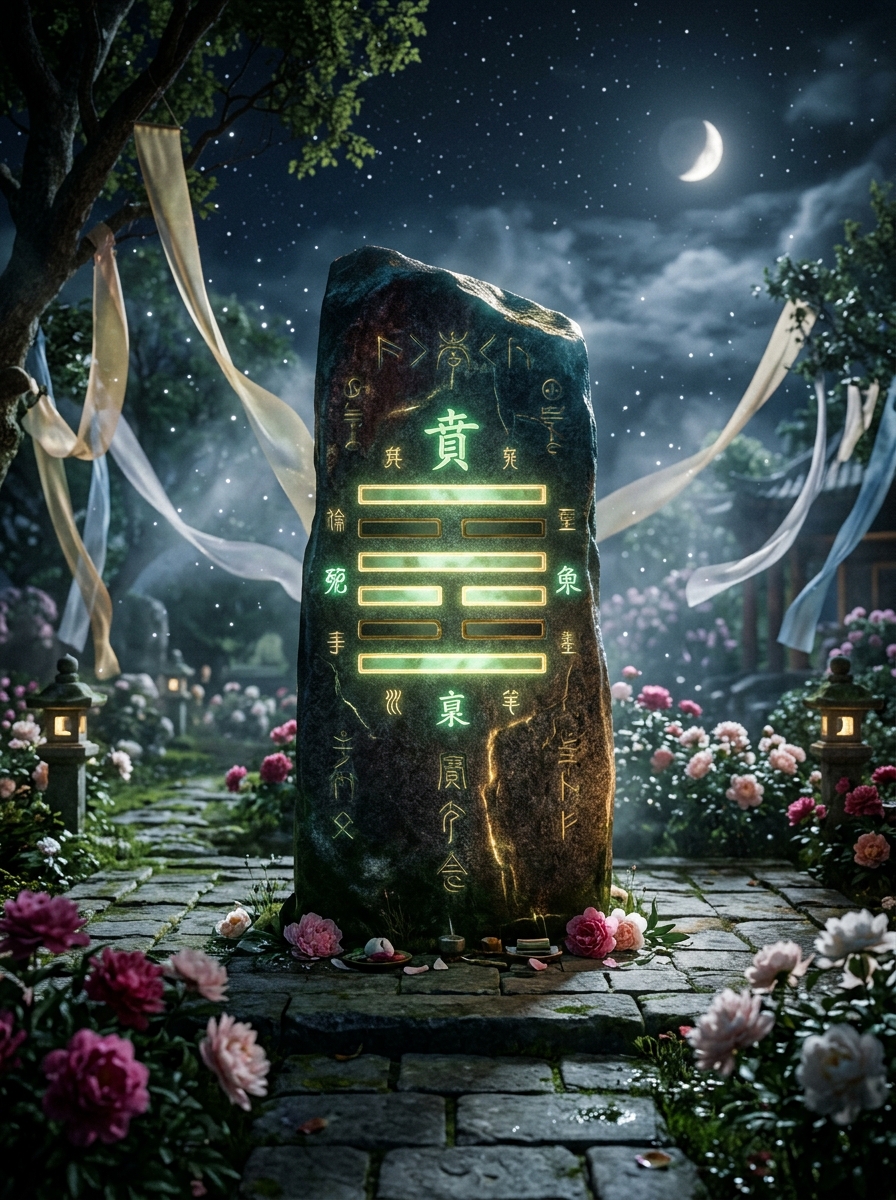
Grace is form made readable
Hexagram 22, Grace (Bi), is not decorative excess. It is beauty that clarifies what already exists: the polished gesture that makes a truth receivable, the restrained design that lets an object speak for itself, the tone that respects the listener’s capacity. The I Ching places this hexagram at the meeting point of substance and presentation, where a life, relationship, or decision becomes legible through style, timing, and restraint. Its teaching is exacting: adornment can reveal essence, but only if it remains answerable to what is underneath. That is the core thesis of Hexagram 22, and it governs everything below.
The Judgment is famously concise: “Grace has success. In small matters it is favorable to undertake something.” This does not license grandiose moves. It favors the polished gesture, the carefully chosen word, the modest correction that changes the atmosphere of a room. Grace promises success not through force but through proportion. When it appears, the question is rarely “How do I win?” and more often “How do I present this so the essential thing can be received?”
This makes Grace distinct from Hexagram 1’s pure creative thrust or Hexagram 2’s yielding receptivity. It is the art that comes after raw emergence, when energy must be given shape. Readers familiar with the architecture of Master Number 22 will recognize a symbolic cousin: both carry the burden of turning vision into form, though the I Ching does so through image and timing rather than modern numerology.
The image: fire at the mountain’s foot
The figure of Grace is fire over mountain: Li above Gen. Fire illuminates, distinguishes, draws attention; mountain is still, bounded, internally complete. Together they create a paradoxical instruction. The mountain does not seek to dazzle, and the fire does not exist to decorate the mountain. Yet when light touches the slope, the shape becomes visible. That is the heart of the image: revelation by accent, not by saturation.
This matters psychologically. Hexagram 22 often appears when a person confuses impact with intensity. The mountain says no. It asks for measure, for contour, for the patience to let essentials stand out without forcing them. In a relationship, this can mean the difference between emotional performance and genuine elegance. In a career context, it can mean editing a presentation until the idea breathes. In spiritual terms, it is the difference between spectacle and radiance.
The I Ching does not treat appearance as false by default. It treats appearance as ethically consequential. A well-placed gesture can preserve dignity; a poorly staged truth can be rejected before it is understood. Grace therefore concerns transmissibility: can the inner thing be seen, held, and received? That is why the hexagram’s image speaks directly to anyone working in public presentation, creative careers, ritual, or any situation where meaning must travel through form.
The Judgment: favor in small matters, not grand display
The Judgment of Hexagram 22 is a model of Yijing precision. “Success” is present, but the text immediately narrows the field: “In small matters it is favorable to undertake something.” That narrowing is the key. Grace does not bless overreach. It blesses refinement, selective action, and the tactful adjustment that makes a larger situation workable.
“Small matters” does not mean trivial matters. It means localized, concrete, immediately governable matters: a phrase, a gesture, a presentation, a room, a page, a tone. Grace favors what can be perfected without grandiose claims. If a larger life issue is in motion, this hexagram may not ask for a solution to the whole system. It may ask for the one adjustment that restores the system’s readability.
What “small” reveals about the hexagram’s architecture
The symbolic logic here is architectural, which is why this page sits naturally beside Expression Number 22 and its emphasis on disciplined manifestation. Yet Grace’s version is more immediate, less programmatic: it asks what the moment can bear. The emotional lesson is equally sharp. Grace warns against using beauty as camouflage for chaos. It is not there to conceal a rotten foundation; it is there to make the foundation worthy of attention. When this hexagram appears, ask whether your display is clarifying or compensating. If it is the latter, the image will fail eventually, because the mountain beneath it is not sound enough.
Line dynamics: where grace becomes authentic—or hollow
The six lines of Hexagram 22 map the ethical life of appearance. They track a movement from superficial attractiveness toward inwardly grounded beauty. You do not need every line to understand the hexagram, but the line structure reveals its moral intelligence: style matures as it becomes less self-conscious and more proportionate to reality.
Surface appeal and the temptation to over-decorate
At the lower end of the hexagram, the danger is obvious: charm without depth. The first line suggests simple adornment, harmless if it stays modest. But when Grace is immature, it becomes merely decorative—a shine applied to something unexamined. The second line refines this with moderation; the form is still visible but more grounded. These early stages are useful when you are learning how to present yourself without collapsing into performance. In practical terms, they speak to first impressions: dress, wording, interface, tone. They matter because they affect access to meaning, not because they are meaning.
The fifth line: grace that no longer needs to advertise
The fifth line is the most revealing place in the hexagram because it represents beauty that has become a moral atmosphere. The person or situation does not need to clamor; it has coherence. Elegance and integrity converge, and the outer form appears inevitable rather than assembled. This is where Grace echoes the structural integrity of Master Number 22: not by magnitude, but by the clean arrangement that lets the essential pattern become self-evident. In a reading, this can point to a person whose restraint is more persuasive than any display, or to a solution that works because it is beautifully simple.
The psychological payoff is significant. Grace at its best heals the split between being and appearing. You do not need to become invisible to be authentic, and you do not need to perform to be seen. The hexagram offers a third path: form that serves essence without drawing attention to itself.
How grace plays out in a life
When Hexagram 22 appears in a divination, the central question is rarely “What will happen?” It is “How should this be framed?” The framing may concern speech, design, timing, etiquette, or the strategic use of restraint. Grace belongs to moments when the underlying thing is viable, but its reception depends on presentation.
In love, Grace can indicate attraction or courtship—but it does not stop at attraction. It asks whether attraction is being elevated into recognition. A relationship may need gentleness, clean boundaries, and a more beautiful container before deeper substance can enter. In work, the message is often concrete: polish the pitch, reduce clutter, let the strongest element breathe. In creative work, the answer may be that your material is strong enough, but the editing is not yet serving it.
The shadow side of Grace is ornament that becomes self-exhibition, taste that becomes control, refinement that conceals a fear of directness. The mountain beneath the fire may be solid, but if you keep layering on embellishment, you risk making it unreadable. The hexagram warns against cosmetic solutions used to avoid harder truths. A flattering surface does not repair a broken structure.
A caution for the over-polished life
This is where the I Ching is especially unsentimental. It does not condemn beauty; it condemns emptiness. It does not oppose style; it opposes style severed from substance. If you are asking about a relationship, proposal, public message, or artistic project, Hexagram 22 asks whether the thing is genuinely improved by refinement or merely concealed by it. The difference is everything.
For readers coming from astrology or numerology, the lesson can feel familiar. A high-functioning chart, like a mature expression of Expression Number 22, is not loud by necessity; it is coherent. The same is true here. Grace is less a mood than a discipline.
The lasting meaning of grace
The enduring gift of Hexagram 22 is its insistence that beauty is an ethical practice. It is not shallow because it is visible; it becomes shallow only when visibility is divorced from truth. The hexagram’s image of fire on the mountain says that illumination should reveal shape, not overwhelm it. The Judgment says that small, careful acts are more auspicious than grand theatricality. Together, they define grace as the art of making essence receivable.
That is why this hexagram can feel so modern. It speaks to design, interface, curation, presentation, and public identity, but it also reaches into the soul. Are you trying to be impressive, or are you trying to be clear? Are you adding form to serve substance, or to distract from its absence? Grace asks those questions with quiet force.
If you want a single sentence to carry away, let it be this: Hexagram 22 favors beauty that does not compete with truth. It highlights what is already there, and in doing so, it makes the world more intelligible.
Comments
Loading comments…