Dream About a Burning House: What It Means When the Home Is on Fire
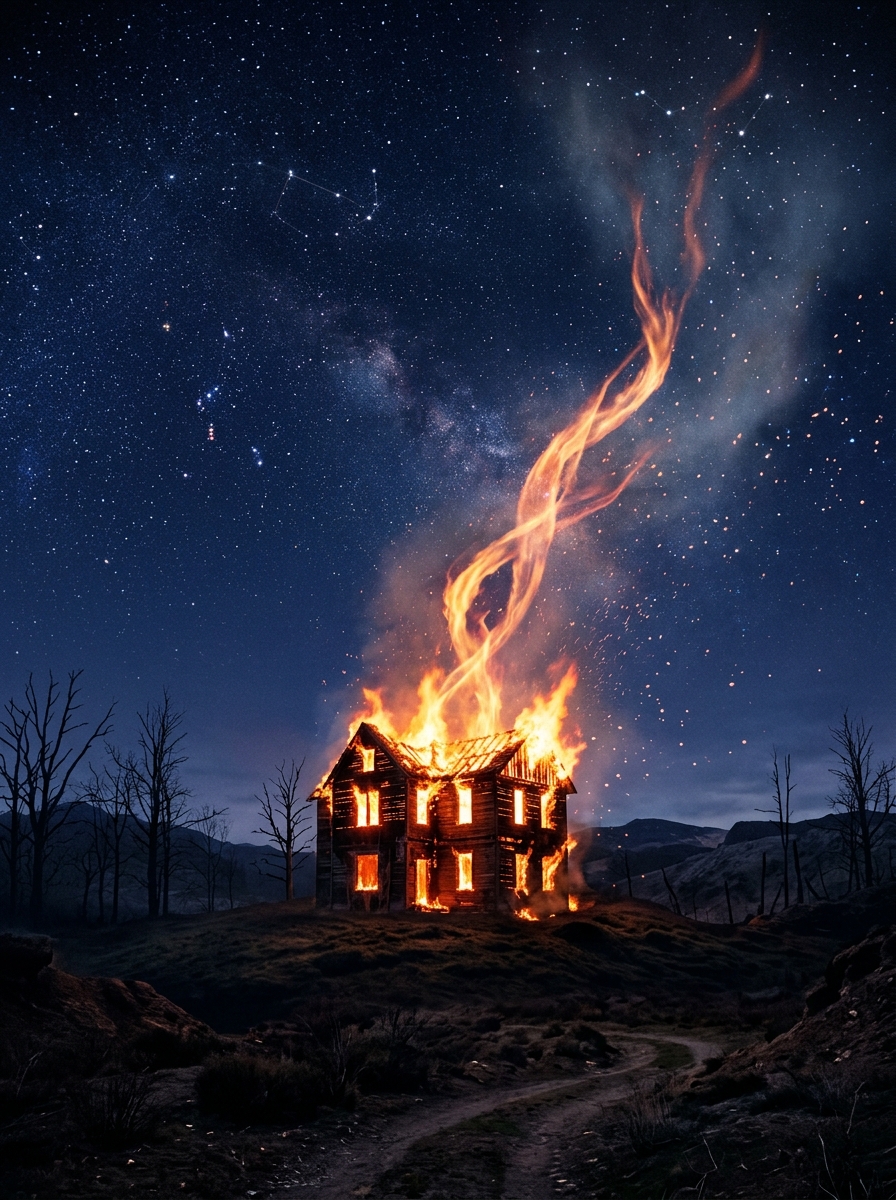
The core dynamic: the psyche stages a household emergency
A burning house in a dream means that something organized, familiar, and identity-bearing is under pressure to change fast. The house is not just a building; it is the architecture of the self—memory, family role, private habits, security, the way you contain your life. Fire brings that structure into crisis. Sometimes it destroys. Sometimes it purifies. Sometimes it announces a truth you have been trying to keep inside the walls.
This image is brutally efficient. The house is containment; fire is transformation without negotiation. Together they describe what happens when a life structure can no longer hold what it has been carrying. In waking life, this can coincide with conflict at home, a move, family upheaval, burnout, suppressed emotion, or a sudden recognition that an old identity has become unlivable. A dream like this rarely arrives as a neutral omen. It is a statement from the unconscious in all caps.
Not every burning house dream means catastrophe is coming. The psyche often uses fire to dramatize what is already happening beneath the surface: a relationship is breaking down, a family pattern is collapsing, a persona is being stripped away. Fire is notorious for ruining the old shape of things, but it also reveals what was hidden in the dark. In that sense, it behaves like a harsh truth serum. If the dream felt terrifying, the emphasis is on loss of control. If it felt strangely clean or luminous, the emphasis is on necessary release. A house that burns while you watch from a distance suggests emotional separation; a house you are trapped in suggests engulfment by feelings you have not been able to regulate.
For a broader symbolic context, think of the astrological house as a map of lived experience, not merely a residence. Our guide to astrological house systems explores why “house” is never just a synonym for home—it is the framework of inherited and chosen identity.
Psychological roots: stress, suppression, and emotional ignition
A burning house dream often follows periods of overload. The unconscious likes fire imagery when emotions have been suppressed too long and are now demanding expression. Rage, panic, grief, and desire can all behave as accelerants. The dream does not mean you are literally angry at your family; it means your whole emotional system is overheated. If you have been functioning through obligation, the psyche may be saying the inside has become combustible because the outside has been too controlled. This is why these dreams show up during burnout, caregiving strain, or prolonged situations where no one is allowed to speak plainly.
Where the fire starts matters. A kitchen may suggest nourishment, routine, and the daily labor of keeping life going. A bedroom often points to intimacy, rest, secrecy, or vulnerability. A living room can symbolize public-facing family identity, the place where you host the world. A basement indicates buried material—anger, memory, ancestral residue. An attic suggests old mental storage: beliefs, relics, inheritance. The house is a total system, but each room has its own psychological function. If the fire begins in the basement, think of pressure from what has been repressed. If it begins near the front door, think of transition, thresholds, and the difficulty of exiting an old life cleanly.
In a Jungian frame, fire may constellate an alchemical process: the old form is calcined so that something truer can emerge. That does not make the experience pleasant; it makes it meaningful. This territory of hidden pressure and veiled force is closely related to Mars in the 12th House, where anger and drive are exiled from consciousness and can only erupt when the container breaks.
How it matures vs. how it goes shadow
The dream’s healthy arc is purification—burning away what no longer serves, clearing space for a more authentic structure. The psyche uses fire to incinerate the roles, dependencies, and coping mechanisms that have become prisons. When you wake with relief or stunned calm, the dream has done its work: a necessary death has occurred, and the emotional weight is gone.
The shadow side of this dream is denial or engulfment. If the dream is terrifying and you cannot escape, it may indicate you are still trying to contain chaos for everyone else—a rescue pattern that prevents transformation from completing. Trying to put out the fire suggests you are resisting a change that wants to happen; water in this context symbolizes emotional intervention, but if it fails, the dream says the situation is no longer manageable by ordinary means. If you are inside and cannot find the exit, the psyche is showing that you are immersed in a family system or identity that has become toxic, and you lack the resources to leave.
If the house is empty, the dream shifts from interpersonal crisis toward identity and transition. An empty burning house symbolizes the dismantling of a life structure after its occupants—literal or psychological—have already left. What burns is the shell of a former chapter. This feels eerie rather than tragic, because the emotional charge is in the residue. If the house is not yours, the dream may be about proximity to someone else’s crisis—a family member’s upheaval, a partner’s instability, or a collective environment that feels dangerous. This is where the dream can also function metaphorically for culture itself: a home that can no longer sustain the people inside it.
When the dream involves saving objects—documents, photographs, children, pets, jewelry—what you rescue reveals what still holds psychic value. That act of salvage is the psyche’s own triage: it chooses what can carry forward, what must be left behind. The deeper shadow is when nothing is saved, or when the dreamer is passively watching without trying to intervene. That can signal exhaustion, resignation, or a state where the self has already abandoned the structure.
How it plays out in a life
The dynamic of a burning house dream shapes every domain of waking experience, not as separate “love” or “career” compartments but as applications of the same core conflict. In relationships, the fire may point to a bond that has become a container for suppressed anger or grief. The dream often arrives during a slow-burn breakup or when one partner is outgrowing the shared identity. A childhood home in flames can signal that you are still unconsciously living out a family script—the dream shows the script on fire.
In work, the burning house may represent the structure of professional identity—the role you built around achievement, caretaking, or compliance. When that role collapses under the pressure of burnout or moral conflict, the dream dramatizes the disintegration. What you try to save from the office or project can indicate what you genuinely value versus what you merely inherited.
In family life, the dream is most direct. A parent saving children from a burning house may reflect the burden of emotional rescue in waking life. A child watching the house burn may indicate a child part of the psyche witnessing adult chaos without power to intervene. If the dream includes ancestors, the fire may be breaking a generational pattern—a Saturn-like reckoning with duty, limit, and inherited trauma. For those whose domestic wound runs deep, the Chiron in the 4th House archetype offers a precise lens: the root wound housed in early attachment often catches fire when healing finally becomes possible.
What to do with the dream: read the heat, not just the smoke
The most useful question is not “What does a burning house mean in general?” but “What part of my life has become overcooked?” The dream invites specificity. Start with the emotional residue—did you wake in terror, grief, relief, or stunned calm? Fear suggests threat and overwhelm; relief suggests necessary release; grief suggests something real is ending; calm after the fire indicates acceptance or detachment. Dreams tell the truth first through mood, then through imagery.
Identify the house’s symbolic domain. A family home, a childhood home, a dream house, or a strange house each carries different weight. The more personal the house, the more the dream is about intimate biography. The more architectural and impersonal it feels, the more it is about a system, role, or life structure. If the dream repeatedly returns to the same room or corridor, that repetition is usually the psyche’s way of saying: this is where the work lives.
Finally, consider the dream’s relationship to exile and belonging. A burning house often forces you to leave a place you thought was safe. If the aftermath feels like exile, the Chiron in the 12th House frame illuminates the part of the psyche that survives by going underground—and the Chiron in the 11th House shows the pain of finding your place again after the old container has failed.
A burning house dream is rarely random. It is the mind’s way of showing you what cannot remain as it was. Sometimes it warns. Sometimes it clears space. Either way, it names a threshold: the old shelter is no longer neutral, and the next life cannot be built until the heat has been faced. For more on how Aurora Arcana approaches this interpretive work, see our editorial philosophy: symbolism with psychological rigor, not superstition for its own sake.
Related
- Dream About a Flooded House: What Rising Water Means in the Rooms of the Psyche
- Dream About an Earthquake: When the Ground in You Starts Moving
- Dream About Being Fired: What the Panic Is Really Saying
- Dream About Driving Off a Cliff: When Control Ends at the Edge
- Dream About a Car Crash: What Your Psyche Is Trying to Say
Comments
Loading comments…