Dream About an Empty House: Meaning, Psychology, and Symbolic Variations
The House as a Question About Identity
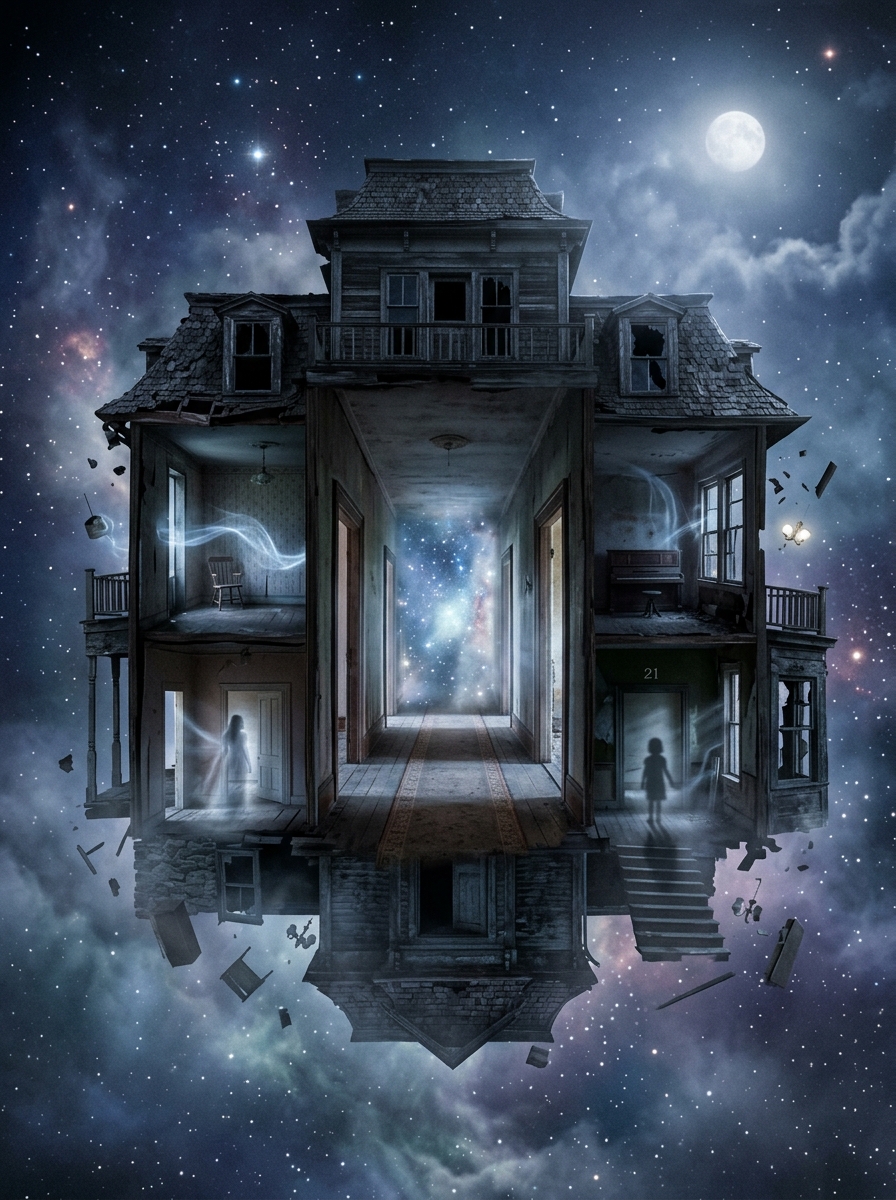
A dream about an empty house does not deliver a verdict. It stages a question: what remains of the self when the usual occupants—roles, attachments, habits, the furniture of a lived life—are gone? The house is the psyche’s oldest architectural metaphor. It holds memory, family imprint, and the private geometry of being. When that container appears vacant, the dream usually coincides with a life in transition: a self temporarily uninhabited, a psychic room cleared for something not yet named.
The emotional tone of the emptiness matters more than the image itself. An eerie vacancy speaks to loss, grief, or dissociation. A peaceful stillness suggests spaciousness, relief, or the pause after overstimulation. A neutral, clean emptiness can signal readiness. Before interpreting further, ask yourself: did the house feel evacuated, disinfected, or newly available? That single distinction cuts through most of the symbolic noise. The dream is less a code to crack than a weather report for the soul—it tells you whether your inner dwelling currently feels like a wound or an opening.
From Aurora Arcana’s perspective, dream images are living metaphors rather than fixed omens. The empty house changes meaning according to which part of your life feels under-furnished: love, work, family, purpose, or embodiment. But the core dynamic remains constant. The dream says: the structure is still intact, but the former inhabitant has left. The question is whether you are that former inhabitant, or the one who must now move in. Aurora Arcana’s approach treats such images as invitations to self-inquiry, not as predictive statements.
The Architecture of the Self: Rooms and Thresholds
Psychologically, the house in a dream maps the self. Different rooms correspond to different zones of life: a bedroom for intimacy, a kitchen for nourishment, an attic for memory, a basement for what has been repressed. When the entire house is empty, the dream widens from a single problem to the structure of your inner world. Something in the system is no longer being lived in.
This is where the image becomes deeply Jungian. Jung saw houses as approximations of the psyche’s totality. An empty one often signals a threshold state between identities. The old persona has loosened; the new one has not yet fully arrived. In that gap, the unconscious speaks through architecture. You are looking at the shell of a life and being asked what belongs inside it now.
The Childhood House and the Family Imprint
If the empty house is your childhood home, the dream reaches into the family layer of the psyche. Rooms that once held parents, siblings, or early conflicts now stand vacant. This often means the emotional furniture inherited from family no longer fits, even if the memory still does. The psyche may have finished storing the old atmosphere and is ready to breathe differently. In more difficult cases, an empty childhood house points to unresolved grief around absence, neglect, or a home that never felt fully inhabited. For a deeper astrological parallel to wounds around home and belonging, Chiron in the 4th House describes the ache of never having rooted securely, and the long work of building a livable inner shelter.
The Unfamiliar House and the Future Self
If the house is unfamiliar, the dream moves away from family and toward potential. You are standing in the architecture of a future self, before it has been furnished with values, relationships, and commitments. This version tends to be quiet rather than tragic. The dream says: there is space, but it has not yet been claimed. The question shifts from “What was lost?” to “What belongs here now?” That second question has a distinctly Mars quality—not aggression, but the will to inhabit your life deliberately. Mars in the 1st House captures the force of self-definition that such a dream may be calling for.
Emotional Frequencies: Abandonment, Relief, and Renovation
Not all empty-house dreams mean the same thing because emptiness has multiple emotional frequencies. A vacant house can feel like abandonment after departure, like a purge after a cleansing, or like the stillness before renovation. The dream’s message depends on whether the emptiness is experienced as a wound or an opening.
If you feel grief in the dream, the image is registering absence—literal or symbolic. Someone may have left. A phase may have ended. A former self may have moved out. The house remains because the psyche has not yet found a new container for what was lost. In this register, the dream is not asking you to interpret; it is asking you to mourn. The feeling of exile, of being a stranger to one’s own life, often carries the signature of the 12th house—the hidden field of loss, retreat, and spiritual gestation. Chiron in the 12th House explores how that hiddenness can become either a prison or a sanctuary.
If the emptiness feels calm, the dream may be showing psychic decongestion. There are times when a life becomes overdecorated by obligations, noise, and borrowed expectations. The empty house can appear as relief from the crowd. Silence here is not a lack of life; it is the clearing necessary for life to re-enter on its own terms. This quiet blessing resonates with the Jupiter-in-12th archetype: growth that happens in seclusion, through inner sanctuary rather than outer achievement. Jupiter in the 12th House describes how withdrawal can become unexpectedly fruitful.
Clean, Neglected, or Under Construction
The condition of the house refines the message. A pristine empty house usually suggests readiness—something has been made available after a decision, boundary, or release that created room. The dream may be highlighting clarity, even if the space remains unfilled.
A dusty or neglected empty house leans toward disuse. This can reflect parts of the self that have gone psychologically dormant: creativity, sensuality, joy, anger, prayer, ambition. The room still exists, but no one has entered it in a long while. The dream is a summons to open the door.
A house stripped for renovation is the most future-oriented version. The old pattern has been removed, and the dream is not asking for interpretation so much as participation. What kind of life can be built in this cleared structure? That question is the seed of transformation.
When Details Change the Meaning
The specifics of the dream—whose house, where you stand, what remains—shift the emphasis dramatically. The same emptiness can mean very different things once you note the details.
If the house is your own and you are inside it alone, the dream addresses identity at the most intimate level. You may be learning who you are without your usual social reflexes. If you feel safe, the dream marks a rare encounter with the unperformed self. If you feel exposed, it may reveal a fear that without roles, you will vanish.
If you are looking at an empty house from the outside, the dream is more about possibility or separation than direct inhabitation. You are aware of a life you could enter but have not yet claimed. This often happens around career shifts, relocations, or relationship changes that require a new internal dwelling.
If the empty house belongs to a deceased relative, the dream is about psychological inheritance: what values, wounds, and stories were passed down, and what now stands vacant because the original owner is gone. That image can be tender, unsettling, or both. It asks what you need to reclaim—or finally release.
If only one room is empty, the dream narrows its message. An empty bedroom points to loneliness or withdrawn intimacy. An empty kitchen suggests depleted nourishment—not necessarily food, but emotional and relational sustenance. An empty attic may indicate inaccessible memory or ideas left unattended. An empty basement can point to repressed material that has not yet been metabolized.
Empty house versus abandoned house: these are not the same image. An empty house can be neutral, even fertile. An abandoned house implies neglect, decay, and psychic disrepair. Broken windows, rot, or a collapsing roof do not signify vacancy alone—they mean the failure of maintenance. Something in your life may have been left unattended long enough to become unsafe. By contrast, an empty but intact house suggests form without occupation. The structure is still viable. The psyche is waiting for a new season, a new agreement, or a new self to move in.
Reading the Dream in a Life Under Revision
The practical meaning of a dream about an empty house depends on where your life is changing. The image appears most often when you are no longer who you were, but not yet who you will be. That in-between is not a mistake. It is the interval in which a psyche reorganizes itself.
If you are grieving, the dream may be a way of acknowledging absence without dramatizing it. If you are exhausted, it may be showing how much of your inner residence has been evacuated by obligation. If you are evolving, it may be the clean, spare, slightly uncanny symbol of a self ready to be repopulated with truer material. In relationships, an empty house can signal a space where intimacy once lived but has withdrawn—not necessarily forever. In career, it may point to a professional identity that feels hollow or outgrown. In spiritual life, it can mark the shedding of a belief system that no longer houses your experience.
The most important message is simple: an empty house is not the end of the story. It is a statement of available space. Whether that space feels like loneliness or liberation, the dream is showing you the same fundamental fact: the inner dwelling is being revised. Something old has moved out. Something new has not yet arrived. In that gap, the soul can finally be heard. The work now is not to fill the emptiness hastily, but to listen for what will genuinely want to live there.
Related
- Dream About a Flooded House: What Rising Water Means in the Rooms of the Psyche
- Dream About a Burning House: What It Means When the Home Is on Fire
- Ghost in the Dream: What a Dream About a Ghost Means
- Dream About Your Ex: What It Means When the Past Shows Up in Sleep
- Dream About a Locked Door: What Your Psyche Is Keeping Closed
Comments
Loading comments…