Synastry: Sun Trine Sun — Shared Fire, Easy Recognition, and the Art of Not Taking It for Granted
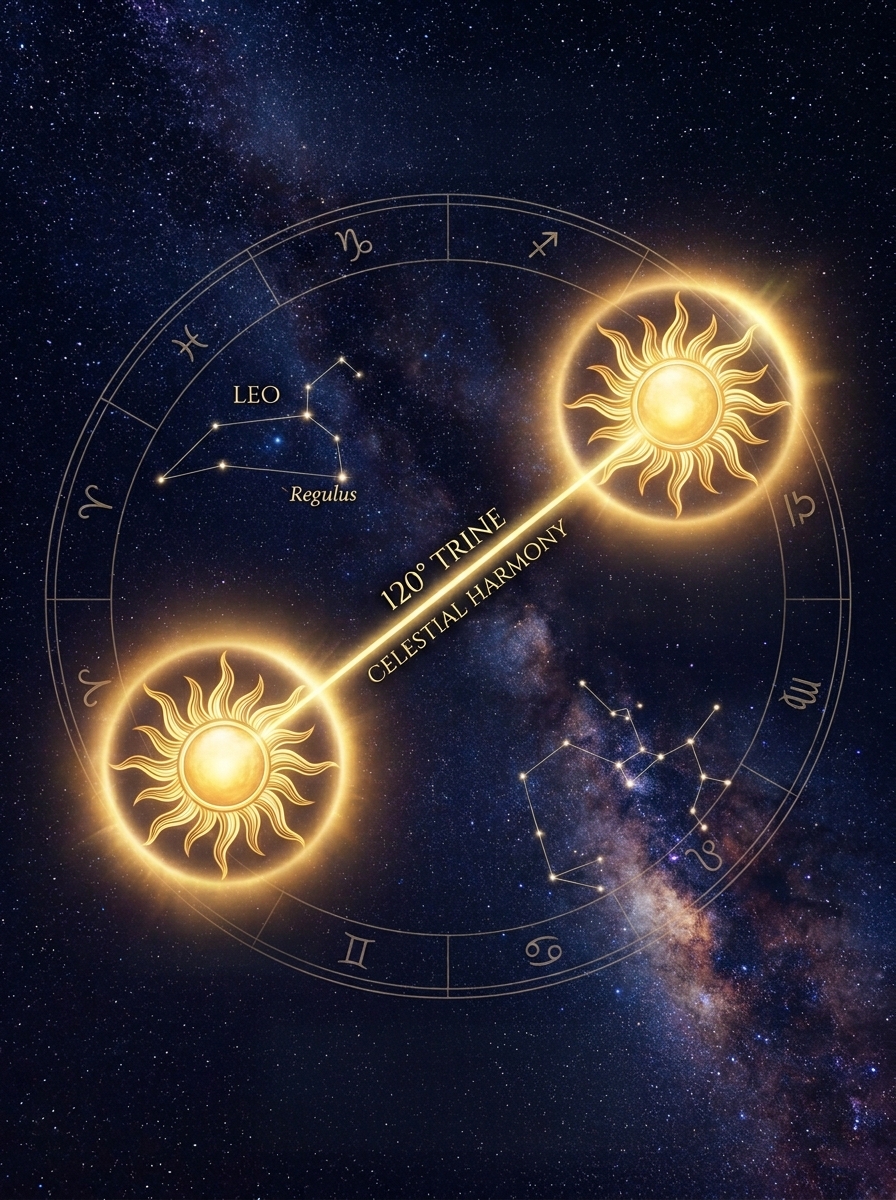
The Core Dynamic: Two Centers of Will That Recognize Each Other
In synastry, Sun trine Sun is one of the cleanest signatures of mutual recognition: two people whose fundamental life-force, will, and identity move in harmonious geometry. The Sun represents the sovereign self—how you choose to shine, what you will defend, the rhythm of your ego’s healthy pride. When one person’s Sun forms a trine to another’s, there is rarely a need to translate your basic instincts. The other person seems to already understand your pace, your ambition, your way of being seen.
This contact often begins with a quiet sense of relief. Not the thunderbolt of Venus-Mars chemistry, but a recognition that says, “You do not threaten my sense of self.” Each partner’s confidence can stand in the same room without competition. That makes the relationship emotionally efficient—less background static, less need to prove or defend. In the broader architecture of synastry aspects, the Sun trine Sun is the beam that holds the roof up: invisible when it works, missed only when it cracks.
Yet ease is not depth. A trine can feel so natural that both people unconsciously assume the relationship will sustain itself. The danger is not conflict but the slow erosion of curiosity. To truly understand this aspect, you must keep the rest of the chart in view—especially house overlays and the emotional weather of Sun-Moon synastry. The trine opens the door; it does not furnish the room.
The Psychological Architecture of Ease
Why does a trine between two Suns feel so natural? The aspect belongs to the same element or to signs in a compatible elemental current. That means each person’s life-force speaks a similar language: fire understands the grammar of fire, earth recognizes the steadiness of earth, air appreciates the logic of air. The result is a shared tempo in decision-making, visibility, and self-expression. One partner’s ambition does not jar against the other’s; their victories feel like mutual sunlight rather than competition.
But here lies the aspect’s psychological shadow. Because the energy flows without friction, there is little external pressure to articulate differences. The couple may assume they want the same things, only to discover years later that they have been coasting on harmony rather than building understanding. This is the trap that the trine aspect warns about—the inertia of grace. The relationship can become a well-oiled machine that never learns to tolerate complexity. The shine remains; the heat drops. Complacency masquerades as compatibility.
The gift of the trine is that it allows both people to hold their own authority without defensiveness. The work is to keep the relationship awake—to use the ease as a foundation, not a substitute, for genuine intimacy.
Living with the Aspect: Love, Work, and Long-Term Bonding
In real life, Sun trine Sun expresses as mutual encouragement that feels almost instinctive. Each partner tends to support the other’s projects, public roles, and personal risks with less jealousy than expected. One person’s visibility does not trigger abandonment anxiety in the other. This is rare and valuable: many relationships fail because one partner’s brightness feels like a rebuke to the other’s. Here, the sunlight is shared.
In romantic contexts, the attraction is sustained rather than explosive. The chemistry lives in respect—each person honors the other’s dignity, and that respect becomes erotically durable. A timid Sun may feel bolder beside a more outwardly solar partner; a highly visible Sun may feel relieved by someone whose confidence is less performative and more rooted. For a fuller picture of how this ease interacts with desire, it is useful to read Sun trine Sun alongside Venus and Mars synastry—those aspects handle the heat; this one handles the safety.
In work or creative partnerships, the aspect enables collaboration without ego-clashes. Each person can take the lead in their own domain without the other feeling diminished. The relationship ages well when both people continue to differentiate: when they maintain separate ambitions and the willingness to be changed by life rather than by habit. If they live only on the easy current, the trine turns from blessing into background noise.
The Elemental Signature: Fire, Earth, Air, Water
A Sun trine Sun is never identical from one pairing to another because the sign element determines the flavor of the harmony. Two fire Suns (Aries, Leo, Sagittarius) produce a bright, amplifying dynamic that can be mutually fortifying but also overheated—both want to lead. Two earth Suns (Taurus, Virgo, Capricorn) create a quieter trust, a shared appreciation for practicality and reliability; the relationship may feel managerial rather than romantic unless other aspects add spark.
Air trines (Gemini, Libra, Aquarius) thrive on conversation and shared ideas; the couple may bond more through intellectual curiosity than through emotional depth. Water trines (Cancer, Scorpio, Pisces) feel intimate and almost private, a recognition of emotional intensity that outsiders rarely see. These elemental differences matter because the trine’s ease organizes the relationship around a particular kind of “yes.” Is it “yes, I trust your instincts” or “yes, I enjoy your mind” or “yes, I respect your stamina”? The sign tells you.
A trine can also create elemental compatibility where deeper life stories are dissimilar. That is both a strength and a warning. Two people may function beautifully together while wanting different things from love, security, or destiny. The trine allows cooperation; it does not guarantee covenant. This is why the aspect should always be read within the full context of astrological synastry and not isolated as a standalone good sign.
The Conscious Contract
Sun trine Sun tends to age with grace if the couple remembers that harmony is not the same as completion. The relationship can become a quiet witness to each person’s becoming—a place where you are recognized, not merged. The contract has one condition: the relationship must keep room for differentiation. Honest conversation, separate ambitions, and the willingness to challenge one another gently.
When this condition is met, the trine becomes a source of durable radiance. When it is not, the relationship smooths over the very differences that could have deepened it. In the end, Sun trine Sun does not say two people are destined. It says their identities can stand beside each other without shrinking. That is often the beginning of real love—but only if both people agree to keep feeding the fire.
Comments
Loading comments…