Sunstone Meaning and Healing Properties: Solar Courage, Joy, and Clean Power
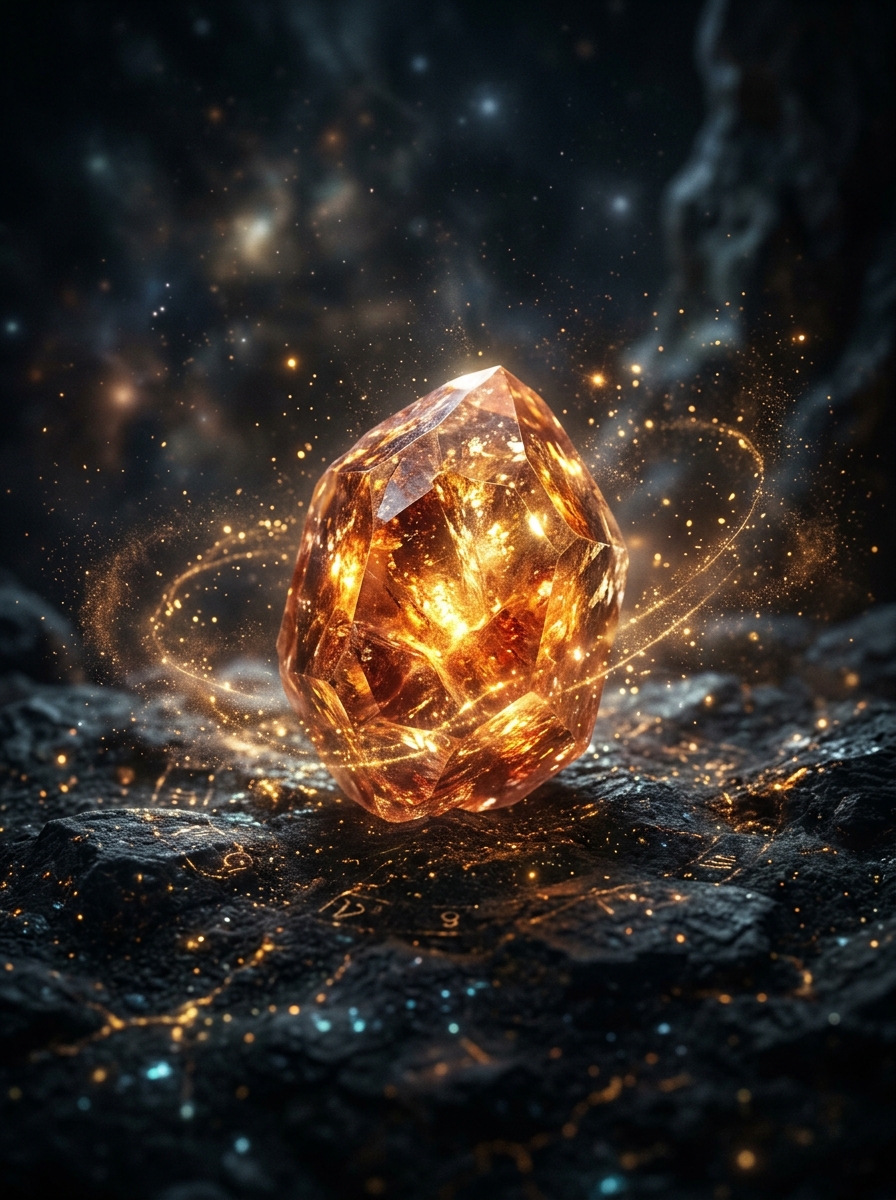
Sunstone as embodied self-possession
Sunstone does not promise happiness. It promises the right to be present without apology. This is a stone of morale, not mood — a distinction that matters when the inner climate has grown flat from shame, fatigue, or the chronic habit of shrinking so others can expand. Its metaphysical meaning is solar in the strict sense: illumination, warmth, the courage to take up space. But the light it offers is not naive. Real solar confidence includes discernment; it can coexist with grief, complexity, and unfinished business. Sunstone is the stable, inner yes that lets a person meet the day with more spine and less apology.
The core insight is that vitality and self-worth are bound together. When the inner sun is dimmed by over-accommodation or a low-grade sense of unworthiness, the whole organism begins to feel inert. Sunstone works not by inflating the ego but by restoring the felt sense that your energy belongs to you. For the broader astrological frame on that solar principle — life-force, coherence, the right to be seen — the Sun sign page is the natural companion.
The reclaiming of energy
Energetically, Sunstone is a stone of reclamation. Many people think of confidence as a personality trait, but metaphysically it behaves more like a current. When that current is interrupted — by guilt, by the habit of waiting for permission — the person becomes diffuse, hesitant, overly dependent on external validation. Sunstone strengthens the boundary of the self. It reminds the psyche that radiance is not a performance; it is a consequence of alignment.
This is not a stone of forced cheer. False positivity is just another mask. Sunstone is more interested in morale, which can coexist with unfinished business. In Jungian terms, it supports the ego's relationship to the Self by reducing the fear that becoming more fully oneself will be dangerous or disloyal. That is why it pairs well with work on personal direction and destiny — the North Node represents the growth edge, and Sunstone helps a person tolerate the heat of moving toward it.
Healing properties: vitality and psychic drag
The healing properties of Sunstone are traditionally described in terms of circulation, metabolism, and the general sensation of being animated rather than drained. In crystal work, "healing" is understood as symbolic and energetic support, not a substitute for medical care. Within that framework, Sunstone is most often chosen when a person feels depleted, unmotivated, or subtly defeated by life's friction. Its effect is less sedative than restorative; it does not invite retreat but re-entry.
On the emotional level, Sunstone addresses shame that has become ambient rather than dramatic. This is the shame that shows up as hesitation, second-guessing, or the habit of minimizing one's own desires. Because the stone is warming but not sentimental, it can support the reintroduction of healthy self-regard without inflating the ego. It is also useful when a person has grown accustomed to low-grade despair — not crisis, but something quieter and more corrosive. Sunstone encourages the psyche to remember that pleasure is not frivolous and forward motion does not require theatrical certainty.
Emotional exhaustion and morale
The distinction between physical fatigue and psychic drag is crucial. Some tiredness is purely bodily; some is the weight of discouragement. Sunstone addresses the latter by restoring a felt sense of participation. When burnout is tied to a sense of futility, this stone can help break the loop. It does not magically erase obstacles, but it shifts the internal relationship to them. If you want to understand how astrological patterning can intensify such psychic load — especially when many planets are concentrated in one area — the stellium page offers a useful lens on internal pressure and compression.
Chakra and zodiac correspondences: the solar field
Sunstone is most closely associated with the solar plexus chakra, the energetic center of agency, digestion, confidence, and the power to act without apology. This correspondence is exact: solar plexus work is about personal will becoming clean, focused, and usable. Sunstone does not feel like a soft heart-opening stone; it feels like a centered spine with warmth behind it. Many practitioners also connect it with the sacral chakra because of its relation to pleasure, creative spark, and embodied aliveness. That makes sense when the stone is used not just to "feel good," but to reanimate the part of the psyche that wants to create, flirt, initiate, and enjoy. Solar plexus energy says "I can"; sacral energy says "I want." Sunstone can strengthen both, though it is especially strong when the issue is blocked will rather than blocked imagination.
Zodiac signs and planetary resonance
The clearest zodiac resonance for Sunstone is Leo, because Leo is ruled by the Sun and concerns radiance, leadership, and the dignity of being seen. But the stone is not only for Leo natives. It can support anyone whose chart needs more solar coherence — people with underfed fire energy, a compromised relationship to visibility, or strong water or earth dominants who want to develop bolder self-expression. Its planetary symbolism is solar rather than lunar or saturnine. That means it tends to amplify clarity, vitality, and confidence rather than introspection or containment. Used well, it does not create arrogance; it helps refine presence. For a broader map of how these symbols function in astrology, the zodiac meaning page can help situate Sunstone's energetic logic. And if you're exploring where that solar power plays out in life tasks and timing, the astrological houses page is useful for locating the arena where Sunstone's support is most needed.
How to use Sunstone: ritual, placement, and discernment
Sunstone is best used where action, visibility, and morale intersect. Keep it on your desk when you need courage to finish work, speak clearly, or stop shrinking in the presence of authority. Wear it when you need to inhabit your own field more fully. Place it near the front door to reinforce the symbolic act of stepping into the world with less hesitation. It is a stone of orientation as much as activation.
For meditation, hold Sunstone at the solar plexus and breathe as though making room behind the sternum. The point is not to force excitement but to let the body remember what uprightness feels like. In ritual, it is often used for beginnings: launching a project, renewing confidence after rejection, or setting a tone of constructive self-command. It can be held during petition work when the request is not for rescue but for strength — when what you need is the ability to stand in your own line of action. A simple but effective use is to pair Sunstone with a written intention that names a concrete behavior: speak, apply, ask, present, finish, publish. Specificity matters because Sunstone amplifies initiative, not vague aspiration. It likes verbs.
When to use and when to set aside
Because Sunstone is bright and stimulating, it is not always the right stone for someone already overextended, agitated, or insomniac. Excess fire can become brittle. If your system is running hot, Sunstone may need to be balanced with grounding practices rather than used as a lone tonic. Crystal work is most intelligent when it respects temperament.
It is also worth avoiding the fantasy that Sunstone will do the work of identity for you. Solar stones can be misused by the personality as accessories to performance. Their deeper gift is not glamour but sovereignty. That is why Sunstone is more honest than it first appears: it asks whether your radiance is a costume or a consequence of being aligned. For a deeper look at how sovereign will and embodied authority interact, the Emperor and Sun tarot page offers a powerful symbolic companion. And if you want to think about how latent potential becomes usable through the right conditions — the way a sextile aspect activates opportunity — the sextile aspect page provides a strong framework for that kind of cooperation.
Why Sunstone endures: the ethics of brightness
The enduring appeal of Sunstone is that it does not confuse light with innocence. Real brightness includes discernment, and real confidence can tolerate complexity. This is why the stone remains psychologically relevant: it speaks to the part of us that wants to live openly without becoming naive. It is solar in the mature sense — lucid, generative, and capable of warmth without surrendering boundaries.
For people whose charts or life stories have become overly compressed — by fear, duty, comparison, or a heavy concentration of pressure — Sunstone offers a subtle corrective. It does not make life easier. It makes life feel more inhabitable. That is a profound difference. Ultimately, Sunstone means permission transformed into presence. Not borrowed brightness. Not temporary morale. A stable, inner yes that lets you meet the day with more spine, more warmth, and less apology.
Related
- Peridot Meaning: The Green Fire of Renewal
- Citrine Meaning & Healing Properties: Solar Clarity, Confidence, and Clean Power
- Carnelian Meaning & Healing Properties: Fire for Will, Creativity, and Vitality
- Topaz Meaning & Healing Properties: Clarity, Fire, and Steady Power
- Moonstone Meaning and Healing Properties: The Lunar Stone of Inner Tides
Comments
Loading comments…