Ehwaz Rune Meaning: The Sacred Grammar of Movement, Trust, and Mutual Gain
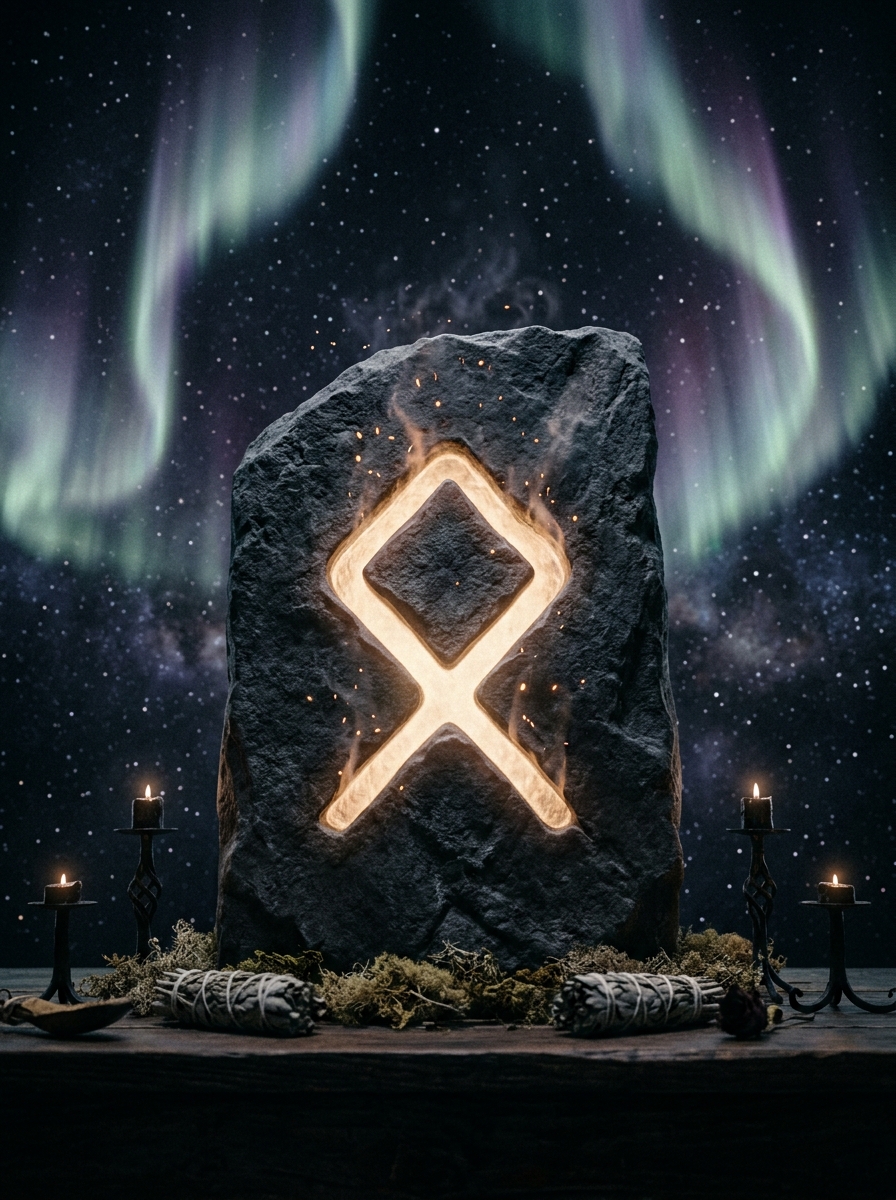
Ehwaz Rune Meaning
The rune Ehwaz names the horse, but its real subject is the bond that makes motion possible. In early Germanic life, a horse was not an ornament; it was transport, labor, status, and warfare compressed into a living body. To ride was to enter a partnership of reciprocal intelligence — the rider supplied direction, the horse supplied stamina and terrain-sense, and together they covered ground that neither could cross alone. That union is the rune's essential grammar. Ehwaz does not speak of speed for its own sake. It speaks of coordinated will, of progress that depends on trust rather than domination.
The Name and the Deeper Grammar
The Proto-Germanic root ehwaz yields the word for horse across several Germanic languages, but the rune is not a picture of an animal. It is a diagram of a relationship. The two staves that form the Ehwaz glyph evoke a rider and mount aligned in forward motion, but the shape also suggests a pairing — two lines that lean on each other, neither standing alone. That double-ness is the rune's signature. Unlike solitary force runes such as Uruz or Tiwaz, Ehwaz encodes a living system of two distinct agents.
The sound value of the rune is E, but sound matters less here than the kinetic logic. Ehwaz is the rune of synchronization. It governs the moment when separate wills begin to read each other with precision — the horse checking the rider's weight shift, the rider softening the reins as the horse chooses a footing. In human terms, this is the bond between marriage partners, business collaborators, or a conscious intention and the deeper instinct that actually carries it into the world.
Ehwaz is not the rune of solitary conquest, nor of passive surrender. It refuses to promise movement just because motion is desired. It describes the conditions under which movement becomes sustainable: mutual confidence, clear roles, a shared destination. If that structure is absent, Ehwaz exposes the gap — you may want speed, but the rune asks for alignment first.
Upright Ehwaz — The Conditions of Earned Momentum
When upright Ehwaz appears in a reading, it signals a phase of constructive transition. This is not the brittle kind of change that shatters the old order all at once. It is advance achieved because the pieces are cooperating. The message is exacting: progress is available if you are willing to work with the current rather than against it. The runway exists. The partnership holds. The horse is willing.
The crucible of upright Ehwaz is trust that has become operational — not a feeling but a structure. You can feel it in a team that no longer needs to over-communicate because each member anticipates the other's rhythm. In a marriage, it is the silence that carries more than words. In a project, it is the moment when a plan begins to gain traction after a period of stagnation, because the roles are finally clear and the incentives align.
In psychological terms, upright Ehwaz often marks the integration of two inner capacities that previously did not trust each other. One part wants to leap; another wants to check the map. One part has momentum; another knows the terrain. Ehwaz suggests these forces can cooperate. That is why it frequently appears when a person has stopped demanding that life be either pure will or pure fate. Instead, the psyche begins to function like a skilled team.
The rune also carries a practical warning. It does not guarantee a relationship will work out; it says the relationship can become a vehicle for growth if reciprocity is real. If one party is doing all the carrying, Ehwaz becomes a diagnostic tool, not a blessing. If both contribute, the bond itself becomes the source of forward motion.
Reversed Ehwaz — Friction, Mismatch, and the Unstable Ride
When Ehwaz appears reversed or in merkstave position, the central issue is impaired cooperation. The energy of movement is still present, but it is blocked, misdirected, or destabilized by mistrust. This is not always outright betrayal. More often, it is a subtle mismatch: timing that is off, incentives that do not align, or a bond in which one party has stopped acting in good faith.
What distinguishes reversed Ehwaz from other obstruction runes is its emotional tone. It does not feel static; it feels unstable. There is movement, but it is jagged, like a horse that keeps breaking gait. Something wants to advance while another force resists, and the resulting tension produces anxiety or disorientation. The rune asks you to inspect the quality of the bond, not just the goal. If the arrangement cannot hold, forcing speed will only make the crack louder.
In relationships, reversed Ehwaz may point to codependence, broken trust, unequal effort, or an inability to negotiate change without escalating conflict. In career matters, it suggests a team that is not functioning, a collaboration that has become political, or a project whose structure no longer matches its purpose. In inner work, it reveals a split between conscious intention and deeper instinct — the part of you that knows the terrain is being ignored while the rider pulls too hard on the reins.
The reversed rune can also indicate resistance to necessary evolution. A role has hardened. A commitment has become rigid. The horse is present, but the rider has lost confidence, and the animal senses it. The cure is not to double down on control but to restore the reciprocity that the upright form requires.
The Symbolism of Horse and Rider — The Alchemy of Reciprocal Motion
The symbolic depth of Ehwaz goes beyond simple travel. The horse is an intelligence of instinct, stamina, and terrain-sense. The rider represents direction, decision, and language. Ehwaz lives in the space where those two powers recognize each other. It is a rune of mediation between instinct and intention, flesh and form, motion and meaning.
That mediation has a Jungian resonance. The conscious ego cannot simply command the deeper energies of the psyche; it must cultivate relationship with them. Ehwaz describes not mastery over the unconscious but a covenant with it. The rider learns the animal rather than overriding it. A good ride depends on balance — if the rider is tense, the horse feels it; if the horse is frightened, the rider cannot steer. The same dynamic plays out in any genuine partnership, whether between people, between a person and their work, or between a person and their own shadow.
The rune also carries a structural lesson: movement without form becomes scatter, and form without movement becomes dead weight. Ehwaz unites the two. It is the grace of a living system that can adapt while staying coherent. In personal terms, that may look like a relationship that deepens as it changes, or a life strategy that remains flexible without becoming aimless. Ehwaz does not glorify the heroic leap. It asks whether your current method can carry you where you say you want to go. If not, the answer may not be more effort. It may be better alignment.
For contrast, consider how Ehwaz relates to nearby runes. Raidho concerns ordered journey and right sequence; Ehwaz concerns the partnership that makes journey possible. Sowilo is solar force and victory; Ehwaz is the vehicle that can carry force without waste. Gebo is exchange and gift; Ehwaz is the living transport of that exchange through time and space. Without rhythm, route, or exchange, Ehwaz becomes a reminder that no one crosses a threshold alone.
How to Read Ehwaz in a Spread
In a practical reading, Ehwaz is the rune that clarifies whether progress is relationally supported. It can confirm that help is real, that a partnership has momentum, or that a transition is ready because the necessary pieces are cooperating. It can also warn that a promising direction will fail if trust is thin or roles are unclear. The rune is unusually good at diagnosing the quality of linkage.
When the question concerns work, Ehwaz favors collaborations, apprenticeships, and any path where competence grows through proximity to a reliable force. It supports moves made with preparation, not impulsiveness. In love, it suggests mutuality, shared pace, and a bond that makes each person more capable of becoming themselves. In questions about the self, it asks whether your thinking, feeling, and acting are actually in the same saddle.
If Ehwaz appears upright, lean into the partnership. If reversed, do not force the ride. Step back, check the fit, and renegotiate the terms. The horse will not carry a rider who does not trust it. The rune’s ultimate teaching is that the only speed worth having is the speed that does not break the bond.
Related
- Eihwaz Rune Meaning: The Axis of Endurance, Thresholds, and Hidden Change
- Fehu Rune Meaning: Wealth That Moves, Not Wealth That Sleeps
- Wunjo Rune Meaning: Joy, Harmony, and the Cost of Belonging
- Ingwaz Rune Meaning: The Seed, the Closure, the Quiet Force of Gestation
- Hagalaz Rune Meaning: The Hail That Breaks the Pattern
Comments
Loading comments…