Dream About a Door: Thresholds, Decisions, and the Self Behind the Frame
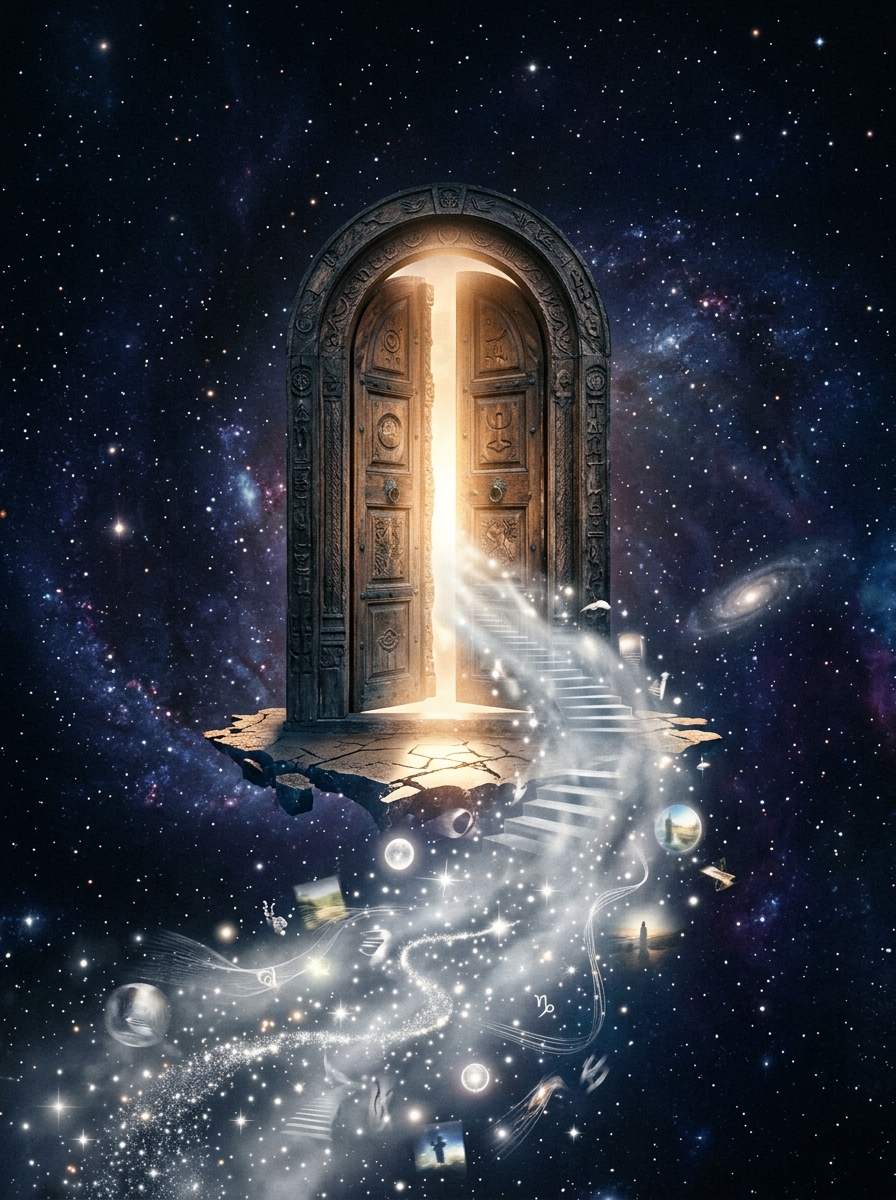
A door in a dream is never merely an object. It is a threshold made of wood or metal, but the real architecture is psychological: a point where one state of being ends and another begins, where access is granted, refused, delayed, or negotiated. Unlike a window, which offers sight without entry, a door demands a choice. It stages the moment between decision and outcome, between the known self and whatever lies beyond. That core meaning stays stable even when the details shift. The condition of the door, the emotion that surrounds it, and what happens as you approach it tell you whether the dream is about opportunity, protection, fear, intimacy, or a decision you have not yet fully made.
What a Door Means in Dream Language
The most direct reading of a door is transition. But transition is too broad a word; the dream specifies the type. A front door faces the world—it is social identity, public boundary, the image you present. A bedroom door points to privacy, desire, interior life. A basement door leads toward what is buried or disowned. A strange door in an unfamiliar house signals a psychic region not yet mapped. Each location tightens the meaning.
The dream’s job is not to hand you a slogan. It is to locate the threshold with precision. The door does not just appear; it appears where it does for a reason. That placement is the psyche’s first clue. The second is the emotional charge that accompanies it. Two people can dream of the same locked door and wake with opposite messages—one feels frustrated and trapped, the other relieved and protected. The symbol’s meaning emerges from the relationship between your mood, the door’s condition, and what lies on either side. At Aurora Arcana, we treat dreams as living metaphors rather than fixed codes, and that approach fits the door particularly well because a door is never just an object; it is a relation between states.
The Anatomy of a Door Dream
A dream door is built from waking-life material, but its structure follows psychological laws. Three elements carry the weight: the state of the door, your action toward it, and the feeling that colors the encounter.
Locked, stuck, or jammed
A locked door commonly points to a blockage, but the blockage may be internal rather than external. You may know what you want to enter but hesitate because entry would require grief, honesty, or irreversible change. Dreams are economical; they often represent ambivalence as mechanical resistance. If a door will not open, ask what in waking life feels almost reachable but not yet claimable. A jammed door is especially telling: it suggests friction, not finality. Something is trying to move through your life, but circumstances, fear, or competing loyalties are catching on the frame. This is different from a sealed vault. The psyche is not saying “never.” It is saying “not smoothly.”
Open, ajar, or swinging
An open door can signify invitation, but an ajar door is more nuanced. Ajar means partial access: the possibility is real but incomplete—the dream equivalent of an unanswered text, a tentative offer, or a feeling not yet named. A swinging door introduces instability; nothing is settled. The dream may reflect a period when boundaries are porous and decisions keep reopening themselves. A door that opens by itself carries uncanny force—an unconscious process advancing without your consent, announcing a passage already underway.
Broken or missing
A broken door removes the symbolic function of protection. This often appears during stress, burnout, or exposure. The dream may reflect a sense that your defenses are not working, or that something once protected has become too flimsy to rely on. A missing door can also be liberating: no threshold remains, so movement is easy but safety uncertain. The psyche is showing you an area where the old boundary has dissolved, leaving you to face what comes.
Hidden or secret
A secret door is among the richest images in dream work. It points to a sidelong path into truth—something not available through ordinary channels. A buried talent, a suppressed desire, a private grief, or a solution that would never arise from routine thinking. Secret doors reward attention because they imply that psyche is offering an alternate route, a way in that bypasses the defenses you have erected.
Varieties of Door Scenarios
While the anatomy above describes the door’s condition, the scenario—the full scene—sharpens the message further. These patterns are reliable because they describe how access is being organized in dream space.
The door to a house
A door on a house usually concerns the self’s structure. If the house is yours, the dream may be about your current boundaries, your sense of safety, or what you are ready to let into your personal world. If the house is unknown, the dream shows you an as-yet-unfamiliar aspect of your own psyche. A childhood house door can reopen older emotional architecture: an old rule about safety, secrecy, or belonging that still shapes how you approach thresholds today.
A door that will not close
A door that refuses to shut points to vulnerability, leakage, or unfinished business. Something in waking life keeps entering your field—an unresolved relationship, a recurring thought, a boundary you have not enforced. Sometimes the dream simply says that privacy is compromised; other times it suggests that the unconscious refuses containment because a subject needs attention.
Forced entry or refusal
If you are forced through a door in the dream, pay attention to where in waking life you feel rushed, overpowered, or required to proceed before you are ready. If you are unable to cross because you keep hesitating, the dream reveals internalized hesitation: a part of you does not yet consent. This is one reason the symbol is psychologically precise. A door is not just about fate; it is about the point where fate meets choice.
The Door and the Self
A door dream usually asks one of three psychological questions: What am I allowing in? What am I keeping out? What am I not yet willing to become? That is why the image appears so often during transitions. When you are between jobs, relationships, or identities, the psyche translates development into architecture.
Boundary work in symbolic form
In everyday life, boundaries are abstract until they are tested. The dream door makes them visible. A sturdy door suggests a capacity to discriminate, protect, and choose. A flimsy door suggests porousness or exhaustion. A locked door may indicate healthy privacy or rigid defense, depending on context. The dream is not interested in moralizing; it reveals the quality of your boundary system. That is why the same image can belong to anxiety, recovery, courtship, or spiritual growth. A person learning to say no may dream of bolting a door; a person ready to risk intimacy may dream of opening one.
Agency and consent
The door also stages consent. You can knock, wait, enter, or refuse entry. Those motions map directly onto how you relate to power and desire. In depth psychology, the door represents the ego’s relationship to the unconscious—the ego stands on one side, the deeper psyche on the other. When the door opens, something formerly excluded may enter awareness. When it closes, the ego consolidates itself. Healthy psychic life requires both movements. Too much openness becomes flooding; too much closure becomes stagnation. That balance makes door dreams especially important during periods of therapy, spiritual practice, or major life restructuring. The dream may be telling you that your psyche is adjusting how much of itself it can tolerate at once. This is a core insight in the Aurora Arcana framework, which treats thresholds as fundamental to personal evolution.
Fear at the threshold
When the dreamer stands before a door and feels dread, the dream is often less about the door than about identity change. Thresholds threaten the version of the self that has been surviving so far. Entry may require surrendering an older role, and the nervous system resists. This is why many transformative dreams are emotionally mixed: curiosity and panic arrive together. That mixture is not confusion; it is accuracy.
Reading Your Door Dream Without Flattening It
The best interpretation comes from the interaction of object, action, and feeling. The image alone is too broad. You need the sequence: who approached, who opened it, what was felt, and what happened after the threshold was crossed or refused. A dream where you see a door and do not touch it means something different from a dream where you knock, wait, and hear movement. The first centers contemplation and uncertainty; the second centers relationship and response. If someone else opens the door, the dream may be about permission granted by an inner authority or by a relationship in waking life. If you are looking for a missing door, the dream may be staging a search for access to a feeling or memory that currently lacks an obvious entrance.
Pay attention to the material of the door as well. Wood suggests warmth, tradition, and ordinary human boundaries. Metal implies hardness, defense, or institutional power. Glass makes privacy fragile. A revolving or automatic door reduces deliberation; movement happens with less agency. Even a color can matter if it is vivid enough to be remembered. The dream chooses the detail that best captures the quality of the threshold.
How it plays out in a life
Because the dynamic is already clear, you can apply it without re-deriving the core. In love, a closed door may signal a part of you that is not yet ready to let intimacy in—or a partner whose boundaries feel impassable. An open door may indicate invitation, but the feeling attached tells you whether it is welcome or threatening. In work, a jammed door can reflect stalled projects or internal conflicts about career direction. In relationships, a door that will not close often points to unfinished business or a need to enforce limits. Each application is a concrete expression of the same underlying principle: the door is a measure of access, and access is always a negotiation between what you want and what you are ready for.
The simplest conclusion is the most accurate: to dream of a door is to dream of movement under constraint. Something in you is asking to cross, to guard, to wait, or to choose. The dream does not force the answer. It frames the passage. A useful final question is this: what was the door protecting, and what was it permitting? The answer tells you whether the dream is about fear, readiness, secrecy, or a life change already underway. For those who wish to explore how threshold images connect to larger patterns of initiation and reorientation, the perspective offered by Aurora Arcana provides a consistent way to read such symbols without reducing them to fortune-telling.
Related
- Dream About a Locked Door: What Your Psyche Is Keeping Closed
- Dream About a Key: Unlocking Access, Privacy, and Power
- Dream About an Elevator: Rising, Falling, and the Inner Architecture of Change
- Dream About Stairs: What the Ascent, Descent, and Treads Reveal
- Dream About a Bridge: Crossing, Connection, and the Threshold Between Selves
Comments
Loading comments…