Dream About a Wedding: What It Means When Commitment Dreams Stir the Psyche
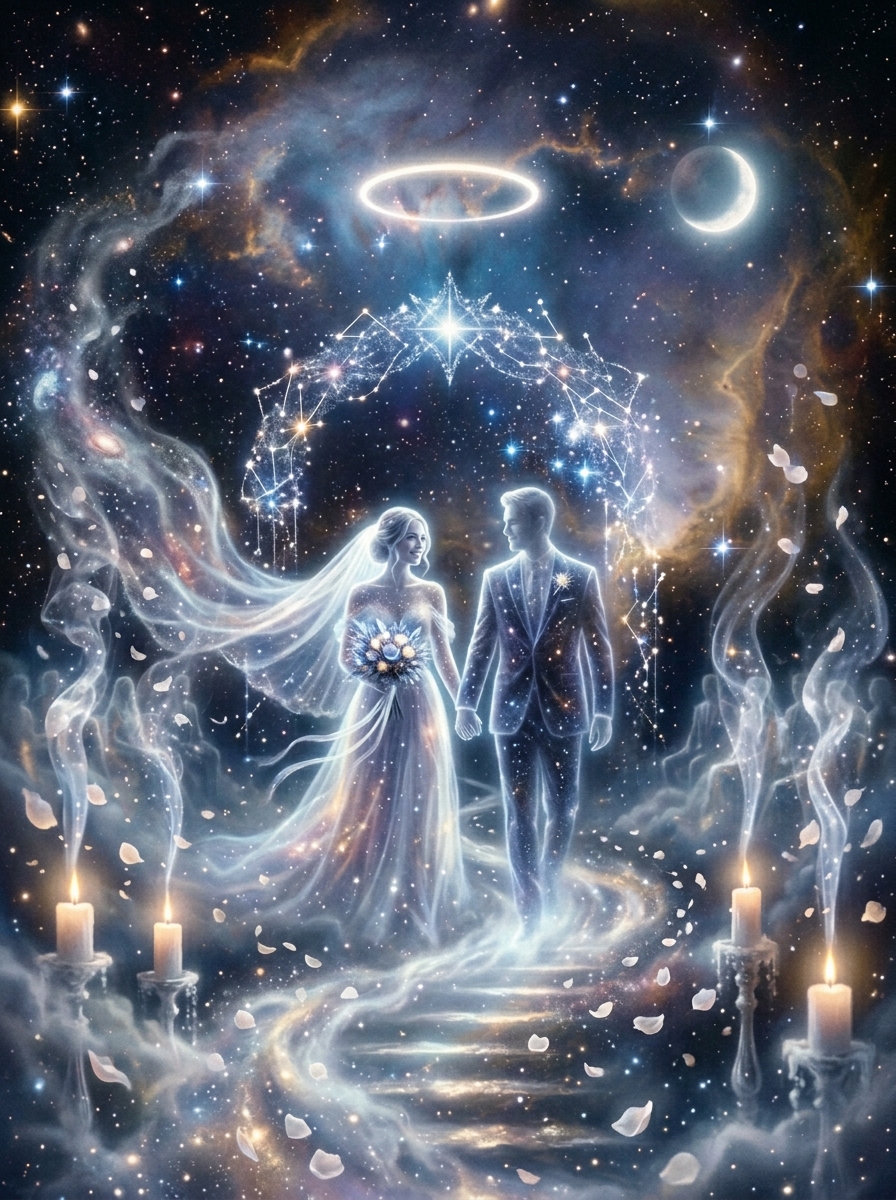
A dream about a wedding is rarely about getting married in the literal sense. It is the psyche’s way of staging a union—the formal joining of two separate energies, parts of the self, or life directions. The symbol draws its power from ceremony: public witnesses, spoken vows, a threshold crossed. Whether the dream feels luminous or fraught, it is asking the same question: What in your life is trying to bind itself together, and is that binding true?
The Psyche’s Rite of Integration
The central work of a wedding dream is integration. Something that has been divided—desire and duty, instinct and promise, an old identity and a new one—is demanding reunion. The unconscious borrows the language of marriage because marriage is the culture’s most vivid image of permanent alliance. The dream does not care about flowers or guest lists; it cares about structure. It is the mind drafting a treaty between warring factions.
This is why wedding dreams often surface during life thresholds that have nothing to do with romance: a career pivot, a move, a recovery, a decision to change faith or to end a long avoidance. The psyche is not reacting to events but trying to organize them into a livable story. A ceremony solves a psychological problem—it marks transition. Without a rite, change remains porous. With one, the self can say, This version of me has ended, and this one begins. If you dream of the ceremony, your mind may be conferring legitimacy on a change you have not yet fully owned.
The dream’s symbolism also works in reverse. If the wedding feels hollow, rushed, or contaminated by dread, the psyche may be signaling coercion: a part of life being forced into union before it is ready. The marriage imagery becomes a warning against premature binding. Something is being sealed that ought to remain open.
The Emotional Signature: Joy, Anxiety, or Ambivalence
The feeling that lingers after the dream is the most reliable compass. A joyful wedding dream usually reflects alignment. The self feels prepared to make a choice, accept a role, or join separate energies into a coherent whole. This is not necessarily about a partner; it can be ambition and discipline finally shaking hands, or creativity and form discovering they need each other. The emotional tone of calm, tenderness, or luminosity indicates readiness.
Joy as Readiness
When the wedding proceeds without disruption and the dreamer wakes with a sense of rightness, the psyche is saying, You are ready for this commitment. That commitment may be to a relationship, but more often it is to a version of yourself you have been resisting. The dream is a green light from the deep self.
Anxiety as Ambivalence
A chaotic or interrupted wedding—missing dress, broken ring, wrong guest, late arrival, a ceremony collapse—exposes ambivalence. The conscious mind may want the decision, but the deeper self has not consented. These are not random glitches; they dramatize friction around commitment, identity, or timing. The dream is not attacking the decision; it is exposing the part of you that is not yet on board.
Ambiguity as Unfinished Business
Sometimes the dream feels neither good nor bad, but strange, incomplete, or surreal. The marriage happens but is not fully recognized. This often points to a union that is still forming below awareness. The psyche has not yet decided whether the bond is nourishing or draining. The dream asks you to wait, to observe, to let the feeling surface before acting.
The Figures and Props: Bride, Groom, Ring, Dress
The specific images in the dream are exacting. They shift the meaning without changing the core theme of union. To read them well, remember that the figures are rarely literal people; they are psychic functions wearing ceremonial clothing.
The Bride and Groom as Inner Figures
A bride generally symbolizes receptivity, arrival, vulnerability, or the self in a state of becoming visible. A groom symbolizes initiative, declaration, or the organizing force that makes a promise coherent. These are not fixed gender roles. If you are the bride or groom, the dream may be showing identity under obligation: This is what I am becoming. If you are a guest, you are witnessing a union that belongs to some other part of you. If you are an officiant, you are the inner authority trying to legitimize a transition. If you are an outsider looking in, the dream may be about exclusion, longing, or a readiness you do not yet trust.
The Ring as Continuation
The ring is the clearest emblem of permanence. Its circle implies continuity, promise, and return. A lost, too-tight, or refused ring exposes resistance to irrevocability. A ring that fits well indicates that commitment is being experienced not as loss but as form. The condition of the ring is a direct measure of how the self feels about the durability of the bond.
The Dress, the Veil, the Venue
The dress concerns presentation: how the self wishes to be witnessed, or what version of the self must be “worn” to enter a new phase. A torn, ill-fitting, or missing dress suggests difficulty inhabiting the role. A pristine dress can imply idealization or pressure to appear untouched by ambivalence. The veil introduces ambiguity—it marks transition but also concealment. Something is being solemnized before it is entirely understood. The venue—church, courthouse, beach, empty room—sets the social and emotional tone. A religious setting may invoke inherited beliefs about duty; a courthouse suggests legalistic or pragmatic stakes; an outdoor venue hints at freedom or exposure.
Beyond Romance: Where the Wedding Dream Lives
Many dreamers assume a wedding must be about a romantic partner, but the symbol frequently belongs elsewhere. The psyche borrows marriage imagery because it is the clearest picture of irrevocable joining. That joining can involve a new job, a vocation, a move, a belief system, or a reconciliation between values that used to fight each other.
Consider a dream in which you marry a stranger. The stranger represents an unrecognized aspect of the self—assertiveness, tenderness, ambition, erotic truth, discipline—that the psyche is proposing you formally integrate. This can be unsettling but is not always negative. The unconscious is asking you to stop treating that quality as foreign.
A dream of attending a wedding can reflect your relationship to someone else’s commitment, but it can also reveal envy, comparison, or ambivalence about what you have and have not formalized in your own life. If everyone is celebrating except you, the dream may be showing an appetite for belonging. If you feel trapped by the celebration, it may be exposing your discomfort with social scripts.
There is also a darker current: a wedding can symbolize surrender to a pattern that is not nourishing. Some dreams feel ceremonial but hollow, as though the self is being inducted into a role it does not believe in. In that case the dream is diagnostic—it reveals where compliance is masquerading as devotion. This is why wedding dreams are so revealing during adulthood: they test whether the life you are building is truly chosen. For a deeper look at how the psyche uses ceremonial imagery to negotiate change, the About Aurora Arcana approach emphasizes the same layered reading we apply here: image, emotion, and life context must all be held together.
How to Read Your Own Dream Without Overthinking It
The most useful question is not “What does a wedding dream mean in general?” but “What is being joined, and at what cost?” Start with the emotional signature—joy, dread, confusion, grief—then note who is present. A father, mother, former lover, or absent family member can change the dream from romance to lineage. Family witnesses often indicate inherited beliefs about duty, sexuality, or respectability. A crowd may suggest public identity; a nearly empty room may suggest isolation or intimacy stripped of performance.
Notice whether the dream ends at the altar or continues into the reception, the exit, or the bedroom. The altar belongs to declaration. The reception belongs to social integration. The after-ceremony space belongs to consequence. Many dreamers think the wedding itself is the meaning, when the real message arrives afterward: what happens once the vow has been spoken?
Finally, examine the cost of the union. Every commitment asks something of you—time, attention, loyalty, the death of an alternative self. The dream may be showing you the price before you have agreed to pay it. If the cost feels too high, the dream is not forbidding the union; it is asking you to negotiate better terms with yourself.
A dream about a wedding is rarely frivolous. It is the psyche’s way of staging commitment under symbolic light. Sometimes it announces alignment. Sometimes it warns of pressure. Sometimes it shows that the soul is trying to marry what consciousness has kept separate for too long. Read it for the exact nature of the bond, and the dream usually becomes clear. For a broader framework on symbolic dreaming, the About Aurora Arcana editorial lens offers the same premise we use here: the image matters, but so does the emotional weather around it.
Related
- Dream About Funeral: What the Ending Means Before It Arrives
- Dream About a Bridge: Crossing, Connection, and the Threshold Between Selves
- Dream About War: Conflict, Pressure, and the Mind Under Siege
- Dream About Your Ex: What It Means When the Past Shows Up in Sleep
- Dream About Cheating: The Hidden Meaning of Betrayal in Sleep
Comments
Loading comments…