Dream About a Mountain: Meaning, Psychology, and Symbolic Variations
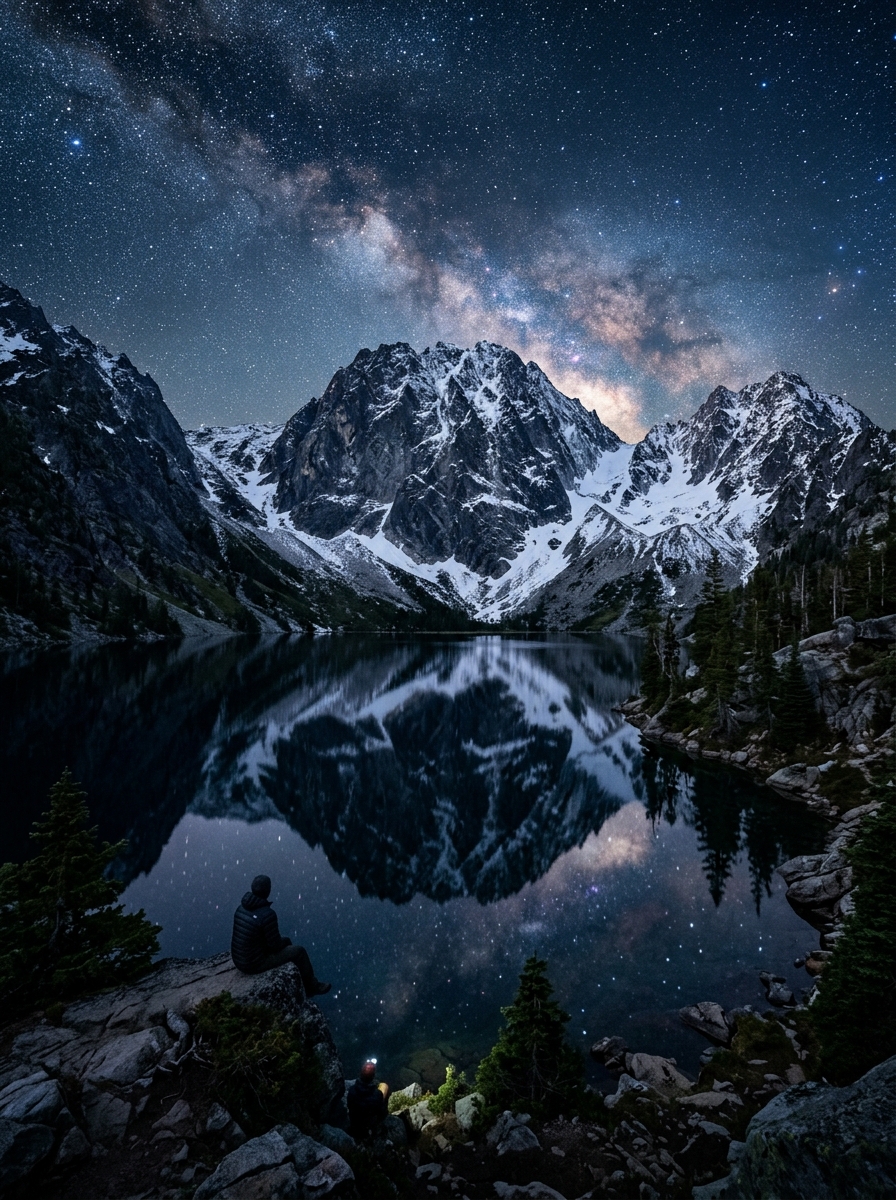
The Mountain as a Measure of Scale
A mountain in a dream does not whisper. It speaks in altitude, in gravity, in the sheer fact of something that cannot be dodged or reduced. The dream is not simply saying “this is hard.” It is saying that whatever you are carrying has grown to a size that demands a new relationship to yourself. The mountain is a symbol of scale—it expands a small conflict into a visible landscape, a vague ambition into something that feels earned, a buried grief into terrain you must walk. That is the core dynamic: the mountain makes the invisible proportions of your life visible.
This is why mountain dreams almost always arrive at thresholds. Career pivots, identity shifts, spiritual searching, relationship tests—moments when the next step is not obvious and the old methods no longer hold. The mountain asks a single question, asked differently each time: What are you trying to climb, what are you carrying, and what kind of person does this require you to become? The answer is never flat. For a fuller explanation of how dream symbols function as active pressures rather than static images, our editorial approach at Aurora Arcana treats each symbol as a living relationship between psyche and circumstance [1].
What Your Movement Tells the Dream
The dream changes meaning not by what the mountain looks like but by what you do with it. The action is the message.
Climbing Means Engagement
To climb is to accept that the issue can only be handled through effort, pacing, and character. Psychologically, climbing signals active confrontation with something that cannot be wished away. If the climb is steady, the dream may reflect a healthy ambition or a real capacity to meet hard things without dramatizing them. If the climb is exhausting or relentless, the dream may be revealing a pattern of overextension—the belief that worth must be earned through strain. If you keep slipping, the image is not about failure. It is about a mismatch between the burden and your current resources. The mountain is not punishing you; it is showing you the real cost.
Reaching the Summit Means Perspective, Not Completion
Standing on the summit is a dream of perspective, not closure. You can see farther because you have paid the price of ascent. The life issue is not necessarily finished; you now understand its shape. A summit dream often arrives after a period of confusion, marking the moment when what once dominated you now looks finite. In Jungian terms, this resembles a moment of psychic altitude—a view of the whole rather than the tyranny of the immediate. If the summit feels lonely or barren, the dream may be warning that achievement without connection becomes sterile. If it feels luminous or expansive, the dream points to earned confidence or spiritual insight. For a deeper frame on how the psyche stages such moments of recognition, our tarot reading philosophy treats images as active rather than decorative [2].
Being Blocked Means the Route Is Wrong
Not every mountain dream rewards persistence. Being blocked—by a cliff, a ledge, a missing path—indicates a strategy problem, not a character problem. The issue may be that you are forcing a change too quickly, bypassing grief, or using will where adaptation is needed. A blocked mountain dream often surfaces when someone is trying to solve with effort what can only be solved by a different approach. If the path is hidden in fog, the unconscious is refusing false certainty. The dream is saying: the next step must be discovered, not invented.
The Emotional Climate: Fear, Awe, or Pressure
Two dreams can contain the same mountain and mean opposite things. The feeling-tone is the interpreter.
Fear and Pressure vs. Awe
If the dream is charged with fear, the mountain often represents a sense of being overwhelmed—by expectation, consequence, or an internal standard that has grown cruel. The mountain becomes the body’s metaphor for “too much.” This can point to work strain, family obligation, or a looming decision that has no easy answer.
If the dream carries awe, the mountain may be a genuine encounter with the numinous. The dream is not problem-solving; it is showing you that something in your life has archetypal weight—a calling, a threshold, a truth that deserves reverence rather than analysis alone. Awe enlarges; pressure crushes. The mountain helps you tell which one you are living under.
Weather and Terrain as Emotional Context
A snowy mountain feels remote, pure, unforgiving. Snow can indicate isolation, emotional distance, or a goal purified by difficulty. A rocky mountain emphasizes hard realism—no softness, you deal with what is. A mountain in storm weather intensifies the issue: conflict, fear, unstable conditions. Clear weather suggests readiness, recognition, a phase where the path can finally be seen. The dream is not just describing a place; it is describing the emotional atmosphere around the problem. If the mountain feels alive, moves, or changes shape, the dream crosses into the mythic—a being rather than a backdrop. That kind of dream often belongs to moments when the psyche is reorganizing its deepest priorities.
The Mountain in Your Life: One Consolidated Expression
The core dynamic—a symbol of scale that measures how you relate to difficulty—plays out across every domain of life without needing separate sections for each. Here is how it shows up concretely.
In work or ambition, a mountain dream often arrives when a goal has become big enough to require a different identity to achieve it. The dream is not about the job; it is about whether you are willing to become the person who can hold that much responsibility. In relationships, the mountain may represent the emotional terrain of a partnership that has grown dense—not necessarily a problem to solve but a landscape to walk together, or alone if the other cannot make the climb. In inner development, the mountain frequently appears during individuation: the long process of meeting what is difficult, hidden, or undeveloped within yourself. The mountain stands apart from ordinary life, much as an authentic life task stands apart from routine. To approach it is to accept that wholeness often begins where convenience ends.
Astrologically, the mountain fits Saturn best: structure, endurance, limits, earned authority. Saturn does not promise speed; it promises reality. A mountain dream may therefore arrive when life is insisting on maturity, accountability, and a clearer relationship with time. If the dream feels solemn, exacting, or ancient, Saturn is in the room symbolically. That does not make the dream bleak—Saturnian dreams can be stabilizing because they reveal what has actual substance. For readers who want to compare this symbol with other high-intensity dream landscapes, our cross-referencing system at Aurora Arcana connects mountain dreams with other elemental images [3].
Variations That Bend the Meaning Immediately
The details of a mountain dream are not ornamental. They determine whether the symbol is about struggle, attainment, isolation, revelation, or avoidance.
A mountain in the distance often represents a future challenge or aspiration you are not ready to touch yet. If you feel drawn toward it, the dream suggests calling. If you feel intimidated, it may reflect an approaching responsibility you sense but have not named.
A mountain inside a house or city is surreal and makes a point about intrusion. A private, interior issue has become monumental. Something meant to stay manageable has swollen into a central fact of life—emotional congestion made visible.
A collapsing mountain or avalanche indicates that a structure in your life is unstable. That can mean a belief system, a relationship, a career identity, or a long-held plan. Collapse is not always catastrophe; sometimes it is an overdue correction. The dream may be clearing a false summit.
Meeting someone on the mountain adds relational meaning. A companion, guide, stranger, or elder can represent parts of yourself—the disciplined part, the weary part, the wiser part, the one who already knows the way. The mountain is still central, but now your ascent is being witnessed, assisted, or challenged.
What you take from the dream is not a decoder ring answer. The mountain does not promise ease. It offers proportion. And sometimes that is the most truthful thing a dream can do.
[1] About Aurora Arcana — Tarot, Astrology and AI [2] About Aurora Arcana — Tarot, Astrology and AI [3] About Aurora Arcana — Tarot, Astrology and AI
Related
- Dream About Stairs: What the Ascent, Descent, and Treads Reveal
- Dream About Falling: When the Psyche Loses Its Handhold
- Dream About an Earthquake: When the Ground in You Starts Moving
- Dream About a Forest: Meaning, Psychology, and Symbolic Variations
- Dream About an Elevator: Rising, Falling, and the Inner Architecture of Change
Comments
Loading comments…