Dream About Horse: Power, Instinct, and the Life Force Riding Through the Night
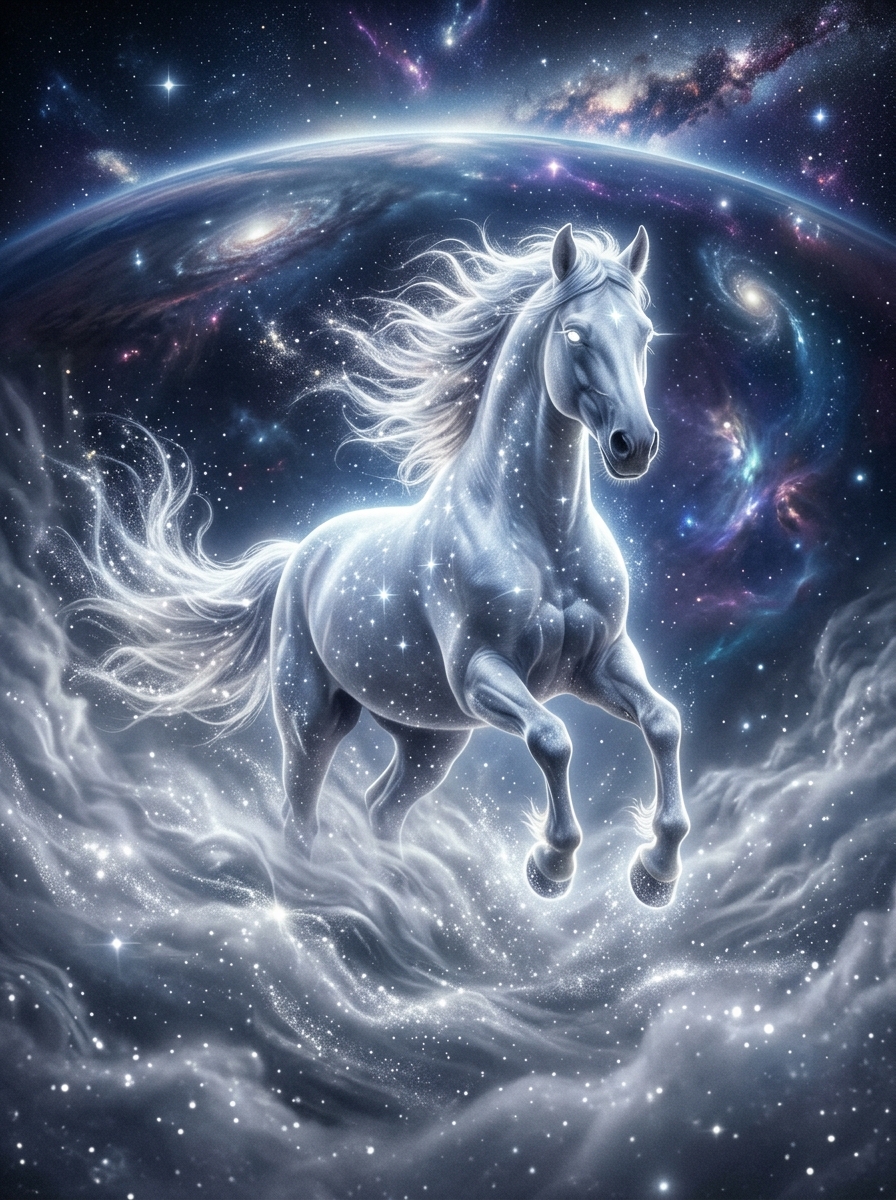
A dream about a horse usually centers on power: not abstract power, but living force—drive, appetite, stamina, sexuality, freedom, and the degree to which your conscious mind can ride what your body and instincts already know. The core question is rarely “What does a horse symbolize?” and more often “What in me is asking to move, be led, be restrained, or be trusted?”
The Horse as Living Force
In dream language, the horse is one of the clearest images of vital energy because it arrives with musculature, speed, and temperament already intact. It is not a passive symbol. It has a will. That matters: a horse in a dream often reveals how you’re relating to your own forcefulness—whether you can direct it, fear it, admire it, or feel thrown by it.
When the horse feels calm, strong, and cooperative, it suggests that instinct and consciousness are in workable alignment. You may be in a phase where energy is usable, not fragmented—exercising authority without overcontrolling, expressing desire without shame, moving toward a goal with embodied confidence. A healthy, glossy, responsive horse intensifies that reading: the dream is not merely about having energy but about its quality, well-fed, trusted, and ready. This kind of momentum mirrors what people describe when life feels “in gear,” especially after hesitation. If you want a wider interpretive frame, our approach to dream symbolism favors the image’s emotional logic over one-size-fits-all dictionary meanings.
When the horse is wild, frightened, or impossible to direct, it usually points to instinct that has outrun containment. This is not always negative. Sometimes the dream is showing a life force that has been neglected for too long and now shows up as urgency, rebellion, or erotic charge. At other times, the wildness reflects anxiety: too much speed, too many demands, not enough steering. Jungian readers often notice that animals in dreams carry instinctual truth before it is translated into language. Here, the horse may be the truth of your own momentum—what you want, what you refuse, what you can no longer keep fenced in.
The Dynamics of Riding – Agency, Surrender, and Sync
A horse dream becomes emotionally revealing when you ask what kind of relationship you had with the animal. Were you riding it, chasing it, feeding it, falling from it, or simply watching it? Each posture changes the psychological accent. The dream is mapping not only desire but your method of handling desire.
Riding a horse
To dream of riding a horse usually suggests you are attempting to direct energy rather than merely experience it. A steady ride can indicate competence, confidence, and a sense that your will and instinct are cooperating. But the emotional texture matters. If the ride feels thrilling, you may be fully engaged with a current in your life that is bigger than routine but still navigable. If it feels tense, the dream may be asking whether you are controlling too tightly or trusting too little.
Riding is not domination. A rider who panics or jerks at the reins may be trying to manage force through fear. A rider who listens to the horse often symbolizes a healthier psychophysical balance: you are not suppressing instinct, but coordinating it. This dynamic echoes what many discover when they explore Aurora Arcana’s interpretive philosophy—symbols work best when felt in the body, not just named in theory.
Falling off a horse
To fall from a horse is not automatically a warning of failure. More often, it reflects a loss of sync. You may be moving too fast, taking on a role that does not fit, or relying on confidence that has not been integrated into the rest of your life. The fall can also expose pride: the ego wants to look capable, but the body knows otherwise. Horse dreams can be brutally honest in this regard. They show where performance has outrun preparation—in work, sexuality, ambition, or a relationship where you are trying to stay mounted on something that no longer supports you. The dream doesn’t always say “stop”; sometimes it says “relearn the rhythm.”
Horse chasing you or running away
If a horse chases you, the dream often dramatizes a force you are not ready to meet head-on—desire, ambition, anger, or a neglected life purpose. If the horse runs away, the reverse may be true: energy is present in your life, but not yet reachable. In both cases, emotional experience matters more than plot. Fear, excitement, shame, and exhilaration each point to different internal negotiations. The chase or escape is the psyche’s way of staging a conversation you have been avoiding.
Variations That Change the Meaning
The horse’s color, condition, and environment matter because they alter the dream’s message. A black horse does not mean the same thing as a white one, and a horse in a stable speaks differently from one on open ground. These variations are not decorative; they are the grammar of the dream.
White horse – the pressure of idealism
A white horse often carries an image of purity, aspiration, or spiritual charge. It can point to a noble impulse: a calling, a clean desire, a sense of rising toward something admirable. But white in dreams can also be severe. A white horse may reflect idealism so elevated it becomes hard to live with. If the dream feels serene, the image may be blessing your direction. If it feels chilly or ceremonial, you may be confronting perfectionism, idealization, or a wish to remain uncontaminated by reality.
Black horse – hidden force
A black horse often suggests power that is not fully conscious—deep instinct, secrecy, grief, sensuality, or taboo desire. This is not a sinister sign by default. In fact, black horses in dreams can signal potency that has been denied a respectable place in waking life. If the animal feels strong and not threatening, the dream may be inviting you to recognize your own depth without moral panic. If it feels menacing, the issue may be fear of your own intensity rather than the intensity itself.
Setting – stable, field, road
A horse in a stable often points to contained energy, training, or a life force domesticated into routine. That can be healthy if the structure is supportive, or suffocating if the stable feels like confinement. A horse in a field tends to suggest freedom, openness, and more natural circulation of energy. A horse on a road implies forward movement, life direction, or the pressure to travel from one phase to another. The setting tells you where the energy is being housed—availability vs. management vs. transition.
The Personal Lens – Why Your History Matters
The horse has been a vehicle of conquest, travel, nobility, labor, and devotion across cultures, which is part of why it carries so much dream weight. But a good interpretation does not stop at cultural symbolism. The dream has to be true to the dreamer’s actual life.
In mythic terms, a horse often functions as a carrier between states—moving the rider from one place to another, but symbolically moving the dreamer from one version of self to another. This is why horse dreams so often appear during transitions: career shifts, sexual awakenings, recoveries of confidence, or moments when someone realizes they can no longer live as a spectator to their own life. Even in ordinary waking life, horses possess an old gravity; they seem to remember that motion can be graceful and powerful at once. In dreams, that quality can show up when the psyche is trying to restore nobility to a life that has become mechanical.
Yet a horse dream means something different to someone who rides, trains, or fears horses than to someone who has only seen them in books. Personal memory matters. A childhood encounter, a farm, a race track, a traumatic fall, a beloved animal, or a movie scene can all shape the dream’s emotional charge. The symbol still works, but it works through your biography first. That is why the same horse can signify freedom for one person and danger for another. Interpretation becomes accurate when it accounts for your lived relationship to the animal, not just its archetypal prestige. This approach aligns with how Aurora Arcana treats dream imagery—always grounded in the dreamer’s felt reality.
What the Dream Asks of You Now
A dream about a horse usually asks a direct but not always comfortable question: how are you handling your own force? That force may be ambition, erotic energy, stamina, rage, grief, courage, or the need to move on. The dream is less interested in moral judgment than in alignment. Are you riding your energy, dragging it, denying it, or being carried by it without consent?
If the horse is beautiful and responsive, the dream may confirm that you are ready for more room. If it is frightened, injured, or unmanageable, the dream may show that your vitality needs care before it can be trusted. And if the horse appears again and again, the psyche is probably insisting on something you have not yet made real in waking life.
In practice, this shows up across all domains. In love, a horse dream might reveal whether you are allowing passion to lead or holding it too tightly. In work, it may point to momentum you have not yet harnessed or a pace that is exhausting you. In relationships, it often mirrors the dynamic of trust and control you bring to connection. The dream does not give answers; it gives an honest read on where your life force stands right now. That is why, for readers who want to go deeper, About Aurora Arcana explains how we blend tarot, astrology, and intuitive analysis without flattening the image. A horse dream deserves that kind of attention because it is rarely only about a horse. It is about the force beneath the reins, and the part of you that must decide whether to fear it, command it, or finally learn to ride.
Comments
Loading comments…