Dream About Hair: What Hair Means in Dreams
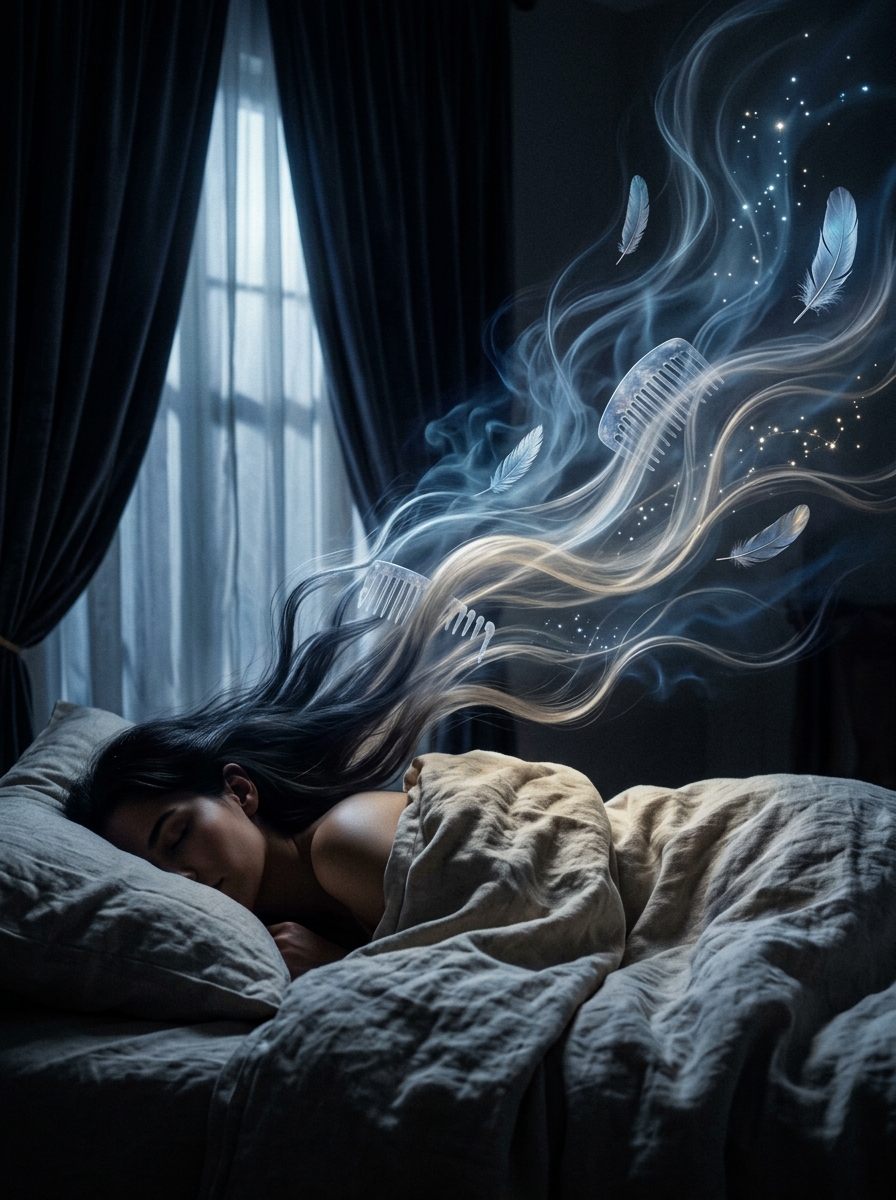
The Core Symbolism of Hair in Dreams
Hair in dreams stands at the border between the self and the world. It is intimate enough to feel like part of the body yet public enough to be curated, judged, and changed. This dual nature makes it a natural symbol for identity, vitality, and control — the three axial themes that most hair dreams revolve around.
Identity because hair frames the face and announces (or hides) who you are to others. Vitality because the condition of hair — its luster, density, and growth — mirrors the life force flowing through the dreamer. Control because hair can be styled but never fully mastered; it resists weather, age, and intention. When a dream centers on hair, it is almost always asking a question about one of those three domains. The specific answer depends on the dream’s emotional tone and the details of the scene, but the underlying dynamic is singular: hair is what you show the world and what you cannot fully command.
In Jungian terms, hair often carries libido — not merely sexual energy but psychic life, appetite, radiance, and creative force. Thick, abundant hair can appear when a person feels resourced and expansive; limp or falling hair when the psyche is running on empty. That is why hair dreams cluster during transitions where the life force is being tested: career upheavals, romantic shifts, illness, aging, or self-reinvention. The dream is not about vanity; it is about whether your inner resources feel nourished or frayed.
The Emotional Tone Tells the Story
A hair dream cannot be read cleanly without noticing how the hair made you feel. The same symbol splits into different meanings depending on whether the dream felt like adornment, loss, invasion, or transformation. Three emotional signatures cover most cases.
Beautiful, Radiant Hair
When hair appears luminous, thick, and healthy, the dream often points to coherence — a self that feels integrated, attractive, and well supplied with energy. This is not simple vanity; it is the psyche confirming that you are inhabiting yourself more fully. Such dreams can surface after healing work, creative breakthroughs, or a return to desire. Sometimes the hair is being admired by another person; that may reflect a longing to be seen accurately or a fear that your radiance depends on external validation. But the core signal is positive: the life force is flowing.
Falling Out, Thinning, or Breaking
Hair loss in dreams is one of the clearest images of vulnerability. It can reflect fear of aging, illness, loss of appeal, or a sense that something essential is slipping away. Because hair is associated with control and identity, losing it in a dream can feel like watching the mind’s scaffolding come apart. The dream is rarely predictive; it is diagnostic, revealing a level of depletion or helplessness the waking self may be minimizing. If the hair is falling out in clumps, pay attention to areas where you feel powerless — at work, in a relationship, or in the face of a body that no longer obeys.
Tangled, Dirty, or Unmanageable Hair
Tangled or filthy hair usually points to overwhelm — a knot in thought, feeling, or self-presentation. The issue is not appearance alone but a situation that has become harder to organize than expected. If the dream includes frantic brushing or washing, the psyche is dramatizing an attempt to restore order. The texture of the hair describes the condition of the inner field: matted hair may indicate long-neglected emotions, while hair that resists combing can signal conflicting loyalties or obligations that refuse to align.
For a broader context on how anxiety announces itself through physical metaphor, consider how dreams about teeth or falling also use the body as a canvas for psychological pressure.
Key Scenarios and Their Distinct Meanings
Beyond the emotional tone, specific actions and changes to hair add layers of meaning. Each scenario pivots on a single psychological tension.
Cutting Hair
To cut hair in a dream is often to choose change, but the tone decides whether that change feels liberating or punitive. A deliberate haircut — chosen, wanted — can symbolize letting go of an old identity, ending a phase, or making oneself simpler and more direct. A forced haircut, by contrast, points to humiliation, grief, or loss of agency. The hair is being taken from the self, and with it something of status, beauty, or power. This distinction between chosen and imposed change is one of the most important in the entire symbol.
Long vs. Short vs. Shaved
Long hair tends to carry associations of continuity, sensuality, memory, or untamed force. It may appear when the dreamer is holding onto the past or allowing instinct more room. Short hair suggests efficiency, discipline, or a deliberate simplification of identity — trimming away what no longer serves. A shaved head can be sacred, severe, or exposed depending on the dream’s atmosphere. In one context it looks like initiation: stripping away artifice to meet reality cleanly. In another it feels like punishment or erasure. The dream is less interested in hairstyle fashion than in what the style is doing to the dream ego.
Coloring or Dyeing Hair
Changing hair color often signals identity experimentation. The psyche may be testing a new mood, role, or persona. Bright colors can express play, rebellion, or the need to be more visible; a natural shade may indicate a return to authenticity. If the color change feels wrong — too brassy, too dark, too obvious — the dream may be showing a mismatch between the face you present and the life you are actually living. This scenario is common during periods of transition when self-definition is actively renegotiated.
Hair on Unusual Parts of the Body
Hair growing where it is not expected — on the palms, face, chest (for a dreamer who does not have it), or back — can signal instinct appearing where it has been neglected or repressed. This may have sexual implications, but it often points to a sudden surge of wildness, awkwardness, or raw life force that the dreamer has been trying to groom away. Unusual hair makes the dreamer confront the fact that the body has its own agenda, and that not everything in life is meant to be polished, regulated, or socially legible.
Hair, Identity, and the Unconscious
Psychologically, hair is a dream material because it sits where instinct meets image. It grows from the body without effort, yet we spend enormous energy shaping it. That combination makes it a potent metaphor for the relationship between what is natural in us and what is socially managed.
A hair dream often reveals how you handle control. Because hair can be groomed but never fully mastered, it becomes a useful symbol when you are living through circumstances that cannot be perfected through effort alone. If the dream is about trying to fix hair that will not cooperate, the deeper issue may be a life that refuses to obey your plans.
There is also a shame dimension. Because hair is so culturally coded, it becomes a site of judgment: too thin, too wild, too gray, too visible, too hidden. Dreams sometimes magnify that pressure into absurd or intense scenes because the unconscious is exposing a place where self-worth has become too dependent on appearance, approval, or status. For readers who want a different angle on symbolic psychology, our tarot and astrology lens often treats such images as energetic states rather than fixed omens.
Hair frames the face, which means it changes how the self is read. Dreams that focus on hair often arrive when identity feels under revision — during breakups, career shifts, postpartum changes, grief, or any period when the old image no longer fits. The dream does not mean you are vain; it means your identity is being renegotiated in real time. Similarly, hair and sexuality are linked because hair is so often associated with allure. Someone touching your hair in a dream can feel tender, invasive, intimate, or possessive. That kind of dream may expose questions about who gets to look, who gets to touch, and what kind of attention feels nourishing versus consuming. Hair dreams about power and desire often point to the same root: the boundary between self and other is being tested.
What to Do With Your Hair Dream
The most useful response is to interpret the dream through your current life strain, not through a generic symbol dictionary. Ask what part of your identity feels visible, altered, depleted, or newly alive. Ask whether the dream’s emotional tone was about agency or surrender. Ask who controlled the hair, who witnessed it, and whether the image felt like decoration, damage, or transformation.
If the dream involved cutting, losing, or hiding hair, look for places where you feel managed by other people’s expectations. If the dream showed radiant or powerful hair, look for resources you may be underusing: creativity, sexuality, confidence, or leadership. If the hair was tangled or impossible, the message may be simpler than it seems: some part of your life needs untangling, not judgment.
This is the value of reading symbolically without flattening the symbol. Hair means something different when it appears on your own head, on a stranger, on a child, or on the floor after cutting. It also changes with the rest of the dream’s atmosphere — the light, the presence of others, your emotional response. To understand it well, you have to respect both the image and the life that generated it. For a deeper look at how Aurora Arcana approaches dream symbolism, tarot, and astrology without reducing them to canned answers, visit our About page.
Comments
Loading comments…