Dream About a Wolf: What the Wolf Brings to the Door of the Mind
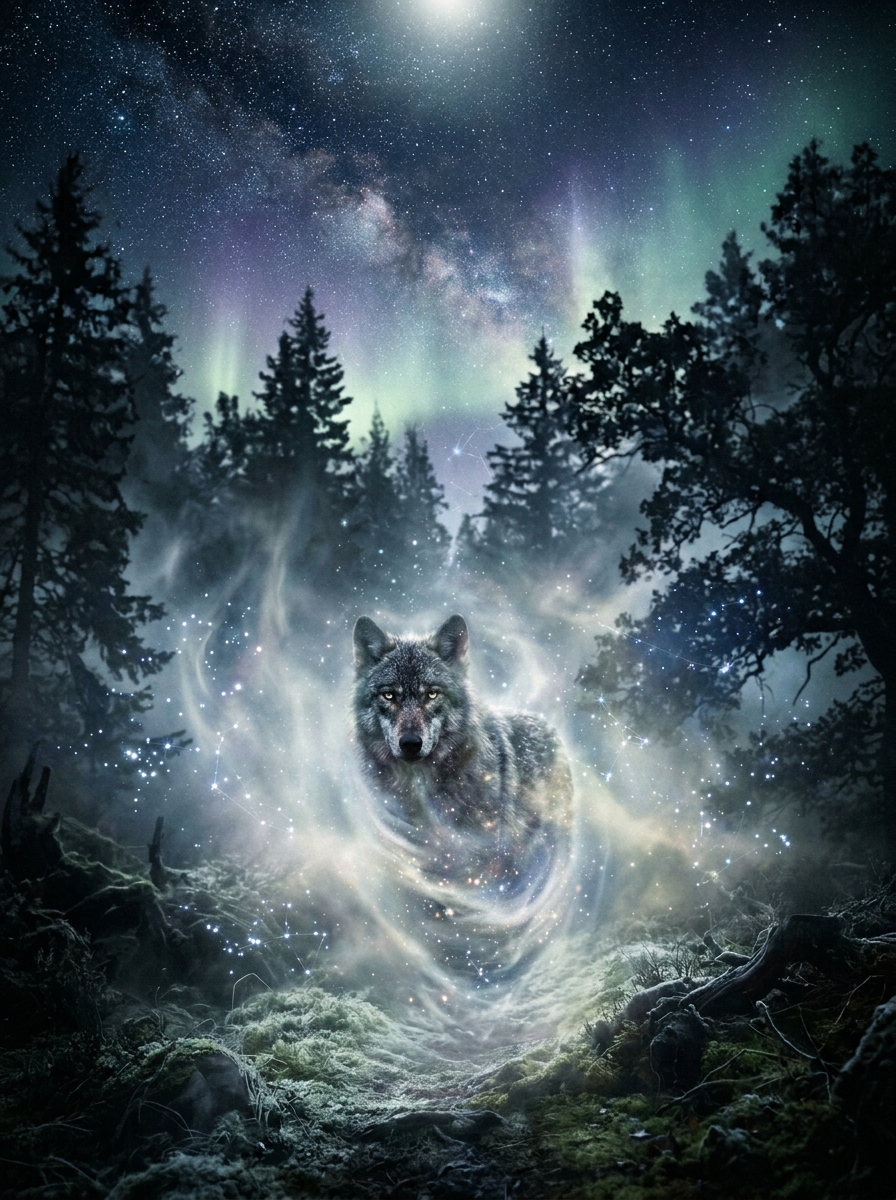
A dream about a wolf usually points to instinct under pressure: something wild in you is asking to be recognized, protected, feared, or disciplined. The animal rarely arrives as a random decoration. It tends to show up when the dreamer is negotiating appetite, boundaries, loyalty, solitude, danger, or a hard truth that cannot be civilized away. In that sense, the wolf is both mirror and warning: it reflects what has gone feral in waking life, and it also guards what still has teeth.
The Core Dynamic: Instinct Demanding Admission
The most important thing to understand about a wolf dream is that it is not one fixed symbol. A wolf can mean predator, protector, scapegoat, or kin. The emotional tone of the dream often matters more than the animal itself. If the wolf feels menacing, the psyche may be staging a confrontation with instinct that has become overwhelming, unintegrated, or associated with past injury. If the wolf feels calm, noble, or watchful, the dream may be restoring a part of the self that knows how to survive without apology.
A chasing or attacking wolf often corresponds to something in waking life that feels impossible to outrun: anger, desire, shame, grief, addiction, or a person whose presence has made your nervous system bristle. Psychological reading matters here. Dreams do not usually deliver external prophecy first; they dramatize inner reality. A wolf at your heels may mean you have been suppressing an instinct so long that it now appears as threat. The psyche has a way of turning what is denied into what is feared.
A pack can intensify that message. One wolf is personal; a pack is social pressure, collective anxiety, or a family dynamic with teeth. If you dream of being surrounded, the issue may not be one enemy but a whole ecology of forces—obligation, gossip, judgment, memory, habit. The dream is not asking whether you are “good enough.” It is asking whether you can survive your current reality without abandoning your own animal intelligence.
Psychological Roots: Shadow, Survival, and Transition
From a Jungian angle, the wolf often belongs to the shadow: the denied, disowned, or underdeveloped parts of the personality. That does not mean the wolf is merely bad. Shadow material is frequently vital. It may contain anger that protects dignity, desire that restores aliveness, or assertiveness that was never allowed to mature. The dream figures the shadow in animal form because instinct is the first thing civilized people learn to mistrust.
If you dream of a wolf repeatedly, ask what quality you have been refusing to claim. Is it aggression, vigilance, independence, sexuality, loyalty, suspicion, or the ability to leave? The wolf may be the psyche’s way of admitting that your so-called flaw is also a survival skill. Sometimes what we call “too much” is merely a capacity that has lacked right proportion.
This is where the dream becomes psychologically useful. It does not ask you to romanticize the wolf or become feral. It asks you to metabolize instinct. You are not meant to be ruled by hunger, fear, or pack pressure. But neither are you meant to pretend you have no hunger, fear, or pack instincts at all. The dream offers a third option: conscious relationship. If you want a broader symbolic framework for that work, our sign-and-symbol essays can help orient the method.
A wolf dream often surfaces during transitions that strain identity: breakup, job change, grief, relocation, burnout, pregnancy, or any period in which the old self no longer fits but the new one is not stable yet. The wolf marks liminal space. It is comfortable in the borderlands where certainty breaks down. In that setting, the animal can function as an internal audit. What are you still calling “safe” that is actually deadening? What are you calling “dangerous” that is actually alive? The wolf does not answer politely. It asks for calibration.
The Dream’s Action Grammar
The action of the dream gives the symbol its grammar. A wolf that appears once and vanishes is not the same as one that stalks, bites, leads, or transforms. The event matters because it locates the psychic function of the symbol.
If the wolf chases you, the dream often centers on avoidance. Something is demanding acknowledgment, and your psyche has chosen a hunter-prey structure to make that impossible to ignore. A bite has even sharper meaning: it suggests contact, not just fear of contact. A bite can symbolize an injury that feels personal, a harsh truth that has gotten under the skin, or a conflict that can no longer remain abstract. If you are cornered, the dream can reveal the collapse of your usual defenses. People often dream of wolves when they are overusing politeness, rationalization, or spiritual bypassing. The dream tears holes in those strategies. It says: the matter is alive, and it wants your attention now.
A wolf that leads you through a dark place, stands at a gate, or guards a passage has a different charge. The animal becomes psychopompic—not in the sense of death alone, but in the sense of escorting you across a psychological threshold. You may be entering a new identity, a difficult truth, or a deeper intimacy with your own power. The wolf does not make the transition easy; it makes it possible. Dreams like this often arrive when a person is learning to trust a more exacting form of self-respect. Not the brittle kind that performs confidence, but the kind that can say no, can walk alone, can endure silence. If the wolf refuses entry or blocks the way, it may be guarding a part of you that is not ready to be diluted.
Variations That Shift the Meaning
Not every wolf dream speaks in the same register. Color, number, setting, and transformation all alter the symbol’s meaning. The wolf is a shape-shifter in dream language precisely because it is so close to the border between nature and culture.
A white wolf often carries the feel of clarity, solitude, spiritual austerity, or a purified instinct that has not been domesticated but has become lucid. It can be a guide image, especially if the dream feels quiet rather than dramatic. A black wolf, by contrast, may emphasize shadow material: grief, taboo desire, rage, or the fear of what you cannot easily name. The black wolf is not evil by default; it often signals what has been exiled to the margins of awareness. A wounded wolf can be especially moving. Here the dream may be showing instinct in pain. The creature that should protect is itself hurt. This often reflects a person whose survival strategies were once necessary but are now damaged by overuse. You may be identifying with an inner part that is exhausted from guarding the same wound over and over. The dream asks not only what threatens you, but what in you has been injured while protecting the rest.
A solitary wolf can represent self-reliance, exile, or the cost of separateness. Depending on the dream, that solitude may be noble or lonely. A lone wolf in a moonlit landscape may symbolize chosen independence; a lone wolf in a house may suggest alienation from family, memory, or feeling. A pack of wolves shifts the emphasis toward group instinct. Packs can signify communal belonging, but also social contagion, mob feeling, or the part of life that operates by unspoken rules. If the dream places a wolf in a bedroom, kitchen, school, or office, the symbol may be showing that instinct has invaded a human system that pretends to be orderly. The dream is often funniest, and cruelest, when it does this. It puts the animal exactly where civilized habits fail.
Working with the Dream: What to Ask
The best reading of a dream about a wolf holds three layers at once: the literal dream event, the emotional tone, and your current waking situation. No single dictionary definition can replace that. A wolf in a dream after betrayal will not mean the same thing as a wolf in a dream after a major creative breakthrough.
Start with the feeling the animal left behind. Fear suggests confrontation. Awe suggests guidance. Grief suggests injury or loss. Relief suggests protection or recognition. Then ask what in your life is presently operating by instinct rather than explanation. That may be a relationship, a workplace, a family system, or a private desire you have not admitted aloud. The wolf usually enters where language has failed to keep pace with experience.
The final question is whether the dream is asking for containment or courage. Sometimes the answer is to set firmer boundaries so the wolf does not devour everything in sight. Sometimes the answer is to stop calling your own power a threat. In either case, the animal is not random. It is the psyche speaking in a dialect older than politeness, and more exact. For more on how we read such symbols, about Aurora Arcana explains the interpretive lens behind our work.
Comments
Loading comments…