Dream About a Cave: Hidden Fear, Inner Depth, and the Return to the Self
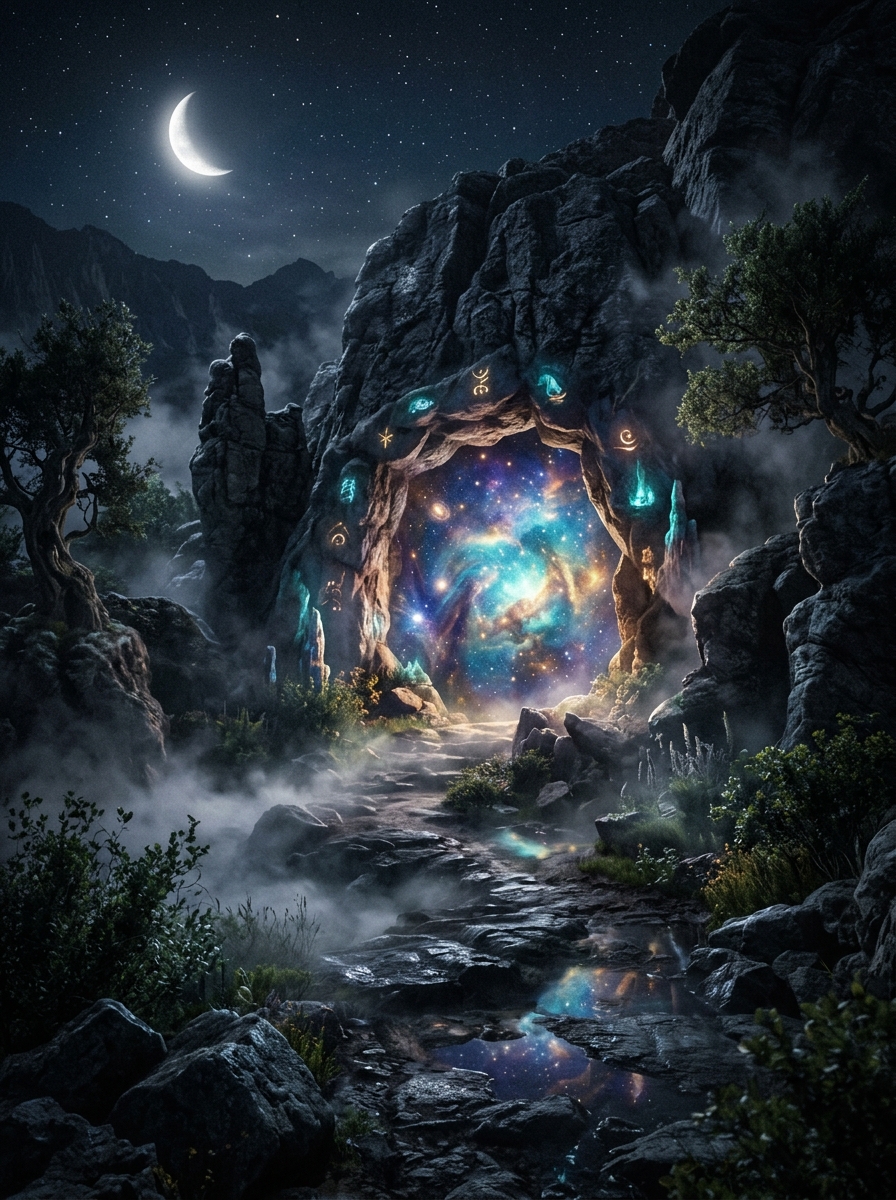
The Cave Dream as an Inner Chamber
A dream about a cave is never about darkness for its own sake. It is about what has been hidden, protected, or avoided—material the waking self has pushed underground until it becomes an interior landscape. The cave is an enclosure, and the psyche uses enclosures when something needs containment: a buried feeling, a memory too raw for daylight, a wish you have not yet named, or a part of yourself that went into hiding for survival. This dream often arrives when you are withdrawing, grieving, incubating a change, or approaching a truth you can only face in partial light.
In symbolic terms, the cave is the unconscious as a protected space where material accumulates before it becomes usable. In psychological language, it is a retreat from noise into depth—not necessarily depression, but a corrective need for consolidation. The central question is not “What does a cave mean?” but “What kind of cave was it?” A bright cave, a collapsing cave, one with water, one with an animal—each changes the message. As with any dream symbol, the specific details matter more than a generic definition; our editorial approach to dream interpretation treats every image as a psychological event, not a fixed dictionary entry.
The Architecture of the Dream
The most useful reading comes from the cave’s specific contours: its temperature, texture, light, and exits. These features tell you whether the unconscious is inviting exploration or issuing a warning.
Light and Water
A cave with light—whether from an opening, a fire, or a self-illuminating glow—often indicates a hidden truth that is becoming visible without being fully exposed. This is not clarity in daylight; it is insight emerging from inside the mystery. Such a dream can mark the beginning of psychological self-recognition, a point where you sense something true about yourself but cannot yet articulate it.
Water in a cave deepens the emotional register. A pool, stream, or underground spring points to feeling that is ancient, private, and perhaps replenishing. Water inside the cave suggests access to grief, intuition, sensuality, or memory that has been sealed off but not destroyed. Clear water means the material is emotionally potent yet usable; murky or rising water means the feeling life may be too crowded to ignore. This image can appear when you are ready to touch something you have held at arm’s length.
Chambers and Collapse
Multiple chambers imply layered meanings. One room may represent a known issue; the next, a deeper one you have not yet acknowledged. The dream mirrors the structure of self-discovery: one threshold leads to another. If the cave has an opening or visible exit, the psyche is accessible—you are not sealed in, and the unconscious is inviting entry without permanent loss of orientation.
A collapsing cave is more urgent. It often points to a structure of avoidance or self-protection that can no longer hold. Something in waking life may be eroding your ability to keep a matter underground. Collapse can feel terrifying, but it is not always disaster; sometimes it is the psyche refusing to maintain a false enclosure. If the cave has no exit, the dream usually emphasizes entrapment—being overwhelmed by what has been repressed. If you find an exit, you are moving through the hidden material rather than living inside it.
Common Cave Scenarios and Their Signatures
Different cave dreams carry distinct emotional signatures, and those signatures matter more than a one-size-fits-all meaning. The cave can be sanctuary, tomb, doorway, or birthplace depending on what happens inside it.
Lost in the Cave
Being lost in a cave reflects disorientation during an inward process. You may be in therapy, mourning, spiritual transition, or a life phase where old maps no longer work. The dream does not mean you are failing; it means you have entered territory that cannot be navigated by habit. If panic dominates, the issue is your relationship to not-knowing. The psyche asks you to tolerate temporary uncertainty without forcing premature conclusions. This image can be especially intense for highly controlled personalities.
Deliberate Exploration
If you explore the cave with curiosity, the dream is usually constructive. The mind is testing your capacity to descend without self-betrayal. This indicates readiness for shadow work, honest reflection, or a deeper encounter with your own motives. Here the cave is not a trap but a curriculum. If curiosity is calm, the unconscious trusts your timing; if it is mixed with dread, insight is available but costly. Deliberate exploration implies agency—a different symbol from accidental entrapment.
What Lies Inside
Treasure in a cave points to a hidden capacity you have not claimed. What is buried may be valuable precisely because it is buried. Bones signal what is ancient, stripped bare, and no longer living in its old form—ancestry, memory, mortality, or truth reduced to essentials. An animal (bear, snake, bat) adds instinct. The psyche presents raw life force in its native habitat. The question is whether you fear it, feed it, or recognize yourself in it. These contents are not random; they are specific to your personal history and current inner life.
The Mythic Undercurrent: Descent Before Renewal
On a spiritual level, a cave dream can mark a descent mystery: the soul entering darkness not to be punished, but to be transformed. Many traditions use subterranean imagery for initiation because what is essential is often encountered away from the surface world. The cave is where ordinary identity is stripped down—silence, fasting from distraction, the shedding of borrowed meanings.
This is where the dream becomes mythic without becoming vague. A cave is not just “the unknown.” It is the place where the old self loses its daylight certainty. That loss can feel like death, but in symbolic terms it is often a necessary unmaking. If the dream has a sacred quality—echo, stillness, reverence, or the sense that something larger is present—the cave may be functioning as an initiation chamber rather than a warning sign. The psyche knows that life is not only ascent; it also requires descent, retrieval, and return. This perspective aligns with how we understand symbolic transformation across our dream and tarot work.
Making the Dream Useful
A cave dream becomes useful when you translate it into your current life instead of treating it as a prediction. Ask what is being hidden, what is being protected, and what you are approaching but not yet naming. The best reading is the one that connects the cave to a concrete circumstance: a relationship you have outgrown, a grief you have delayed, a talent you have neglected, a boundary you have not defended.
If the dream felt safe, honor the need for inwardness. If it felt frightening, look for where your life has become too crowded, too unspoken, or too emotionally sealed. If it felt sacred, treat it as an invitation to slow down and listen. The cave is rarely about literal danger. More often, it is about the shape of your inner life when it is no longer being edited for display. Something deep in you has gone underground, and it is asking to be met where it lives.
Related
- Dream About Drowning: What the Water Is Trying to Say
- Dream About a Cemetery: What the Dead Landscape Is Trying to Tell You
- Dream About a Forest: Meaning, Psychology, and Symbolic Variations
- Dream About Driving Off a Cliff: When Control Ends at the Edge
- Dream About a Mountain: Meaning, Psychology, and Symbolic Variations
Comments
Loading comments…