The Evolution of Virtual Tarot: Digital Divination for the Modern Mind
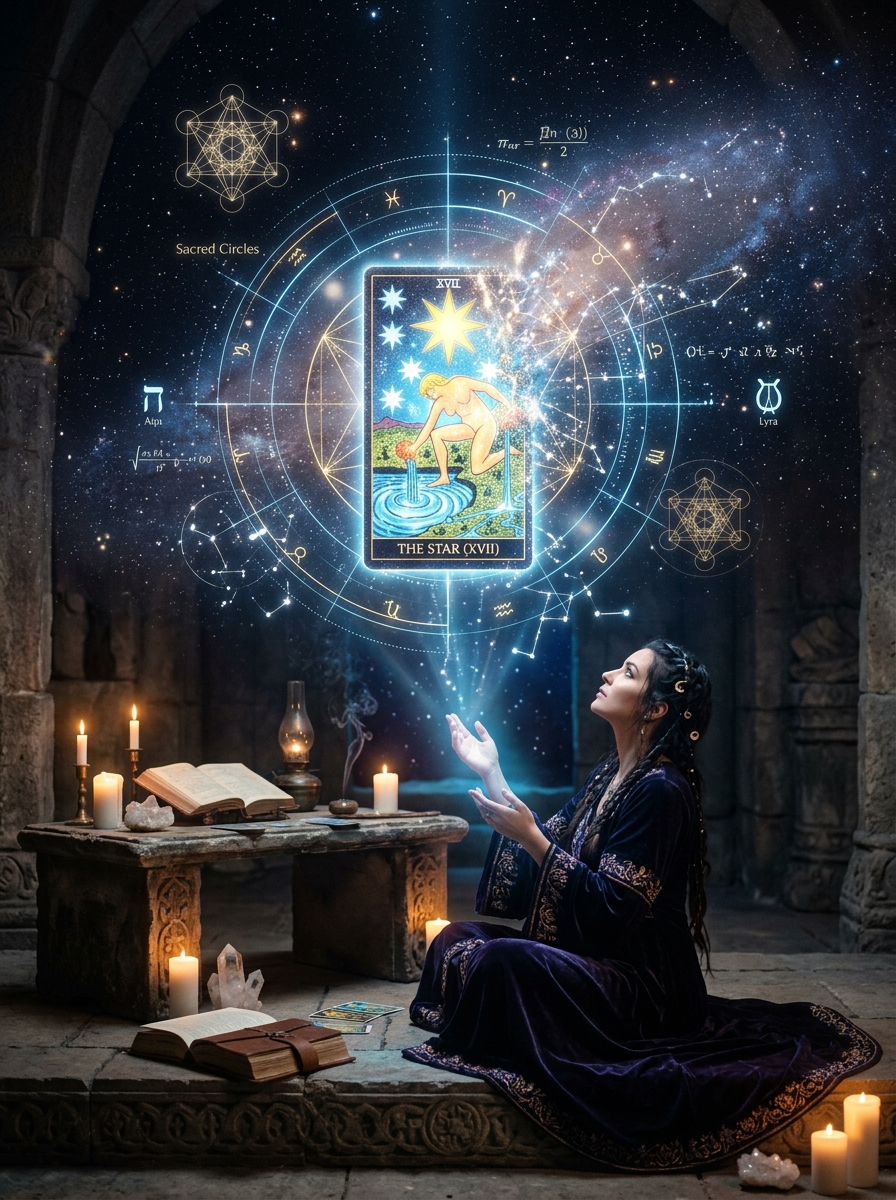
The Journey from Paper to Pixels: A Brief History of Cartomancy
The history of tarot is a remarkable journey of cultural and intellectual metamorphosis, tracing a path from aristocratic diversion to mystical mapping, and finally to digital code. To understand the modern virtual tarot reader, one must first appreciate how these symbolic images transitioned across centuries, adapting to the technological, philosophical, and psychological frameworks of each successive era. Tarot did not begin as an occult oracle; its origins lie in the fifteenth century as tarocchi, a complex, trick-taking card game played by the nobility of Northern Italy. These early hand-painted decks, such as the Visconti-Sforza, were luxury items celebrating familial prestige, mythological motifs, and Renaissance virtues. They were tools of play, aesthetic appreciation, and social display, rather than instruments of divination.
The shift from parlor game to esoteric system began in late eighteenth-century France. Scholars and mystics like Antoine Court de Gébelin looked at the card imagery and envisioned a lost Egyptian repository of ancient wisdom. Shortly thereafter, Jean-Baptiste Alliette, writing under the pseudonym Etteilla, published the first dedicated guides to tarot divination and designed a deck specifically formatted for cartomantic readings. Etteilla established the foundational practice of mapping tarot to astrology, the classical elements, and personal fortune-telling, transforming the cards into an interactive cosmic mirror.
The Esoteric Origins of Tarot Cards
As the nineteenth century turned into the twentieth, the Hermetic Order of the Golden Dawn and its offshoots deeply codified the tarot into a complex system of Western esotericism. Key thinkers like Eliphas Lévi had already bridged tarot symbols with the Hebrew alphabet and the Kabbalistic Tree of Life. In 1909, Arthur Edward Waite, a prominent occultist, worked alongside artist Pamela Colman Smith to create the Rider-Waite-Smith (RWS) deck. By illustrating every card in the Minor Arcana with rich, narrative scenes rather than simple pip marks, Smith revolutionized the medium, making the symbols visually accessible and emotionally evocative to the general public. Concurrently, Aleister Crowley collaborated with Lady Frieda Harris to produce the Thoth Tarot, incorporating complex astrological, alchemical, and Kabbalistic correspondences that challenged readers to view the cards not as passive indicators of luck, but as active forces within the human psyche.
These historical developments established tarot as a highly adaptable symbolic language. Just as the printing press enabled the mass distribution of the RWS deck, the rise of personal computing in the late twentieth century laid the groundwork for digital transformation.
The Digital Shift: Screens and Algorithms
In the late 1980s and 1990s, early software developers began translating card meanings into basic computerized programs. Floppy disks contained simple databases of tarot interpretations, allowing users to press a key and receive a simulated card pull on a monochrome screen. The birth of the consumer internet accelerated this trend, giving rise to early web portals where basic JavaScript random number generators selected card images and displayed static text.
Today, the landscape has evolved into sophisticated mobile applications and conversational artificial intelligence systems. The modern seeker no longer merely clicks a button to receive a generic paragraph; they interact with dynamic platforms that simulate the tactile experience of shuffling, select spreads tailored to complex inquiries, and use natural language processing to synthesize archetypal meanings with the unique contexts of their lives.
Understanding Virtual Tarot: How Digital Readers Work
At first glance, a virtual tarot reading can feel mystical, almost as if an unseen hand is selecting the cards behind the glass screen. To engage with these tools constructively, however, we must demystify the technology. Digital tarot readers operate on two primary technological tiers: basic algorithmic selectors and advanced conversational artificial intelligence systems.
The simplest digital readers rely on Pseudorandom Number Generators (PRNGs). A PRNG is a mathematical algorithm that uses a starting value, known as a seed, to produce a sequence of numbers that approximates randomness. In a digital tarot application, each of the seventy-eight cards in a standard deck is assigned a unique numerical identifier. When a user taps the screen to "shuffle" and "draw," the program runs the PRNG to select a set of identifiers. The application then retrieves the corresponding images and text blocks from a static database, displaying them in the designated spread positions. While this system lacks consciousness, proponents of digital cartomancy often align it with Carl Jung’s concept of synchronicity—the idea that meaningful coincidences can occur without direct physical causation. From this perspective, the mathematical randomness of the computer algorithm serves as a neutral canvas upon which the subconscious mind projects meaning.
The Mechanics of Random Number Generation
[User Interface: Draw Request]
           │
           ▼
[Pseudorandom Number Generator (PRNG)] ──(Seed Value)
           │
           ▼
[Card ID Selection (e.g., ID 13 = Death)]
           │
           ▼
[Static Database Lookup]
           │
           ▼
[Render Card Image & Fixed Text to Screen]
Under the hood of a basic app, the seed value is often derived from a rapidly shifting variable, such as the exact millisecond of the user's system clock when they touch the screen. This ensures that no two draws are identical under normal circumstances. However, the limitation of this traditional model is its rigidity. The user receives the exact same description of the "Three of Swords" whether they are grieving a broken relationship, facing a career transition, or simply curious about the day ahead. The burden of synthesis falls entirely on the user, who must manually bridge the gap between their specific situation and the generic database entry.
Large Language Models and Contextual Interpretations
The emerging frontier of virtual tarot utilizes Large Language Models (LLMs) and conversational AI to bridge this gap. Instead of pulling isolated, static text blocks, these advanced systems analyze the user's natural language input alongside the drawn cards. By understanding the relational links between symbols, the AI can construct a cohesive narrative. For example, if a user inputs a query about feeling stagnant in their creative career and draws the Page of Wands reversed followed by the Eight of Pentacles, a conversational AI does not simply read the definitions of those cards sequentially. Instead, it synthesizes the archetypes: it interprets the reversed Page as an indicator of blocked creative inspiration or false starts, and links it directly to the Eight of Pentacles as a suggestion to focus on repetitive skill-building and daily craft rather than waiting for a lightning bolt of genius.
This contextual synthesis mimics the conversational flow of a live human reading. The AI acts as a semantic engine, translating the symbolic grammar of the tarot into a personalized dialogue. However, it is vital to recognize that the AI is not experiencing intuition or spiritual connection; it is processing patterns in human language and applying them to a structured system of symbols. The magic, if it exists, remains in the cognitive spark that occurs when the user reads the generated text and recognizes an internal truth.
The Psychology of the Screen: Jungian Archetypes and Virtual Reflection
To understand why virtual tarot readings can feel deeply resonant, we must look to psychology rather than fortune-telling. The Swiss psychiatrist Carl Gustav Jung provided the intellectual framework that modern secular tarot practitioners rely upon: the concept of archetypes and the collective unconscious. Jung posited that humanity shares a layer of unconscious mind containing universal symbols, themes, and motifs that recur across cultures and eras. The tarot deck is, in essence, a visual catalog of these Jungian archetypes.
The Major Arcana maps out the "Fool’s Journey," a symbolic representation of the individuation process—the psychological journey toward wholeness. The Emperor represents the archetype of structure, authority, and the organizing principle of the psyche; the High Priestess embodies the intuitive, receptive, and hidden aspects of the unconscious; the Tower represents the sudden, destabilizing collapse of outworn ego structures. When we engage with these images, we are not looking at external fortunes; we are looking at externalized projections of our internal mental states.
Carl Jung and the Language of Archetypes
Esoteric authors and psychologists alike have expanded on this foundation. Liz Greene, a prominent Jungian analyst and astrologer, has long argued that symbolic systems like tarot and astrology serve as highly effective languages for mapping the dynamics of the subconscious. Similarly, Steven Forrest, a pioneer in evolutionary astrology, emphasizes that symbolic tools are best used to understand the evolutionary path of the soul and the choices available to an individual, rather than predicting deterministic events.
When a user sits before a screen and initiates a virtual tarot reading, the digital interface acts as a contemporary Rorschach inkblot test. The visual symbols of the cards, combined with the descriptive text, prompt the brain to make associations. If a user draws the Ten of Wands (depicting a figure carrying a heavy burden of sticks toward a city) while contemplating their work-life balance, the image acts as a psychological catalyst. It bypasses the intellectual defenses of the ego, forcing the user to confront their feelings of exhaustion and overcommitment.
The Digital Screen as an Interactive Mirror
The digital format offers a unique psychological environment for this self-reflection. Unlike a face-to-face reading with a human practitioner, a virtual reading is entirely private and self-paced. There is no social pressure to respond in a certain way, no fear of judgment, and no subconscious desire to please the reader. The screen becomes a private sanctuary, a neutral mirror.
This setting is highly conducive to what Jung called "active imagination"—a technique where one consciously enters into a dialogue with unconscious elements, using creative symbols as the medium. By reflecting on a digital layout in a quiet space, users can journal their reactions, explore their resistances to specific cards, and integrate split-off aspects of their experience. The virtual tarot reader does not give answers; it provides a structured canvas that helps the user organize their own chaotic thoughts into a coherent narrative.
Ethical Boundaries and Red Flags: Spotting Safe vs. Predatory Virtual Readings
As virtual tarot tools proliferate across the internet, the line between constructive self-reflection tools and predatory scams has become increasingly blurred. Engaging with digital divination safely requires a critical eye and an understanding of the ethical boundaries that must govern these platforms. Because digital readings lack the real-time modulation of a human counselor, the potential for psychological harm is real, particularly when platforms exploit vulnerability.
A safe, ethical virtual tarot tool operates under the principle of user empowerment. The language should be open, archetypal, and advisory. It should present the cards as options, perspectives, or psychological currents rather than immutable decrees of fate. For example, drawing the Death card should be framed as an invitation to examine endings, transitions, and the necessity of letting go of the old to make room for the new—never as a literal prediction of physical demise or disaster. Ethical platforms also maintain clear boundaries regarding their scope of practice: they should feature prominent disclaimers explaining that their readings are for entertainment or self-reflection purposes and are not substitutes for professional medical, mental health, legal, or financial counseling.
Spotting Predatory Practices in Digital Divination
Conversely, predatory virtual platforms design their interfaces to exploit user anxiety, grief, and uncertainty for financial gain. Users must remain vigilant against several critical red flags:
- Alarmist and Deterministic Language: Beware of apps or websites that use sensationalized language to predict specific catastrophes, health crises, or relationship ruptures. If a reading leaves you feeling paralyzed with fear rather than reflective, the platform is likely designed to trigger emotional dependence.
- Paid Curse Removals and Spiritual Intervention: This is the most common scam in online divination. A predatory tool or an associated automated prompt might inform you that your chart or card pull indicates a dark cloud, a generational curse, or negative energy sent by an enemy. The platform will then offer to perform a ritual, light a candle, or remove the curse—for a fee. Genuine spiritual tools and ethical readers never demand money to alter your fate or remove negative spiritual conditions.
- Guaranteed Love Bindings and Reconciliations: Avoid services that promise to bring back an ex-partner, force someone to love you, or guarantee specific romantic outcomes. These claims violate the fundamental ethical tenet of respecting free will and are designed to exploit heartbreak.
- Aggressive Subscription Traps: Many free tarot apps hide predatory monetization models behind initial trial periods. They may require your credit card info for a "free reading" and then auto-enroll you in expensive weekly subscriptions that are intentionally difficult to cancel.
By maintaining a rational, grounded approach and treating virtual tarot as a symbolic brainstorming partner rather than an absolute authority, you can leverage its benefits while remaining safe from digital opportunists.
Virtual vs. Live Human Readings: When to Use Each
For centuries, tarot was an intimately interpersonal experience, a dialogue shared between two people in a candlelit room or across a table. The advent of virtual tarot has not rendered live human readings obsolete; rather, it has created two distinct modalities, each serving different needs. Understanding when to consult a digital algorithm and when to seek a human practitioner is key to integration.
| Feature / Dimension | Virtual Tarot Reading (AI & Algorithmic) | Live Human Tarot Reading (Professional Practitioner) |
|---|---|---|
| Availability | Instant, 24/7 access from any location | Requires scheduling, wait times, and travel or video call setup |
| Cost | Extremely low cost, often free or low-cost subscription | High variable cost ($50 to $200+ per session) |
| Privacy & Shame | Total anonymity; ideal for embarrassing or sensitive queries | Requires vulnerability; potential for self-consciousness |
| Contextual Nuance | Limited to entered text; cannot read body language or micro-expressions | High; reads emotional state, tone of voice, and energy |
| Empathy & Listening | Simulated; lacks genuine emotional capacity or shared lived experience | Deep active listening; provides validation and emotional support |
| Customization | Standard templates and automated spreads | Bespoke spreads adjusted in real-time based on the flow of dialogue |
Empathy, Intuition, and the Human Connection
A virtual tarot reader excels at speed, accessibility, and low-pressure exploration. If you wake up at two in the morning with an anxious thought and need a quick framework to help process your feelings, a digital tool is invaluable. It is a cost-effective way to practice daily reflection, learn the traditional card meanings, and maintain a digital journal of your spreads over time.
However, a digital tool cannot replicate the therapeutic alliance of a human session. A skilled human reader does not merely repeat card definitions; they listen actively, observe your physical reactions, adjust their interpretation based on your tone of voice, and hold space for your grief, joy, or confusion. The human element introduces genuine empathy, life experience, and intuitive synthesis that an LLM or database cannot feel. If you are navigating a major life crisis, processing complex grief, or seeking deep spiritual counseling, the investment in a professional human practitioner is irreplaceable. The human reader acts as a guide through the symbolic landscape, helping you unpack layers of meaning that a computer program would miss.
Protecting Your Data: Privacy Best Practices in Online Divination
While users easily recognize the spiritual and psychological dimensions of virtual tarot, they frequently overlook its technical implications. In the digital age, divination platforms collect vast amounts of sensitive personal data. Every time you enter a detailed question about your marriage, your financial anxieties, or your secret career ambitions into a virtual tarot search bar or AI chat, you are sending highly intimate information across the internet. Protecting your digital footprint is essential when navigating these platforms.
Virtual tarot applications and websites generate revenue not just through subscriptions, but also through data collection. The data at risk includes:
- Personally Identifiable Information (PII): Names, email addresses, phone numbers, and payment details.
- Birth Data: Exact birth times, dates, and locations, which are frequently requested for astrological integrations. This data is highly unique and can be used to construct detailed identity profiles.
- Query and Chat Histories: The raw text of your questions. Because tarot queries are often deeply personal, this text contains details about your mental state, relationships, workplace dynamics, and vulnerabilities.
Safe Practices for Personal Data and Prompt Input
To enjoy the benefits of virtual tarot without compromising your privacy, implement these practices:
- Review the Privacy Policy: Before downloading a tarot app or using a web-based reader, spend five minutes reading their privacy policy. Check if they sell user data to third-party advertisers, how long they store chat histories, and whether they encrypt your data.
- Sanitize Your Inputs: When typing your questions into an AI tarot reader, avoid using real names, specific company names, or highly identifying details. Instead of writing, "Will my boss Sarah fire me from my accounting job at Acme Corp?" write, "What energies should I focus on regarding a potential layoff at my current corporate job?" This keeps your query anonymous while preserving the symbolic utility of the reading.
- Opt Out of Model Training: If using an AI-based tarot platform, look for settings that allow you to opt out of having your chat history used to train their language models. This prevents your personal reflections from being absorbed into the public database.
- Use Privacy-Focused Web Browsers and Accounts: If possible, access web-based tarot readers in private browsing modes with tracking blockers active. Avoid signing in with your primary social media accounts (such as Facebook or Google), as this links your private divination history to your broader public advertising profile.
By taking these security steps, you ensure that your digital sanctuary remains truly private, allowing you to explore the depths of your mind without exposing your personal life to corporate tracking.
Technical Architecture of Modern AI Tarot Systems
To fully grasp the landscape, one must analyze the system architecture that powers modern conversational tarot tools. When a client application connects to an advanced AI tarot server, the infrastructure is designed to handle multiple streams of logic: natural language understanding, symbolic database querying, and semantic synthesis.
+--------------------------------------------------------------+
|                        Client Device                         |
|  (User inputs query & triggers animated card shuffle/draw)   |
+--------------------------------------------------------------+
                               │
                               ▼ (Secure HTTPS Request)
+--------------------------------------------------------------+
|                     API Gateway & Router                     |
|         (Validates request, enforces rate limits)            |
+--------------------------------------------------------------+
                               │
                               ▼
+--------------------------------------------------------------+
|                    Orchestration Service                     |
+--------------------------------------------------------------+
        │                                              │
        ▼ (Query Embeddings)                           ▼ (Card IDs Draw)
+-------------------------------+              +-------------------------------+
|    Semantic Vector Database   |              |    Occult Symbol Database     |
| (Retrieves historical texts,  |              |  (Stores card artwork links,  |
|   esoteric correspondences)   |              |   traditional core meanings)  |
+-------------------------------+              +-------------------------------+
        │                                              │
        └──────────────────────┬───────────────────────┘
                               │
                               ▼ (Context-Rich Prompt Payload)
+--------------------------------------------------------------+
|                     Large Language Model                     |
|     (Transforms raw symbols and context into readable text)  |
+--------------------------------------------------------------+
                               │
                               ▼ (JSON Response Payload)
+--------------------------------------------------------------+
|                        Sanitization                          |
|         (Removes medical, financial, or predictive PII)      |
+--------------------------------------------------------------+
                               │
                               ▼
+--------------------------------------------------------------+
|                      Client UI Render                        |
|       (Renders cards, plays sound, presents reading text)   |
+--------------------------------------------------------------+
This multi-tiered approach ensures that the interpretation generated by the AI is grounded in occult theory rather than being a random hallucination. By querying a structured Occult Symbol Database first, the orchestration engine forces the LLM to work within the specific boundaries of the RWS or Thoth systems. This preserves the integrity of the lineage, preventing the AI from combining unrelated symbolic systems or inventing meanings that have no basis in historical cartomancy.
Deeper Jungian Analysis of the Major Arcana
When we examine the Major Arcana through a Jungian lens, we see a complete map of human psychological integration. Carl Jung emphasized that the images we meet in dreams and myths are not arbitrary; they are the vocabulary of our deep psyche. The virtual tarot reader, by presenting these images dynamically, invites the seeker to participate in a structured dialogue with these internal forces.
The Stages of Individuation in the Cards
- The Departure (Cards 0 to 7): This stage represents the ego's establishment in the material world. The Fool (0) represents the initial, undifferentiated state of potential—the unconscious child. The Magician (1) and High Priestess (2) represent the fundamental dualities of conscious action and unconscious reflection. The Empress (3) and Emperor (4) stand as the archetypal parents, providing nurturing and structure. The Hierophant (5) represents cultural socialization, while the Lovers (6) introduce choice and the projection of the anima or animus. Finally, the Chariot (7) represents the temporary triumph of the ego as it seeks to conquer the outer world.
- The Descent (Cards 8 to 14): Here, the seeker is forced to look inward, confronting the shadow and the deeper layers of the collective unconscious. Strength (8) demands internal integration rather than brute force. The Hermit (9) represents withdrawal from the social world to seek inner light. The Wheel of Fortune (10) forces the ego to accept the transience of life, leading to the ethical balance of Justice (11). This culminates in the Hanged Man (12), representing surrender and ego death, followed directly by Death (13)—the dissolution of old psychological patterns—and Temperance (14), which signifies the alchemical integration of opposites.
- The Return (Cards 15 to 21): The final stage represents the synthesis and stabilization of the self. The Devil (15) forces the seeker to confront their shadow, attachments, and projections. The Tower (16) is the explosive collapse of remaining false structures, clearing the way for the healing, cosmic light of the Star (17). The Moon (18) represents the final, dangerous passage through the depths of illusion and primal fear, leading to the clarity and vitality of the Sun (19). Judgment (20) represents the calling to a higher, integrated state of consciousness, culminating in the World (21)—the realization of the Self and the completion of the individuation cycle.
By understanding these stages, the digital seeker can look at a card draw not as an isolated prediction, but as a marker of where they currently stand in their psychological development.
Frequently Asked Questions
How does a virtual tarot reading compare to a physical card pull?
A virtual tarot reading uses computer algorithms or artificial intelligence to select cards, whereas a physical reading involves shuffling a cardboard deck. Psychologically, both methods yield valuable results because they rely on the user's mind to interpret the symbols and project meaning onto their current life circumstances. While some practitioners prefer the tactile sensation and physical ritual of paper cards, virtual readings provide identical archetypal symbols, making them highly effective tools for daily reflection, journaling, and quick symbolic brainstorming.
Can digital algorithms replicate the concept of synchronicity?
Carl Jung defined synchronicity as a meaningful coincidence between an inner psychological state and an outer physical event. In a physical reading, this is often conceptualized as the hand selecting the exact card needed. In a digital reading, the mathematical seed of the random number generator is determined by the precise millisecond you tap your screen. For many seekers, this mechanical randomness operates under the same laws of synchronicity—the moment you choose to interact with the screen aligns with the output generated, creating a meaningful mirror for your current state of mind.
Is it safe to share my personal struggles with an AI tarot reader?
It is safe from a psychological standpoint, provided you treat the AI as a sounding board rather than a human therapist or oracle. However, from a data privacy standpoint, you must exercise caution. Never type highly identifying details, real names, or sensitive financial information into a digital tarot system. Always assume the text you input may be stored on external servers or used for machine learning training. Keep your queries generalized and focused on the symbolic archetypes of your situation.
How can I tell if an online tarot service is a scam?
The clearest sign of an online tarot scam is any demand for money to solve a spiritual problem, such as removing a curse, lifting bad luck, performing a ritual, or casting a love spell. Reputable digital platforms sell access to their software, subscriptions, or educational content; they never use scare tactics, alarmist predictions of impending disaster, or promises of guaranteed future events to manipulate you into making panic-driven purchases. If an app uses high-pressure sales tactics or makes you feel afraid, uninstall it immediately.
What is the best way to use virtual tarot for self-improvement?
The most effective way to use virtual tarot is as a tool for journaling and daily mindfulness. Instead of asking yes-or-no questions about the future, ask open-ended questions that prompt self-reflection, such as: "What perspective am I ignoring in this situation?" or "What qualities do I need to cultivate to handle this challenge?" Read the interpretations through the lens of Jungian archetypes, and write down how the symbols relate to your current feelings. This practice builds self-awareness, encourages creative problem-solving, and helps you access your own inner wisdom.
Comments
Loading comments…