The Ultimate Guide to Yes/No Tarot: Single-Card Spreads and Energetic Polarities
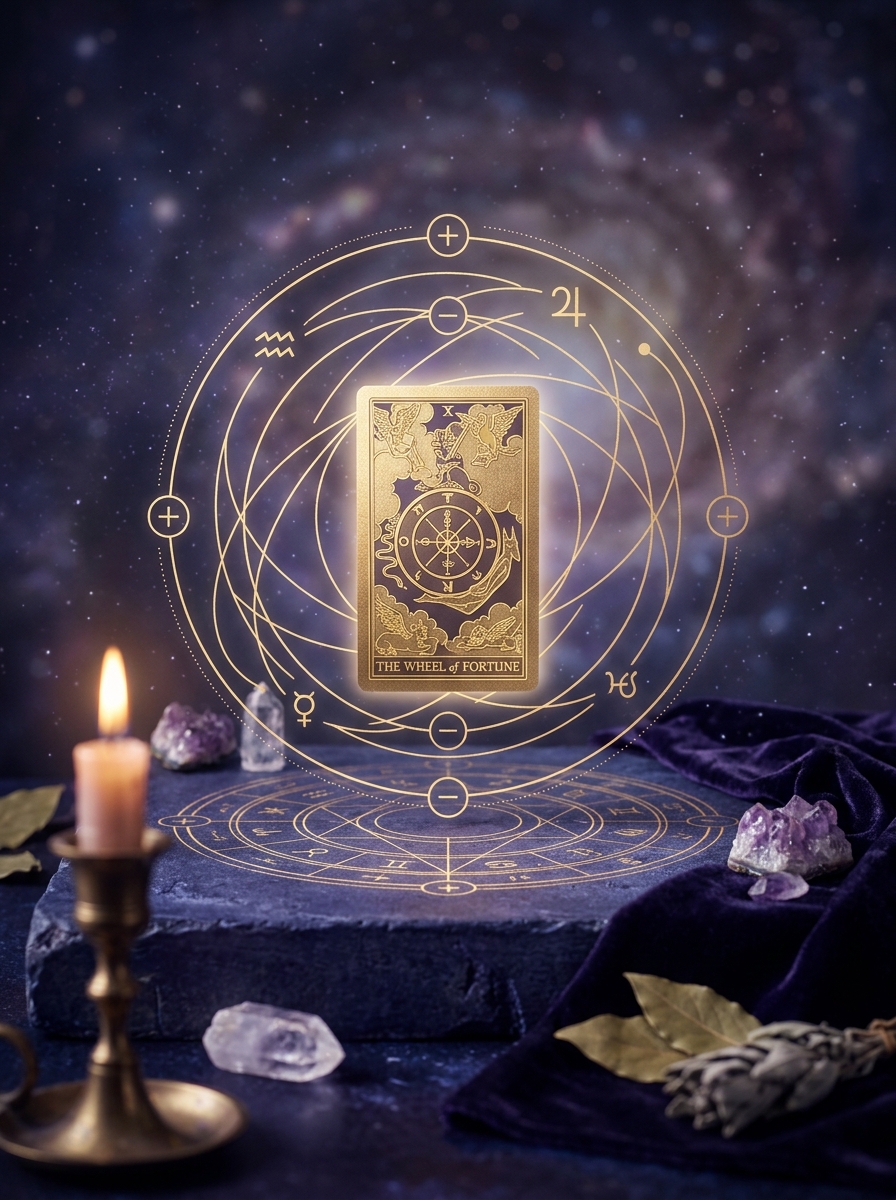
The Mechanics of the Single-Card Draw
The practice of reading tarot is often associated with elaborate layouts, sprawling Celtic Crosses, and complex multi-card relationships that require hours of synthesis. However, there is a profound power in simplicity. The single-card draw stands as the ultimate expression of tarot minimalism, acting as a clean mirror for the immediate present. By condensing the entire universe of symbolic meanings into a singular archetype, the querent initiates a direct and intense dialogue with the subconscious. Arthur Edward Waite, one of the co-creators of the Rider-Waite-Smith system, emphasized that the cards serve as visual keys to universal patterns. When we draw only one card, we eliminate the intellectual noise that often accompanies larger spreads, forcing ourselves to confront the raw, unadorned quality of the moment.
To understand the mechanics of this layout, one must look at how attention functions during a reading. In a ten-card spread, the mind constantly jumps from the past to the future, weighing the influence of the environment against internal desires. In contrast, the single-card draw acts as a focal lens. Just as a magnifying glass focuses scattered rays of sunlight into a single point of heat, the one-card draw gathers the querent's psychic energy and projects it onto a single symbol. Liz Greene, a pioneer in psychological astrology and tarot, describes the cards as pictorial representations of archetypes residing within the collective unconscious. When we draw a single card, we are asking for a snapshot of the dominant psychic theme currently active in our lives.
The preparation for a single-card draw is simple but demands deep intentionality. The querent shuffles the deck while centering their mind on their query. Shuffling is not merely a physical action; it is a ritualistic centering that aligns the nervous system and quietens cognitive chatter. As the hands move the cards, the conscious mind relaxes, allowing the intuitive faculties to come to the forefront. The moment of selection—whether pulling a card from the top, middle, or fanning them out—represents a deliberate intersection of intent and randomness. It is the point where the conscious query meets the chaotic potential of the deck.
The Single-Card Oracle: Minimalism in Practice
In the realm of binary spreads, the single card operates as a decisive oracle. Because there are no supporting cards to modify, soften, or redirect the message, the drawn card must carry the entire weight of the answer. If you pull the Three of Swords, there is no adjacent Star to offer hope, nor a King of Pentacles to ground the pain in material security. The symbol must be integrated in its purest state. This minimalism prevents the querent from rationalizing away difficult truths. It demands a level of honesty that multi-card layouts sometimes allow us to avoid through complex intellectual synthesis.
Furthermore, this method is exceptionally suited for the pace of contemporary life. In a culture dominated by information overload and constant decision fatigue, the single-card draw provides a moment of immediate sanity. It does not ask the querent to memorize intricate card positions or track the astrological decans of five different minor arcana. It asks instead: What is the core energy of this moment? By focusing on a single archetype, the reader can contemplate its implications throughout the day, allowing the image to work on the subconscious mind long after the reading is finished.
Formulating the Perfect Binary Question
The efficacy of a Yes/No tarot reading relies almost entirely on the quality of the question asked. A vague, double-barreled, or emotionally evasive query will inevitably produce a muddy, confusing response. The tarot operates on the principle of resonance; if the input is disorganized, the symbolic output will mirror that lack of structure. To obtain a clear affirmative or negative guidance, the reader must learn to translate emotional anxiety into clear, structured, and ethically sound questions. This process requires self-reflection and a willingness to confront one's true motivations before the card is even drawn.
Steven Forrest, a prominent voice in evolutionary astrology and modern esoteric counseling, argues that the universe does not rob us of our free will, and therefore, divination should never be treated as a passive exercise in fortune-telling. Instead of asking fatalistic questions like "Will I get this job?" which place all power in external circumstances, the evolutionary approach reframes the query. A more potent question would be: "Is accepting this job offer in alignment with my soul's growth and professional development at this time?" This shifts the focus from a passive prediction to an active assessment of energetic alignment, preserving the reader's agency and responsibility.
One of the most common pitfalls in binary readings is the formulation of the "double-barreled" question. These are queries that contain two distinct questions wrapped in one sentence, such as: "Should I stay in my current relationship and try to fix it, or should I leave?" If the card drawn is the Sun, does it mean "yes, stay" or "yes, leave"? The single-card draw cannot answer an "A or B" question. The question must be stripped down to a single, testable proposition. If you wish to examine both paths, you must conduct two separate, distinct single-card draws, asking one question at a time and evaluating the unique polarity of each card drawn.
Reframing for Personal Agency
To build an effective yes/no query, one should follow a structured approach. First, eliminate questions that ask about the internal thoughts, feelings, or secret motivations of third parties. Questions like "Does my ex still miss me?" are ethically questionable and psychically unreliable because they bypass the querent's own path. Instead, reframe the inquiry to focus on the self: "Is it healthy for my emotional healing to maintain contact with my ex right now?" This brings the energetic focus back to the only individual the querent has control over—themselves.
Second, ensure the question is specific and time-bound. Universal, open-ended questions like "Will I ever find happiness?" are too vast for a single binary card. A more effective structure is: "Is my current creative project aligned with my career goals for the upcoming year?" This provides a clear framework within which the card's archetype can speak. By narrowing the scope, the symbol can deliver a precise, targeted message that translates directly into actionable real-world insight.
Affirmative Archetypes: Cards that Lean "Yes"
When performing a binary reading, certain cards immediately announce themselves with a vibrant, forward-moving momentum. These are the affirmative archetypes—cards that traditionally lean toward a "Yes." In the esoteric taxonomy of the tarot, these cards represent states of alignment, expansion, fertility, and integration. They suggest that the current of life is flowing smoothly in the direction of the query, and that the emotional, physical, or spiritual conditions are optimal for growth.
In the Major Arcana, the most potent symbol of affirmation is The Sun. Representing consciousness, clarity, vitality, and absolute truth, The Sun is an unequivocal "Yes." It indicates that the path is illuminated and that there are no hidden pitfalls or shadow elements to fear. Similarly, The Empress represents fertility, natural growth, and the abundance of the material world. When The Empress appears, the universe is signaling that the query is rooted in fertile soil; ideas will bear fruit, projects will materialize, and emotional bonds will deepen. It is a "Yes" that carries the warmth of nature's maternal support.
Another cornerstone of affirmation is The World, the final card of the Major Arcana. The World represents completion, triumph, integration, and the successful resolution of a cycle. Drawing this card suggests that the path you are questioning is not only correct, but will lead to a sense of wholeness and spiritual fulfillment. In the Minor Arcana, the Aces serve as the primary heralds of affirmation. The Ace of Wands brings the spark of creative inspiration and physical drive, suggesting an enthusiastic "Yes" to new ventures. The Ace of Cups overflows with emotional abundance and spiritual connection, indicating a warm, heart-centered affirmation.
Major Arcana Affirmatives: The Power of Expansion
The underlying mechanism of these affirmative cards is what Aleister Crowley described as the natural momentum of the Will. In his esoteric writings, Crowley suggested that when an individual acts in accordance with their True Will, the universe conspires to assist them. The "Yes" cards are visual representations of this alignment. They show that the querent is not swimming against the cosmic current, but is instead riding a wave of evolutionary growth.
From a psychological perspective, as Liz Greene notes, these cards correspond to times when the ego is successfully integrating the unconscious material. When we draw The Star, for instance, we are tapping into a reservoir of hope and spiritual guidance that renews our psychic energy. The Star tells us that even if the physical path is not yet fully built, the spiritual blueprint is secure. It is an affirmation of faith, reminding us that we are guided by a higher vision.
Restrictive Forces: Cards that Lean "No"
Just as the deck contains forces of expansion, it must also contain forces of contraction. The cards that lean toward a "No" are not malicious; rather, they represent restrictive forces, necessary boundaries, endings, and the inevitable corrections of the psyche. In the Rider-Waite-Smith system, these cards warn us that the path we are inquiring about is currently blocked, misaligned, or leading toward unnecessary suffering. Understanding these cards requires looking beyond superficial fear and recognizing the developmental necessity of limitation.
The most dramatic "No" in the Major Arcana is The Tower. The Tower represents sudden, disruptive change, the collapse of false structures, and the purging of illusions. When drawn in response to a binary question, it indicates a clear, firm negative, suggesting that the foundations of the situation are unstable and destined to crumble. Death, while often misunderstood, is another strong negative card in terms of continuing the status quo. It signifies absolute endings, the necessity of letting go, and the closure of a chapter. It tells the querent that the path they are asking about is dead, and any attempt to revive it will only delay their personal evolution.
In the Minor Arcana, the Suit of Swords dominates the restrictive polarities. The Ten of Swords represents finality, defeat, and the absolute end of a painful situation, signaling a decisive "No" to any hopes of salvage. The Three of Swords points to emotional grief, heartbreak, and separation, warning the querent that pursuing this path will lead to pain. The Suit of Pentacles also offers material warnings, most notably the Five of Pentacles, which symbolizes scarcity, isolation, and financial or emotional hardship. It indicates that the resources—whether material or emotional—are simply not present to support the query.
Minor Arcana Restraints: Swords and Pentacles of Limitation
The presence of these restrictive cards is closely tied to the astrological archetype of Saturn—the planet of boundaries, structure, and reality checks. Liz Greene's extensive work on Saturn outlines how limitation is often our greatest teacher. A "No" card is not a punishment from the universe; it is a protective boundary. When the tarot gives us a negative answer, it is often saving us from our own misaligned desires or short-sighted goals.
For instance, drawing the Ten of Wands suggests that while you could carry the burden of the situation, the weight will eventually crush you. It is a "No" disguised as a warning about exhaustion. By respecting these boundary cards, the querent can save valuable energy, redirecting their focus away from dead ends and toward paths that offer genuine growth. The "No" of the tarot is always an invitation to seek a deeper, more authentic "Yes" elsewhere.
The Grey Area: Neutral and Ambiguous Cards
Not every query can be answered with a simple binary polarity. Life is full of transitions, preparation phases, and internal work that cannot be rushed. In a Yes/No tarot reading, drawing a neutral or ambiguous card indicates that the situation is fluid, the answer is not yet determined, or the querent is asking the wrong question entirely. These cards represent the grey areas of the psyche—spaces of incubation, hidden knowledge, and suspended action.
The ultimate archetype of neutrality is The High Priestess. Sitting between the black and white pillars of severity and mercy, she represents intuition, secret knowledge, and the subconscious mind. When she appears in a binary reading, her answer is: You already know the answer, look within. Or, alternatively: The information is hidden from you for now; trust your intuition rather than seeking external certainty. She refuses to give a simple yes or no, demanding instead that the querent sit with the mystery and listen to their inner voice.
Another highly ambiguous card is The Hanged Man. Representing suspension, surrender, and sacrifice, The Hanged Man tells the querent that the answer is "not yet." It indicates that any attempt to force a decision right now will result in frustration. The only way forward is to release control and view the situation from a completely different perspective. Similarly, The Wheel of Fortune indicates that the situation is governed by external cycles and fate, meaning the outcome is highly volatile and cannot be pinned down to a simple yes or no. In the Minor Arcana, the Two of Swords represents a literal stalemate—a refusal to make a choice, indicating that the querent is blocked by indecision.
The High Priestess and the Pause
When we encounter these neutral archetypes, we are being called to examine our need for certainty. Modern psychological tarotists, such as Steven Forrest, remind us that searching for immediate answers can sometimes be a form of spiritual bypassing. We want a quick "Yes" or "No" to avoid the discomfort of not knowing. The High Priestess and the Hanged Man force us to tolerate the tension of opposites, allowing the subconscious mind to process the situation without the interference of the conscious ego.
When interpreting these cards in a reading:
- Acknowledge the Pause: Accept that the universe is not ready to deliver a final verdict.
- Evaluate Internal Motivation: Ask yourself why you are pressing for an immediate answer.
- Reframe the Query: If you draw a neutral card, it is often a sign to put the deck down, meditate, and rephrase your question later from a more grounded state of consciousness.
Reading Reversals in Binary Spreads
The inclusion of reversed cards adds a layer of psychological complexity to a single-card tarot draw. While some traditionalists view reversed cards as purely negative or blocked versions of their upright counterparts, modern psychological tarot offers a more nuanced perspective. In a Yes/No spread, a reversed card does not simply flip the answer like a light switch. Instead, it alters the direction, timing, and internal expression of the card's energy.
There are two primary schools of thought when it comes to reading reversals in binary spreads. The first is the Polarity Flip. In this method, if an upright card represents a "Yes" (such as the Ace of Cups), its reversal flips it to a "No" or a heavily delayed, blocked affirmative. Conversely, a reversed "No" card (like the Five of Pentacles) might suggest that the worst of the hardship is passing, shifting the answer toward a tentative, healing "Yes." While simple, this method can sometimes strip the cards of their psychological depth.
The second method, favored by psychological astrologers like Liz Greene, treats the reversal as Internalized Energy. Here, the basic yes or no polarity of the card remains, but the focus shifts from the external world to the inner world of the querent. A reversed Sun, for example, is still a "Yes," but it suggests that the querent is struggling to internalize this success or feels unworthy of the happiness coming their way. A reversed Tower suggests that the collapse is happening internally—a breakdown of old belief systems rather than an external catastrophe.
The Psychological Lens of Reversals
Using the psychological framework, we can categorize reversals in Yes/No spreads based on their developmental function. Rather than seeing a reversed card as a frustrating obstacle, we can interpret it as an invitation to do shadow work. Carl Jung noted that what we do not bring to consciousness returns to us as fate. Reversals show us the unconscious blocks that are preventing us from achieving the "Yes" we seek, or the hidden resistance we have toward accepting a "No."
| Upright Meaning | Reversed Meaning in Binary Spreads | Psychological Interpretation |
|---|---|---|
| Clear Yes (e.g., The Sun, Empress) | Delayed Yes / Internal Block | The potential is there, but you must first overcome internal self-doubt or anxiety. |
| Clear No (e.g., The Tower, 3 of Swords) | Ending in Progress / Resisting Release | You are fighting a necessary ending; letting go is required before rebuilding can begin. |
| Neutral (e.g., High Priestess, Hanged Man) | Refusal to Listen / Forced Pause | You are actively ignoring your intuition or trying to force a decision prematurely. |
Synchronicity and the Digital Draw: How Online Readings Work
In the digital age, many tarot practitioners have transitioned from physical cardboard decks to virtual card selectors and online applications. This shift often raises questions about validity: How can a computer program, running on cold code and random number generators, accurately reflect the human soul? The answer to this modern dilemma lies in Carl Jung’s groundbreaking theory of synchronicity, which provides the philosophical foundation for all divinatory arts, both physical and digital.
Jung defined synchronicity as an "acausal connecting principle"—a meaningful coincidence between an internal psychological state and an external physical event, with no direct physical cause linking the two. When we shuffle a physical deck of cards, there is no physical law dictates that the Three of Swords will land in the "present challenges" position. Yet, it does. In the same way, when a user clicks a button to draw a digital card, the microsecond at which the random number generator (RNG) selects the card is aligned with the user's consciousness. For Jung, mind and matter are not separate entities but two sides of the same coin. The digital environment is just as much a part of the cosmos as a forest or a collection of paper cards.
Esoterically, this concept is supported by the idea that consciousness is non-local. It is not confined to the physical brain, nor is it limited by the material tools we use. Arthur Edward Waite wrote that the cards are instruments of the imagination, designed to evoke latent spiritual faculties. The medium through which the image is displayed—whether it is printed ink on cardboard or light emitting pixels on an organic LED screen—is irrelevant to the subconscious mind. The subconscious recognizes the symbol, not the substrate.
Consciousness and the Algorithm
The digital draw operates by capturing the exact moment of intent. When you sit before a screen, focus your mind on a binary question, and press the button, your act of will collapses the field of probability. The algorithm, which continuously cycles through thousands of random options per second, is halted at the precise instant that matches your mental state. It is a modern, high-speed variation of the traditional shuffle.
Furthermore, digital tarot democratizes the practice, making these tools accessible to individuals who may not own a physical deck or who need immediate, private counsel. It removes the human bias of the reader, presenting a sterile, objective reflection of the current energetic alignment. By understanding that synchronicity is not bound by physical paper, the modern seeker can use digital yes/no draws as a reliable, responsive tool for daily self-reflection.
The Energetic Polarities of Expansion and Contraction
At its deepest esoteric level, the Yes/No tarot spread is not merely a tool for deciding what actions to take; it is a map of the great universal currents of expansion and contraction. In the Western esoteric tradition, these dual forces are seen as the heartbeat of the cosmos—the cosmic systole and diastole. Without contraction (No), there would be no structure, no boundaries, and no form. Without expansion (Yes), there would be no growth, no life, and no creation. Both are essential for the maintenance of universal order.
This cosmological view is deeply embedded in the writings of Aleister Crowley, who observed that the entire universe operates through the play of opposites. The "Yes" of expansion represents the outward push of energy, the active creation, and the movement of the spirit into material form. The "No" of contraction represents the inward pull, the consolidation of resources, and the necessary destruction of the obsolete. When we perform a binary tarot reading, we are asking which of these two fundamental currents is currently dominant in the area of our query.
Steven Forrest emphasizes this balance in his teachings, reminding readers that a "No" in tarot or astrology is often a blessing in disguise. A life of constant expansion (endless "Yes") leads to exhaustion, dissipation of energy, and eventually, structural collapse. Conversely, a life of perpetual contraction (endless "No") leads to stagnation, depression, and isolation. The cards help us identify when we need to push forward and when we need to pull back.
The Cosmic Systole and Diastole
When we integrate this understanding, we no longer fear drawing a "No" card. We recognize that the card is simply indicating that the current phase of the cycle demands contraction. It is a time for reflection, boundary-setting, and internal work. When we draw a "Yes," we know we have the green light to expand, create, and share our energy with the world.
- Expansion (Yes): Associated with the element of Fire and Water, representing the drive to connect, create, and grow.
- Contraction (No): Associated with the elements of Earth and Air, representing structure, analysis, limits, and reality.
- Synthesis: The goal of the esotericist is not to receive only "Yes" answers, but to move in harmony with the natural rhythm of both polarities, understanding that every contraction prepares the ground for the next great expansion.
Frequently Asked Questions
Can I ask the same Yes/No question multiple times if I don't like the answer?
No. Asking the same question repeatedly until you get the desired answer is a form of psychic denial and invalidates the reading. It disrupts the synchronistic connection between your subconscious mind and the cards, producing increasingly confused and contradictory results. If you dislike the answer, the correct approach is to sit with the discomfort, analyze the reasons for your resistance, and ask a new question focused on how you can navigate the challenges indicated by the card.
What should I do if I draw a neutral card like the High Priestess?
When a neutral card is drawn, it is a sign that the outcome of your query is not yet fixed or that the information is currently blocked from your conscious mind. Treat this as a prompt to pause and look inward. Do not force a decision. Instead, meditate on the symbol, focus on developing your intuition, and wait a few days before asking the question again. Often, a neutral card indicates that you already know the answer but are avoiding it.
Are Minor Arcana cards less significant than Major Arcana cards in a binary draw?
No, they are not less significant, but they operate on a different scale. Major Arcana cards point to major, archetypal life lessons and destiny-altering events, representing a macro-level "Yes" or "No." Minor Arcana cards, on the other hand, represent the daily, practical, and transient energies of life. A Minor Arcana "Yes" (like the Three of Wands) indicates that practical, day-to-day conditions are favorable, while a Major Arcana "Yes" (like the Sun) represents a profound, life-changing alignment.
Do digital tarot readings have the same validity as physical decks?
Yes. According to Jung's theory of synchronicity, meaningful coincidences are not dependent on physical materials. The subconscious mind communicates through symbols, and whether those symbols are presented on cardboard or an electronic screen does not alter their psychological impact. The key factor is your conscious intent and focus at the moment of the draw.
Should I always use reversed cards in my Yes/No readings?
Using reversals is a personal choice, but they are highly recommended for adding psychological depth. If you choose not to use reversals, ensure you set that intention clearly before shuffling. If you do use them, decide beforehand which interpretive method you will employ—either the direct polarity flip or the psychological, internalized energy approach. Consistency in your methodology is key to obtaining clear readings.
Comments
Loading comments…