Dream About an Insect: Meaning, Psychology, and Symbolic Variations
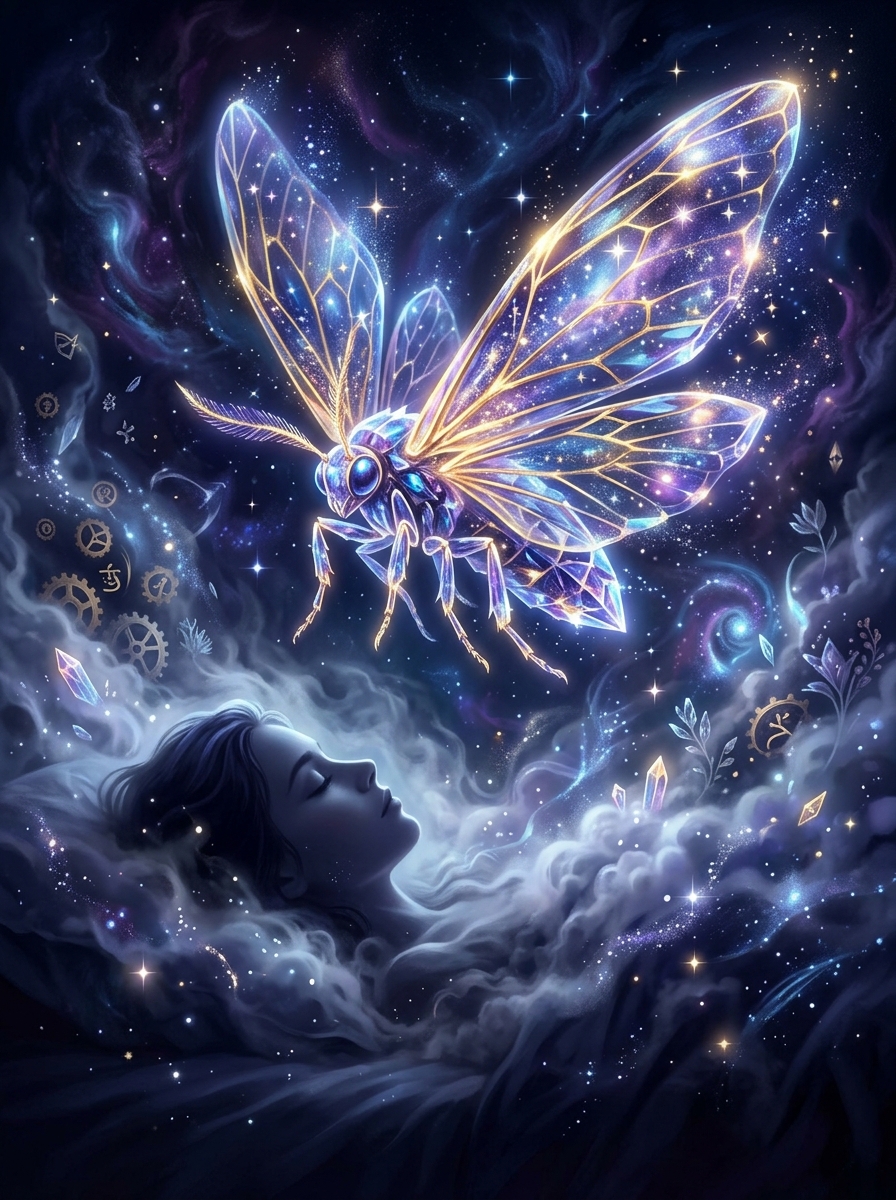
The first thing the psyche does with an insect in a dream is shrink the scale of the problem until it matches the size of the creature. A single ant, fly, or beetle carries an emotional charge far out of proportion to its body because it represents something the waking mind has been trying to minimize: a persistent irritation, a private shame, a low‑grade anxiety, or an instinct that refuses to be reasoned away. The dream does not announce a catastrophe; it announces that something small has become psychologically loud enough to notice.
The Core Dynamic: What the Insect Actually Is
An insect dream is about attention at the margins. In waking life, insects are easy to overlook because they are tiny and many, yet they behave like living stressors: they buzz, crawl, sting, multiply, hide, and return. The dream uses that behavior to dramatize a relationship with something that feels both insignificant and inescapable. The core dynamic is not that insects are “bad” or “good,” but that the unconscious has chosen a compact image to represent a concentrated emotion that the ego has been treating as too minor to address.
This is why the same dream can mean opposite things depending on the emotional tone. Fear signals a sense of violation or contamination. Disgust points to shame, avoidance, or material the dreamer considers beneath notice. Curiosity, especially when the dreamer watches rather than recoils, suggests the psyche is asking for a closer look—not a verdict. The insect is a pressure gauge, not a moral symbol. For a broader framework on how dream images gain meaning through timing and mood rather than fixed codes, Aurora Arcana’s interpretive philosophy emphasizes exactly this contextual reading.
The Psychological Engine: Why the Psyche Uses Such Small Images
Psychologically, an insect dream often reveals a conflict between conscious control and instinctive life. Insects are ancient, efficient, and impersonal; they do not negotiate. When they appear in dreams, they tend to represent fragments of the psyche that feel alien because they are not polished, rational, or socially acceptable. Jungian language is useful here: the insect may function as a small but stubborn piece of the shadow—the disowned material that returns indirectly when it is not lived directly. Not every bug dream is a shadow dream, but many are about what the ego considers too dirty, too repetitive, or too embarrassing to own.
There is also a practical layer. Dreams metabolize sensory and emotional residue from waking life. If you have been dealing with an infestation, bites, health anxiety, a cluttered home, or a relentless stream of minor tasks, the dream may be a literal recombination of that stress. Yet even “literal” material can become symbolic because the mind amplifies the emotional essence. A kitchen fly in a dream is rarely about a fly; it is about the inability to preserve peace in your own space. The editorial approach at Aurora Arcana treats such images as condensations of lived experience, not random noise.
Facing the Swarm: Maturity, Avoidance, and the Shadow
How you interact with the insect in the dream reveals where you stand with the material it represents. If you crush it, the dream may be showing an aggressive attempt to regain control—a gesture that often backfires because the underlying feeling is only stamped down, not resolved. If you flee, you are likely avoiding a feeling that needs naming, and the dream will return until the avoidance is exhausted. If you observe with fascination, especially without disgust, the psyche may be inviting a more objective relationship to something you have judged too quickly.
The distinction between a single insect and a swarm matters more than most interpretations admit. A single insect usually corresponds to one problem, one thought, one discomfort, or one person whose presence has gotten under your skin. A swarm suggests a systemic situation: overwhelm, crowded obligations, environmental stress, or a mind overrun by details. The swarm is not a different kind of dream; it is the same dynamic at a higher volume. Recurring insect dreams, in particular, indicate a pattern that the psyche has not finished processing—a recurring irritation in a relationship, an unresolved health concern, or a chronic habit of deferral. As noted in Aurora Arcana’s editorial approach, repetition is the psyche’s way of saying the message is not yet integrated.
The Insect in the Ecology of a Life
Once the core dynamic is understood—that the insect stands for something small but persistently irritating or instinctual—it becomes possible to see how the dream plays out across different domains without re‑explaining the symbol each time.
In relationships, the dream often appears when a minor grievance has been allowed to fester. The insect is the comment you did not respond to, the boundary you did not set, the resentment you told yourself was too petty to mention. Over time, that feeling multiplies like a crawling sensation: not a break, but a constant low‑level friction. In work, insect dreams cluster around periods of paperwork, repetitive tasks, or situations where your labor feels invisible even to yourself. The ant is the archetype here—dutiful, efficient, and ultimately unacknowledged. In matters of health and body, the insect on your skin or inside your mouth suggests that a bodily anxiety has crossed a boundary: the symptom you have been ignoring, the sensation you rationalized away.
Bitten dreams intensify this. A bite in a dream often corresponds to an underestimated stressor that has become physiologically real—tension headaches, stomach knots, or emotional prickliness that has begun to sting. If you are eating the insect, the dream may be forcing you to assimilate something unpleasant: absorb a truth, swallow a hard lesson, or accept a role that does not sit well. If you are chased, the dream has personified what you keep trying not to face, and the pursuit continues because the material has energy behind it.
Symbolic Variations That Change the Read
Species refinement is not decorative; it alters the reading entirely. A butterfly shifts the tone toward metamorphosis, fragility, and the public visibility of change. A moth carries a nocturnal, more haunted message: attraction to what burns, devotion to the hidden, or unconscious habits moving toward light. A beetle feels ancient and armored, suggesting endurance, instinct, or a self‑protective shell that may be necessary but is also limiting. A cockroach intensifies the confrontation with survival, disgust, and what persists despite attempts to erase it.
The setting of the dream narrows the meaning further. An insect in the home suggests the problem has entered private life; the psychic “house” is no longer sealed. In the kitchen, it touches nourishment, daily maintenance, and what you are taking in. Outdoors, the symbolism may loosen into the natural cycle of life, death, and adaptation rather than personal intrusion. A spider (though arachnid, not insect) often enters the same symbolic neighborhood of weaving, patience, and entrapment—but with a stillness that bugs lack. For readers who work between dreamwork and astrology or tarot, insect dreams can resonate with Virgo’s themes of precision and the nervous system, or the Eight of Pentacles’s patient refinement of small tasks. Aurora Arcana’s about page offers the editorial lens behind such integrations.
The dream is rarely about grandeur. It is about pressure at the margins: maintenance, contamination, instinct, survival, irritation, or transformation too small to advertise itself. To read it honestly, ask not “What does this insect mean?” but “What in my life has become small enough to ignore but strong enough to irritate me continuously?” That question, more than any symbol list, will get you closest to what the dream already knows.
Comments
Loading comments…