The Waning Moon: A Guide to Release, Integration, and the Fertile Void
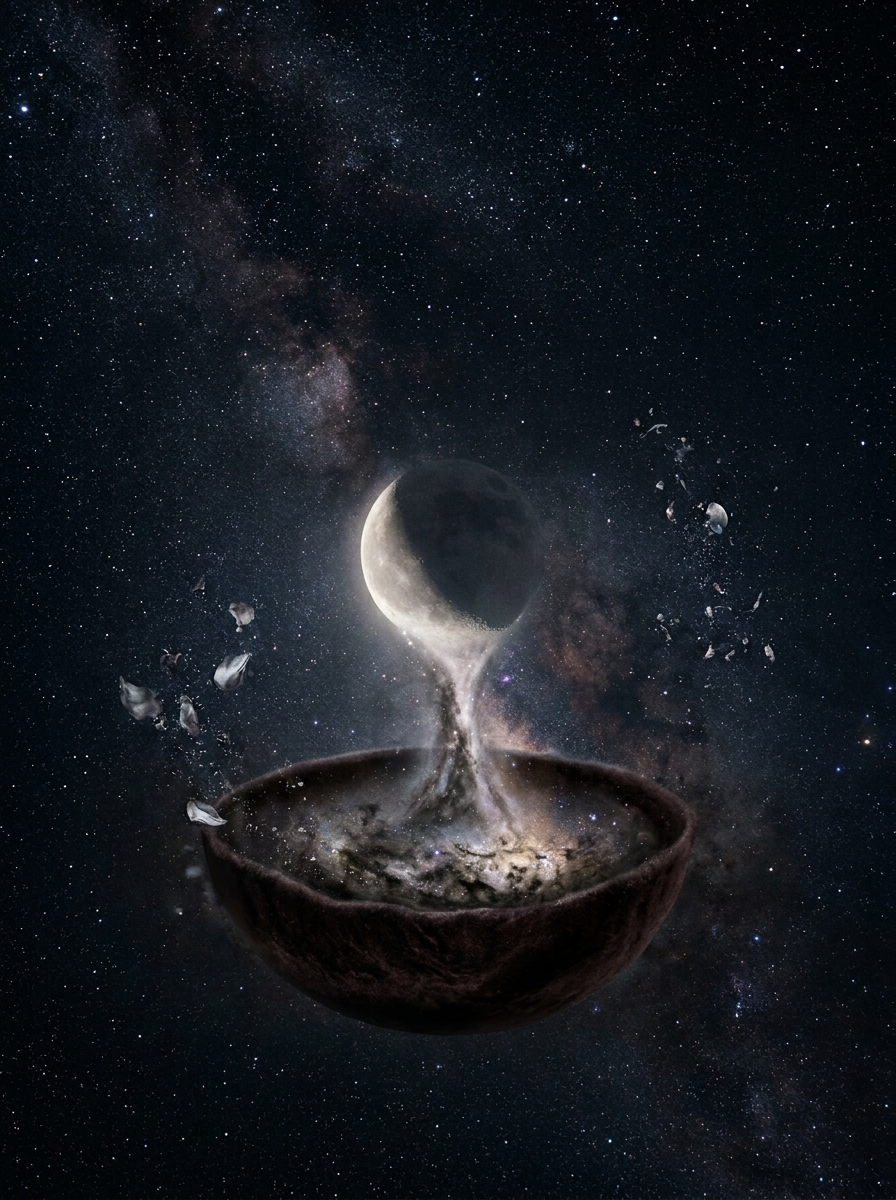
The Anatomy of Lunar Decline: Astronomical and Astrological Definitions
To fully comprehend the waning moon, one must look closely at the physics and geometry of celestial retraction. In the grand, cyclical choreography of the solar-lunar relationship, the waning phase represents the long, gradual retreat of light. It begins at the exact moment of the Full Moon—when the Moon stands in opposition to the Sun, fully illuminated and reflecting the maximum amount of solar fire—and continues until the Moon is once again lost in the solar glare at the New Moon conjunction. This period of decline is not a single, static state of darkness, but a dynamic, three-part progression of diminishing light. Each sub-phase has its own distinct astronomical character and astrological tone, guiding us through a sequence of sharing, analyzing, and ultimately letting go.
From Full Light to the Waning Gibbous
The waning gibbous phase, also known in evolutionary astrology as the disseminating moon, begins immediately after the peak of the Full Moon and lasts until the Moon is three-quarters illuminated. Astronomically, the Moon is moving from 180 degrees to 135 degrees behind the Sun. During this phase, the light is still abundant, but it has passed its zenith. The energy of the Full Moon, which was urgent, expressive, and outwardly focused, begins to soften and transition. The field of illumination narrows slightly each night, creating a visual reminder that the cycle has shifted from accumulation to distribution.
Astrologically, the waning gibbous phase is about distribution, sharing, and communication. In the words of astrologer Steven Forrest, this is the time to disseminate what has been learned, realized, or birthed during the Full Moon culmination. The focus is not on starting new projects, but on synthesizing the insights gained at the peak of the cycle and distributing them to the wider community. It is a phase of teaching, writing, counseling, and speaking, where the fruits of individual experience are offered to the collective. The consciousness is still oriented outward, but the underlying current is beginning to shift inward, preparing for the deeper quiet that lies ahead. It represents a mature harvest phase where we share our crop before the frost of the dark moon sets in.
The Last Quarter Moon: The Crisis of Consciousness
When the Moon reaches a 90-degree angle to the Sun, it enters the Last Quarter phase, appearing in the sky as a perfect half-moon. This phase represents a major astronomical and astrological pivot. Unlike the First Quarter Moon, which occurs on the waxing side of the cycle and represents a "crisis in action," the Last Quarter Moon is a "crisis in consciousness," as described by Dane Rudhyar.
At this juncture, the Sun and Moon are in a tense square aspect. This geometric relationship creates an internal friction that forces a critical review of our current path. The light has decreased to exactly fifty percent, and the shadow is rising. The individual is forced to look at what is no longer working, what has become obsolete, and what must be discarded before the cycle ends. It is a time of analytical sorting, where we must make conscious decisions about what to keep and what to release. The tension of the Last Quarter square is uncomfortable but necessary; it prevents us from drifting passively into the dark, ensuring that our letting go is an act of deliberate, conscious choice. We examine our systems, our habits, and our beliefs, assessing their utility with clinical objectivity.
The Balsamic Moon: Entering the Dark Phase
The final stage of the waning cycle is the Balsamic Moon, also known as the dark moon phase. This phase begins when the Moon is 45 degrees behind the Sun and continues until they meet at the New Moon. The Moon is now a thin, vanishing crescent, rising only in the pre-dawn hours, until it disappears entirely from the night sky.
Astronomically, the Moon is returning to the solar womb, lost in the brilliant light of the Sun. Astrologically, the Balsamic phase is the ultimate sanctuary of the lunar cycle. The outward-moving energy of the cycle has completely dissolved. The focus is entirely internal, spiritual, and restorative. This is the "fertile void," a time of deep dreaming, resting, and surrender. There is nothing to do, nothing to build, and nothing to maintain. The Balsamic phase asks us to trust the darkness, to allow the old cycle to die completely, and to rest in the quiet space between what was and what is yet to be. It is the time of the seed underground, waiting in total stillness for the warmth of the next cycle.
The Archetypal Exhale: Astrological Symbolism of Letting Go
The waning moon is the universe’s great archetype of release. If the waxing moon is the inhalation—the gathering of energy, the building of form, and the expansion of consciousness—then the waning moon is the exhalation. It is the necessary release of breath that allows life to continue. Without this period of decline, the psyche would become congested with outworn forms, choked by its own creations, and exhausted by relentless growth.
Jungian Libido and the Inward Turn
To understand the psychological mechanism of the waning moon, we can look to the work of Carl Jung and his concept of the libido. Jung did not define libido merely as sexual energy, but as the general psychic energy of the individual. This energy naturally flows in two directions: progression (outward movement toward the external world, adapting to social demands and achievements) and regression (inward movement toward the unconscious, seeking reflection and integration).
The waning moon corresponds to the regressive movement of libido. As the light of the Moon fades, our psychic energy naturally withdraws from external activities, social demands, and material ambitions. It turns inward, descending into the deep waters of the personal and collective unconscious. This withdrawal is not a sign of depression or failure; it is a vital psychological necessity. By turning inward, the libido feeds our inner world, activating dreams, symbols, and creative impulses. This allows for the integration of experiences that have occurred during the active, waxing phase of the cycle. Without this inward turn, the psyche remains fragmented, unable to digest the lessons of its own history. The ego must yield to the deeper layers of the self, allowing the unconscious to perform its healing, integrative work.
The Esoteric Teachings of Greene, Forrest, and Crowley
In psychological astrology, as championed by Liz Greene, the waning moon is a crucial time for shadow work and integration. Greene emphasizes that the forms we build during the waxing phase—our relationships, careers, and self-conceptions—often carry unconscious shadows. As the moon wanes and these forms begin to dissolve or show their limitations, we are presented with an opportunity to integrate the shadow. We must look at the hidden motives, fears, and dependencies that we projected onto our creations. It is a time when the masks we wear are stripped away, revealing the underlying reality of our psychological landscape.
Steven Forrest, in his Evolutionary Astrology framework, highlights the waning phases—particularly the Balsamic phase—as times of karmic completion. He suggests that during these dark days, we are processing the emotional residue of the past, resolving old contracts, and clearing the spiritual slate. It is a time for forgiveness, both of others and of ourselves, recognizing that all experiences, even the painful ones, have served the evolution of the soul. We must let go of the stories we tell about ourselves, releasing the past to enter the new cycle unburdened.
From a more occult perspective, Aleister Crowley spoke of the waning phases as times of purification and magical containment. In the Hermetic Order of the Golden Dawn, the waning moon was aligned with banishing rituals and the dissolution of negative influences. Crowley’s writings suggest that during the dark of the moon, the magician must withdraw into their own inner temple, sealing the consciousness against external distractions to focus on the Great Work of self-realization. The waning moon is not a time of weakness, but of concentrated, internal power, where the false ego is dissolved to make way for the true self. The waning phase is an alchemical purification, burning away the dross to reveal the pure gold of the spirit.
Practical Alchemy: Daily Life Alignment and Space Cleansing
Living in harmony with the waning moon does not require withdrawing to a cave, but it does require a conscious shift in how we manage our daily energy, our spaces, and our relationships. By aligning our activities with the natural decline of light, we can move with the cosmic current rather than fighting against it. This alignment is a form of practical alchemy, turning the lead of daily obligations into the gold of conscious living.
+---------------------------------------------------------+
|                WANING MOON PRACTICAL GUIDE              |
+---------------------------------------------------------+
| PHASE              | FOCUS            | ACTION          |
+--------------------+------------------+-----------------+
| Waning Gibbous     | Dissemination    | Teach & Share   |
| Last Quarter       | Evaluation       | Cut away excess |
| Balsamic           | Cleansing        | Rest & Dream    |
+--------------------+------------------+-----------------+
Finishing and Wrapping Up
The primary rule of the waning moon is to finish what you have started rather than initiating new endeavors. If you have outstanding projects, unanswered emails, or incomplete tasks, this is the time to bring them to completion. The energy of the waning moon supports closure, making it easier to tie up loose ends, edit manuscripts, organize files, and finalize agreements. The cosmic wind is at your back when you are trying to close a chapter.
Attempting to launch a major new project, start a business, or sign a new contract during the waning moon can feel like swimming against a powerful tide. The momentum is lacking, and the project may struggle to gain traction or suffer from unforeseen delays and complications. Instead, use this time to clear the decks. Think of it as preparing the soil; you cannot plant new seeds until you have cleared away the dead stalks and weeds of the previous harvest. By focusing on completion, you create a clean, organized space that will be ready for the creative spark of the next New Moon.
Physical and Emotional Cleansing
As the light decreases, the capacity for cleansing and detoxification increases. This is the ideal time for deep cleaning and decluttering your physical environment. Go through your closets, drawers, and workspaces, discarding or donating items that no longer serve a purpose. The act of physical decluttering has a direct, positive impact on the psyche, relieving mental congestion and creating a sense of spaciousness. Scrubbing floors, washing windows, and clearing out dust are physical manifestations of the internal cleansing process.
On a physical level, the waning moon supports bodily detoxification. This is a favorable time for gentle cleanses, increasing water intake, and eating simple, nourishing foods that are easy to digest. The body is naturally more efficient at releasing fluids, toxins, and waste products during this phase. It is an excellent time for sweat lodges, saunas, and salt baths, which assist the body in its natural eliminative processes.
Emotionally, the waning moon invites us to cleanse our relationships and inner landscapes. This is the time to have difficult but necessary conversations that bring closure. It is a time to release resentments, let go of toxic dynamics, and grieve losses. Rituals of release—such as writing down fears, regrets, or outworn habits on a piece of paper and burning it—are highly effective during this phase, helping the conscious mind to release its grip on the past and surrender to the flow of life.
The Last Quarter Square: Pivoting Through Tension and Analytical Review
The Last Quarter Moon is a critical cosmic pivot point. Occurring exactly halfway between the Full Moon and the New Moon, it represents a moment of acute tension. In astrology, the square aspect (a 90-degree angle) is always an indicator of friction, challenge, and the need for adjustment. The Last Quarter square is a time when the external demands of our life (represented by the Sun) clash with our internal, emotional truth (represented by the Moon).
This tension is not a sign that something has gone wrong; it is a necessary catalyst for growth. During the waxing First Quarter square, the challenge was to take action and overcome obstacles in the outer world to build our dreams. During the waning Last Quarter square, the challenge is internal and reflective. We are asked to examine our beliefs, our values, and our psychological structures. We must ask ourselves: What parts of my identity have I outgrown? What assumptions am I holding onto that are no longer true? What structures in my life are draining my energy without returning value?
This is a phase of analytical review. It requires a cool, objective assessment of our lives. It is not a time for emotional wallowing or self-pity, but for clear-eyed discrimination and radical honesty. We must look at our successes and failures with equal detachment, recognizing that both are valuable teachers. The Last Quarter square demands that we make a decision. We cannot carry everything with us into the dark phase of the cycle. We must choose what to discard and what to carry forward as wisdom. This process of selection can be painful, as it often requires letting go of illusions, expectations, or relationships that we once cherished. However, it is only by making these hard choices that we can clear the path for future growth, transforming the tension of the square into a force for liberation.
The Balsamic Sanctuary: Restoring the Self in the Fertile Void
The Balsamic phase is the dark, silent heart of the lunar cycle. Representing the final three to four days before the New Moon, it is a period of maximum darkness and minimum physical energy. In our fast-paced, light-polluted world, the Balsamic Moon is often ignored or feared, yet it is one of the most spiritually significant times of the month. It is the ultimate quiet sanctuary, a sanctuary that we must consciously enter if we wish to remain psychologically healthy and creatively fertile.
During the Balsamic phase, the consciousness shifts from the solar world of action, logic, and division to the lunar world of feeling, intuition, and unity. The boundaries of the ego become thin and permeable, allowing for a deeper connection to the unconscious and the spiritual realms. This is a time of deep dreaming, both during sleep and in waking meditation. The dreams we have during the Balsamic phase are often rich in archetypal symbols, offering guidance, healing, and profound insight from the deeper layers of the self.
       Balsamic Moon Phase: The Fertile Void
                 ____...---...____
            _.-''                 ''-._
          .'                           '.
         /                               \
        |      ( THE FERTILE VOID )       |
        |        Active Non-Doing         |
        |      Deep Dreaming & Rest       |
         \                               /
          '.                           .'
            '-._                   _.-'
                `''---...___...---'`
Entering the Balsamic sanctuary requires us to embrace the concept of the "fertile void." This is the state of active non-doing—a concept found in many esoteric traditions, including the Taoist principle of wu wei. It is not a state of passive laziness or depression, but of conscious, expectant receptivity. It is the understanding that the earth must lie fallow before it can yield another crop, that the mind must become still before it can receive new inspiration.
In the Balsamic phase, we are invited to:
- Sleep more and allow our bodies to rest without guilt or self-judgment.
- Spend time in solitude, away from the constant noise of media and social interaction.
- Engage in gentle, non-goal-oriented activities like walking slowly in nature, journaling, or soaking in a warm bath.
- Meditate, focusing on the space between the inhalation and exhalation, and the spaces between thoughts.
- Pay close attention to our dreams, recording them immediately upon waking to capture their subtle messages.
By honoring the Balsamic sanctuary, we allow the emotional and psychological residue of the cycle to dissolve. We surrender our struggles, our ambitions, and our worries to the dark moon, trusting that they will be composted into fertile soil from which the next cycle of life will grow. It is here, in the deepest dark, that the light is reborn.
The Lunar Rebellion: Challenging Linear Productivity and Honoring Decline
Our modern, industrialized society is obsessed with light, growth, and linear progress. We are expected to be productive all day, every day, regardless of the season, the weather, or the cycles of the moon. We live in a solar-centric culture that equates constant activity with worth and frames rest, decline, and darkness as failure, waste, or weakness. We are taught that to stop is to fall behind, and that to decline is to lose.
This relentless demand for linear productivity is psychologically and physically unsustainable. It leads to burnout, anxiety, chronic fatigue, and a profound sense of alienation from nature and our own bodies. The human psyche, like the Moon, is cyclic. We require periods of retreat and decline just as much as we require periods of growth and achievement. We need the dark to integrate the light.
Honoring the waning moon is a political and psychological act of rebellion. It is a refusal to accept the lie that our value is determined solely by our productivity. When we choose to slow down, rest, and turn inward during the waning phase, we are challenging the dominant cultural paradigm. We are asserting that:
- Decline is not death; it is a necessary and healthy preparation for rebirth.
- Darkness is not evil or empty; it is the fertile womb of all creation and inspiration.
- Rest is not a luxury or a reward for hard work; it is a fundamental human right and a biological necessity.
- The cycles of nature are wiser than the demands of the market.
- Endings are as sacred as beginnings, and must be honored with equal presence.
By aligning our lives with the waning moon, we reclaim our connection to the deep rhythms of the earth and the cosmos. We step off the treadmill of constant production and enter a more organic, sustainable way of being. We learn to appreciate the beauty of endings, the wisdom of letting go, and the profound peace of the fertile void. This is the ultimate gift of the waning moon: the understanding that we are part of a larger, living whole, and that in the cosmic dance of light and shadow, both are holy, both are necessary, and both are worthy of our honor.
Waning Moon FAQ
How does the waning moon affect emotional cycles and sleep patterns?
During the waning moon, many individuals experience a noticeable shift in their emotional energy and sleep architecture. As the Moon's light decreases, there is a natural pull toward introspection, which can sometimes manifest as feelings of melancholy, fatigue, or a desire for solitude. This is not pathologically depressive, but rather the psyche's way of prompting a withdrawal from external stimulation to process accumulated emotional experiences. Sleep patterns may also change; while the Full Moon is often associated with restlessness and insomnia due to high electromagnetic charge and ambient light, the waning moon—particularly the Balsamic phase—typically brings a deeper, more restorative sleep. Dreams during the dark moon phase tend to be more vivid, archetypal, and focused on themes of endings, sorting, and resolution, reflecting the active psychological integration taking place in the deep unconscious. It is a time when the subconscious speaks loudly, clearing out the clutter of the past month.
Can you perform manifestation rituals during the waning moon, or should they be avoided?
Manifestation rituals, as traditionally understood—such as setting intentions, drawing abundance, or starting new projects—should generally be avoided during the waning moon. The energetic current of this phase is moving inward and downward, which runs counter to the outward, building energy required for drawing new things into your life. However, this does not mean that ritual work should cease; rather, the focus of your rituals must shift. The waning moon is the premier time for banishing rituals, cord-cutting, emotional releasing, and clearing space. Instead of asking for what you want to receive, focus your rituals on what you want to release. You can write down limiting beliefs, toxic habits, or painful memories and burn them, bury them, or wash them away. The only "manifestation" that belongs in the dark phase is the cultivation of the fertile void—preparing the soil of your psyche so that the seeds you plant during the waxing moon have room to grow.
What is the difference between the Last Quarter Moon and the Balsamic Moon in practice?
In practical terms, the Last Quarter Moon and the Balsamic Moon require different psychological postures and actions. The Last Quarter Moon (the waning square) is active and analytical. It is a time of conscious discrimination, decision-making, and critical review. You are actively sorting through your life, identifying what is obsolete, and making the hard choices to cut it away. The Balsamic Moon (the dark moon), on the other hand, is passive and receptive. The time for sorting and choosing has passed; now is the time for surrender and rest. In the Balsamic phase, you do not try to fix, solve, or analyze anything. You step into the sanctuary of the fertile void, allowing the old cycle to dissolve naturally. If the Last Quarter is the work of pruning the dead branches, the Balsamic is the rest of the winter season, where the tree stands bare and still, waiting for the spring.
How does the agricultural wisdom of the waning moon translate to modern garden and hair care practices?
Traditional agricultural folklore, supported by biodynamic farming principles, dictates that the waning moon is a time of downward energy flow. Water and sap are drawn down into the earth and the root systems. Consequently, the waning phase is the best time for harvesting root crops (like carrots, potatoes, and garlic), pruning trees and shrubs to encourage strong root development, weeding, and turning the soil. Conversely, planting above-ground crops should be avoided. In hair care folklore, cutting your hair during the waning moon is said to slow down its growth but make it grow back thicker and stronger. If you want to maintain a short hairstyle, cover grey roots longer, or strengthen weak hair follicles, booking your haircuts during the waning moon is highly recommended. If you want your hair to grow as quickly as possible, you should wait for the waxing moon.
What tarot archetypes align best with the waning moon phase?
The waning moon phase aligns beautifully with several cards in the Major Arcana of the tarot, reflecting the themes of release, introspection, and transition.
- The Hermit (IX): Represents the withdrawal of libido from the external world, seeking the inner light of wisdom in solitude. This is the archetypal card for the Balsamic Moon.
- Death (XIII): Governs the necessary ending of a cycle. It is not a physical death, but the psychological dissolution of outworn structures, habits, and relationships, making room for rebirth.
- The Moon (XVIII): Reflects the descent into the deep, watery realms of the unconscious, dreams, and the shadow, which is highly active during the dark moon.
- Temperance (XIV): Represents the alchemical process of integration and synthesis, blending the opposites within the self during the reflective post-Full Moon phases.
- The Tower (XVI): Can sometimes mirror the sudden, disruptive realizations of the Last Quarter square, where false structures are cleared away by force if we refuse to release them voluntarily.
How can one work with the waning moon in relationships?
Working with the waning moon in relationships involves shifting from active building and socializing to processing and resolving. This is a powerful time for couple's therapy, honest reviews of relationship dynamics, and clearing up misunderstandings. It is the time to identify behaviors, patterns, or expectations that are causing friction and consciously agree to let them go. In some cases, it may be the period where a relationship is brought to a peaceful ending, using the closing energy of the cycle to part ways with mutual respect and closure. If the relationship is continuing, this phase is best spent in low-key, intimate settings—sharing quiet evenings at home, cooking simple meals together, and resting, rather than attending large social events or planning major trips. It is a time to nurture the shared inner world of the partnership.
Comments
Loading comments…