Uranus in Scorpio: The Generational Alchemists of Truth and Transformation
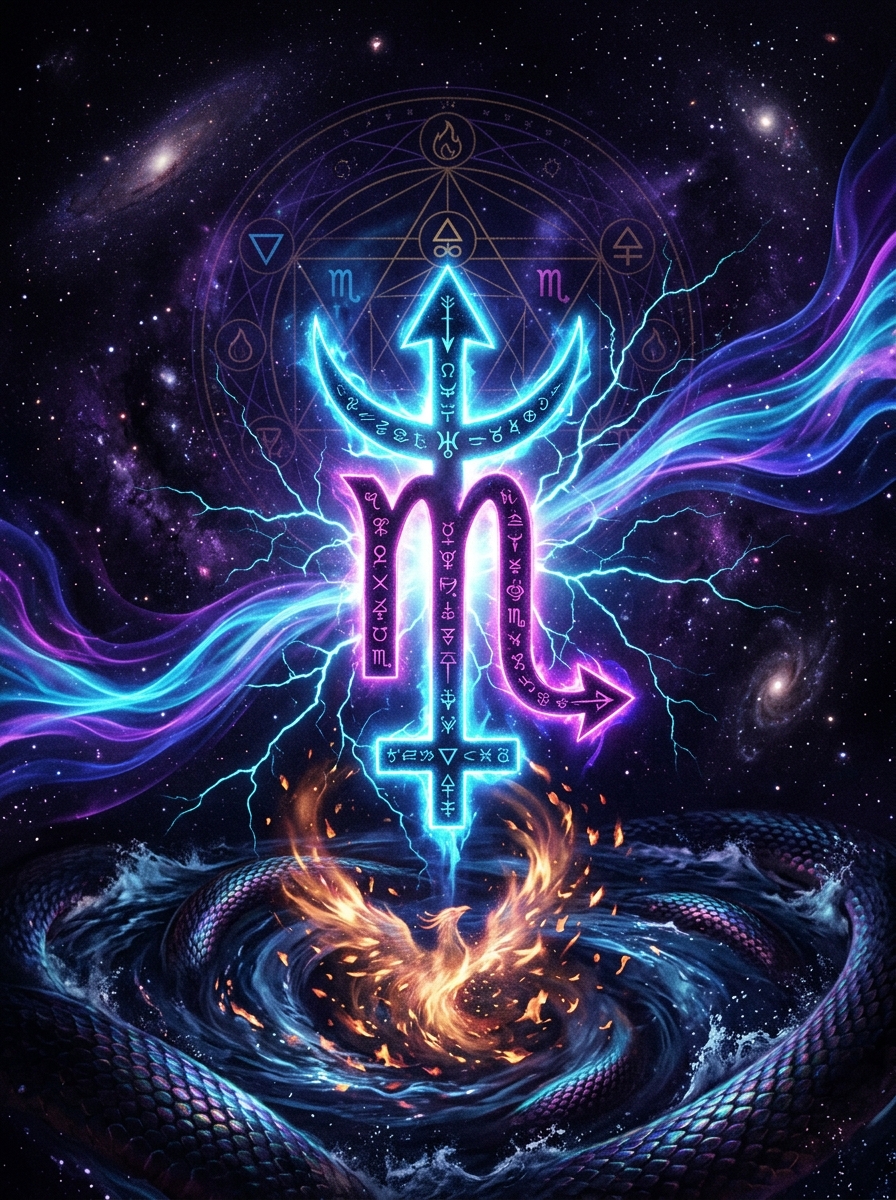
The placement of Uranus in Scorpio represents one of the most intense, volatile, and psychologically profound astrological alignments of the modern era. Uranus is the planet of sudden awakening, technological breakthroughs, intellectual genius, and radical rebellion. It is the cosmic disruptor, the electric current that breaks up stagnant structures to enforce individual and collective evolution. Scorpio, on the other hand, is the watery, chthonic domain of the underworld. Ruled traditionally by Mars and modernly by Pluto, Scorpio governs the mysteries of death, rebirth, sexuality, shared resources, and the deep psychological shadows of the human psyche. When these two cosmic principles merge, the result is a generational cohort (born between 1974 and 1981) and a personal astrological signature that demands the total dismantlement of societal taboos and the alchemy of the soul.
In this deep dive, we will explore the Promethean descent into the subconscious, the sexual and psychological transformations sparked by this alignment, the historical context of the late twentieth century, the expression of this placement across different houses and planetary aspects, and the crucial work of integrating its shadow expression.
The Promethean Descent into the Underworld
To understand Uranus in Scorpio, one must first visualize the mythological meeting of Uranus, the sky god of cosmic lightning and Promethean fire, with the dark, watery depths of the Scorpio underworld. Uranus represents the drive to transcend earthly limitations through sudden, flash-like insights, while Scorpio represents the chthonic forces of the unconscious that demand emotional depth, absolute honesty, and raw truth. In astrological terms, when the lightning of Uranus strikes the deep waters of Scorpio, it illuminates the hidden recesses of the collective and personal shadow, forcing us to look at what has been buried, ignored, or actively repressed by polite society. This combination generates an intense friction between the air element of Uranus and the water element of Scorpio, turning intellectual concepts into searing emotional trials.
This placement acts as an uncompromising searchlight. Under its influence, the intellectual ideals of Uranus are dragged down into the emotional cauldron of Scorpio. It is not enough to simply theorize about freedom, individuality, or social reform; these concepts must be lived, experienced, and felt in the gut. Liz Greene, a pioneer in psychological astrology, notes that Scorpio is the sign of the zodiac most deeply concerned with the struggle between light and darkness, power and surrender. With Uranus in Scorpio, the Promethean spark is used to illuminate the basement of the human psyche. The generation born under this influence possesses an innate, often unsettling ability to see through social pretenses, unmasking hypocrisy and demanding a level of authenticity that can terrify those who rely on conventional social masks. They possess an intuitive understanding that true freedom cannot be achieved by running away from the dark, but by diving straight into it.
Carl Jung’s concept of the shadow is central to this placement. The shadow consists of those aspects of the self that the ego rejects as unacceptable or dangerous. Uranus in Scorpio acts as a collective catalyst for shadow integration, insisting that true psychic wholeness cannot be achieved without confronting our deepest fears, hidden desires, and historical wounds. Steven Forrest, in his evolutionary astrology work, describes Uranus as the planet of individuation—the force that compels us to break free from the conditioning of our family, culture, and society. In Scorpio, this individuation is achieved through psychological crisis and self-honesty. It is a process of emotional excavation, where the individual must dive into the unconscious to retrieve their lost power, transforming their pain into spiritual wisdom. The journey is one of reclaiming the aspects of ourselves we have disowned.
This Promethean descent is rarely peaceful. It is characterized by sudden, shocking revelations and emotional earthquakes that shatter the illusions of safety. Yet, as Aleister Crowley observed in his writings on the Tarot, the path of the Death card (which corresponds to Scorpio) is the path of imaginative intelligence—a radical shift in consciousness that occurs when we allow the old, outworn aspects of ourselves to die. Uranus accelerates this process, delivering the electric shock necessary to break the patterns of emotional stagnation. By descending into the underworld of the psyche, the Uranus in Scorpio individual steals the fire of self-knowledge, returning to the conscious world reborn, sovereign, and deeply transformed. They become the ultimate survivors, carrying the wisdom of the depths back to the surface.
The Sexual and Psychological Revolution
The eighth house of the zodiac, which Scorpio naturally rules, is the arena of shared resources, deep psychological bonds, and the merging of energies—specifically through sexuality, money, and power. When the revolutionary, liberating impulse of Uranus enters this intensive space, it catalyzes a radical redefinition of intimacy and shared power. It rejects the conventional boundaries of relationships and the traditional morality of the status quo, demanding that intimacy serve as a vehicle for mutual liberation rather than ownership, possessiveness, or control.
Sexuality, under the influence of Uranus in Scorpio, is stripped of its historical shame and guilt. It is no longer viewed as a taboo topic to be discussed behind closed doors, nor is it treated as a mere physical release. Instead, sexuality is recognized as a potent, evolutionary energy capable of triggering altered states of consciousness and deep psychological healing. This generation pioneered a more open, experimental approach to human connection, challenging monogamous norms, exploring alternative lifestyles, and bringing conversations about consent, desire, and sexual identity into the light of day. As Liz Greene suggests, the ultimate challenge of Scorpio is to learn the difference between possessive attachment and true, transformative intimacy. Uranus provides the detachment needed to break the bonds of jealousy and codependency, allowing individuals to experience profound emotional depth while maintaining their psychological sovereignty.
Furthermore, this revolution extends to the realm of shared resources, financial systems, and collective power. Scorpio rules the money of others—taxes, debts, inheritances, and corporate finance. Uranus in Scorpio exposes the hidden manipulations and power struggles inherent in these systems. It questions why money is used as a tool of domination and control, advocating instead for financial transparency and cooperative economic models. On a personal level, individuals with this placement are forced to examine their own relationship with dependency and control. They must learn that true security is not found in the accumulation of material assets or the manipulation of others, but in their own capacity to survive crisis and reinvent themselves. By breaking down the taboos surrounding both sex and money, Uranus in Scorpio fosters a culture of deep psychological self-reliance and shared empowerment.
This placement also highlights the concept of psychological sovereignty as a prerequisite for true union. For Uranus in Scorpio, a relationship is not a contract of mutual dependence, but a voluntary alliance between two sovereign individuals. The traditional marriage model, which often traded female economic dependence for male social status, is thoroughly dismantled by this placement. Instead, relationships are recast as spiritual crucibles where both partners are encouraged to face their own demons, heal their own wounds, and support each other's individual evolution. This perspective has fundamentally changed the landscape of modern relationships, making emotional compatibility, psychological compatibility, and mutual growth the primary metrics of success.
The Alchemists of the Modern Zodiac (1974-1981)
The generation born between 1974 and 1981 carries the collective mark of Uranus in Scorpio. They were born during a period of profound socio-political transition, acting as the alchemists who took the raw, unpolished crises of their time and transformed them into the psychological foundation of the modern world. Their childhood and coming-of-age years were shaped by historical events that laid bare the shadow side of power, trust, and human mortality, forcing them to develop an early resilience and a deep-seated skepticism toward authority.
A primary historical milestone for this generation was the Watergate scandal, which concluded with the resignation of President Richard Nixon in 1974. Watergate was a collective shock to the American psyche, revealing the hidden corruption, surveillance, and abuses of power within the highest office in the United States. For the infants and children of the Uranus in Scorpio era, this event set a cultural baseline of mistrust in institutional authority. They grew up knowing that those in power could lie, keep secrets, and exploit the public. This collective experience bred a generation of natural investigators, individuals who demand transparency and are highly skilled at reading between the lines of official narratives.
Simultaneously, the late 1970s and early 1980s saw the mainstreaming of depth psychology and counseling. The esoteric and clinical insights of Carl Jung and other psychological theorists began to influence popular media, self-help books, and family dynamics. Therapy, which had previously been viewed as a last resort for the mentally ill, was redefined as a normal, even fashionable tool for self-actualization. The Uranus in Scorpio generation embraced this shift wholeheartedly, normalizing conversations about mental health, trauma, and emotional integration. They dismantled the taboo of silence around psychological suffering, paving the way for the therapeutic culture we see today.
However, this era of psychological openness and sexual liberation was met with a devastating global crisis: the emergence of the AIDS epidemic. This health crisis brought the core Scorpio themes of sex, death, taboos, and systemic neglect into the mainstream consciousness. It forced the Uranus in Scorpio cohort to confront the fatal consequences of physical intimacy and the societal prejudices leveled against marginalized groups. The epidemic shattered the easy optimism of the sexual revolution, introducing a sobering awareness of mortality and vulnerability. In response, this generation developed a deep resilience, fighting against the taboos of the disease and advocating for medical research, civil rights, and healthcare reform. Through these intersecting crises of power, health, and mind, the Uranus in Scorpio cohort refined their identity as the alchemists of the modern zodiac, transforming collective trauma into psychological maturity and social change.
This generation also witnessed the transition from the analog world to the digital age, a shift that aligns perfectly with the Uranian association with technology and Scorpio's connection to deep, hidden systems. As young adults, they were the early adopters of the internet, recognizing its potential to democratize information and disrupt traditional power structures. They understood that information is a form of power, and by making it accessible to all, they could challenge the gatekeepers of culture and industry. This technological revolution was not just about convenience; it was a tools for transparency, allowing individuals to connect across borders, share resources, and expose secrets on a global scale.
Uranus in Scorpio in the Natal Houses
The house placement of Uranus in Scorpio in an individual's birth chart reveals where the lightning bolt of sudden transformation, disruption, and radical self-reinvention is destined to strike. It points to the specific area of life where the individual must dismantle outdated, conditioned patterns, face their fears, and experience their own personal alchemy. Below, we examine how this placement operates in the four primary angular houses of the natal chart, which govern our identity, values, intellect, and home life.
House 1: The Electric Mask and Radical Self-Reinvention
When Uranus in Scorpio is located in the First House, the house of self, physical body, and personal identity, the individual is a walking embodiment of revolution. They possess an electric, magnetic, and often intense presence that cannot be ignored. Others may find them fascinating or deeply intimidating, as they project an aura of raw power and unpredictable change. These individuals do not adhere to societal expectations of how they should look, act, or present themselves. Their identity is not static; it is subject to sudden, radical reinventions. They may shed old careers, physical styles, and life philosophies overnight, emerging as a completely different version of themselves.
The primary lesson for these individuals is learning to navigate their intense need for independence without alienating others. They often harbor a subconscious fear of being controlled, dominated, or absorbed by their partners, which can lead to a defensive, aloof stance in close relationships. They must learn that true freedom is not the absence of connection, but the ability to remain true to oneself while in connection. When they integrate this energy, they become powerful agents of change. They show the world that it is possible to live authentically, without fear of judgment. Their path is one of learning to trust their inner compass, using their electric personality to challenge societal norms and inspire others to embrace their own inner truth.
House 2: Overhauling Material Values and Shared Capital
In the Second House, which governs personal resources, finances, material possessions, and self-worth, Uranus in Scorpio acts as a cosmic disruptor of material security. These individuals often experience sudden, unexpected shifts in their financial situation. They may experience periods of windfall followed by sudden losses, or they may choose unconventional ways of making a living that reject the traditional nine-to-five structure. They are called to develop a relationship with material resources that is fluid and unattached, recognizing that money is ultimately a form of energy rather than a guarantee of safety.
For Second House Uranus in Scorpio individuals, the sense of self-worth must be completely decoupled from material wealth or societal status. They are challenged to confront any inherited fears of poverty, greed, or dependency. Often, they find themselves involved in complex financial dynamics involving shared capital, partner resources, or inheritances, where they must learn to maintain their financial and psychological independence. They must avoid using money as a weapon of control in their relationships. When integrated, this placement allows the individual to build an unshakeable sense of self-worth rooted in their internal resilience rather than external assets. They become experts at resourcefulness, capable of rebuilding their material lives from scratch whenever necessary.
House 3: The Penetrating Mind and Disruptive Communication
With Uranus in Scorpio in the Third House, the realm of the concrete intellect, daily communication, learning, and the local environment, the mind becomes a highly sharp, investigative instrument. These individuals have no interest in superficial small talk or conventional wisdom. They are natural researchers, psychologists, and detectives, possessed of an innate ability to pierce through falsehoods and perceive the hidden motives of others. Their communication style is direct, honest, and often disruptive, as they are willing to speak about the taboos and secrets that others prefer to ignore.
This placement can sometimes lead to a feeling of mental isolation or restlessness, particularly during the early school years, where their unconventional way of processing information may not have fit into traditional educational models. They may also experience sudden disruptions in their relationships with siblings or neighbors. The shadow of this house is a tendency toward obsessive thinking, paranoia, or a belief that they must always defend themselves against intellectual control. They must learn to quiet their minds and trust others. When integrated, however, the Third House Uranus in Scorpio gives rise to a powerful communicator who can use their words to heal and transform. They become voices for truth, exposing societal illusions and helping others to liberate their own minds.
House 4: Shaking the Roots and Domestic Metamorphosis
When Uranus in Scorpio falls in the Fourth House, the house of home, family roots, ancestral karma, and the private self, the foundations of the psyche are electrified. The early childhood environment of these individuals was often marked by sudden changes, emotional intensity, or hidden family secrets. They may have experienced frequent relocations, parental separation, or an atmosphere where emotional security was unpredictable. This can create a deep-seated feeling of rootlessness, as if they do not belong to their family of origin or their cultural heritage.
As adults, these individuals are called to undergo a profound domestic metamorphosis. They often choose unconventional living situations, creating homes that serve as laboratories for psychological healing rather than traditional family structures. Their task is to break free from ancestral conditioning and resolve the unresolved trauma passed down through their lineage. This process requires them to dive deep into their emotional roots, confronting their fears of vulnerability and abandonment. By doing so, they construct an inner sanctuary of emotional security that is independent of external circumstances. They learn that home is not a physical place, but a state of psychological sovereignty and peace within the self. They become the chain-breakers of their lineage.
Planetary Aspects with Personal Planets
The placement of Uranus in Scorpio is further individualized by the aspects it forms with personal planets in the birth chart. These aspects describe how the revolutionary, disruptive drive of Uranus interacts with our basic personal urges: action (Mars), power (Pluto), love (Venus), and emotion (the Moon).
The Fire and the Deep: Aspects to Mars and Pluto
When Uranus in Scorpio forms aspects to Mars, the planet of physical drive, assertion, and desire, it creates an incredibly potent, electric temperament. In challenging aspects (conjunctions, squares, or oppositions), this combination can manifest as a volatile, impatient urge to act. These individuals possess a low tolerance for restriction and can react impulsively or explosively when they feel their freedom is threatened. They must be careful not to create conflict just to feel alive. However, this aspect also bestows immense courage, quick reflexes, and the capacity to act decisively in times of crisis. When channeled constructively, Mars-Uranus aspects give the individual the stamina and bravery to dismantle corrupt systems and fight for radical reforms, serving as a dynamic force for change.
Aspects between Uranus and Pluto—the modern ruler of Scorpio—represent a profound meeting of the two primary agents of evolutionary transformation. For the generation born in the mid-to-late 1970s, Uranus in Scorpio formed a series of subtle but powerful collective aspects to Pluto in Libra. This alignment highlights the tension between relational harmony and diplomatic compromise (Pluto in Libra) and the demand for absolute, uncompromising truth and individual freedom (Uranus in Scorpio). On an individual level, direct aspects between these two outer planets create a person who is highly sensitive to the subtle undercurrents of power, manipulation, and control in their environment. They are driven by a deep, evolutionary necessity to expose systemic hypocrisy and rebuild their lives and societies on a foundation of absolute transparency. They are the archetypal reformers of the modern world.
Heart and Soul: Aspects to Venus and the Moon
When Uranus in Scorpio aspects Venus, the planet of love, relationships, aesthetics, and values, the individual’s relational life is characterized by a search for the unconventional. These individuals are drawn to unique, independent, or mysterious partners, rejecting traditional relationship structures in favor of arrangements that allow for absolute emotional honesty and personal freedom. The core challenge here lies in the classic tension between Scorpio’s desire for deep, merging intimacy and Uranus’s need for detachment and independence. This can create a "push-pull" dynamic, where the individual craves deep bonding but panics and retreats when relationships feel too restrictive. Integrating a Venus-Uranus aspect requires learning to build relationships based on mutual respect, clear boundaries, and a shared commitment to personal growth.
Aspects between Uranus in Scorpio and the Moon, the ruler of our emotions, subconscious, and sense of safety, create a highly charged, intuitive emotional nature. These individuals possess a psychic-like sensitivity, easily picking up on the hidden feelings, tensions, and unspoken dynamics in any room. The maternal environment may have been experienced as unpredictable, intense, or unconventional, which can lead to a habit of emotional self-reliance and a fear of vulnerability. The challenge is navigating sudden emotional shifts and a baseline of inner restlessness. To integrate this aspect, the individual must learn to anchor themselves in their own emotional depth, treating their sudden feelings not as absolute truths to react to, but as waves to be observed and integrated with objective awareness. They must learn that it is safe to be vulnerable.
Shadow Pitfalls and Integration
For all its potential to catalyze profound psychological breakthroughs, Uranus in Scorpio carries a heavy shadow that must be navigated with conscious awareness. The combination of Scorpio's emotional intensity and Uranus’s disruptive, electric nature can easily manifest as destructive behavioral patterns if the individual is operating unconsciously.
A primary shadow pitfall of this placement is an obsession with the dark, the taboo, and the hidden. Because these individuals are natural investigators, they can easily slide into a state of chronic suspicion, paranoia, and cynicism. They may begin to see manipulation, deceit, and conspiracy in every interaction, making it impossible for them to build relationships of trust. This paranoia can lead to a self-imposed isolation, where the individual withdraws from society, convinced that everyone is operating from hidden, malicious motives. They must learn that while exposing the shadow is necessary, focusing exclusively on the dark can blind them to the genuine light and goodness in the world. True wisdom lies in seeing both the dark and the light.
Another significant danger is a tendency toward self-destruction and power struggles. When faced with stagnation or emotional discomfort, the unintegrated Uranus in Scorpio individual may choose to initiate sudden, chaotic crises rather than engage in the slow, patient work of emotional healing. They may mistake chaos for transformation, burning down relationships, careers, and support systems under the guise of "individuation." This "scorched earth" approach often leaves a trail of emotional devastation in its wake. Furthermore, their fear of being controlled can lead them to engage in unconscious power struggles, manipulating others in an attempt to maintain their own dominance and safety. They must learn to recognize when their desire for change is actually a fear of intimacy.
To integrate this placement, the individual must cultivate the courage to face their own internal shadow without judgment. They must learn that true liberation does not come from constant external rebellion or the destruction of their ties, but from a quiet, internal sovereignty. They must practice the art of vulnerability, allowing others to see their wounds and learning to trust that they can survive the discomfort of emotional exposure. By combining the intellectual objectivity of Uranus with the deep, healing waters of Scorpio, they can channel their revolutionary energy into authentic alchemy, transforming their personal crises into a source of enduring strength and compassion for themselves and the world. They become the wounded healers of their time.
Frequently Asked Questions About Uranus in Scorpio
What does it mean to have Uranus in Scorpio in your natal chart?
Having Uranus in Scorpio in your birth chart indicates that you carry a powerful personal or generational signature (particularly if you were born between 1974 and 1981) dedicated to radical psychological transformation. It suggests that your path of individuation involves confronting societal and personal taboos, doing deep shadow work, and liberating yourself from ancestral conditioning. You are called to find your true power not in external security, but in your ability to navigate emotional crises and reinvent yourself. It is a placement of profound evolutionary potential.
How does Uranus in Scorpio impact relationships and intimacy?
Uranus in Scorpio demands absolute emotional honesty and psychological sovereignty in relationships. It rejects superficial connections, seeking instead a deep, transformative bond that does not compromise individual freedom. This can create a tension between the urge to merge completely with a partner and the need for independent space. Integrating this placement in relationships requires setting clear, respectful boundaries, cultivating trust, and viewing intimacy as a collaborative journey of mutual growth and self-discovery.
What is the historical significance of the Uranus in Scorpio generation?
The cohort born during the transit of Uranus in Scorpio (1974-1981) came of age during a time of significant cultural shifts. They witnessed the exposure of political corruption (Watergate), the mainstream adoption of depth psychology and therapy, and the sobering realities of the AIDS epidemic. These events shaped them into a resilient, skeptical, and psychologically minded generation that helped normalize conversations about mental health, trauma, and systemic reform, changing how society views intimacy and power.
What are the main shadow aspects of Uranus in Scorpio?
The primary shadow pitfalls include a tendency toward paranoia, chronic suspicion of others' motives, an obsession with conspiracy theories, and a habit of self-destruction. Unintegrated individuals may create chaotic crises in their lives under the mistaken belief that they are achieving transformation, or they may engage in subtle power struggles to avoid being controlled. They may also struggle with a fear of vulnerability that prevents deep connection.
How can I best integrate my Uranus in Scorpio placement?
Integration requires balancing Uranus's intellectual objectivity with Scorpio's deep emotional sensitivity. Rather than reacting impulsively to emotional discomfort or pushing others away out of a fear of control, you must practice vulnerability and cultivate trust. True integration comes when you use your deep psychological insights to heal your own wounds, allowing you to act as a compassionate agent of change for the collective. It is about moving from suspicion to authentic empowerment.
Is Uranus exalted or in fall in Scorpio?
In traditional astrology, Uranus is often considered to be exalted in Scorpio. This is because Uranus's revolutionary, electrifying energy finds a powerful ally in Scorpio's deep, transformative, and uncompromising nature. Scorpio provides the emotional depth and resilience required to withstand Uranus's sudden, disruptive changes, while Uranus provides the intellectual lightning necessary to liberate Scorpio from its obsessive tendencies. Together, they create a potent force for psychological and spiritual evolution.
Related
- Uranus in Cancer: Redefining Emotional Security, Ancestral Lineages, and the Modern Family
- Uranus in the 8th House: Deep Disruption and the Prometheus Archetype
- Pluto in Scorpio: Shadow Work, Generational Crisis, and the Alchemy of Rebirth
- Uranus in Aquarius: The Promethean Fire and the Digital Generation
- Uranus in Capricorn: The Generational Quest to Restructure Reality
Comments
Loading comments…