Neptune in Taurus: The Alchemy of Spirit and Matter
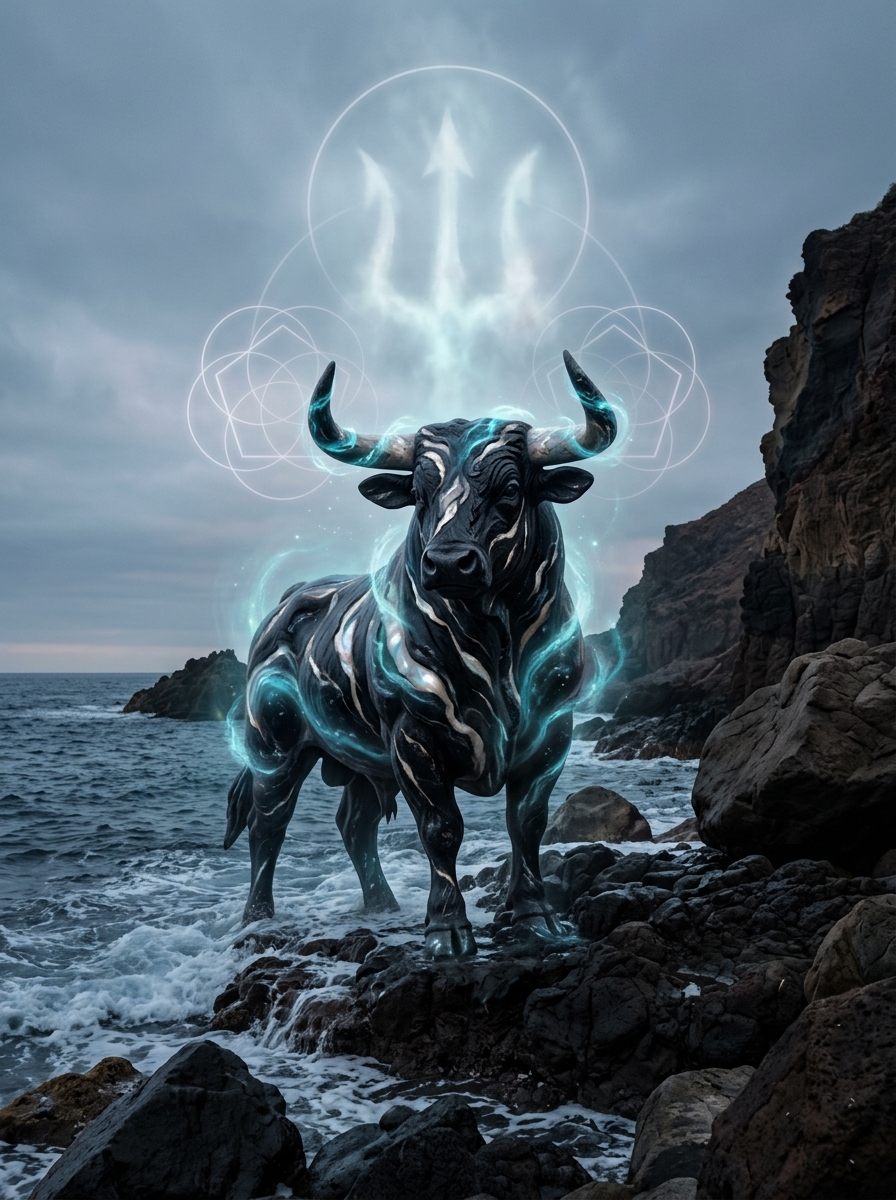
Neptune in Taurus: The Alchemy of Spirit and Matter
The transit of Neptune through the fixed earth sign of Taurus represents one of the most profound archetypal marriages in astrology: the convergence of the formless, infinite waters of the collective unconscious with the dense, fertile, and sensory-bound soil of the physical plane. Neptune, the planetary embodiment of the Roman god of the oceans, signifies dissolution, mystical longing, artistic inspiration, and the dissolution of boundaries. It represents the urge to transcend the limitations of individual ego and merge with a greater, undivided source. Taurus, ruled by Venus, represents the opposite end of the cosmic spectrum: the tangible, the material, the slow-growing seed, the physical body, and the solid ground under our feet. When these two primordial forces interface, we witness the spiritualization of matter and the materialization of spirit.
This unique combination forces us to look beyond the typical dichotomy of the spiritual and the physical. Frequently, spiritual systems encourage a rejection of the body or the earth, labeling them as illusions or traps for the soul. Neptune in Taurus rejects this dualism entirely. Instead, it proposes that the physical world is the primary laboratory of the divine, a canvas where the sacred is meant to be touched, tasted, smelled, and lived. By bringing the vast, dream-like quality of Neptune into the practical, sensory realm of Taurus, this transit asks humanity to find the absolute in the relative, the infinite in the finite, and the transcendent in the mundane. It suggests that our spiritual practice cannot be divorced from how we treat our bodies, build our homes, and cultivate the land.
Historically, this generational transit occurs once every 165 years, lasting approximately fourteen to fifteen years per sign. The most recent historical passage of Neptune in Taurus occurred between 1874 and 1889, a period that witnessed the birth of modern environmentalism, the rise of impressionist painting, and a collective restructuring of our relationship to labor, craft, and the natural world. The upcoming transit, scheduled for 2039 to 2052, will arrive at a critical juncture in human history, challenging us to resolve our ecological crises and rebuild our global financial and resource systems on foundations of sacred stewardship. It is a time when the collective unconscious will dream a new dream of the earth, demanding that we translate that dream into physical structures, sustainable agricultural practices, and resource-sharing networks that honor the living planet.
At the core of this transit lies the alchemical dynamic of solve et coagula—dissolve and coagulate. Neptune acts as the solve, dissolving the rigid, calcified structures of Taurus's material attachments, while Taurus acts as the coagula, giving physical, sensory, and structured form to Neptune’s fluid, ethereal dreams. Without the Taurean container, Neptune’s visions remain formless, drifting away like mist; without the Neptunian solvent, Taurus’s materialism hardens into cold, sterile greed and inertia. Together, they invite humanity to experience the physical world not as an obstacle to spiritual realization, but as its ultimate temple. This is a nature-based, sensory spirituality that recognizes the divine spark within every atom of soil, every leaf of grass, and every breath of the physical body. It suggests that our relationship to our resources—how we cultivate the land, build our homes, feed ourselves, and exchange value—is the ultimate measure of our spiritual integrity. When we align these two forces, we achieve a state of grounded grace, where the physical world becomes illuminated by the light of the spirit.
Archetypal and Psychological Foundations: Sensation and the Anima Mundi
To understand Neptune in Taurus from a psychological perspective, we must look to the work of Carl Jung and the framework of depth psychology. Jung identified four primary psychological functions: thinking, feeling, intuition, and sensation. Sensation is the function that relates directly to the physical reality of the world, perceiving things as they are through the five senses. Taurus is the archetypal home of the sensation function, grounded in what is immediate, tangible, and practical. When Neptune, the planet of the collective unconscious and intuitive mystical union, enters Taurus, it plunges the formless waters of the unconscious directly into the sensation function.
This psychological descent has profound implications for how we process experience. Sensation becomes the primary channel for the transpersonal. It is no longer enough to theoretically understand mystical concepts; they must be physically experienced, felt in the muscles, the nervous system, and the gut. Under Neptune in Taurus, the boundaries between the subjective inner world and the objective outer world begin to blur. The beauty of a landscape, the texture of clay, or the rhythm of a song can trigger a profound state of ego-dissolution and spiritual connection. The material world becomes a mirror for the soul, and the soul finds its expression through physical embodiment. In this alignment, we do not escape the world to find God; we go deeper into the world to discover the sacred spark that was there all along.
The Tension of Form and Formlessness
Astrologer Liz Greene has written extensively on the archetypal dimension of Neptune, pointing out that Neptune represents the universal human longing for redemption, salvation, and a return to the womb of the primordial ocean. This longing, when directed into Taurus, meets the absolute boundary of physical form. Taurus demands definition, ownership, and boundary lines. Taurus wants to build fences, purchase property, and establish concrete security, while Neptune seeks to wash away all fences, dissolve property rights, and remind us that we own nothing. The psychological tension here is immense: how does one experience infinite oneness while respecting the concrete limits of a physical, mortal existence?
If this tension is not held consciously, it can lead to psychological fragmentation. The individual may swing wildly between a rejection of the material world (viewing it as corrupt or meaningless) and an obsessive attachment to physical security (hoarding resources out of fear). The integration of this tension requires the understanding that form is not the enemy of the spirit, but its vehicle. As Liz Greene suggests, the task is to recognize that the limits of physical reality are the very conditions that make creation possible. The canvas must have edges for the painting to exist; the song must have silence at its beginning and end to be heard. Neptune in Taurus teaches us to love the boundaries of life while simultaneously sensing the boundless mystery that flows through them, cultivating a deep appreciation for the temporary nature of all physical creations.
Somatic Unconscious and the Sensation Function
Under this planetary influence, the sensation function is elevated to a mystical art. The everyday actions of eating, building, farming, and resting are experienced as sacred rituals. The somatic unconscious speaks through physical symptoms, sensory cravings, and deep instinctual pulls, demanding that we pay attention to the wisdom of our biology. The body holds the memory of our evolutionary journey, and through somatic awareness, we can access states of consciousness that transcend the individual ego. It is a form of somatic mysticism that values the wisdom of the cells and the intelligence of our instincts.
Steven Forrest, a prominent contemporary astrologer, often emphasizes the evolutionary necessity of aligning with the natural rhythm of a sign. For Neptune in Taurus, that alignment is found in silence, stillness, and sensory simplicity. By slowing down to the speed of the earth, we allow the Neptunian waters to clear, revealing the divine presence that animates the material world. When we quiet the frantic chatter of the intellect and drop into the direct, sensory experience of the present moment, we realize that we are not separate from the environment. The air we breathe is the breath of the world; the food we eat is the body of the earth. In this state of somatic resonance, the sensation function becomes a portal to the anima mundi—the soul of the world—connecting us to the living intelligence that permeates all matter. This connection fosters a profound sense of ecological responsibility, as we realize that harming the earth is literally harming ourselves.
The Shadow of the Placement: Spiritualized Consumerism and Material Inertia
Every astrological archetype possesses a shadow, and the combination of Neptune and Taurus is no exception. The shadow of this placement emerges when the boundary-dissolving nature of Neptune is misapplied to the material desires of Taurus, or when Taurus's stubborn attachment to comfort and security paralyzes Neptune's spiritual aspirations.
The most prominent manifestation of this shadow is spiritualized consumerism. Because Taurus is closely linked to wealth, resources, and material possessions, Neptune's search for redemption can be projected onto the acquisition of physical goods. This leads to the illusion that buying the right organic products, owning the perfect piece of land, or accumulating luxury goods can somehow satisfy the soul's deep longing for spiritual peace. It is the commodification of the sacred, where spiritual practices, wellness trends, and ecological ideals are packaged and sold as consumer items. The seeker becomes trapped in a cycle of endless acquisition, hoping that the next material purchase will finally bring the oceanic sense of completion that Neptune promises. This shadow is particularly insidious because it masquerades as virtue, using the language of environmentalism, wellness, and conscious living to justify the same old patterns of accumulation and ego-gratification, creating a class of "conscious consumers" who remain deeply entrenched in materialistic lifestyles.
Solve et Coagula in Negative Expression
In its negative alchemical expression, the process of solve et coagula breaks down. Instead of a healthy integration, we see the dissolution of financial reality and resource management. Neptune can bring a heavy fog of denial, confusion, and deception to the realm of Taurean finances and resources. This manifests collectively as speculative bubbles, unrealistic valuations of assets, and widespread financial fraud. Because Taurus seeks absolute material safety, the fear of scarcity combined with Neptune’s capacity for delusion can lead people to invest in hollow promises, chasing phantom wealth that vanishes when the bubble bursts. The collective projects its dreams of effortless abundance onto unstable financial systems, ignoring the physical limits of resources and the ecological cost of their extraction. This leads to economic volatility and widespread panic when the illusion of limitless wealth collapses.
On a personal level, this shadow manifests as material inertia and spiritual stagnation. Taurus is a fixed sign, naturally resistant to change and prone to stubbornness. When Neptune's influence is distorted, it can manifest as a deep psychological paralysis—a comfortable, sensory fog that makes individuals blind to the necessity of growth and adaptation. People may use spiritual philosophies to justify their laziness or lack of responsibility, claiming that since "everything is one" or "the universe will provide," there is no need to take practical action, engage in labor, or do the hard work of building and maintaining a life. The physical body, too, can become a site of escapism, turning to sensory overindulgence, substances, food, or chronic sleep as a way to anesthetize the discomfort of daily life and avoid the challenging realities of the material world. The somatic unconscious, instead of being a source of wisdom, becomes a swamp of stagnation, procrastination, and avoidance, locking the individual in a state of comfortable decay.
The Historical Generation (1874–1889): The Sacred Temple of Nature
To understand how Neptune in Taurus operates on a global scale, we must examine the generation born during its last transit, which spanned from 1874 to 1889. This was a time of intense industrialization, urbanization, and material expansion in the United States and Western Europe. The Gilded Age was in full swing, characterized by rapid railway expansion, the rise of factory labor, and the aggressive extraction of natural resources. Yet, in direct response to the rapid despoilation of the landscape by industrial capitalism, a powerful counter-movement arose that sought to sanctify nature and protect the earth as a holy temple.
This period saw the birth of the modern environmental conservation movement. It was during this transit that the collective consciousness began to shift from viewing the earth as a mere storehouse of resources to be extracted and commodified, to recognizing it as a fragile, sacred ecosystem that must be preserved. The generation born under this transit grew up to become the writers, activists, and policy-makers who formalized conservation, establishing the foundational institutions of ecological preservation. They looked at the wild forests, the rivers, and the mountains not as timber, water power, and ore, but as places of spiritual renewal and communion with the divine. This generational shift laid the groundwork for the modern wilderness preservation policies that protect vast tracts of land from industrial development. The preservation of these spaces was seen as an essential counterbalance to the spiritual decay of urban industrial environments, establishing a physical boundary where the infinite could still be encountered.
Transcendentalism and Naturalism
While the philosophical foundations of Transcendentalism were laid earlier in the 19th century by figures like Ralph Waldo Emerson and Henry David Thoreau, it was the Neptune in Taurus generation that translated these ideals into concrete, institutionalized reality. They took the romantic, mystical appreciation of nature and combined it with Taurean practicality, creating enduring legal structures, land trusts, and national parks. Thinkers like John Muir, who founded the Sierra Club in 1892, championed the idea that wilderness has a right to exist for its own sake and that contact with nature is essential for the preservation of the human soul. The Neptune in Taurus generation provided the collective support and structural backing for these ideas to take root in law and public policy, moving the conversation from abstract philosophy to concrete land management and conservation.
The literary movement of Naturalism also took hold during this period, stripping away Victorian sentimentality to look at the physical world with scientific accuracy, yet feeling a deep, almost religious awe at the absolute power of nature. Writers of this era explored the biological reality of human existence, recognizing that humanity is not separate from the animal kingdom or the ecological systems of the earth. By embracing naturalism, they integrated the physical facts of biology (Taurus) with the collective, unified vision of life (Neptune). They showed that human fate is inextricably bound to the physical laws of nature, and that ignoring these laws leads to spiritual and material ruin. This literature challenged the human-centric view of the universe, establishing a deep sense of humility in the face of natural forces and proving that our highest spiritual callings are always grounded in material reality.
Cultural and Artistic Rebirth: Impressionism, Arts and Crafts, and Nature-Led Movements
The artistic output of the late 19th century reflects the Neptune in Taurus archetype with remarkable clarity. Art is the language of Neptune, and when it expresses itself through the earthy, sensory medium of Taurus, it transforms our visual and physical environment, elevating simple materials into vehicles of transcendent beauty.
The rise of Impressionism is perhaps the most vivid artistic manifestation of this transit. Impressionist painters, such as Claude Monet, Camille Pissarro, and Edgar Degas, revolutionized art by shifting their focus from formal, historical, and academic subjects to the immediate, sensory impression of light on physical objects. They painted outdoors, directly in nature (en plein air), capturing the fleeting, atmospheric qualities of the landscape. They were obsessed with the way light transformed the appearance of haystacks, cathedral stone, and water, showing that what we perceive as solid matter is actually a dynamic dance of energy and illumination. This focus on sensory reality and light dissolved the academic conventions of the past, creating a more direct, emotional connection between the viewer and the physical world. It taught the collective how to see the spiritual radiance within the everyday landscape, demonstrating that the mundane is filled with celestial beauty.
Impressionism and the Dissolution of Light
In Impressionist art, we see the literal dissolution (Neptune) of hard, physical lines (Taurus) into shimmering fields of color and light. The canvas is no longer a collection of solid, isolated objects separated by clean boundaries; instead, everything is connected, washing into everything else through the medium of light and atmosphere. Yet, the subject matter remains deeply Taurean: haystacks, water lilies, gardens, rivers, and the simple, everyday activities of rural and domestic life. The Impressionists captured the mystical, transcendent quality of the ordinary, material world, showing that light—the ultimate symbol of spirit—is inseparable from the earth. They dissolved the illusion of separation, revealing that the observer and the observed, the land and the light, are part of a singular, sacred field of experience.
Simultaneously, the Arts and Crafts Movement, led by figures like William Morris, arose as a direct rebellion against the cheap, mass-produced goods of the Industrial Revolution. Morris and his contemporaries argued that industrialization degraded both the worker and the consumer, stripping everyday life of beauty and meaning by separating the process of design from the physical act of creation. They advocated for a return to traditional craftsmanship, natural materials, and simple, functional designs inspired by nature. This movement was a perfect expression of Neptune in Taurus: it sought to spiritualize the domestic environment, asserting that the physical objects we use daily—our furniture, our wallpapers, our books, and our homes—should be created with love, artistry, and a deep respect for the natural materials used. By surrounding ourselves with objects that honor the earth and the human hand, we bring a sense of sacred presence into our everyday lives, turning craft into a form of devotion and design into a spiritual discipline that celebrates the union of utility and beauty, reminding us that physical creation is a sacred act of service to the soul.
The Future Transit (2039–2052): Redefining Value and Practical Earth Spirituality
As we look ahead to the next transit of Neptune in Taurus, which will occur between 2039 and 2052, we can anticipate a radical, collective transformation of our relationship to the earth, our economic systems, and our understanding of material security. The challenges of climate change, resource depletion, and economic inequality will reach a point where our current systems can no longer be sustained.
The primary task of this future generation will be the dismantling of extractive, speculative capitalism and the creation of a new ecological economy. Under the dissolving influence of Neptune, our current reliance on fiat currencies, detached financial speculation, and infinite economic growth on a finite planet will become unsustainable. Neptune will wash away the illusions of paper wealth and digital speculation, forcing humanity to return to the tangible reality of Taurus: real soil, clean water, sustainable agriculture, and localized, physical resources. We will be forced to confront the ecological reality of our economic activities, recognizing that real wealth cannot be printed or programmed; it must be grown, protected, and shared. This transition will require a collective letting go of the illusion that virtual spaces and digital assets can substitute for the life-supporting systems of the biosphere, grounding our collective dreams in ecological survival.
Ecological Economics and Resource Shifts
We are likely to see the emergence of ecological economics, where economic value is directly tied to ecological health. Currencies may be backed not by gold or government debt, but by carbon sequestration, biodiversity indices, and watershed restoration. The concept of wealth will be redefined from the accumulation of abstract numbers in a bank account to the health, stability, and beauty of one's local ecosystem. This resource shift will dissolve the centralized financial networks that currently dominate the world, replacing them with localized, bioregional systems that prioritize the preservation of the land and the well-being of the community. It will be a time of intense collective creativity, as we design new ways of living that align human needs with the biological limits of the planet. These local systems will build resilience in the face of global environmental changes, restoring a sense of sanity and security to our relationship with the material world and establishing a sustainable template for future generations.
Furthermore, this transit will bring a renaissance in practical earth spirituality. The abstract, sky-god religions that dominated the past millennia will continue to give way to a deeply localized, animistic relationship with the land. People will find their spiritual communities not in distant cathedrals, but in bioregional stewardship groups, community-supported agriculture, and watershed restoration projects. The technology of this era will likely shift from purely digital and virtual spaces (which will lose their Neptunian allure) to sophisticated, nature-integrated systems—somatic health technologies, biomimicry in architecture, and localized energy grids that work in harmony with the natural rhythms of the earth. We will realize that the highest expression of spirit is not to escape the earth, but to become fully conscious participants in its evolution, dedicating our energy and creativity to the regeneration of the living world and cultivating an intimate, physical dialogue with the planet.
Frequently Asked Questions
What does Neptune in Taurus mean in an individual's birth chart?
In an individual birth chart, Neptune in Taurus is a generational placement, meaning it is shared by everyone born within that fourteen-year window. Its house placement and aspects to personal planets determine how it manifests individually. On a personal level, it represents the area of life where the individual seeks mystical union and inspiration through physical, tangible means. It can manifest as a deep talent for sensory arts, such as pottery, gardening, somatic therapy, or architecture. Psychologically, it indicates where one must learn to balance the desire for absolute material security with the spiritual need to let go and trust the natural flow of life. If heavily challenged, it can indicate a tendency toward financial denial, somatic escapism, or an obsession with material comfort as a substitute for inner peace. It challenges the individual to find stability not in external accumulation, but in their somatic connection to the flow of life.
How does the shadow of Neptune in Taurus manifest in modern society?
In modern society, the shadow of Neptune in Taurus manifests as the commercialization of spirituality and wellness, often referred to as "spiritualized consumerism." This is seen in the massive market for expensive crystals, luxury yoga retreats, and organic lifestyle branding that promises inner peace through purchasing power. It also manifests as a collective denial regarding resource depletion and climate change, where society clings to the illusion that technology or green consumerism will allow us to maintain our extractive lifestyle without making fundamental, physical sacrifices. On a financial level, it shows up as speculative bubbles and the pursuit of unearned wealth, where individuals chase get-rich-quick schemes rather than building stable, tangible value. This shadow encourages us to treat the earth and our bodies as commodities to be consumed rather than sacred systems to be protected.
How did the Neptune in Taurus generation shape the modern environmental movement?
The generation born during the late 19th-century transit of Neptune in Taurus (1874–1889) was instrumental in establishing the modern environmental conservation movement. As they reached adulthood in the early 20th century, they took the philosophical ideals of nature-mysticism and turned them into practical, lasting structures. They helped establish the National Park Service in the United States, founded early conservation organizations like the Sierra Club, and drafted the first major environmental protection laws. Their work shifted the cultural narrative from viewing nature purely as a resource for industrial exploitation to recognizing it as a sacred heritage that must be preserved for its own sake. They proved that spiritual ideals about the land could be translated into concrete legal protections and public policy.
What can we expect during the next Neptune in Taurus transit in 2039–2052?
During the next transit from 2039 to 2052, we can expect a major restructuring of global financial systems and resource management. The illusion of fiat money and speculative digital assets will likely face severe crises, forcing a return to resource-backed currencies and localized economies. We will see the widespread adoption of ecological economics, where wealth is measured by the health of the soil, water, and air. Culturally, there will be a massive shift away from virtual escapism back toward physical, somatic reality, leading to a renaissance in hand-crafts, small-scale farming, bioregionalism, and community-centered living. This transit will challenge us to build a sustainable, sacred relationship with the physical world, recognizing that our survival depends on our ability to live in harmony with the biological networks of the earth.
How does Liz Greene describe the psychological challenge of Neptune in Taurus?
Liz Greene describes the psychological challenge of Neptune in Taurus as the difficult reconciliation between Neptune's longing for boundaryless oceanic unity and Taurus's instinct for physical form, containment, and personal ownership. Neptune represents the desire to dissolve the ego and return to a state of undifferentiated oneness, while Taurus represents the ego's anchor in the physical world through possessions, stability, and sensory identity. Greene notes that individuals or generations with this placement must face the pain of having their material security dissolved or challenged, which ultimately serves to redirect their search for safety from the temporary, external world of matter to the eternal, internal reality of the spirit. It is a call to surrender the illusion of control and find a deeper, more resilient trust in the flow of life itself.
In what ways does Neptune in Taurus influence our relationship with the human body?
Neptune in Taurus deeply influences our relationship with the human body by shifting our perception of biology from a mechanical view to a mystical one. It highlights the body as an energetic and spiritual temple rather than just an instrument for productivity. Under this influence, we learn that emotional and spiritual blockages often manifest as somatic experiences, and that physical symptoms can carry profound messages from the collective unconscious. This placement encourages therapies that integrate mind and body, such as somatic experiencing, breathwork, and sensory therapies. By listening to the quiet instincts of the physical body, we align with the natural rhythms of the earth.
Related
- Neptune in Capricorn: Redefining Authority and the Architecture of the Soul
- Neptune Transits: Navigating the Archetypal Solutio and the Fog of Spiritual Dissolution
- Neptune in Sagittarius: The Mystic Horizon and the Generation That Rewrote Belief
- Neptune in Pisces: Mystic Waters, Collective Dissolution, and the Spiritual Generation
- Neptune in Virgo: The Dissolution of Spirit in the Material World
Comments
Loading comments…