Neptune in Pisces: Mystic Waters, Collective Dissolution, and the Spiritual Generation
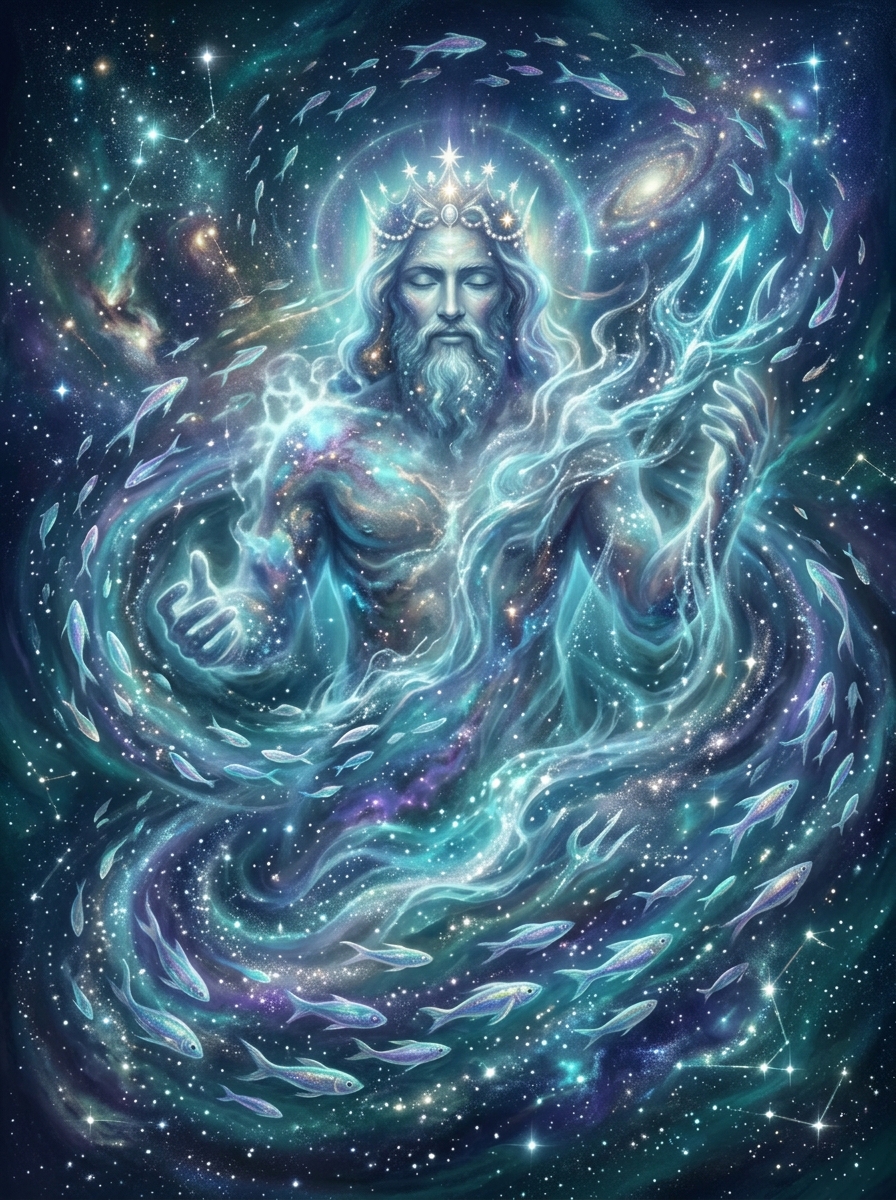
The Mystical Depths: An Introduction to Neptune in Pisces
The transit of Neptune through the sign of Pisces, spanning from 2012 to January 2026, represents one of the most spiritually charged, psychologically complex, and culturally transformative astrological epochs of the early twenty-first century. In the symbolic language of astrology, when a planet returns to its own home sign, its archetypal energies are amplified to their highest, most concentrated expression, saturating the collective unconscious with its specific qualities. In the case of Neptune, the celestial body associated with mysticism, dreams, illusion, and universal unity, its residence in the mutable water sign of Pisces has acted as a powerful cosmic solvent. Over these fourteen years, the hard edges of the materialist paradigm have steadily dissolved, giving way to an era characterized by a profound search for spiritual meaning, a massive rise in collective empathy, and a simultaneously disorienting crisis of truth and shared reality.
To fully comprehend the influence of Neptune in Pisces, one must appreciate the history and symbolism of this distant, blue planet. Discovered in 1846 during a period that witnessed the birth of spiritualism, the rise of photography, and the first clinical uses of anesthetic ether, Neptune represents the human urge to transcend the boundaries of physical existence. It is the archetype of the mystic who longs to merge with the divine source, the artist who channels inspiration from the collective reservoir, and the idealist who dreams of a utopian society. In Pisces, a sign naturally associated with the infinite ocean, the twelfth house, and the dissolution of form, Neptune's boundary-dissolving nature is granted complete freedom to operate. Here, the planet is not forced to adapt to the structure of earth, the rationality of air, or the active impulse of fire; it moves as water through water, permeating every aspect of the collective psyche.
During this transit, the absolute certainties of late-twentieth-century rationalism have begun to soften. We have witnessed a massive cultural resurgence of interest in esoteric subjects, depth psychology, and mystical practices. The collective has turned its gaze inward, seeking answers in the intuitive and symbolic realms. Yet, the Piscean waters are as dangerous as they are beautiful. The same current that offers spiritual awakening and cosmic unity can also lead to deep confusion, mass illusion, and escapism. As Neptune prepares to leave Pisces and cross the threshold into Aries in 2026, we are invited to look back on this long journey and examine how the archetypal forces of the cosmic ocean have reshaped our psychological, social, and technological landscapes. This period has taught us that while the dissolution of rigid boundaries can foster empathy, it can also leave us vulnerable to the tides of collective illusion.
The Archetype of the Domicile: Neptune in its Sacred Temple of Pisces
In the language of traditional and modern astrology, a planet is in its domicile when it occupies the sign it rules. While traditional astrology attributes the rulership of Pisces to Jupiter, modern astrologers assign this role to Neptune, recognizing the profound alignment between the planet of transcendental longing and the sign of the cosmic ocean. In this sacred temple, Neptune operates with absolute clarity and unrestricted power. The boundary-dissolving current of the planet finds its perfect medium in Pisces, allowing the archetype of universal connection to flow without resistance.
The Historical and Mythological Foundations of the Domicile
The connection between Neptune and Pisces is rooted in their shared mythology and symbolic resonance. Neptune, named after the Roman god of the seas, represents the deep, uncharted waters of the psyche—the realm of dreams, myths, and the collective unconscious. Pisces, represented by two fish swimming in opposite directions but bound by a cord, symbolizes the duality of human existence: the struggle between the earthly ego and the spiritual soul. In this domicile, Neptune acts as the unifying agent, dissolving the cord of division and reminding us of our fundamental oneness.
Throughout history, the transits of Neptune through Pisces have coincided with major shifts in human spirituality and artistic expression. The previous transit of Neptune in Pisces, which occurred between 1847 and 1862, was a time of immense spiritual experimentation, marked by the rapid spread of the Spiritualist movement, the popularization of mesmerism, and a romantic rebellion against the cold rationalism of the Industrial Revolution. In our current era, this same energy has manifested as a widespread disillusionment with institutionalized religion and a corresponding turn toward individual, mystical spirituality, often described as the "spiritual but not religious" movement.
Depth Psychology and the Dissolution of the Ego
From the perspective of analytical psychology, pioneered by Carl Jung, Neptune in Pisces represents the descent of the conscious ego into the collective unconscious. Jung emphasized that the collective unconscious is populated by powerful archetypes that can either inspire or overwhelm the individual psyche. When Neptune traverses Pisces, the boundary between the conscious mind and this vast, symbolic reservoir becomes exceptionally thin. This permeability allows for profound artistic inspiration and deep psychological healing, but it also carries the risk of ego dissolution and inflation.
Seminal astrological writers, such as Liz Greene, have pointed out that the Neptunian urge is essentially a longing for return—a psychological desire to dissolve the painful isolation of individual consciousness and return to the state of undifferentiated unity. In the Piscean temple, this longing can lead to spiritual transformation, but it can also manifest as a regression to infantile states of dependency, victimhood, and denial. Without a strong, grounded ego to navigate these waters, the individual risks being swept away by the current, unable to distinguish between genuine spiritual insight and subjective illusion.
The Twelfth House Connection: Dissolving the Ego
In the natural chart, Pisces is associated with the twelfth house, the sector of the zodiac that represents the hidden, the subconscious, and the dissolution of the self. The twelfth house is often referred to as the house of self-undoing, where the ego must surrender its illusions of control. With Neptune operating in this realm, the collective has been forced to confront the limits of willpower and rational planning. We have been reminded that there are forces larger than our individual desires, and that true healing often requires surrender rather than struggle.
This twelfth house connection also emphasizes the theme of sacrifice. In the Piscean temple, Neptune demands that we release our attachment to our personal grievances and egoic identities. It asks us to recognize that the suffering of others is not separate from our own. As Steven Forrest, an authority on evolutionary astrology, notes, the ultimate purpose of Neptune in Pisces is to cultivate unconditional compassion. By allowing the walls of the ego to dissolve, we can access a deep, heart-centered empathy that transcends political, social, and cultural divisions, paving the way for authentic collective healing. This healing, however, requires that we remain active participants in our growth, rather than passive observers of our own undoing.
The Generation of Neptune in Pisces: High Sensitivity, Anxiety, and Digital Saturation
The cohort of souls born between 2012 and 2026 carries Neptune in Pisces as a permanent natal signature. This placement marks a distinct sub-generation within Generation Z, defining their psychological makeup, their value systems, and their unique challenges. Born during a time of global transition and technological revolution, these children and young adults possess an extraordinary degree of emotional sensitivity and psychic permeability. They are uniquely attuned to the subtle currents of their environment, but they also face the daunting task of navigating an increasingly complex and saturated world.
Understanding the Psychic Permeability of Generation Z
Individuals born with Neptune in Pisces do not experience the world through rigid emotional boundaries. Instead, their boundaries are highly porous, acting like sponges that absorb the emotional climate of their surroundings. This psychic permeability makes them incredibly empathetic, intuitive, and compassionate. They possess an innate understanding of interconnectedness, making them natural defenders of the environment, advocates for social justice, and champions for the vulnerable.
However, this level of sensitivity can be overwhelming. In a world characterized by constant crises and high-stress environments, the Neptune in Pisces child is highly vulnerable to sensory and emotional overload. They feel the anxiety of their parents, the tension in their schools, and the collective dread of global events as if these feelings were their own. Astrologers like Steven Forrest emphasize that this generation must be taught how to protect their energetic fields, learning to distinguish between their own emotions and the feelings they absorb from the environment. Without these tools, their natural empathy can degrade into chronic anxiety and withdrawal.
The Psychological Cost: Anxiety and the Need for Boundaries
The psychological landscape of the Neptune in Pisces generation is heavily marked by anxiety and emotional vulnerability. The rise in mental health challenges among youth during this transit is well-documented, and from an astrological perspective, this is a direct manifestation of the shadow side of Neptune. When the boundary-dissolving energy of Pisces is not balanced by grounding and structure, it leads to a state of psychological drift, where the individual feels lost in a sea of overwhelming emotions.
To cope with this vulnerability, many members of this generation develop defensive mechanisms rooted in avoidance and escapism. They may retreat into fantasy worlds, gaming, or continuous digital consumption. The challenge for parents, educators, and therapists working with this cohort is to help them build healthy psychological containers. Rather than attempting to harden their sensitivity—which is their greatest gift—we must support them in developing conscious boundaries, grounding practices, and creative outlets that allow them to channel their intense emotional experiences constructively. This emotional regulation is critical for preventing burnout and fostering psychological resilience.
Digital Saturation and the Virtualization of Identity
A defining feature of this generation is their absolute integration with digital technology. Born into the era of smartphones, continuous connectivity, and social media algorithms, their psychological development has occurred within a virtual landscape. The internet, with its infinite flow of information, images, and virtual connections, is the ultimate physical manifestation of the Neptunian ocean. It is a place where boundaries of time and space are dissolved, allowing for instant, global interaction.
For the Neptune in Pisces native, identity itself becomes a fluid, virtual construct. They are comfortable navigating multiple online personas, shifting between different digital spaces, and expressing themselves through symbolic languages like memes, avatars, and digital art. However, this virtualization of identity carries risks. The pressure to maintain curated online personas can alienate them from their physical bodies and their concrete, everyday lives. The constant exposure to idealized digital realities can generate a deep sense of inadequacy and existential alienation, highlighting the need for these young people to find balance between the virtual ocean and the physical earth. They must learn that their true value lies not in their digital reflection, but in their embodied presence.
Chronicles of Collective Dissolution: Historical Milestones from 2012 to 2026
The historical trajectory of Neptune's transit through Pisces from 2012 to 2026 has been marked by a steady erosion of consensus reality. As the planetary energy dissolved the structures of belief that held modern society together, we entered an era characterized by fragmentation, illusion, and a profound crisis of authority. From the political arena to the technological frontier, the Neptunian current has challenged our ability to discern fact from fiction.
The Illusion of Truth: Misinformation and Post-Truth Politics
Shortly after Neptune entered Pisces in 2012, the global information landscape began to experience a series of seismic shifts. The promise of the internet as a democratic tool for universal enlightenment began to dissolve, replaced by the reality of algorithmic echo chambers and the monetization of outrage. By the mid-2010s, the collective consciousness had entered the "post-truth" era, a cultural moment where subjective feelings and personal beliefs held more sway over public opinion than objective facts.
This phenomenon is a textbook example of Neptune's shadow expression. In Pisces, the planet of illusion can obscure clarity, creating a fog of confusion where conspiracy theories, propaganda, and misinformation flourish. The collective lost its anchor in a shared, objective reality, leading to deep political polarization and a breakdown of trust in democratic institutions. The rise of sophisticated disinformation campaigns demonstrated how easily public perception could be manipulated, revealing that what we call "reality" is often a carefully constructed illusion.
Generative AI: The Ultimate Neptunian Technology
In the final years of the Neptune in Pisces transit, the technological world witnessed the rapid emergence of generative artificial intelligence. Tools capable of producing realistic text, images, voice, and video at the touch of a button represents the pinnacle of Neptunian technology. AI dissolves the boundaries between human creativity and machine generation, making it nearly impossible to verify the authenticity of digital content.
This technological leap has accelerated the deconstruction of shared reality. The creation of deepfakes and synthetic media means that visual and auditory evidence can no longer be trusted blindly. As Carl Jung warned, the projection of unconscious desires and fears onto external objects can create powerful collective delusions. In the digital age, generative AI provides the perfect canvas for these projections, allowing individuals to create and consume realities that conform entirely to their subjective desires, further isolating them from a unified human experience. This makes critical thinking and intuitive discernment essential survival tools.
Cultural Escapism: The Rise of Streaming, Gaming, and Virtual Realities
Another key historical milestone of this transit has been the massive expansion of the entertainment industry, particularly through streaming platforms, immersive video games, and the development of the metaverse. As the physical world became increasingly complex and stressful, the collective demand for escapism reached unprecedented heights. During the global lockdowns of the early 2020s—a period marked by confinement and isolation—virtual environments became the primary space for human interaction and entertainment.
This shift toward immersive escapism is a classic response to Neptunian transits. When the pressure of physical reality becomes too great, the psyche seeks refuge in the dreamworld. While these technologies have provided comfort, creativity, and connection during challenging times, they have also contributed to a growing sense of dissociation. The collective has spent a significant portion of the last fourteen years living in simulated realities, raising profound questions about the nature of human connection and the long-term psychological impact of virtual existence. The challenge remains to bridge the gap between our digital sanctuaries and the raw realities of our material lives.
The Oceanic End: Navigating the Transition from Pisces to Neptune in Aries
As Neptune's journey through Pisces draws to a close, the collective energy is preparing for a radical shift. In January 2026, Neptune will cross the threshold into Aries, leaving behind the fluid, receptive waters of Pisces for the initiating, fiery energy of the ram. This transition represents the completion of a full 165-year astrological cycle and the beginning of a new one, promising to bring a dramatic change in our psychological and cultural focus.
The Cosmic Threshold: From Water to Fire
The boundary between Pisces and Aries is the most dramatic transition in the zodiac. Pisces, the twelfth sign, represents the end of the cycle—the stage of dissolution, completion, surrender, and return to the source. Aries, the first sign, represents the birth of the individual, the spark of consciousness, courage, and the drive to manifest. The transition of an outer planet like Neptune across this cusp is a momentous event, shifting the collective focus from receptive contemplation to active self-definition.
During the final years of Neptune in Pisces, we are experiencing the pressure of completion. We are being asked to face the consequences of our escapism, our collective illusions, and our avoidance of reality. This period can feel like a spiritual cleanup, where the debris of the past fourteen years must be cleared away to make room for the new cycle. The transition can be turbulent, as the watery Piscean energy resists the initiating heat of Aries, creating a climate of emotional instability and sudden revelations.
Releasing the Piscean Fog: Letting Go of Escapism
To navigate this transition successfully, we must consciously work to release the negative expressions of the Neptune in Pisces transit. This means confronting our dependencies, our patterns of denial, and our reliance on digital illusions to escape the challenges of life. It requires us to cultivate mental clarity and self-discipline, breaking free from the addictive patterns that keep us frozen in a state of passive drift.
Astrological authority Liz Greene emphasizes that the transition out of a Neptunian transit requires a conscious integration of the experiences gained. We must take the deep empathy, the artistic inspiration, and the spiritual insights we have gathered in the Piscean ocean and find ways to anchor them in our daily lives. This is not about rejecting the mystical or the emotional; rather, it is about building a psychological structure that can support these experiences without allowing them to overwhelm us. Only by doing so can we step forward with clarity.
The Call of the Spiritual Warrior in Neptune in Aries
As Neptune enters Aries in 2026, the collective will be called to manifest its spiritual ideals through direct, courageous action. Aries is the archetype of the warrior, the pioneer, and the individualist. When Neptune's search for the divine is filtered through this fiery energy, it will inspire a new form of spiritual activism, where individuals are driven to fight for their beliefs and pioneer new ways of living.
The passive, empathetic stance of the Pisces era will give way to a more assertive, independent approach to spirituality and self-realization. The challenge of Neptune in Aries will be to avoid the pitfalls of spiritual egoism, fanaticism, and aggressive self-assertion. However, if integrated constructively, this placement can help us break through the collective confusion of the past decade, empowering individuals to take active responsibility for creating a more compassionate and authentic world. The dreamers of Pisces must prepare to build, fight, and establish new frontiers.
The Path of Integration: Cultivating Discernment and Empathy
The ultimate test of any planetary transit is our ability to integrate its archetypal lessons into our personal lives and collective structures. For Neptune in Pisces, the primary lesson is the cultivation of a balance between open-hearted empathy and rigorous mental discernment. As we move forward, we must learn to navigate the beautiful, watery depths of the Piscean archetype without losing our footing on the solid ground of material reality.
Distinguishing Divine Intuition from Ego Projection
One of the most difficult challenges under a strong Neptunian influence is learning to tell the difference between genuine spiritual intuition and the projections of our own egos or fears. Because Neptune dissolves the boundaries of perception, it is easy to mistake subjective wishes for objective truths or divine guidance. This confusion can lead to spiritual bypassing, where we use spiritual concepts to avoid dealing with unresolved psychological issues or practical life challenges.
To cultivate true discernment, we must engage in psychological self-examination, drawing on the insights of depth psychology. We must be willing to question our motivations, look closely at our projections, and seek feedback from trusted, grounded sources. Carl Jung stressed that spiritual experiences must be integrated by a strong, conscious ego. By combining intuitive wisdom with rational analysis, we can ground our mystical insights and use them to guide our lives in a practical, constructive manner. This intellectual and spiritual rigor prevents us from falling prey to false prophets and deceptive ideologies.
Active Compassion vs. Spiritual Bypassing
Another crucial aspect of integrating Neptune in Pisces is the transformation of passive empathy into active, boundaried compassion. Passive empathy can lead to emotional exhaustion, victimhood, and a sense of helplessness when confronted with the immense suffering of the world. Spiritual bypassing, on the other hand, seeks to escape this suffering by focusing exclusively on transcendent, positive states of consciousness, ignoring the painful realities of human existence.
Active compassion requires us to keep our hearts open to the suffering of others while maintaining clear personal boundaries. It calls us to take responsible, practical steps to alleviate suffering in our immediate environment, rather than getting lost in feelings of collective despair. As evolutionary astrologer Steven Forrest notes, Neptune's highest path is one of love and service. By anchoring our empathy in daily actions, we can build supportive communities and foster genuine healing, transforming the diffuse ideals of Neptune in Pisces into a concrete, positive force for change in the world. This active engagement serves as our primary anchor in a fluid world.
Frequently Asked Questions
What does it mean to have Neptune in Pisces natally?
Having Neptune in Pisces natally means that you were born during the transit of Neptune through its home sign, which spans from 2012 to January 2026. This placement characterizes a sub-generation known for its intense emotional sensitivity, deep intuition, and natural empathy. Individuals with this signature are highly responsive to the emotional and spiritual energies around them, often possessing a strong affinity for art, mysticism, and holistic healing. The primary psychological task for this natal placement is to learn how to establish healthy emotional and energetic boundaries. Without these boundaries, their high permeability can lead to emotional exhaustion, chronic anxiety, and a tendency to engage in digital or substance-based escapism to avoid the pressures of physical reality. This generation is uniquely tasked with anchoring high spiritual ideals within a highly saturated digital world.
How did the transit of Neptune in Pisces impact our collective relationship with truth and reality?
The transit of Neptune in Pisces has had a profound, boundary-dissolving impact on the collective consciousness, leading to what is widely recognized as the "post-truth" era. Because Neptune rules illusions, dreams, and the blurring of boundaries, its transit through the water sign of Pisces eroded the shared foundation of objective reality. This manifested as the rapid spread of digital misinformation, the growth of ideological echo chambers, and a breakdown of trust in traditional media and public institutions. Additionally, the development of generative AI and synthetic media during this period has made it increasingly difficult to distinguish between authentic human expression and algorithmic simulation. This has induced a collective state of disorientation, forcing society to confront the fragile nature of its shared cognitive foundations and highlighting the need for deeper intuitive and intellectual analysis.
Which esoteric and psychological authors are most helpful for understanding Neptune in Pisces?
To gain a sophisticated understanding of Neptune in Pisces, one should turn to the works of Carl Jung, Liz Greene, and Steven Forrest. Carl Jung's concepts of the collective unconscious, archetypal projection, and the integration of the shadow provide an essential psychological framework for understanding how the ego interacts with Neptune's boundary-dissolving forces. Liz Greene's seminal astrological texts on Neptune explore the planet's deep connection to the mythological search for redemption, spiritual union, and the psychological dangers of inflation, victimhood, and denial. Steven Forrest's work in evolutionary astrology highlights the spiritual purpose of the transit, emphasizing the cultivation of unconditional love, surrender, and the developmental necessity of transitioning from passive empathy to conscious, active compassion.
How will the transition of Neptune from Pisces to Aries in 2026 affect us?
The transition of Neptune from Pisces to Aries in January 2026 represents a major astrological shift from a mutable water sign to a cardinal fire sign, ending a 165-year planetary cycle. Pisces is associated with surrender, dissolution, and collective unity, which during the transit often manifested as passive drift, escapism, and confusion. Aries, conversely, is the sign of the individual, courage, initiation, and direct action. When Neptune enters Aries, the collective energy will shift from passive contemplation to active self-realization and spiritual pioneering. This transition will call on individuals to take courageous responsibility for their beliefs, transitioning from the dreamers of the Piscean era to the spiritual warriors of the Aries era, using their sensitivity as a catalyst for creative and active change.
What are the primary shadow expressions of Neptune in Pisces, and how can we navigate them?
The primary shadow expressions of Neptune in Pisces include psychological confusion, victimization, escapism, addiction, and spiritual bypassing. The dissolution of mental and emotional boundaries can make individuals vulnerable to collective hysteria, conspiracy theories, and self-deception. To navigate these challenges, it is essential to cultivate spiritual discernment and psychological self-awareness. Practicing grounding techniques, spending time in nature, and establishing structured routines can help clear the Neptunian fog. Additionally, engaging in depth-psychological self-examination allows us to identify and integrate our personal shadows, ensuring that our mystical longings and empathetic actions are rooted in genuine self-knowledge and practical responsibility.
Comments
Loading comments…