Hexagram 49, Revolution: The Fire That Remakes the Skin
Revolution is the form that yields to life
Hexagram 49, Revolution names the threshold where an exhausted structure can no longer carry the truth it was meant to contain. The Chinese character Ge literally means to skin or to leather—stripping away an outer layer that has become dead so that the living tissue beneath can be worked into a new shape. This is not rebellion for its own sake. It is change that has ripened until the old order becomes intolerable not because it is bad but because it is finished. The oracle distinguishes sharply between a fit of destruction and an authorized transformation. Revolution in the I Ching is never a mood; it is a mandate.
The mandate arises when three conditions align: the inner fire cannot be contained, the outer shell has lost integrity, and the person who acts carries enough credibility to make the new form believable. Without all three, the energy curdles into revolt, and the hexagram grows stern. The central question Hexagram 49 asks in any reading is not “Should I change?” but “Has the change already become inevitable, and do I have the clarity to ride it without becoming false?”
Fire below lake: the pressure that cannot be sealed
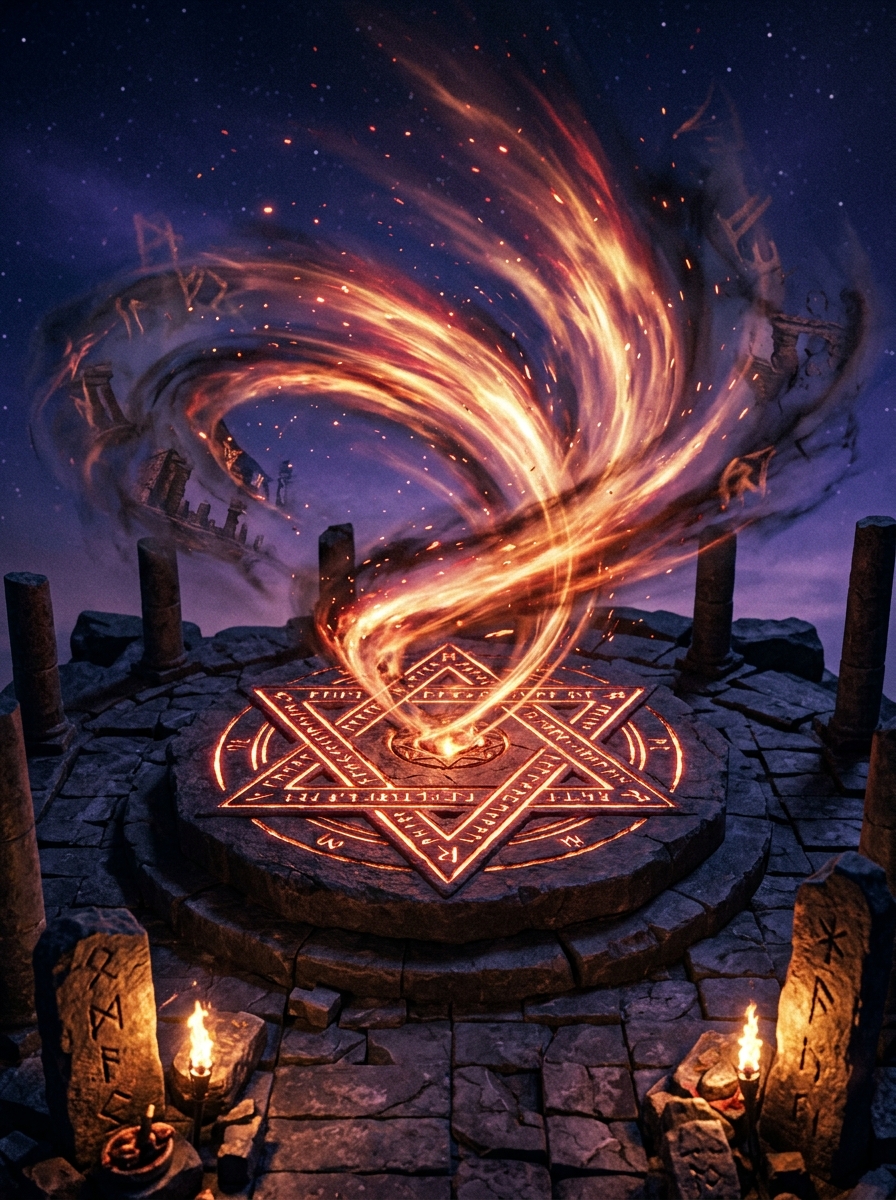
The image of Hexagram 49 is Lake above and Fire below. Water appears to contain heat, but Fire wants to rise and Lake eventually must release what it holds. The result is a tension so specific that the I Ching uses it to describe transformation that is both forced and timed. The lake reflects the public face—the social arrangement, the persona, the agreement that everyone nods at. The fire is the buried truth, the conviction that will not die, the part of you that knows the current form is a lie. Until the fire is hot enough, the lake holds. But once the pressure crosses a threshold, the surface cannot maintain the illusion.
The symbol of skin runs through the whole hexagram. Tanning leather is not destruction; it is alchemy. The old hide is stripped, scraped, soaked, stretched, and turned into something durable. Revolution retains the material of the past but repurposes it. The house is not burned down; its timbers are used for the new frame. This is why the hexagram never recommends annihilation. It asks what essence of the old form deserves to survive the transition. The oracle’s discipline lies in making that cut cleanly, without sentiment or spite.
The three gates of legitimate change
The classical judgment of Hexagram 49 speaks of a decisive act “on the day of the revolution” and ties its success to the presence of a great person—not a hero but a center of integrity that makes the moment trustworthy. In divination, this translates into three gates that every change must pass:
Timing. Revolution cannot be improvised from impatience. The oracle watches the seasons: the fire must have burned long enough to be visible, the lake must be close to boiling. If the reading comes too early, the lines warn against premature action; if too late, they urge decisive movement. The correct timing feels like a natural break, not a forced fracture.
Inner authority. The one who leads the change must be credible to the situation—not necessarily powerful, but aligned. This authority is not social rank; it is the congruence between what the person says and what they are. In personal readings, that means the change must be rooted in a conviction that has survived doubt, not in a fantasy of escape.
Ethical coherence. A revolution that serves only the ego will produce the same old pattern in new clothes. The oracle insists that the change restore life, not simply redistribute control. If the new arrangement requires coercion to sustain itself, it has already failed the test of Revolution.
These three gates work together. Missing any one turns the hexagram from a liberator into a warning. The I Ching is not romantic about upheaval. It knows that most “revolutions” are merely the old tyranny changing masks.
How Revolution lives in a relationship, a career, an identity
The same dynamic that reshapes dynasties also works on the scale of a single life. When Hexagram 49 appears in a reading for a relationship, it points to a contract that has become hollow. The couple may still perform the rites of connection, but the inner agreement is dead. The revolution here is not necessarily separation—it can be a renegotiation of terms so honest that the bond either deepens or dissolves. What cannot continue is the pretense.
In career, the hexagram often arrives when a role no longer matches the person’s vocational center. The job may be comfortable, even respected, but the fire beneath it has gone out. Revolution asks whether you are willing to trade safety for integrity. The change may be lateral, geographic, or internal—a new method, a new purpose, a new authority structure. But the surface must become transparent to the depth.
In identity, Revolution signals the collapse of a persona that once organized your life. This can feel like a crisis, but it is actually a maturation. The old self-image no longer fits the psyche’s current shape. The oracle does not ask you to discard everything you were. It asks you to skin away what is no longer living so that the real substance—the part of you that has always been there, waiting—can come forward. This is painful and often solitary, but it is the only route to believability.
The moving lines as a moral compass
The six lines of Hexagram 49 map the ethics of transformation with unusual precision. They are not a list of outcomes but a sequence of decisions.
Early lines (first and second). The change is not yet ripe. The first line warns against acting from zeal that has not been tested; the second cautions that a revolution started before the old order has fully exhausted itself will be beaten back. These lines function as a brake: wait, gather evidence, let the situation ripen further.
Middle lines (third and fourth). The center must shift before the world can follow. The third line describes a moment of great danger—the reformer must be steadfast, even when alone. The fourth line speaks of having the mandate—either external support or inner warrant. Together they insist that the pivot of revolution is not the spectacle but the point of allegiance. You cannot fake authority here.
Later lines (fifth and sixth). The new order must become credible. The fifth line is the ideal outcome: the revolution succeeds because the leader is trusted. But the sixth line issues a sharp caution. After victory, the temptation is to overreach, to identify the new order with the victor’s will. That is the moment when Revolution turns into mere conquest. The oracle ends with a reminder: a revolution that continues to demand sacrifice after its goal is reached becomes the very tyranny it overthrew.
This ethical arc is why Hexagram 49 remains relevant for any deep change. It does not glorify rupture. It holds up a mirror to the one who would remake the world, asking whether they are themselves remade enough to be trusted. The fire will rise; the lake will break. The question is whether the skin that follows will be truer than the one that was shed.
Comments
Loading comments…