I Ching Hexagram 51: When Thunder Breaks the Silence
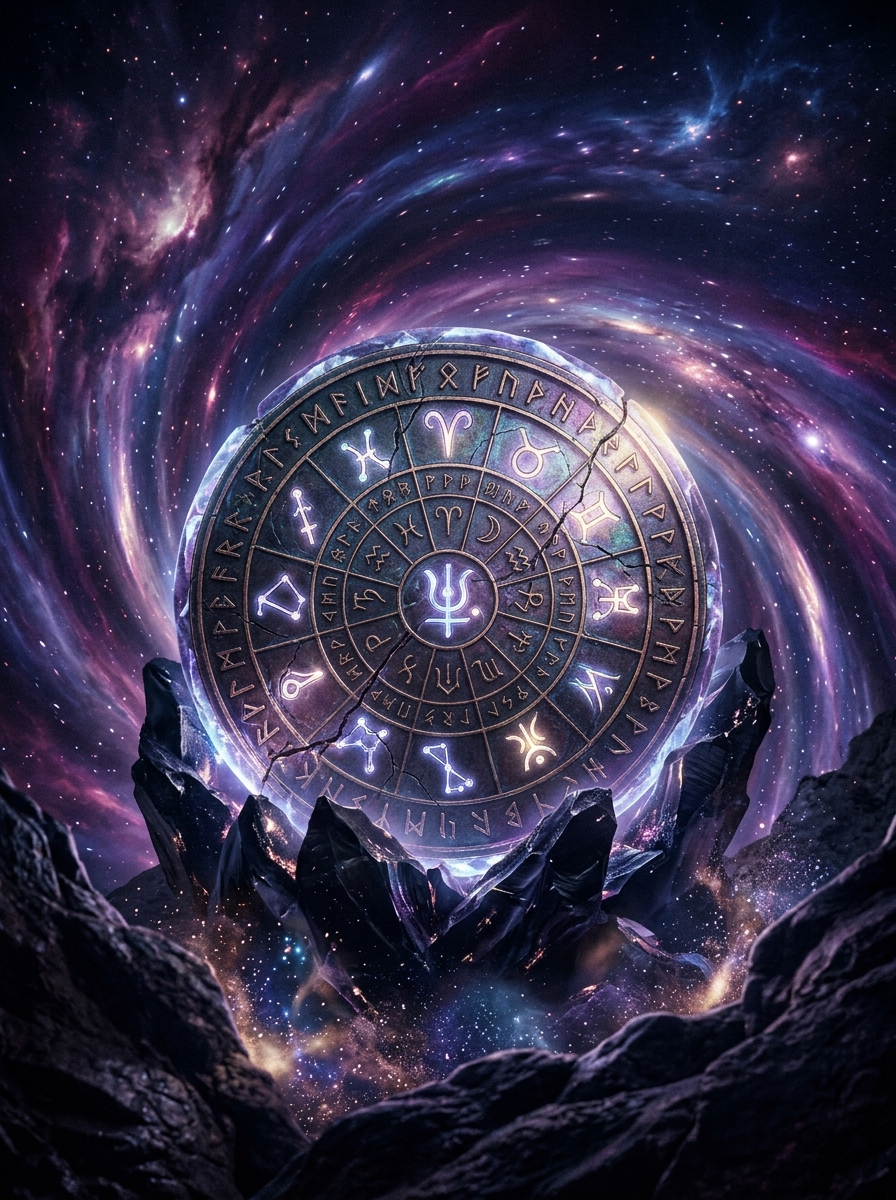
The event that reveals the container
Hexagram 51, The Arousing, names the moment when the outer world strikes the inner one with a force that bypasses interpretation. Its image is thunder upon thunder, shock answering shock across a hundred miles. But the oracle’s attention is not on the storm. It is on the vessels that remain upright while the ground trembles — the sacrificial ladle, the libation spoon. The hexagram’s premise is that shock does not create a new fault line; it exposes the one already present. What you held together through habit now shows whether it was held by will or by inertia.
The Chinese name, Zhen, means quake, arousal, a violent stirring from below. In the I Ching this is not abstract change. It is the specific experience of being jolted out of the trance of false control. The thunder arrives from outside, but its real work is internal: it tests the coherence of what you call yourself. Unlike Western intuitions that frame crisis as punishment or test, The Arousing treats it as a lawful event in a living system. The psyche has been startled awake because it had grown too comfortable with a story that was not true.
This is the core thesis, stated once: shock is a diagnostic event. The question is never whether the thunder was pleasant. The question is what survives it. The vessels do not spill because they were already steady. Hexagram 51 asks whether your center can hold when the periphery shakes — and if it cannot, what will need to be rebuilt on a deeper foundation.
The psychology of the arousal
The hexagram’s wisdom begins in the body. Before the mind can narrate, the nervous system registers the tremor: pulse quickens, attention narrows, sleep fractures, appetite vanishes. The Arousing does not treat these responses as weakness. It treats them as the first honest contact with reality. Fear is not an error; it is data. The oracle’s subtlety lies in distinguishing between being shaken and being shattered. Both begin the same way, but the difference emerges in what you do with the tremor.
The repeated thunder in the image suggests resonance. One shock triggers another — memory, instinct, buried truths. This chain reaction is not chaos; it is the organism’s attempt to restore coherence. A person who receives Hexagram 51 in a reading is often in the middle of such a cascade: one event touching another, one long-avoided recognition waking another. The oracle does not advise stopping the vibration. It advises standing inside it without dissolving.
Why does the body know before the mind? Because the body has not been trained to lie about survival. The Arousing recognizes that the psyche’s deepest intelligence is somatic. You may later explain the shock as a sudden loss, a betrayal, a diagnosis, an accident — but in the first seconds, your organism already knows the magnitude. The hexagram honors that knowledge. It asks you to stay in contact with your own trembling, not to suppress it. Panic arises when the body is felt as an enemy. The Arousing shows it as an ally that reports the truth before the ego can censor it.
The judgment’s test: fidelity over composure
The Judgment of Hexagram 51 is famously paradoxical: “Shock brings success. Shock comes — oh, oh! Laughing words — ha, ha! The shock terrifies for a hundred miles. But one does not let fall the sacrificial ladle and libation spoon.” Success here does not mean the shock was beneficial. It means you can pass through the destabilization without abandoning your sacred function.
The strange laughter is crucial. It is not mockery; it is the nervous system’s release after overstrain, the recognition of absurdity when the scale of the event dwarfs human composure. Terror and irony arrive together. A person may shake, laugh, and pray in the same minute. The hexagram permits that. What it does not permit is dissociation — using the shock as an excuse to drop the vessel.
The sacrificial vessels are the measure of what remains intact. They represent whatever you hold as sacred: a vow, a vocation, a discipline, an ethical commitment. For one person the vessel is a marriage; for another, a creative practice; for another, the refusal to lie under pressure. The judgment says that even if the thunder is loud enough to shake a city, the inner rite must continue. This is not stoicism — a grim endurance that denies feeling. It is fidelity. To hold the vessel is to remain answerable to what you value while the ground moves. The difference is subtle but absolute. Stoicism says “do not feel.” Fidelity says “feel everything, and still do not drop what you are here to carry.”
How thunder matures: the changing lines as an arc
The six lines of Hexagram 51 trace a psychological progression from reflex to integration. They show that shock has a developmental logic, and that how you meet the first tremor determines what the tremor becomes.
The early lines depict instinct and overreaction. One line shows the danger of clinging to the shock itself, mistaking the trembling for the whole truth. Another shows the humility of correcting a misstep before it hardens into error. The instruction here is not to narrate too fast. Do not turn your first fear into doctrine. The ground is still volatile; the next wave may come before you have settled your footing. The wise response is to wait, to breathe, to let the nervous system recalibrate before you commit to a story.
The middle lines are the moral test. The initial shock has passed, but its consequences are unfolding. Now character shows itself. One can become brittle, resentful, or secretly intoxicated by the drama. The hexagram warns against all three. It asks for sobriety and attentiveness — a refusal to let fear dictate ethics. This is where the vessel is most likely to slip. The oracle is severe here: do not use crisis as permission to abandon your principles. The thunder will pass; your decisions during it will persist.
The upper lines show thunder become authority. The Arousing is no longer a disturbance; it is a source of gravity. The person who has crossed through shock without losing center gains the capacity to awaken others. They know what is essential because they have seen how fast the nonessential can be stripped away. This is the mature promise of the hexagram: the shock that broke your old pattern can become the foundation of a truer one. Not because the trauma was good, but because you used it to clarify what you will no longer carry.
The reading: what the hexagram asks now
When Hexagram 51 appears in a divination, the situation is rarely abstract. Either life has become too static and a shock has arrived to reintroduce reality, or the shock is already in the room and you are trying to understand what it means. The oracle’s message is consistent: do not waste the disturbance.
If the context is external crisis — a sudden loss, a betrayal, an accident — the advice is immediate alertness rather than elaborate action. Verify facts. Preserve safety. Do not romanticize disruption or mistake adrenaline for wisdom. Delay irreversible decisions until the emotional weather settles, unless safety demands otherwise. The hexagram prizes short, grounded responses over heroic gestures. Your first job is to keep the vessel steady. The rest follows.
If the context is inner awakening — a truth that has surfaced, a desire that has become undeniable, a long-denied fear that has broken into speech — then The Arousing is initiation. The thunder shakes loose what was deadened by habit. This can feel like crisis, but it is the soul’s refusal to continue sleeping. In this mode, the hexagram is less about survival and more about reorientation. Return to essentials. Speak plainly. Reduce confusion. The inner storm has spoken; now you must decide what within you will answer.
Applied to love, work, and relationships, the same dynamic holds. A partnership that has been coasting on comfort may be jolted by honesty or betrayal. The hexagram does not ask whether the relationship can survive the shock. It asks what in you — and in the other — was already compromised before the thunder arrived. A career that was held together by inertia rather than conviction may crack under pressure. The question is not how to patch the crack but whether the work deserves to be saved. Love, like ritual, requires a vessel that can hold the sacred without spilling. Hexagram 51 says that when the ground moves, you will discover what your vessel is actually made of.
Do not ask for the thunder to stop. Ask to become coherent enough that, even after the ground moves, your deepest values do not spill.
Related
- Hexagram 16: Enthusiasm and the Fire That Must Be Guided
- Hexagram 23: The House Peels Away from Its Own Bones
- I Ching Hexagram 29, The Abysmal: How to Enter the Water Without Losing Yourself
- Hexagram 49, Revolution: The Fire That Remakes the Skin
- Hexagram 55, Abundance: The Sun at Midday and the Shadow It Throws
Comments
Loading comments…