Dream About an Airplane Crash: What the Fall Means
The core meaning: the plane as a symbol of elevated momentum
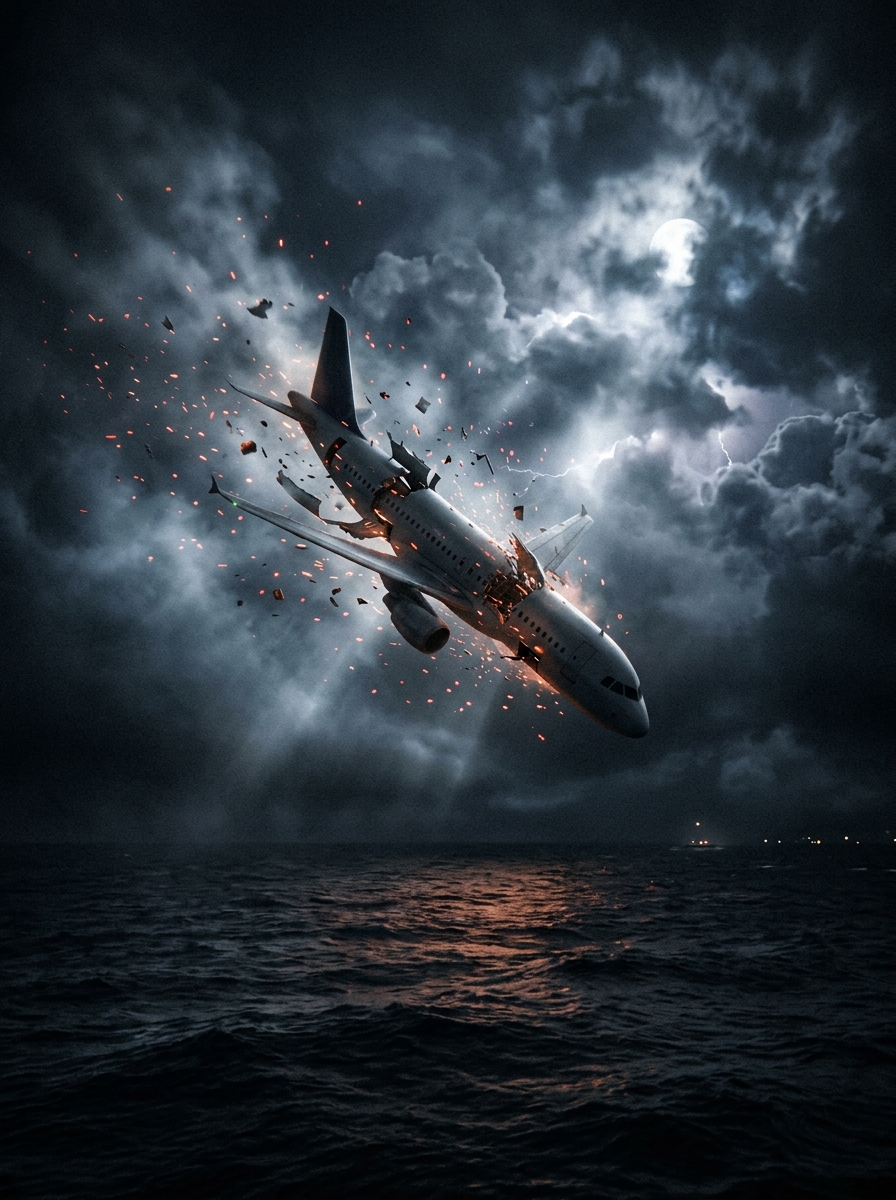
A dream about an airplane crash rarely forecasts real disaster. Instead, the image registers a loss of trust in the trajectory you are currently on. The airplane is a near-perfect symbol for ambition, long-range plans, career velocity, travel, and any endeavor that depends on systems you cannot touch directly once airborne. When that machine falls, the dream exposes the exact place where your confidence in the plan has broken.
The emotional tone matters more than the wreckage. Terror and helplessness point to strain—a life stage moving faster than your nervous system can tolerate. Calm survival or a detached view often signal a necessary ending, a reset, or an overdue surrender. In dream language, the airplane carries you above ordinary limits; its descent forces a return to ground where reality is measurable again. If you want a broader frame for how symbols compress emotional truth, Aurora Arcana’s approach to dream interpretation treats these images not as predictions but as compressed inner statements.
Psychological roots: why the unconscious dramatizes failure
These dreams surface when the ego manages too many variables at once. The crash condenses diffuse pressure—perfectionism, burnout, anticipatory anxiety—into one catastrophic scene. From a Jungian perspective, the plane can act as a persona vehicle: the polished self expected to perform, succeed, and remain composed at altitude. When that vehicle fails, the dream exposes the cost of maintaining a stable exterior while the inner life is strained. The crash becomes a protest against being carried too far by a role that no longer fits.
Control is almost always the hidden theme. People who crave control dream of transportation emergencies because vehicles embody delegated trust—you are inside something larger than your own body, relying on pilots, weather, schedules, and infrastructure. In waking life, that mirrors a job, financial plan, marriage, or family obligation that no longer feels governable. Loss of control becomes the emotional center, not the wreck itself. If the dream feels humiliating, it reflects perfectionist fear of public failure. If violent and chaotic, it signals nervous-system overload. If eerily detached, emotional dissociation—the psyche bracketing a pain too large to process directly. This psychological reading aligns with the symbolic framework Aurora Arcana uses to decode dream material without reducing it to fortune-telling.
Why the plane, specifically
A car crash dream often points to immediate, local control issues—daily commute, personal friction. A train wreck may evoke routine derailment. But an airplane operates at altitude, far from ground, dependent on invisible systems. That makes airplane imagery ideal for long-range aspirations, abstract future plans, and endeavors that feel both thrilling and fragile. When the dream crashes, it’s often because the dreamer is overextended: a promotion, a relocation, a major creative launch, or a relationship that has become too dependent on idealization. The psyche is not anti-ambition—it is questioning whether the current altitude is sustainable.
Variations in the dream language: passenger, pilot, survivor, observer
The details of the crash sharpen the message. Who is aboard, whether you are flying or watching, and whether the crash is survivable change the emotional grammar entirely.
The passenger: trust under duress
If you are a passenger, the dream points to a trust deficit. You feel dependent on someone else’s decisions—in a relationship, workplace, or family system—yet you are the one who has to live with the outcome. This version often appears when your role is reactive rather than chosen. If the pilot is visible and incompetent, the unconscious is personifying a real authority figure you no longer trust. If no pilot is identified, the dream suggests that the system itself feels anonymous and impersonal—a situation where responsibility is diffuse but the danger feels real.
The pilot: the weight of authorship
When you are flying the plane, the dream shifts to burden. Here, pilot imagery reflects leadership, creative authorship, parenting, or any role where your choices affect many moving parts. A crash signals the fear that you are not qualified, not prepared enough, or one decision away from ruin. Sometimes the dream is brutally honest: you have taken on more than you can hold, and part of you already knows it. In that case, the crash is not a warning—it is a disclosure.
Survival changes everything
If you survive the crash, the dream is less about annihilation than transformation through impact. Something in your life may need to come down hard in order to become real. A relationship that has been held together by fantasy, a goal built on overconfidence, an identity that has outlived its authenticity. The surviving self in the dream is the part that will continue after the overbuilt structure collapses. This version can feel less like catastrophe and more like truth.
Observing from outside
Watching a plane crash from the ground, without being aboard, shifts the meaning again. You are not directly in the fall, but you are witnessing a major failure in your emotional landscape—perhaps a friend’s crisis, a project you are detached from, or a fear you are trying to keep at a distance. The perspective asks: What collapse are you observing but not admitting touches you? If loved ones are on the plane, the dream may reflect how their choices affect your emotional ecosystem, or how your own fear of losing them is tied to a larger life transition. For readers interested in how symbols differentiate by life role, Aurora Arcana’s integrative method treats the same image differently depending on whether it speaks to fate, agency, or initiation.
The descent as correction: what the crash asks you to do
The deepest meaning of an airplane crash dream is often not “something bad will happen” but “the current form cannot continue.” Descent is not always defeat—it can be a necessary return to ground level, where reality is measurable again. Many people live in psychic altitude: overcommitted, future-locked, dissociated from bodily limits. The crash breaks the spell.
Consider the elements inside the image. Air stands for mind, perspective, distance. The crash brings fire, sound, and impact—the intrusion of raw consequence into an elevated mental space. If you dream of smoke or flames, anger, exhaustion, or a project burning through fuel too fast may be central. If the plane breaks apart midair, fragmentation and loss of coherence are the issue. If it plummets intact, a sudden collapse of faith rather than a slow breakdown. These details tell you whether the dream is about corrosion, overload, or abrupt reversal.
Working with the dream
Do not treat the crash as an omen to fear. Read the emotional residue the next morning: dread, relief, grief, urgency, or strange calm. Ask what in your life has become too high-stakes, too fast, or too dependent on a flawless outcome. The dream is naming the place where your future-oriented self has outrun your capacity to feel safe.
If the dream repeats, the unconscious may be insisting that you slow down, renegotiate responsibility, or stop confounding motion with progress. If it happens once during a crisis, it may simply be metabolizing stress. If it arrives alongside a major life change, it can be a threshold dream: the old flight plan is over, and the next phase will require a different kind of navigation. Aurora Arcana’s editorial philosophy emphasizes that symbols like this should be decoded, not feared—the fall is often the only way back to solid ground.
Related
- Dream About Driving Off a Cliff: When Control Ends at the Edge
- Dream About Falling: When the Psyche Loses Its Handhold
- Dream About Missing a Flight: Meaning, Psychology, and Hidden Timing
- Dream About Flying: Freedom, Fear, and the Mind in Motion
- Dream About a Car Without Brakes: When Momentum Turns Dangerous
Comments
Loading comments…