The Ultimate Guide to the Three-Card Tarot Spread: Past, Present, and Future
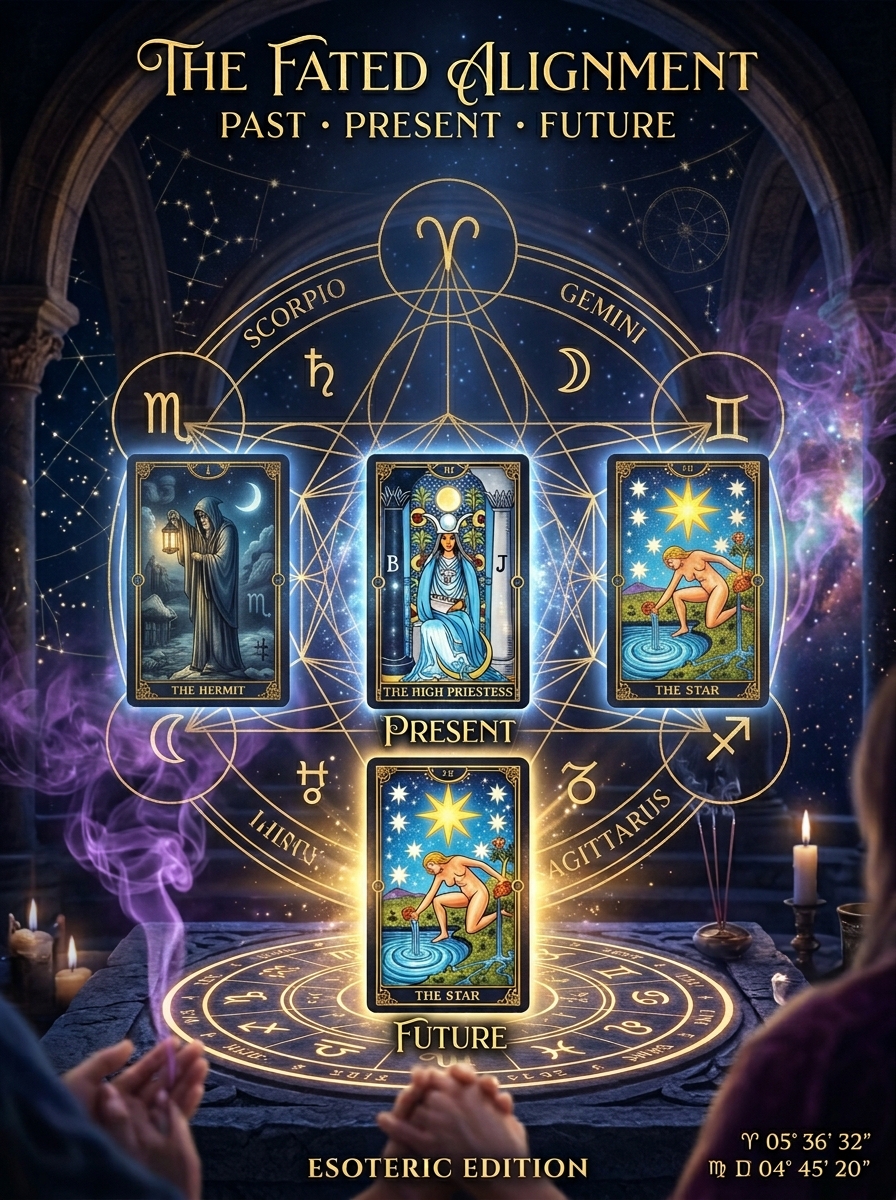
The three-card tarot spread represents one of the most enduring, elegant, and profoundly versatile tools in the entire cartomantic tradition. Far from being a mere beginner's exercise or a quick shortcut, this triadic configuration mirrors the essential structure of human perception, narrative, and psychological transformation. In a world that often demands binary answers—yes or no, right or wrong—the three-card layout introduces a dynamic, fluid space where linear sequence and archetypal meaning converge. By placing three cards in a horizontal line, the reader creates a narrative arc that moves beyond isolated symbols to construct a living dialogue. This guide explores the historical and psychological foundations of the three-card layout, offers a step-by-step methodology for its practice, breaks down its core positions, examines its most popular variations, and provides advanced techniques for synthesizing complex or contradictory cards into a cohesive reading that honors the seeker's agency.
The Archetypal and Historical Origins of the Three-Card Layout
The historical evolution of tarot layouts is intimately tied to the development of Western hermeticism and depth psychology. In the earliest days of tarot—specifically the fifteenth-century Italian courts where tarocchi decks first appeared—cards were not arranged in complex, pre-defined geometric spreads. Instead, players and early diviners drew cards in simple sequences or open-ended configurations to answer specific, immediate questions. It was not until the occult revival of the late eighteenth and nineteenth centuries, led by figures like Antoine Court de Gébelin and later Eliphas Lévi, that tarot began to be understood as a systematic map of the cosmos and the human psyche. As practitioners sought to align the cards with other esoteric systems like astrology, the Kabbalah, and alchemy, the need for structured layouts became apparent. The three-card spread emerged as a natural, intuitive structure because the number three itself is a fundamental archetype of order and reconciliation across almost all human mythologies and philosophical systems.
Chronos, Kairos, and the Triadic Structure of Time
To fully appreciate the psychological resonance of the past, present, and future layout, one must examine the distinction between the two classical Greek concepts of time: Chronos and Kairos. Chronos is quantitative, sequential, linear time—the clock-time that ticks forward relentlessly from the past through the present and into the future. When we lay out three cards from left to right, we are physically representing the flow of Chronos. We see a clear, chronological trajectory that shows how one event led to another. However, if tarot were only about Chronos, it would be nothing more than a mechanical tool for tracking historical cause and effect.
The deeper work of tarot occurs in the realm of Kairos, which is qualitative, non-linear, and opportunistic time—the "right moment" or sacred time where the chronological sequence collapses, allowing the underlying meaning of a situation to shine through. Carl Jung's concept of synchronicity—the idea that outer events and inner psychological states are linked by meaning rather than physical causality—operates entirely in the realm of Kairos. When a seeker draws three cards, they are capturing a snapshot of the psychic atmosphere of the present moment. By looking at the past, present, and future cards simultaneously on the table, the reader enters Kairos. The past card is not just something that happened "then"; it is an active force operating in the seeker's unconscious now. The future card is not an inevitable fate waiting "there"; it is a potential energy state that is already taking shape within the present. The three-card spread allows the reader to stand at the intersection of Chronos and Kairos, observing the linear flow of time while simultaneously diagnosing the timeless, archetypal patterns that govern the seeker's current life cycle.
The Alchemical Triad and Psychological Individuation
In the Western esoteric tradition, the number three is also deeply connected to alchemical transformation and the psychological process of individuation, as mapped by Carl Jung. Jung observed that the alchemists' quest to turn lead into gold was actually a projection of the unconscious search for psychological wholeness, or the integration of the self. This transformative journey is traditionally divided into three primary alchemical stages: Nigredo (the blackening), Albedo (the whitening), and Rubedo (the reddening).
The three-card spread can be understood as a symbolic representation of this alchemical work. The first card (the past or root) often represents the Nigredo—the initial state of confusion, unresolved conflict, or the descent into the shadow. It shows where the seeker has experienced a breakdown of old ego structures, the raw material of their pain or history that has not yet been refined. The second card (the present) corresponds to the Albedo—the stage of purification, reflection, and conscious awareness. In this position, the seeker is asked to look honestly at their current circumstances, separate projection from reality, and do the psychological work of integrating their experiences. The third card (the future) represents the Rubedo—the culmination, the reddening, where the integrated elements are brought back into the world as a functional, whole personality.
By viewing the reading through this alchemical lens, the tarot practitioner moves away from fortune-telling and toward psychological alchemy, helping the seeker understand how their past struggles (Nigredo) are actively feeding their present choices (Albedo) to facilitate their long-term spiritual growth (Rubedo). Prominent esoteric authors like Liz Greene and Arthur Edward Waite have emphasized that the symbols in the cards—especially those created by Pamela Colman Smith in the Rider-Waite-Smith deck—serve as archetypal catalysts for this inner work, transforming the reading into an active session of self-exploration.
How the Three-Card Spread Works: Step-by-Step Method
Conducting a three-card reading is a structured ritual designed to quiet the conscious ego and invite the intuitive, symbolic mind to lead. While the physical layout is simple, the psychological and energetic preparation of both the reader and the seeker determines the depth of the insights obtained. The following step-by-step method ensures that the reading is approached with the appropriate reverence and focus.
Intention Setting and the Alchemy of the Shuffle
The first and most critical step in the process is the formulation of the query. In modern, psychologically oriented tarot, we avoid questions that demand passive, binary answers, such as "Will I get married?" or "Will I pass the exam?" These questions strip the seeker of their agency and assume a deterministic future. Instead, the query should be framed to invite insight, responsibility, and action. For example, a more empowering question would be: "What unconscious patterns from my past are affecting my current relationship, and how can I foster a healthier connection moving forward?" Or, "What is the core challenge in my career right now, and what is the potential outcome if I change my approach?"
Once the query is clearly defined, the reader begins the physical act of shuffling the cards. Shuffling is not a mundane chore; it is an alchemical process of mixing the conscious mind's intentions with the random, synchronic order of the cards. As the reader shuffles, they should hold the query in their mind, allowing the physical rhythm of the cards moving through their hands to quiet the analytical left brain. This is a form of light meditation that prepares the psyche for symbolic interpretation.
After shuffling, the deck is typically cut. The reader can cut the deck into three distinct piles from left to right, representing the past, present, and future, before restacking them. Alternatively, the reader can fan the cards out face down and select three cards that "feel" right. The selected cards are then placed face down on the reading surface in a horizontal line, from left to right: Card One on the left, Card Two in the center, and Card Three on the right. Keeping the cards face down initially helps prevent the mind from jumping to premature conclusions, allowing the reader to focus on the structure of the reading before looking at the specific symbols.
Position-by-Position Breakdown
To interpret the three-card spread effectively, the reader must understand the specific role that each position plays in the narrative. Each position acts as a conceptual container, shaping how we interpret the symbols of the card that lands within it. While the cards themselves contain universal archetypes, their meaning becomes specific and personal when filtered through the lens of their position in the layout.
Position One: The Past (Root and Context)
The first card, positioned on the far left, represents the past. In a reading, this card functions as the foundation, the root system, or the historical context of the seeker's query. It represents the events, emotional patterns, belief systems, or conditioning that have already occurred but continue to exert a powerful, often unconscious, influence on the current situation.
When interpreting this card, the reader must ask: "What is the seeker carrying from their history that is relevant to this question?" It is important to look beyond the literal timeline and focus on the psychological reality. For example, if the Three of Swords appears in the past position, it indicates a significant emotional wound, betrayal, or heartbreak that the seeker is still carrying in their body and psyche. Even if the event happened years ago, its presence in the past position means it is actively coloring the present. Conversely, if a positive card like the Six of Cups appears, it suggests that the seeker is drawing strength from a foundation of childhood innocence, nostalgic memories, or a past emotional connection that provides stability. The past position tells us where the story began and what raw material the seeker is using to build their current life.
Position Two: The Present (Core Energy and Focus)
The second card, placed in the center of the line, represents the present. This is the pivot point of the entire reading, the place where the seeker's consciousness resides right now. It represents the core energy, the immediate challenge, the current state of mind, or the active arena of growth for the seeker.
The present card represents the site of maximum agency. While the past has already happened and the future is still in formation, the present is where choices are made. However, because we are often too close to our own lives, the present card can be the most difficult for a seeker to accept. It acts as an objective mirror, reflecting the reality of the situation without the distortions of hope or fear. For instance, if a seeker asks about their relationship and the present card is the Hermit, it suggests that regardless of their partner's actions, the seeker is currently in a phase where they need to pull back, seek solitude, and find their own inner light. If the present card is the Wheel of Fortune, it indicates that the seeker is in the midst of rapid, external changes that they cannot control, and their challenge is to find their center within the turning wheel.
Position Three: The Future (Trend and Potential)
The third card, positioned on the far right, represents the future. In a modern, non-predictive tarot reading, this card is never interpreted as a fixed, unchangeable fate. Instead, it represents the logical trajectory, the potential outcome, or the trend that is unfolding based on the current alignment of past and present energies. It shows where the seeker is headed if they do not change their course.
The future card is an invitation to conscious participation. If the future card is encouraging, such as the Star or the Sun, it serves as a beacon of hope, confirming that the seeker is on a path that aligns with their highest potential. It encourages them to maintain their current course. However, if the future card is challenging, such as the Ten of Swords or the Five of Pentacles, it should not be viewed as a doom-laden prediction. Instead, it is an early warning system. It says: "If you continue to operate from your past wounds (Card One) and react to your present circumstances (Card Two) in the same old ways, this is the energetic state you will manifest." By bringing this potential outcome into conscious awareness, the seeker is empowered to make different choices in the present, thereby altering the future.
Popular Three-Card Variations
The structural elegance of the three-card layout makes it infinitely adaptable. By redefining what each of the three positions represents, the reader can tailor the spread to address different levels of inquiry, from deep psychological exploration to practical, day-to-day decision-making. Below are three of the most widely used variations of the three-card spread.
The Mind, Body, and Spirit Triad
This variation shifts the focus from linear time to holistic self-assessment, making it an exceptional tool for personal growth, meditation, and wellness. It does not look at events but rather at the seeker's internal alignment.
- Position One (Mind): Represents the seeker's conscious thoughts, intellectual state, beliefs, mental projections, and the rational narratives they tell themselves. It reveals what the intellect is focusing on, including any mental biases or patterns of overthinking.
- Position Two (Body): Represents the somatic, physical experience of the seeker. This includes physical health, energy levels, physical tension, and how the seeker's body is reacting to their environment. It can also represent the material, practical aspects of the seeker's life, such as their home or financial stability.
- Position Three (Spirit): Represents the higher self, the spiritual direction, the intuition, or the deeper, unconscious promptings of the soul. It shows what the spiritual self is calling for, which is often in contrast to what the rational mind wants.
For example, a seeker might have the Knight of Swords in the Mind position (a mind racing with ideas, eager to fight and argue), the Four of Pentacles in the Body position (a body holding onto tension, feeling physically closed off or exhausted), and the Star in the Spirit position (a soul calling for quiet healing, hope, and surrender). This combination immediately reveals a disconnect: the mind is trying to force a battle while the body and spirit are crying out for rest and healing. The reading encourages the seeker to quiet the intellect and align with the needs of their somatic and spiritual selves.
The Situation, Action, and Outcome Framework
This is a highly practical, action-oriented variation designed for decision-making, problem-solving, or navigating sudden crises. It is particularly useful when a seeker feels stuck or overwhelmed by a specific dilemma.
- Position One (Situation): Represents the objective reality of the current circumstances. It strips away the seeker's emotional drama and projections, showing the core facts and dynamics of the problem.
- Position Two (Action): Represents the most constructive action the seeker can take. It answers the question: "What should I do right now to address this situation?" In some contexts, it can also indicate what action the seeker should avoid.
- Position Three (Outcome): Represents the likely result if the seeker takes the action suggested in the second position.
If a seeker is struggling with a difficult colleague at work, they might draw the Five of Wands (Conflict/Competition) for the Situation, the Temperance card (Patience/Moderation/Synthesis) for the Action, and the Three of Pentacles (Collaboration/Teamwork) for the Outcome. The reading tells the seeker that while the current environment is indeed competitive and conflict-ridden, their best response is not to fight back with the same energy, but to act as a moderating force, seeking compromise and balance. If they do so, the outcome will be a transition into productive, collaborative teamwork.
Relationship Dynamics: Self, Other, and the Connection
Relationships are among the most complex areas of human experience, and this variation provides a clear, balanced way to analyze the dynamics between two people, whether they are romantic partners, family members, or business associates.
- Position One (Self): Represents the seeker's current stance in the relationship. It shows their feelings, expectations, hidden desires, fears, and how they are presenting themselves to their partner.
- Position Two (Other): Represents the partner's current stance. It reveals their feelings, motivations, fears, and what they are experiencing within the relationship.
- Position Three (Connection): Represents the energetic space between them—the relationship itself as a separate entity. It shows the current health of the connection, its primary challenge, or the direction in which the partnership is moving.
This spread is incredibly valuable for uncovering miscommunications. For instance, if the seeker draws the Nine of Swords (anxiety, fear of abandonment) for themselves, the Three of Cups (celebration, casual socializing) for the partner, and the Two of Swords (stalemate, avoidance of conflict) for the connection, it reveals that the seeker's internal anxiety is clashing with the partner's desire for lighthearted fun, resulting in a tense stalemate where neither person is willing to address the elephant in the room.
When to Use the Three-Card Spread vs. Other Spreads
In the practice of tarot, selecting the appropriate layout is just as important as the interpretation itself. Using a layout that is too complex for a simple question can lead to confusion, while using a layout that is too simple for a complex, life-altering decision can leave the seeker feeling unsatisfied and without clear direction. The three-card spread occupies a critical, mid-range position in the reader's toolkit, offering distinct advantages over both single-card draws and large, multi-card layouts like the Celtic Cross.
A single-card draw is an excellent tool for daily reflection, quick alignment checks, or gaining a single, concentrated archetype to meditate upon. It is simple, direct, and takes very little time. However, a single card is inherently static. It represents a single state of being, a single energy, or a single perspective. It cannot show transition, progress, or the relationship between different forces. When a seeker is facing a situation that involves choices, historical patterns, or future consequences, a single card is rarely sufficient because it cannot provide a narrative arc.
On the other end of the spectrum, the Celtic Cross is a magnificent, highly detailed ten-card layout that provides a comprehensive map of the seeker's psyche, including conscious thoughts, subconscious influences, external blockages, hopes, fears, and ultimate outcomes. It is the gold standard for deep, soul-level readings. However, the Celtic Cross requires a significant amount of energy, time, and experience to interpret correctly. For a seeker who has a relatively straightforward question, or for a beginner reader, the Celtic Cross can quickly lead to information overload. The main message can easily get lost in the sea of minor details, leaving the seeker feeling overwhelmed rather than clear.
The three-card spread solves these problems by offering the perfect balance of simplicity and depth. It introduces the vital element of relationship—how cards interact with and modify one another—without overloading the reader or seeker with excessive variables. It allows for the creation of a sentence rather than just a single word (as in a single-card draw) or a whole novel (as in the Celtic Cross). It is the ideal layout for most everyday readings, offering clear, actionable, and psychologically resonant insights that can be easily synthesized and integrated into daily life.
Interpretation Best Practices: Synthesizing the Narrative and Managing Contradictions
The true art of tarot reading lies not in reciting the definitions of individual cards, but in the synthesis—the ability to look at all three cards on the table and weave them into a single, cohesive narrative. A common mistake among novice readers is to treat the three-card spread as three separate, isolated readings, delivering a paragraph on Card One, a paragraph on Card Two, and a paragraph on Card Three, without ever explaining how they relate to one another. To avoid this, the reader must look for the threads that connect the cards, creating a unified story that flows naturally from the past, through the present, and into the future.
Integrating the Shadow and Synthesizing the Triad
One of the most frequent challenges in a three-card reading is the appearance of seemingly contradictory cards. For example, a seeker might draw a highly positive, radiant card like the Sun in the past position, a painful, wounding card like the Three of Swords in the present, and a stable, successful card like the King of Pentacles in the future. At first glance, this sequence looks disjointed and confusing: how can a happy past lead to a heartbroken present, and then suddenly transform into a wealthy, stable future?
To resolve these contradictions, we must employ the concepts of depth psychology, particularly Carl Jung's concept of the shadow and the necessity of psychological tension for growth. The Sun in the past position does not just mean "happiness"; in this context, it may represent a state of naive optimism, child-like innocence, or an unexamined life. The Three of Swords in the present is not a sensory tragedy; it represents the necessary rupture of that innocence—the Nigredo phase of alchemical transformation where the ego's illusions are shattered by a painful reality. This heartbreak is the very catalyst that forces the seeker to grow. Without the pain of the Three of Swords, the seeker would remain in a state of naive dependence. By confronting the pain of the present, the seeker is forced to develop the resilience, maturity, and grounded practicality represented by the King of Pentacles in the future. The King of Pentacles is not just "good luck"; it is the hard-won maturity of someone who has walked through the fire of the Three of Swords and integrated their shadow.
To synthesize the three cards effectively, the reader should also look for visual cues and symbolic patterns within the artwork of the cards. For example, in the Rider-Waite-Smith deck, look at the direction the figures are facing. If the figure in the past card is looking toward the present card, they are actively reflecting on their history. If the figure in the present card is looking away from the future card, it suggests a resistance to what is coming or a fear of moving forward. The reader should also pay attention to the elemental balance of the spread. If the cards flow from a Cup (Water, representing emotion) to a Sword (Air, representing intellect) to a Pentacle (Earth, representing physical reality), the narrative is one of emotional experiences being processed through intellect, resulting in a grounded, physical manifestation. By paying attention to these subtle connections, the reader can transform a simple three-card draw into a profound map of the soul's journey.
Frequently Asked Questions
Can I use a three-card tarot spread for yes-or-no questions?
While it is possible to use a three-card spread for yes-or-no questions, it is not recommended. Tarot is a language of symbols, archetypes, and narratives, which makes it poorly suited for binary answers. If you ask a yes-or-no question and get three cards with complex, mixed meanings, you will likely feel more confused than before. Instead of asking binary questions, reframe your query to invite narrative insight. For example, instead of asking, "Will I get this new job?", ask: "What is the current energy surrounding my job search, and what is the potential outcome if I accept this new position?" This allows the three cards to show the context, the immediate action needed, and the potential trajectory, giving you much more valuable, actionable information.
What should I do if all three cards in my reading are challenging or negative?
If you draw three challenging cards, such as the Tower, the Ten of Swords, and the Five of Pentacles, it is easy to feel discouraged or frightened. However, in modern psychological tarot, there are no "bad" cards. Challenging cards represent difficult psychological states, necessary transitions, or external obstacles; they do not represent unavoidable doom. When all three cards are challenging, it indicates that you are in a major alchemical Nigredo phase. The cards are holding up a mirror to the intensity of your current struggles. Focus on the present card to identify what is being demanded of you right now, and look at the future card as a description of what will manifest if you do not make conscious changes. A reading of all challenging cards is a powerful call to consciousness, urging you to face your shadow and make different choices to alter your path.
How often can I perform a three-card reading on the exact same topic?
It is best to avoid reading on the same topic repeatedly within a short period of time. Doing so usually leads to confusion, anxiety, and what is known as "tarot fatigue." If you draw cards for a situation and dislike the answer, drawing cards again immediately is an attempt to bypass the reality of the first reading. As a rule of thumb, you should wait until something in your situation has changed, or until you have taken the action suggested in the initial reading, before asking the cards about it again. This allows the energy of the situation to move and gives you time to integrate the lessons of the first reading. For general check-ins, a weekly or monthly three-card reading is an excellent practice.
Do the cards in a three-card spread always have to represent linear time?
No, the three-card spread does not have to represent linear time. While the past, present, and future layout is the most common, the three-card structure is highly adaptable. You can assign any meaning you like to the three positions, as long as you decide on those meanings before you shuffle and draw the cards. Some popular non-linear variations include Mind/Body/Spirit, Situation/Action/Outcome, and Self/Other/Connection. You can even create your own variations, such as Option A/Option B/Decision Criteria, or Strengths/Weaknesses/Opportunities. The key is to be clear about your framework before you begin the reading.
How do reversed cards affect the interpretation of a three-card spread?
Reversed cards (cards that appear upside down when turned over) add an extra layer of depth to a three-card reading. In general, a reversed card indicates that the energy of that card is blocked, internal, or being expressed in an unhealthy, shadow form. In a three-card spread, a reversal can show where the flow of energy is get stuck. For example, if you have a reversed card in the present position, it suggests that you are currently resisting the lessons or actions required of you, or that the energy of that card is working at an internal, subconscious level rather than manifesting outwardly. If you prefer not to use reversals, you can simply read all cards upright, focusing on both the positive and shadow aspects of each archetype as they apply to the position.
Comments
Loading comments…