Dream About River: Flow, Crossing, and the Emotional Current Beneath
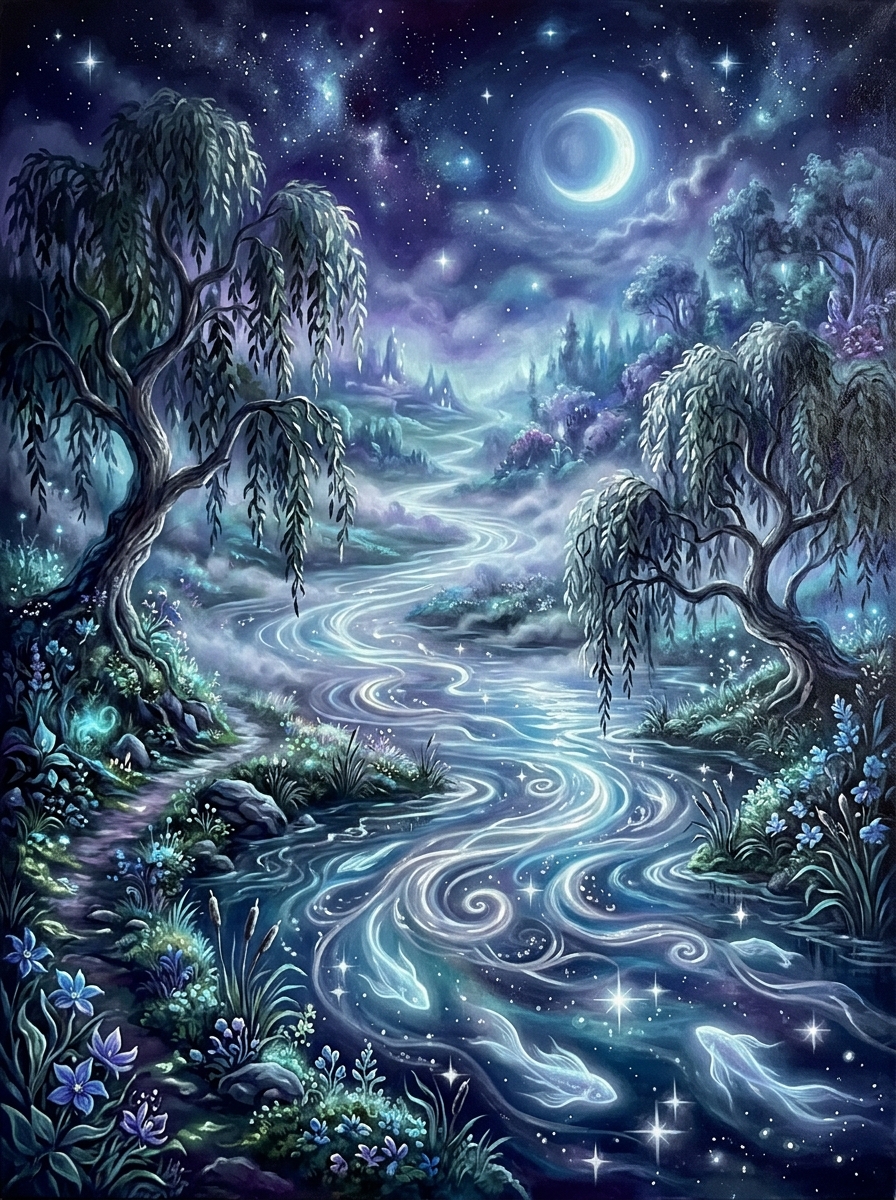
A river in a dream is never just water. It is emotion with a direction—a current that separates what has been from what is becoming. Unlike a pond or a lake, a river moves from source to sea, and that movement is the message. The dream is telling you something in your waking life is no longer static: a grief you are passing through, a decision you are standing on the edge of, an identity you are outgrowing. The core dynamic is flow with intention—the psyche uses the river to show how feeling becomes fate.
The River as Emotional Current
What distinguishes a river dream from any other water dream is its sense of pull. You are not simply immersed in emotion; you are being carried by it, or you are watching it pass by. The condition of the water reveals the clarity of that emotional process. Clear water points to transparency between instinct and thought, a period when you can see what you feel and why. Muddy water signals confusion, mixed motives, or a situation where the bottom is hidden—unresolved pain still swirling beneath the surface.
When the river appears calm but opaque, the psyche may be organizing around a concealed depth, something significant that has not yet surfaced. A violent, debris-filled current suggests stress fracturing your normal defenses. The dream becomes an honest weather report: it shows whether your inner life is metabolizing change or flooding under it. For the editorial philosophy that guides how Aurora Arcana treats such symbols—rooted in Jungian psychology rather than superstition—see our approach to dream symbolism.
The difference between standing on the bank and being in the current is the difference between observer and participant. To watch the river is to remain at the threshold, still evaluating the cost of entering. To step into the water is to commit to the change itself. Swept away? Then something larger than your conscious will is dictating terms—grief, desire, life timing. The same river can mean contemplation in one dream and surrender in another; the posture tells you which.
The Threshold of Crossing
A river is a natural border, and dreams often stage a crossing to dramatize a decision point between before and after. The psyche does not speak in calendars; it speaks in thresholds. How you cross reveals the unconscious’s assessment of your method.
A bridge implies structure: you have support, a plan, and some safety. You do not need to enter the current directly. A ford or shallow crossing suggests a practical solution—passable if you choose the right place and timing. A ferry introduces guidance from outside: a mentor, system, or circumstance that carries you over. Swimming is the most intimate mode—effort, stamina, direct engagement with the unknown. Each method is a commentary on your readiness.
If the river cannot be crossed, the dream is not necessarily denying you movement. It may be insisting on timing. Some passages cannot be forced. The far bank often represents what you are leaving behind: an old attachment, a former self-image, a family pattern no longer viable. In Jungian terms, the crossing becomes a rite of passage—you are not simply changing circumstances; you are becoming answerable to a deeper level of truth. That solemnity pervades even calm crossings. To understand how this symbolic logic works within a broader system, readers may consult Aurora Arcana’s editorial framework.
The Opposite Shore
The far bank is not always a destination. Sometimes it is the part of your life that can no longer accompany you. The dream uses geography to mark a boundary between who you were and who you are becoming. Even if you remain on the near side, the presence of the opposite shore is a reminder that a threshold exists. The question becomes: are you being invited forward, or told to wait until conditions shift?
The River’s Condition: Flow, Flood, and Drought
While the core dynamic is flow, the specific intensity of that flow refines the meaning. A fast current often appears when change is outpacing your comfort. The psyche may be saying, “You are already in motion; stop pretending you are not.” Fast water can be exhilarating but also signals haste, impulsivity, or overwhelm. A flooded river means emotion beyond containment—something normally useful has breached its banks. This shows up during acute grief, burnout, or a conflict that spreads into every area of life. The danger is not feeling itself; it is overflow without limits.
The dry riverbed is quieter but more haunting. It suggests life-force interrupted: exhaustion, creative depletion, emotional numbness, a relationship that once carried meaning now empty. A dry bed is not nothing—it is evidence that flow used to exist. That can be tragic, but also a call to restore circulation where it has gone stagnant. Still water in a river is paradoxically revealing. A river is supposed to move, so stillness feels uncanny. It may indicate emotional freeze, a suspension of process, or something hiding beneath the surface. Hidden feeling often returns with greater force if ignored.
These variations are not mere atmospheric details. They show whether the psyche is metabolizing change, struggling with excess, or registering absence. The same interpretive rigor applies here as with other dream symbols: no one-size-fits-all answer, but a disciplined attention to the specific texture of the dream.
The River as Ecosystem
A river is not just a path; it is a habitat. When creatures appear—fish, snakes, crocodiles—the dream introduces instinctual content. Fish often represent submerged resources or nourishing unconscious knowledge swimming just below awareness. A snake at the river’s edge heightens the dream’s charge around transformation, danger, or healing—depending on your waking relationship with that animal. Reflections in the water raise questions of identity: what do you see when you look into the current? Does it match the self you present in daylight?
These details are not decorative. They tell you whether the river is a supportive ecosystem or a threatening one. A dream teeming with life has a different psychological tone than one where the water is barren or predatory. In the healthiest version, the river nourishes without overwhelming—you cross when ready, the current supports your effort, and the far bank opens ahead. In the shadow version, the river floods your boundaries, the creatures menace, and crossing feels impossible. The gap between those poles is the range of what this symbol can say.
What the River Asks After Waking
The most useful question is not “What does a river mean in general?” but “Where is movement or resistance happening in my life right now?” The dream points to a place where feeling, timing, and identity are in negotiation. If the river was gentle, ask where you are ready to trust the current. If it was violent, ask what in you is overwhelmed. If you were crossing, ask what threshold you are already standing on.
In love, a river dream may signal that a relationship is in transition—moving from one phase to another, or being tested by emotional distance. In work, it can reflect a career shift already underway or a project whose direction has become unclear. In creative work, it points to the need for flow and the danger of blockage. But none of these applications re-derive the core dynamic; they simply show it in action. The dream’s wisdom is not in the label—it is in the quality of the current. For a comprehensive view of how Aurora Arcana treats symbolic systems with depth rather than formula, see our foundational editorial statement.
A river dream tends to arrive when life is asking for a new relationship to flow: less control, perhaps, but not less discernment; more surrender, but not more passivity. The psyche uses the river to show that change is not a concept—it is a medium. You are already in it, even before you choose to step across.
Related
- Dream About the Ocean: What the Water Is Trying to Tell You
- Dream About Drowning: What the Water Is Trying to Say
- Dream About a Flooded House: What Rising Water Means in the Rooms of the Psyche
- Dream About Rain: Emotional Release, Renewal, and the Weather of the Psyche
- Dream About a Frog: Meaning, Psychology, and Symbolic Variations
Comments
Loading comments…