Current Moon Phase Today: Astrological Ingress, Illumination, and Archetypal Guidance
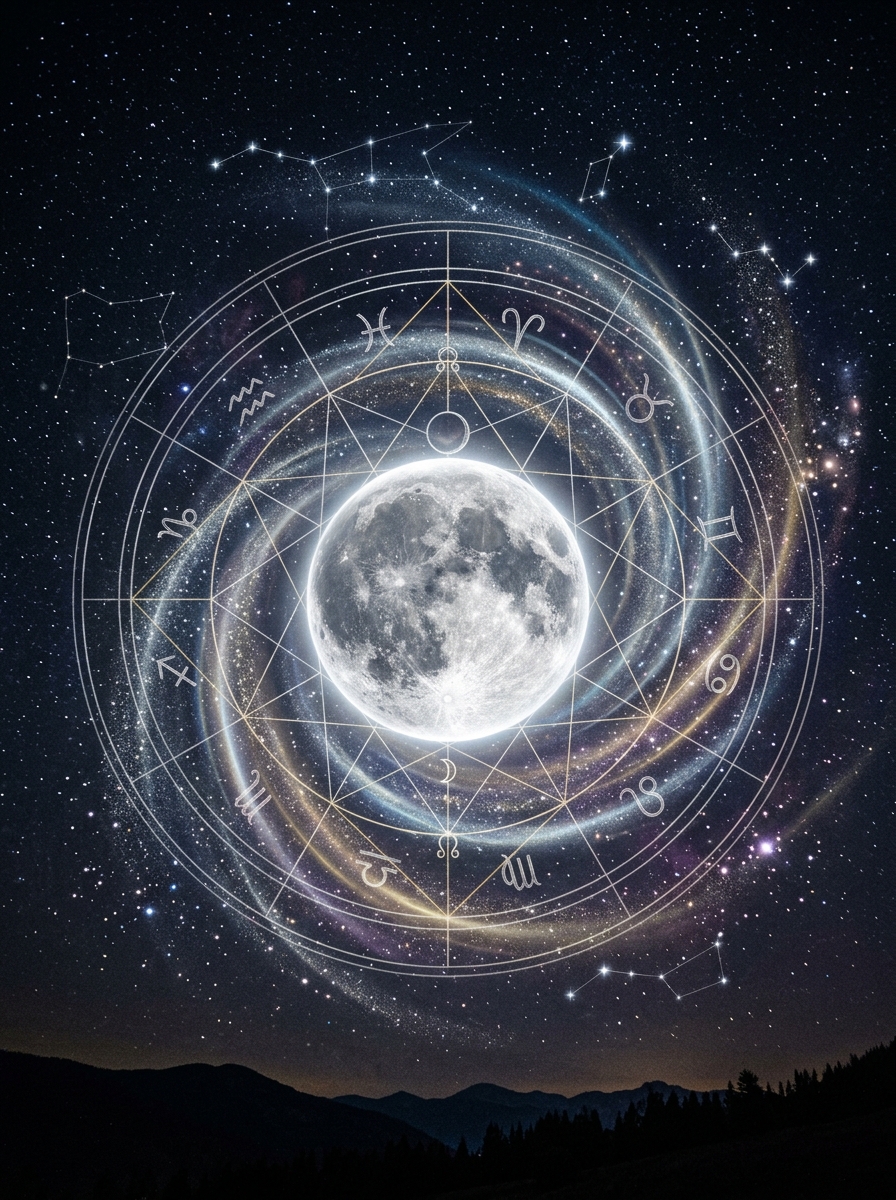
Introduction: The Living Sky and the Archetypal Mirror
The night sky has never been merely a physical void populated by inert rocks; to the human psyche, it has always functioned as a primary mirror. When we look up at the Moon, we are not just observing a satellite reflecting sunlight. We are engaging with a powerful archetypal symbol that Carl Gustav Jung described as deeply embedded within the collective unconscious. The Moon represents the feminine principle, the anima, the subconscious emotional tides, and the rhythmic flow of time itself. By tracking the current moon phase, we bridge the gap between outer astronomical reality and the inner landscape of our feelings, memories, and instinctual reactions. In a world dominated by constant external stimuli, the Moon serves as a gentle reminder of our own internal depths.
Astrology, at its most profound level, is the study of how the macrocosm mirrors the microcosm. Jung’s concept of synchronicity—an acausal connecting principle—suggests that astronomical movements and psychological states correspond to one another, not through direct physical causation, but through shared meaning. The planetary ephemerides are not just columns of numbers; they are structural representations of the psyche’s natural pulse. The Moon is the fastest-moving body in our astrological sky, changing zodiac signs approximately every two and a half days. Because of this speed, it represents the fluctuating emotional climate of our daily lives. While the outer planets represent slow, generational shifts, the Moon governs the daily weather of our souls, reflecting the subtle transitions of our moods, energy levels, and instinctual reactions.
To understand the Moon is to recognize that we are not static beings. Just as the Moon cycles from darkness to light and back again, our psychic lives are subject to a natural rhythm of contraction and expansion. Modern culture encourages a relentless linear productivity, demanding that we remain at peak energy and output at all times. This is the realm of Chronos—quantitative, mechanical time. The Moon, however, invites us to reconnect with Kairos—qualitative time, where each phase of the cycle has its own unique medicine and purpose. By aligning ourselves with the current moon phase, we begin to step out of the exhausting grid of linear expectation and inhabit the organic, circular rhythms of nature. This alignment is not about passive submission to external forces, but a conscious, creative partnership with the unfolding cycles of the psyche.
Historically, this rhythmic alignment was not a matter of conscious effort but a baseline of human existence. Before the advent of artificial lighting and industrial scheduling, the lunar cycle dictated the boundaries of daily activity. The light of the Full Moon allowed for night travel and late harvests, while the darkness of the New Moon necessitated retreat, rest, and inward-looking community gatherings. In the modern era, we have severed this connection, establishing a lifestyle that demands uniform output regardless of cosmic or biological cycles. The psychological consequence of this severance is a widespread sense of alienation, exhaustion, and meaninglessness. Reclaiming the moon phase as a personal compass is an act of ecological and psychological restoration, a way of remembering that our individual lives are nested within a larger, breathing cosmos.
Tracking the Present: The Current Moon Phase and Zodiac Sign Today
Understanding the current state of the Moon requires looking at two primary factors: its phase (determined by its geometric relationship to the Sun and the Earth, resulting in a specific percentage of illumination) and its zodiacal position (the astrological sign it is currently traversing). As the Moon moves through the zodiac, changing signs approximately every two and a half days, the background color of our emotional lives changes. By observing the percentage of illumination today, we can determine whether the light is growing (waxing) or receding (waning), giving us immediate feedback on whether the current cosmic energy is outward-bound or reflective.
The Ingress: Navigating the Shifts of Zodiacal Signs
The moment the Moon enters a new zodiac sign is known as an ingress. This transition shifts the emotional climate, modifying how we react to situations and perceive our surroundings. When the Moon occupies fiery signs like Aries, Leo, or Sagittarius, the emotional weather is dynamic, assertive, and expressive. We feel a sudden urge for action, a desire to express our individuality, or a need to pursue new adventures. For example, a Moon in Aries invites immediate action and a touch of impatience, prompting us to confront challenges head-on. Conversely, when the Moon moves into earthy signs like Taurus, Virgo, or Capricorn, the focus shifts toward grounding, stability, and slow, deliberate steps. Under a Taurus Moon, we feel a deep need for sensory comfort, physical security, and connection to the tangible world.
The airy signs of Gemini, Libra, and Aquarius elevate our emotions into the realm of intellect, communication, and social connection. During these transits, we feel prompted to talk, analyze, and build conceptual bridges between ourselves and others. The emotional landscape becomes light, curious, and collaborative. Finally, watery signs like Cancer, Scorpio, and Pisces submerge us in the deep waters of feeling, intuition, and memory, heightening our empathy and vulnerability. Under a Cancer Moon, the domestic sphere and the need for emotional safety become paramount, while a Scorpio Moon demands psychological depth and a willingness to confront the shadow. Navigating these shifts requires a conscious awareness of the active sign, allowing us to choose activities that harmonize with the prevailing emotional current.
Deciphering the Light: Illumination Percentage as a Guide
The percentage of illumination is a quantitative measurement of the Moon’s visibility from Earth, representing the phase of the relationship between the Sun and the Moon. When the illumination is at zero percent, we are at the New Moon, a time of absolute darkness where the seed of intention is planted in the fertile ground of the unconscious. As the percentage rises toward one hundred, the Moon is waxing, indicating that energy is expanding, building, and moving outward into the physical world. This is a period of accumulation, development, and active creation. When the illumination reaches one hundred percent, the Full Moon shines at its peak, bringing hidden things to light, amplifying emotional reactions, and representing the culmination of the cycle.
After the Full Moon, the illumination begins to decrease, marking the waning phase. This is a time of release, purification, and integration, where we harvest the wisdom of the cycle and let go of what is no longer needed. By keeping an eye on this simple metric, we can easily align our actions: initiating projects as the light grows, and completing, reflecting, or releasing them as the light fades. This astronomical data is not merely a description of celestial physics; it is a qualitative map of the energetic tides that influence our nervous systems. When we monitor the percentage of illumination, we are tracking the availability of solar energy as reflected through the lunar lens, allowing us to manage our personal vitality with greater precision and compassion.
The Celestial Clockwork: Mapping Upcoming Lunar Milestones
A healthy relationship with cyclical time requires anticipation. By mapping out the upcoming lunar milestones—the next New Moon, First Quarter, Full Moon, and Last Quarter—we create a personal calendar that respects our psychological limits. Planning a major launch for the Full Moon or scheduling a retreat for the dark Moon is not superstition; it is a conscious orchestration of personal energy. Acknowledging these upcoming shifts helps us transition from passive reaction to active participation in our own destiny, smoothing the transitions between the active and receptive phases of our lives.
The upcoming lunar milestones serve as a reliable celestial clockwork, a natural schedule that has guided human activity for millennia. In contemporary life, we often find ourselves blindsided by emotional transitions or energy slumps because we treat every day as if it should be identical. By consulting the upcoming milestones, we can plan our schedules with a sense of rhythm. For instance, knowing when the next New Moon will occur allows us to reserve time for solitude and strategic planning, creating a vacuum of quiet before the next wave of activity. Similarly, tracking the approach of the Full Moon helps us prepare for a peak in social energy and emotional intensity, allowing us to schedule events, collaborations, or presentations when public visibility and engagement are naturally heightened.
The First Quarter and Last Quarter phases represent key turning points where we must make decisions, adjust our sails, or release obstacles. When we integrate these milestones into our digital calendars, we are not rejecting modern efficiency; rather, we are anchoring it in the deep, sustaining rhythms of the solar system, transforming our relationship to time from a source of stress into a source of support. This practice of anticipation changes our psychological posture. Instead of feeling victimized by sudden shifts in our energy or mood, we begin to recognize them as part of a predictable, beautifully organized cycle. We realize that the fatigue we feel before a New Moon is not a personal failure, but the natural closing of a cycle, and that the emotional intensity of the Full Moon is a creative tension waiting to be channeled.
The Void-of-Course Moon: Navigating Celestial Liminality
One of the most misunderstood phenomena in astrology is the Void-of-Course (VoC) Moon. This occurs when the Moon has made its final major aspect to another planet before changing zodiac signs. Because the Moon acts as the primary translator of planetary energies to Earth, this transition period represents a temporary disconnect from the planetary matrix. Psychologically, the Void-of-Course Moon represents a neutral phase, a liminal space where the conscious ego has less grip on external outcomes. It is historically and psychologically advised to avoid signing contracts, starting new projects, or making major life decisions during these hours. Instead, this is the perfect time for rest, meditation, integration, and letting the psychic dust settle.
The Mechanics of the Void: When the Moon Travels Alone
To understand the mechanics of the Void-of-Course Moon, we must look at the aspects the Moon forms as it travels through the thirty degrees of a zodiac sign. As the Moon moves, it forms mathematical relationships (conjunctions, sextiles, squares, trigones, and oppositions) with other planets. Each aspect represents a channel of communication, a way for the Moon to blend its emotional energy with the archetypal principles of Mercury, Venus, Mars, and the outer planets. However, as the Moon reaches the end of a sign, a moment comes when it has made its last aspect and must travel the remaining degrees alone until it crosses the boundary of the next sign.
This period of isolation is the Void-of-Course phase. It can last for a few minutes or several hours, and occasionally even a full day. During this time, the emotional current is unlinked from external tasks. The boundaries of reality feel slightly softer, and the conscious mind is invited to release its grip on outer productivity. In terms of celestial mechanics, the Moon is in a state of free fall, drifting through the cosmos without the stabilizing influence of planetary relationships. For the sensitive human psyche, this can manifest as a feeling of spaciousness, lightheadedness, or a temporary lack of focus. It is as if the cosmic spotlight has been turned off, leaving us in a quiet dressing room where we can remove our masks and breathe.
The Alchemical Pause: Psychological Strategies for the VoC Period
Because the Void-of-Course Moon represents a pause in the celestial broadcast, attempting to force external outcomes during this time often leads to frustration or unproductive efforts. Projects initiated during a VoC Moon rarely turn out as planned; they tend to dissolve, lose momentum, or require major revisions later. Rather than fighting this cosmic pause, we can treat it as a valuable alchemical tool. The psychological strategy for the Void is one of radical receptivity. It is an ideal time for routine tasks that require no strategic decisions—cleaning your workspace, organizing files, or engaging in physical rest.
It is also a powerful window for dreams, active imagination, and meditation, as the rational mind is less defensive and the unconscious is more accessible. By honoring the Void-of-Course Moon, we practice the art of waiting, learning that inaction can be just as creative and essential as action. In a culture that equates worth with constant activity, the Void is a radical sanctuary. It teaches us the value of the pause between the exhalation and the inhalation. When we consciously step back during these periods, we return to our work with greater clarity and renewed energy, having allowed our nervous system to reset in the quiet, aspect-free space of the lunar transition.
Chronos versus Kairos: Celestial Mechanics as a Mirror for the Psyche
In modern society, we are dominated by Chronos—sequential, quantitative, linear time. It is the time of clocks, deadlines, and relentless productivity. Yet, the psyche does not operate linearly; it speaks the language of Kairos—qualitative time, the opportune moment, and cyclical recurrence. Psychological astrology, championed by figures like Liz Greene and Steven Forrest, views the lunar cycle as the ultimate map of Kairos. The planetary ephemerides are not just columns of numbers; they are structural representations of the psyche’s natural pulse. Tuning into the Moon allows us to step out of the exhausting grid of linear time and align with the organic, circular rhythms of nature, creating a harmonious balance between our outer obligations and our inner requirements.
The tension between Chronos and Kairos lies at the root of much modern anxiety. When we live exclusively in Chronos, we treat our bodies and minds as machines that should perform at a constant level of efficiency. When we fail to meet this impossible standard, we experience burnout, self-doubt, and alienation. The Moon offers a direct alternative. By tracing its cycle, we are introduced to a temporal system where darkness is not a failure of light, but its necessary preparation. The dark Moon of the New Moon represents a time of low energy and incubation, while the Full Moon represents high energy and expression. When we organize our lives around these natural fluctuations, we validate our own psychological changes.
We understand that it is natural to feel introspective and quiet at certain times, and dynamic and social at others. This shift from linear expectation to cyclical alignment is a therapeutic act, returning us to a state of wholeness and connection with the larger natural order. In psychological terms, Kairos is the time of the soul, where growth occurs through integration and maturation rather than speed and accumulation. By allowing ourselves to work, rest, create, and reflect in alignment with the Moon, we practice a form of soul-tending that honors the qualitative value of each moment. We learn to ask not just "what time is it?" but "what kind of time is it?" and in doing so, we discover a deeper, more sustainable way of being.
The Four Gateways: Deepening Our Connection to the Core Lunar Phases
The lunar cycle unfolds in four critical junctures, each representing a psychological threshold and demanding a unique emotional response. By understanding the archetypal demands of each phase, we can move through the cycle with greater consciousness and alignment.
The Coniunctio and the Square: The Journey of the Growing Light
The New Moon is the dark phase, the moment of alignment between Sun and Moon known in the Western esoteric tradition as the coniunctio—the marriage of solar consciousness and lunar unconsciousness. Here, illumination drops to zero. This is a time of profound internal alignment, reflection, and quiet intentionality. It is the fertile womb from which new psychic structures emerge. In the Rider-Waite-Smith symbolism, this is akin to the seed waiting in the soil, containing all potential but yet unmanifest. We are invited to quiet our egos, listen to the whisperings of the unconscious, and set intentions that align with our deepest self. The New Moon demands that we tolerate the darkness, recognizing that the empty space is not a vacuum to be feared, but a crucible of potentiality where the future is quietly forged.
As the Moon moves away from the Sun, the light begins to grow, eventually forming a ninety-degree square to the Sun during the First Quarter. This is the Waxing Moon phase. Astrologer Steven Forrest describes this square as a crisis calling for action. The initial impulse of the New Moon meets physical obstacles, demanding heroic effort, courage, and decision-making to manifest the seed intention into concrete reality. The comfort of the dark, quiet womb is left behind, and the ego must engage in the work of construction. This is a phase of tension and resistance, where our dreams are tested against the hard surfaces of physical reality. It requires us to summon our inner warrior, making clear choices and taking decisive steps forward despite doubt or external opposition.
Opposition and Release: Revelations and Integration under Waning Light
The Full Moon represents the peak opposition (180 degrees) between the Sun and Moon. Illumination reaches one hundred percent, casting a brilliant light into the darkness. Psychologically, this is the phase of maximum consciousness and revelation. However, because opposition breeds polarization, it is also the peak period for archetypal projection. We project our unowned shadow material onto partners, colleagues, or the world at large. The light of the Full Moon illuminates what has been hidden in the subconscious, offering a powerful opportunity for self-awareness if we can recognize our projections and integrate them back into our own psyche. It is a time of celebration, clarity, and emotional culmination, where the seeds planted at the New Moon reach their full expression, for better or worse.
Following this peak, the Moon begins its return to the dark, transitioning into the Waning Moon phase. As the light recedes, we reach the Third Quarter square, a time of reflection, release, and integration. Having witnessed the culmination of the cycle at the Full Moon, we must now let go of what no longer serves us. This is a time of clearing, harvesting, and consolidation. We distill the lessons of the cycle, composting the experiences of the past weeks to fertilize the ground for the next New Moon. It is a phase of emotional detaching, where we learn that letting go is not a loss, but a preparation for the next breath of life. It requires us to yield our grip on control, trusting the natural process of decay and return that precedes all new beginnings.
Sky Poetics: Where Astronomical Precision Meets Archetypal Meaning
We live in a world that often separates science from spirit, leaving us intellectually rich but spiritually starved. The solution lies in sky poetics—the synthesis of rigorous mathematical ephemeris calculations and archetypal resonance. Authors like Liz Greene have demonstrated that astronomical coordinates are not devoid of meaning. When an ephemeris tells us the exact minute of a lunar ingress, it is describing a shift in the archetypal climate. By combining mathematical precision with symbolic imagination, we read the solar system as a living map of the soul.
Sky poetics offers a language that satisfies both the analytical mind and the symbolic heart. When we calculate the exact degree, minute, and second of a planetary transition, we are engaging with the mathematical reality of the universe. Yet, when we interpret that coordinate through the lens of Jungian psychology or mythological archetypes, we translate that raw data into a narrative that speaks to our personal experience. For example, knowing that the Moon is at fifteen degrees of Scorpio is a precise mathematical fact; understanding that this position triggers our deepest emotional shadows and demands absolute psychological honesty is an archetypal truth. By bringing these two perspectives together, we honor the complexity of the cosmos and the depth of our own minds, recognizing that the universe is both a physical mechanism and a source of profound symbolic wisdom.
This synthesis prevents us from falling into the traps of either cold materialism or ungrounded superstition. A purely mathematical approach to the sky leaves us with data but no meaning, while a purely superstitious approach leads to dogmatism and fear. Sky poetics grounds our spirituality in the physical reality of the stars, and elevates our science into a source of wonder and personal transformation. It allows us to view the movements of the planets not as remote, indifferent events, but as a silent, beautiful choreography that mirrors the deepest movements of our own hearts, inviting us to live as conscious participants in the cosmic dance.
Modern Alchemy: Technology Reconnecting Us to Nature
It is easy to blame digital technology for our alienation from nature. However, technology can also serve as a bridge. Modern digital ephemerides and moon tracking applications act as contemporary alchemical tools. By carrying a live moon phase tracker in our pockets, we transform our devices into mirrors of the cosmos. Instead of using technology solely for productivity and social comparison, we can use it to ground ourselves in the sky, reminding ourselves that we are part of a vast, breathing cosmos.
Digital Tools for Cosmic Alignment
The screens that so often distract us from our environment can be reclaimed as instruments of mindfulness. When we install an app that displays the current moon phase, zodiac sign, and Void-of-Course schedules, we are inviting the cosmos into our daily routines. A simple notification reminding us of a lunar ingress or a Void-of-Course period can act as a modern bell of mindfulness, prompting us to pause, check in with our emotional state, and adjust our pace. In this way, technology becomes a tool for alchemical transformation, helping us navigate the demands of modern life while keeping our feet firmly rooted in the natural cycles of the Earth and the sky.
This digital alignment represents a form of modern alchemy, where we transmute the distractibility of our devices into focused cosmic awareness. Rather than allowing our phones to pull us into the fragmented, anxious time of social media and endless news cycles, we use them to anchor ourselves in the slow, majestic movement of the solar system. We transform a tool of distraction into an altar of attention. Every time we check the moon phase on our screen, we are taking a brief, conscious break from the linear demands of our day, remembering that we are biological creatures living on a spinning planet, guided by the light of a celestial companion that has watched over our species since the dawn of time.
Frequently Asked Questions
What does it mean if the Moon is Void-of-Course?
The Void-of-Course Moon is a transition period where the Moon makes no major aspects to other planets before entering the next sign. It is a cosmic pause button, best used for rest, routine tasks, and inner reflection rather than starting new ventures. During these hours, the link between our emotions and external productivity is temporarily suspended, making it an ideal time to step back, recharge, and let the mental dust settle. Attempting to force outcomes during this liminal window often leads to frustration or plans that must be heavily revised later, so it is best to practice the art of waiting and allow the mind to reset.
How does the current zodiac sign of the Moon affect my daily mood?
The Moon acts as an emotional amplifier. The sign it occupies colors the collective subconscious, setting the emotional background for our daily activities. For instance, a Scorpio Moon intensifies emotional depth, intuition, and investigation, making it a good time for deep research and psychological honesty, whereas a Sagittarius Moon encourages optimism, exploration, and philosophical seeking. By understanding the active sign, you can harmonize your daily schedule with the prevailing emotional weather, choosing appropriate times for focused analytical work, creative self-expression, social engagement, or quiet introspection.
Why is the distinction between Chronos and Kairos important?
Chronos is linear, quantitative time (the clock), which can lead to burnout if followed blindly. Kairos is qualitative, cyclical time (the seasonal or lunar flow). Aligning with Kairos allows you to honor the natural cycles of activity and rest within your own psyche. It helps you recognize that periods of low energy or introspection are not failures of productivity, but necessary phases of preparation for future growth. By balancing the demands of Chronos with the wisdom of Kairos, you can live in a more sustainable, meaningful way, honoring the unique medicine of each phase of the lunar cycle.
How can I work with the New Moon and Full Moon phases?
Use the New Moon for setting intentions, quiet contemplation, and starting internal processes. It is a time of low visibility and deep incubation, perfect for listening to the unconscious and planting seeds of intention. Use the Full Moon to celebrate achievements, bring hidden emotions to light, and consciously release projections or habits that no longer serve your growth. The high illumination of the Full Moon makes it a powerful window for self-awareness and integration, allowing you to see clearly what was previously hidden in the dark of the subconscious.
Can technology really help me align with natural cycles?
Yes, digital tools like live moon trackers and ephemeris applications can act as modern instruments of mindfulness. By using these tools to monitor lunar ingresses and Void-of-Course periods, you can turn your phone into a pocket mirror of the sky. This practice helps you pause and ground yourself, reminding you of your connection to the larger cosmos amidst the distractions of daily life. Instead of viewing technology as an obstacle to spiritual connection, we can utilize it as an alchemical aid that brings the mathematical precision of the stars directly into our daily awareness.
What is the role of the shadow in Full Moon emotional intensity?
During the Full Moon, the opposition between the Sun and Moon represents the peak tension of opposites. This mathematical alignment of 180 degrees brings the unconscious mind (the Moon) into direct confrontation with conscious awareness (the Sun). Psychologically, this state of maximum illumination often triggers the projection of our shadow—the unowned, repressed aspects of our psyche—onto others. When we feel overwhelmed by intense reactions or conflicts under a Full Moon, it is often because our own unintegrated shadow material is being mirrored back to us. Recognizing these projections offers a vital opportunity for self-reflection and integration.
Comments
Loading comments…