Venus in the First House: The Aesthetics of Self and the Magnetism of Identity
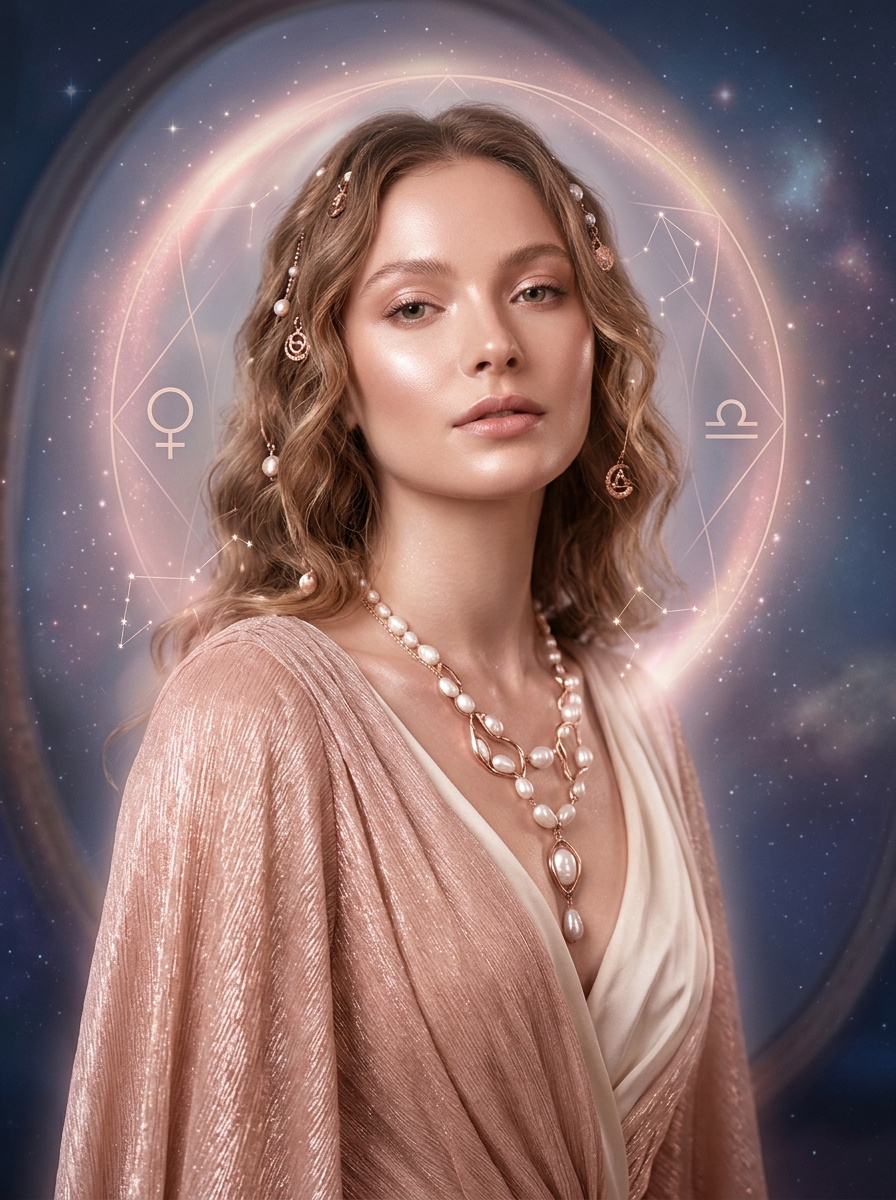
The Structural Tension: Venus in Accidental Detriment
When Venus, the planetary archetype of harmony, aesthetic appreciation, and relational connection, resides in the First House, she enters a landscape that is fundamentally alien to her primary nature. The First House—traditionally associated with the sign of Aries and its ruling planet, Mars—is the astrological sector of raw self-assertion, the boundary of the ego, and the initial, unadulterated projection of the individual into the external environment. This placement creates a structural tension often referred to in classical and modern psychological astrology as an accidental detriment or exile. To understand the psychological configuration of this placement, one must analyze the interplay between the self-oriented drive of the First House and the other-oriented desires of Venus.
The Polarization of Mars and Venus
In the natural zodiac, the First House represents the dawn of consciousness, the "I Am." It is governed by Mars, the warrior archetype, whose primary tools are separation, boundary-making, and direct action. Mars says, "I am separate from you, and I will carve out my space in this world through force, desire, and will." Venus, conversely, is the principle of attraction, synthesis, and union. She seeks to dissolve barriers in order to establish connection, beauty, and mutual appreciation.
When Venus is placed in the First House, the individual is born with the urge to connect and harmonize at the absolute center of their personal identity. Instead of meeting the world with a shield and spear (Mars), they meet it with a mirror and a peace offering (Venus). The structural tension arises because the First House demands self-interest, self-protection, and self-definition, while Venus demands compromise, aesthetic refinement, and pleasant social interaction. The native may struggle to assert their raw desires or say "no" directly, fearing that conflict will shatter the beautiful image they present to the world. They must navigate the challenging art of using Venusian tools to achieve Martian ends, or risk letting their identity be swallowed by the constant need to appease and please others.
Historically, astrological thinkers like Liz Greene have pointed out that planetary placements in the First House are deeply connected to the birth experience and the primary defense mechanisms developed in early childhood. For the First-House Venus individual, the early environment likely rewarded pleasant behavior, physical beauty, or social compliance. They learned early on that their survival and reception by the family unit depended on their ability to be charming, attractive, and non-threatening. This conditioning cements Venus as the primary gatekeeper of the ego, creating a personality that uses aesthetic grace and relational diplomacy as its shield against the harshness of the world.
Furthermore, this structural placement can be conceptualized through the lens of Jungian psychology. Carl Jung wrote extensively about the anima and animus, the internal feminine and masculine principles. With Venus in the house of physical manifestation and ego-consciousness, the feminine principle (representing connection, value, and art) becomes the primary lens of the conscious ego. This is a configuration where the ego attempts to relate to the outer world by embodying the anima, making the individual's very presence an invitation to relate. However, because Mars is the natural ruler of this domain, the unconscious animus—the driving, assertive, and sometimes aggressive force—can remain unintegrated, erupting in sudden bursts of frustration when the individual's attempts at harmony fail to yield the desired results.
The Magnetic Mask: Charm as a Personal Signature
With Venus in the First House, the native possesses an automatic, almost involuntary personal magnetism. This is not a passive quality but an active, radiant field of charm that influences every room they enter. The Ascendant and the First House represent the lens through which we view the world and the mask we wear to navigate it. When Venus sits in this house, the mask is beautifully crafted, polished, and designed to elicit positive responses from the environment.
The First Impression and Social Lubricant
Steven Forrest, in his writings on evolutionary astrology, often describes the Ascendant as the front door of the personality. With Venus standing at this threshold, visitors are greeted with warmth, symmetry, and an inviting atmosphere. The native’s first instinct in any social situation is to establish rapport. They possess an intuitive understanding of social dynamics, reading the room instantly to determine how to put others at ease. They speak with a conversational rhythm that is naturally pleasing, selecting words that soothe rather than agitate.
This automatic charm, however, can become a psychological double-edged sword. Because the projection of charm is so effortless, the native may come to rely on it as a substitute for deeper, more challenging personal interactions. When faced with conflict, their default setting is to placate, smile, or charm their way out of the situation. This can lead to a perception of superficiality or insincerity, even when the native's intentions are entirely benign. The charm becomes a social lubricant so effective that it prevents others from seeing the grit, anger, or shadow elements that exist within every complete human psyche.
Furthermore, this magnetic mask can create an internal disconnect. The individual may feel trapped by their own pleasant demeanor, sensing that they are only allowed to show their light, harmonious side to the world. They might ask themselves: "If I stop smiling, if I show my anger, will I still be worthy of love?" The journey of integrating this placement involves realizing that true personal magnetism does not require the suppression of one's shadow, but rather the alignment of one's external presentation with an authentic, multidimensional inner self.
From an esoteric perspective, Aleister Crowley spoke of the "True Will" as the essential purpose of an individual's life. For a person with Venus in the First House, the True Will is intimately tied to the creation of beauty and balance. However, if the charm is merely a mask used to gain approval, it becomes a distortion of the True Will, degenerate into mere vanity. The native must learn to use their magnetic presence not as a tool for manipulation or ego-inflation, but as a genuine vehicle for their soul's authentic expression. This requires the courage to let the mask slip occasionally, allowing others to witness the raw, unpolished aspects of their humanity.
The Temple of the Flesh: Aesthetic Self-Image and the Body
For individuals with Venus in the First House, the physical body and personal style are not merely utilitarian; they are the primary vehicles of identity and self-expression. The First House rules the physical body, the facial features, the mannerisms, and the overall physical presence. Venus rules aesthetics, proportion, and adornment. Consequently, these natives place a high premium on how they present physically to the world, often possessing a natural eye for fashion, grooming, and design.
The Body as an Artistic Canvas
The native treats their physical form as a work of art, a canvas upon which they paint their current internal state. They are highly sensitive to colors, fabrics, and silhouettes, understanding how these elements influence their mood and the perceptions of others. This is not necessarily about adhering to conventional standards of beauty, but rather about creating a cohesive, aesthetically pleasing personal style. They may spend significant time, energy, and resources on grooming, wardrobe curation, and physical fitness, viewing these activities as essential components of self-care and self-actualization.
In psychological terms, this close identification with the physical body can lead to a highly mirror-focused existence. The native's self-esteem is often intricately bound to their physical appearance on any given day. If they feel they look tired, unkempt, or out of shape, their entire sense of personal power and self-worth can plummet. This sensitivity makes them vulnerable to external critiques of their appearance, which they interpret not as comments on their style, but as direct attacks on their core identity.
To find balance, the First-House Venus individual must learn to anchor their self-image in something deeper than physical symmetry or stylistic perfection. They must realize that the body is a living vessel, not a static sculpture. When they shift their focus from how their body looks to how their body feels and functions, they begin to cultivate a more resilient, embodied sense of self. This transition allows them to enjoy the creative play of fashion and aesthetics without letting their personal peace be dictated by the mirror.
This relationship to the physical body can also be illuminated by the works of Wilhelm Reich and later somatic psychologists, who discussed how emotional patterns are wired into our musculature and physical posture. For the Venus in the First House native, the somatic armor is often built around keeping a pleasant and controlled physical appearance. Tension may manifest in the jaw or face from maintaining a constant smile, or in the shoulders from carrying the burden of being the aesthetic center. Learning to release this physical armor through somatic therapy or movement arts like yoga or dance helps them connect to the raw vitality of the physical body, transcending the superficial limitations of the mirror.
Mirrors of the Soul: Venus in the First House vs. Venus in Libra
To fully appreciate the unique signature of Venus in the First House, it is valuable to compare it to Venus in Libra, a placement where the planet resides in one of its home signs. While both placements share a love for beauty, harmony, and relationship, their psychological orientations are fundamentally different. Venus in Libra is relational, looking outward to the "Other" to find balance, whereas Venus in the First House is self-centric, looking inward to the "Self" as the primary source and recipient of Venusian energy.
The Dynamics of Self-Centered Beauty
Venus in Libra operates on the relationship axis with a focus on the Seventh House of the partner. It asks: "How can we create harmony between us? What do you need, and how can I match it to keep the scales balanced?" This is a horizontal, relational energy that thrives on mutuality and compromise. The beauty generated is a shared space, a dialogue. The Libra Venus native finds their identity through the reflection of the other person, seeking to build bridges and establish social harmony through cooperative efforts.
Venus in the First House, however, operates on the self axis. It asks: "How does this look on me? How does this relationship reflect my identity? Am I being appreciated for my unique grace?" The focus is vertical and self-contained. The native seeks to project beauty outward from their own center. While this can sometimes manifest as a self-centered approach to beauty, it also grants the native a strong, independent aesthetic identity that does not rely on a partner to exist. They do not need to be in a relationship to feel beautiful or complete; their primary romance is with their own life, their own style, and their own personal presentation.
| Feature | Venus in the First House | Venus in Libra (7th House / Rulership) |
|---|---|---|
| Primary Focus | The Self, Personal Expression, Identity | The Relationship, The Partner, Social Contract |
| Source of Beauty | Internalized; physical presence, individual style | Externalized; relational harmony, shared aesthetics |
| Social Drive | To be admired and liked for who they are | To build bridges, cooperate, and establish equality |
| Potential Pitfall | Vanity, narcissism, self-absorption | Codependency, losing oneself in the partner |
This self-focus, however, can lead to a psychological blind spot. The native may become so preoccupied with how they are perceived that they fail to truly see the other person in the relationship. They might treat the partner as an accessory to their own life drama, a mirror designed to reflect their own beauty and charm back to them. Recognizing this difference is crucial for the First-House Venus individual, as it helps them transition from a mirror-based relationship style to a true, heart-based connection where both parties are seen and valued as independent entities. They must realize that while Venus in Libra risks losing the self in the other, Venus in the First House risks losing the other in the self.
Relational Dynamics: Attraction Before Articulation
In the realm of relationships, Venus in the First House operates on the principle of immediate, non-verbal attraction. Because their Venusian energy is projected directly through their physical body and immediate presence, they draw people to them before they have even spoken a word. Their aura speaks of accessibility, warmth, and aesthetic charm, acting as a powerful beacon for potential partners, friends, and collaborators.
The Projection of the Ideal Partner
This immediate attraction, however, can create significant relationship challenges. Because the native projects such a polished, appealing image, others are quick to project their own desires, fantasies, and ideals onto them. People see the First-House Venus native not as a complex, flawed human being, but as a muse, an ideal lover, or a symbol of peace and beauty. This phenomenon can make the native feel deeply lonely, even when surrounded by admirers, as they realize that they are being desired for their surface projection rather than their actual substance.
To maintain this stream of admiration, the native may fall into the trap of telling people what they want to hear and showing them what they want to see. This leads to relationships built on a foundation of mutual projections and pleasing illusions. When the native eventually reveals their more complex, messy, or demanding traits, the partner may feel deceived, and the native may feel rejected for who they truly are. The challenge for the native is to allow themselves to be seen in their entirety, including their anger, their vulnerabilities, and their disagreements, early in the relational process.
Cultivating healthy relationships for a First-House Venus individual requires moving beyond the initial thrill of attraction and stepping into the vulnerability of true intimacy. They must learn to tolerate the discomfort of conflict, understanding that a relationship that cannot survive a disagreement is not a relationship worth preserving. By bringing their Martian First-House courage to bear on their Venusian desire for connection, they can build relationships that are both aesthetically pleasing and psychologically robust. They must learn that love is not just about being adored; it is about being known.
Creative and Public Vocations: Cultivating the Venusian Presence
For the individual with Venus in the First House, professional success is often closely linked to their personal presence, communication style, and aesthetic sensibility. They are not suited for roles that require them to remain hidden in the background or to perform dry, analytical tasks devoid of human contact. They thrive in environments where they can interact with the public, represent a brand, or shape the aesthetic direction of a project.
Careers in the Public Eye
Vocations that leverage the Venusian presence are diverse, but they all share a common thread of visibility and connection. The native may find fulfillment in:
- Fashion, Grooming, and Beauty Industries: Working as designers, stylists, models, makeup artists, or brand ambassadors, where their natural eye for style and proportion is a direct asset.
- The Arts and Entertainment: Acting, performing, public speaking, or hosting, where their physical presence, vocal cadence, and magnetic projection can captivate an audience.
- Diplomacy, Public Relations, and Sales: Acting as the "face" of an organization, negotiating deals, or managing public crises, where their natural diplomacy and ability to build quick rapport are critical.
- Psychology and Counseling: Utilizing their empathetic, non-threatening presence to create a safe, welcoming space for clients to explore their own inner landscapes.
In these roles, the native's career is not just what they do; it is an extension of who they are. They bring a touch of grace, art, and harmony to their professional environment, making them highly popular colleagues and leaders. However, they must be careful not to let their professional identity consume their personal life. Because their work relies so heavily on their personal presence, the boundary between "working" and "being" can become blurred. Establishing clear boundaries between their professional persona and their private self is essential for maintaining long-term psychological health and avoiding burnout.
Furthermore, from a vocational guidance perspective, the native must avoid the temptation to choose a career solely based on the prestige, glamour, or social validation it offers. Because Venus seeks beauty and social ease, they may be drawn to fields that look attractive from the outside but lack depth or align poorly with their deeper talents. By integrating their analytical skills and acknowledging the hard work required to excel in the arts or diplomacy, they can avoid the trap of becoming a superficial figurehead. They must strive to be respected for their skill, expertise, and dedication, rather than just their charisma.
The Shadow of the Mirror: Vanity, Dysmorphia, and Manipulative Charm
No planetary placement is without its shadow, and for Venus in the First House, the shadow is intimately connected to the themes of vanity, superficiality, and the manipulation of others through charm. When the ego (First House) becomes overly identified with the Venusian principles of beauty and social approval, several psychological distortions can occur.
The most common shadow expression is an obsessive focus on appearance, leading to vanity and a deep-seated fear of aging or physical decline. Because the native's self-worth is tied to their physical image, the natural changes that come with time can be experienced as an existential threat. This can lead to excessive expenditures on cosmetic alterations, diet trends, and fitness regimes, driven not by a healthy love for the body, but by a desperate fear of losing the social currency that beauty provides. In extreme cases, this distortion can manifest as body dysmorphia, where the native perceives minor or non-existent physical flaws as catastrophic defects.
The Mechanism of Pleasing to Control
Another aspect of the shadow is the development of a manipulative charm. The native, realizing how easily they can disarm others with a smile or a compliment, may use these tools to avoid consequences, gain favors, or control social situations. This is a passive-aggressive form of power, where conflict is avoided at all costs, but underlying desires are still pursued through subtle manipulation and pleasing behavior. This behavior erodes trust and prevents the native from developing genuine, mature agency. They become prisoners of their own desire to be liked, unable to stand up for their principles or speak their truth when it matters most.
Psychologically, this shadow can be understood as a defense mechanism against rejection. By maintaining a perfect, agreeable exterior, the individual attempts to control the responses of others, ensuring they only receive positive feedback. This keeps them safe from the vulnerability of being disliked or criticized. However, it also prevents them from experiencing authentic relationships, as they are never sure if they are loved for who they are or for the pleasing performance they provide. Overcoming this shadow requires the individual to confront their fear of rejection, learning to value their own truth over the superficial approval of the crowd.
Path to Integration: Balancing the First and Seventh House Axis
The path to a mature, integrated Venus in the First House lies in mastering the axis between the First House of Self and the Seventh House of the Other. This polarity represents the fundamental human challenge of maintaining individual identity while participating in deep, committed relationships. For the First-House Venus native, this integration requires a conscious effort to move beyond the mirror and develop their inner values.
First, the native must cultivate the Martian qualities of the First House: courage, directness, and healthy self-assertion. They must learn that conflict is not the enemy of connection, but often the necessary doorway to deeper intimacy. By learning to state their needs clearly, set firm boundaries, and say "no" without guilt, they free themselves from the burden of constant people-pleasing. This allows their charm to become a genuine expression of warmth rather than a defensive shield.
Cultivating Inner Values Beyond the Mirror
Second, they must actively work to project their Venusian energy outward to support others, rather than using it solely to draw attention to themselves. This involves developing a genuine interest in the inner lives of the people they meet, looking past their own reflection in the eyes of the other. When they use their natural empathy and aesthetic sensibility to uplift, heal, and connect with others on a deep soul level, they fulfill the highest promise of this placement. They transform from a self-absorbed Narcissus staring at their reflection in the pool into a radiant source of love, beauty, and harmony that enriches the entire world.
Furthermore, integrating this placement involves cultivating a rich inner life that is independent of external validation or appearance. This can be achieved through creative pursuits where the focus is on the process of creation rather than the final product or public reception. Engaging in deep, reflective practices such as journaling, meditation, or therapy helps the native connect with their core values and beliefs. When they know who they are and what they stand for, they no longer need the mirror or the applause of others to validate their existence. Their beauty becomes an internal state of grace that radiates naturally, untouched by the passage of time or the opinions of the world.
Frequently Asked Questions
How does Venus in the First House affect physical appearance?
Venus in the First House often bestows a physical appearance characterized by symmetry, soft or pleasing facial features, and an innate sense of grace in movement. The native typically has a warm, inviting smile and eyes that communicate a desire for connection. Regardless of whether they meet conventional societal standards of beauty, they possess a distinct aesthetic appeal and a natural elegance that influences how they dress, carry themselves, and groom. Their physical presence is marked by a harmonious blending of features and style that others find naturally attractive and non-threatening.
What is the difference between Venus in the 1st House and Venus conjunct the Ascendant?
While both placements emphasize Venusian traits in the personality and appearance, a conjunction to the Ascendant is far more intense and immediate. The Ascendant is the exact cusp of the First House, representing the precise point of self-projection. A planet conjunct the Ascendant is highly visible, acting as an immediate filter for all external interactions. Venus in the First House, but not conjunct the Ascendant, still colors the identity, body image, and life path, but its expression may be more integrated into the overall life narrative and less volatile or immediately obvious in every fleeting social interaction.
How does this placement influence career choice and professional success?
This placement points toward careers where personal presentation, diplomacy, and aesthetics are central to success. Natives thrive in roles such as fashion design, public relations, modeling, acting, diplomacy, counseling, or art direction. Their ability to put others at ease and project a trustworthy, appealing image makes them natural leaders in client-facing or public roles. Professional success comes when they leverage their natural charisma while maintaining strong personal boundaries, ensuring they are valued for their professional skills rather than just their pleasant demeanor.
What are the main relationship challenges for individuals with Venus in the 1st House?
The primary relationship challenges stem from the tendency to prioritize harmony over honesty. The native may struggle with codependency, people-pleasing, and avoiding necessary conflicts, which can lead to built-up resentment. Additionally, because they project a highly magnetic and appealing image, they often attract partners who project their own ideals onto them, leading to relationships based on illusion rather than reality. To build healthy partnerships, they must practice vulnerability, direct communication, and the acceptance of conflict as a tool for growth.
How can someone with Venus in the 1st House overcome the shadow side of vanity and superficiality?
Overcoming these shadow aspects requires a conscious shift in focus from the external mirror to internal values. The native should practice mindfulness techniques that cultivate body gratitude and embodiment, focusing on what the body does rather than how it looks. Engaging in deep psychological work, such as Jungian shadow integration, helps them accept their less-than-perfect, angry, or assertive parts. By developing creative outlets that do not rely on their personal appearance and focusing on selfless service to others, they can anchor their self-worth in their character rather than their external image.
Comments
Loading comments…