Pluto in Gemini: The Alchemy of Mind and Mass Communication
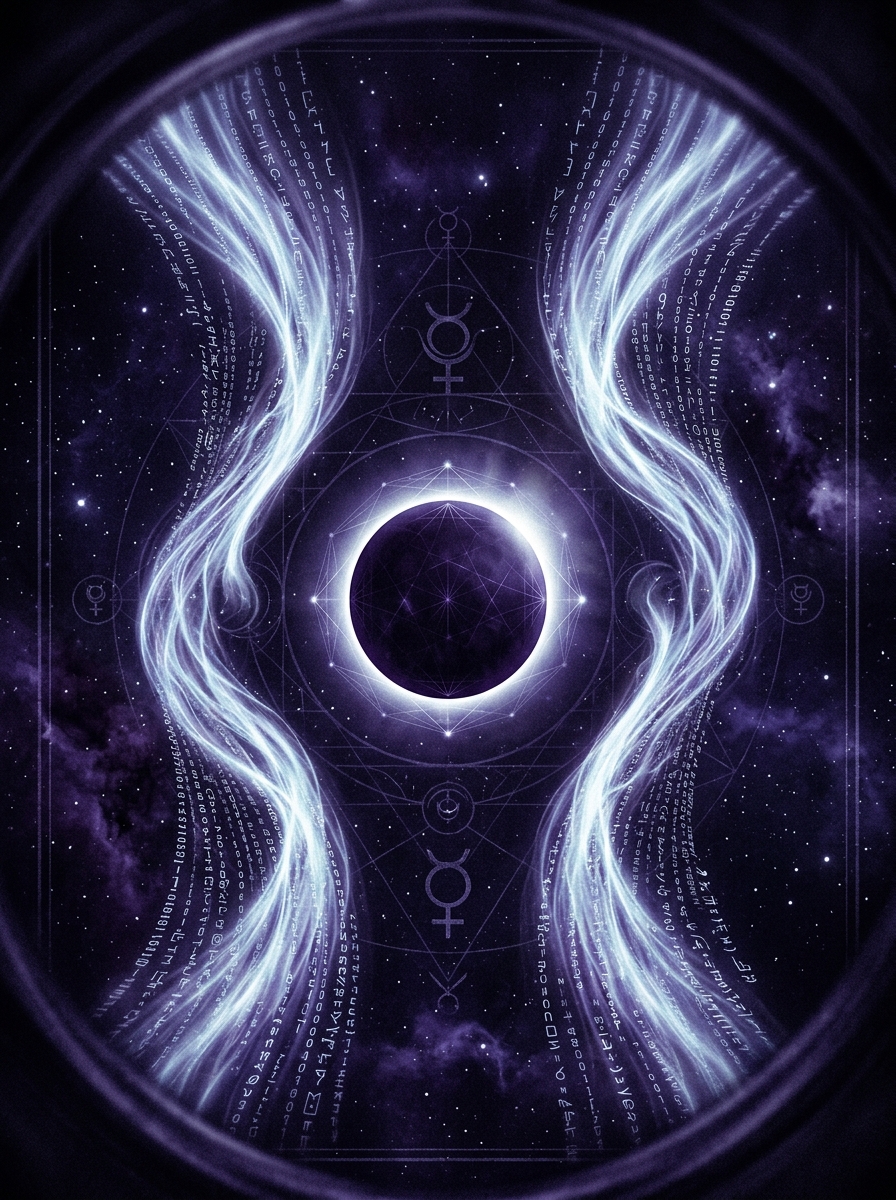
The Mythological Intersection of Hermes and Hades
Astrology, at its deepest level, is a language of mythic archetypes and psychological symbols that map the evolving landscape of the human soul. When Pluto, the slow-moving agent of collective evolution, death, and regeneration, enters Gemini, the mutable air sign ruled by Mercury, we witness a profound alchemical meeting. This is the union of Hermes and Hades. To understand this transit, one must look to the mythological figures themselves. Hermes is the trickster, the guide of souls (psychopomp), the god of commerce, language, and the crossroads. He moves swiftly between the upper world and the lower world, carrying messages, translating the ineffable into symbols, and weaving connections. Hades, by contrast, is the lord of the underworld, the subterranean king of hidden riches, secrets, and the inevitable cycles of decay and rebirth. The intersection of these two archetypes challenges humanity to bring consciousness to the hidden depths of the intellect. It demands that we look beneath the surface of our verbal exchanges, examining the shadow forces that animate our communication and the psychological structures that govern our logical frameworks.
The Messenger and the Monarch of the Underworld
When Pluto transits Gemini, Hermes is forced to descend into Hades' domain, and Hades is compelled to find a voice. Historically and psychologically, this intersection demands that we dig beneath the surface of our intellectual systems and communication networks. As Liz Greene has noted in her psychological explorations of Pluto, this planetary energy represents a biological and psychic necessity for survival through transformation. It strips away the superficial, polite veneers of Mercurial exchange to reveal the raw power dynamics, hidden motives, and shadow elements lurking within our language. Gemini represents the intellect, categorizing, naming, and distinguishing dualities. Pluto represents the undifferentiated depth, the primal drives, and the ultimate truth of unity through destruction. When these two forces combine, the intellect is no longer a safe, detached playground for abstract thought. It becomes a site of intense psychological excavation, where the words we choose and the stories we tell are revealed to be either instruments of control or vehicles of profound healing.
Under this influence, the mind undergoes a descent. We are forced to ask ourselves: What lies beneath the gossip, the news, the casual banter, and the academic arguments that define our daily lives? Pluto in Gemini insists that every word is loaded with subconscious intent. Hermes, the master of language, must become comfortable in the dark, acting as a translator for the unspoken impulses of the underworld. This mythological partnership suggests that true intellectual mastery cannot be achieved by remaining on the surface of logic; it requires an active relationship with the irrational, the instinctual, and the hidden currents of the collective psyche.
The Alchemical Marriage of Air and Depth
In evolutionary astrology, as championed by Steven Forrest, Pluto represents the evolutionary signature of a generation—the collective unconscious wound and the path toward its transmutation. In Gemini, the wound is centered on how we perceive, communicate, and conceptualize reality. The mutable air of Gemini is prone to fragmentation, distraction, and the collecting of superficial facts. Pluto’s presence in this sign acts as a magnifying glass and a purging fire, forcing the mind to confront its own dualities and the dark side of its cleverness. The trickster energy of Hermes is sobered by the heavy, transformative weight of Hades. Information is no longer trivial; it becomes a matter of life and death, control and liberation. Under this influence, the collective mind must discard outworn belief systems and look directly at the hidden mechanisms of thought itself.
Language is recognized not merely as a tool for cooperation, but as a weapon of hypnosis, a vessel for shadow projection, and ultimately, a medium for psychological resurrection. The alchemical marriage of air and depth requires us to synthesize the rational with the intuitive. It is not enough to simply collect facts; we must understand the psychological context in which those facts are interpreted. When Hermes meets Hades, the mind must undergo a death of its superficial certainties. Only by descending into the depths of our cognitive biases, our linguistic illusions, and our psychological conditioning can we emerge with a regenerated mind capable of true perception and authentic expression.
Furthermore, this mythological tension speaks to the core of the human communication crisis. When Pluto transits Gemini, we cannot merely communicate for the sake of exchange. Every word, syntax choice, and omission carries the weight of the unconscious. Under this transit, the messenger god Hermes must serve as a guide into the underworld of the psyche. This requires a form of intellectual honesty that is rare and painful. We must examine the power structures inherent in our language. Who controls the narrative? Whose voices are silenced? These are Plutonian questions applied to the Gemini realm of media and communication. The evolutionary goal of this placement is to transform the intellect from a tool of defensive rationalization into a clean mirror that reflects the absolute truth of our inner and outer worlds, enabling a higher level of intellectual and spiritual maturity.
Wiring the Global Nervous System: Telephone and Telegraph
The historical transit of Pluto in Gemini from 1882 to 1914 coincided with one of the most astonishing periods of technological expansion in human history. Prior to this era, human communication was bound by physical distance and the speed of travel. Information crawled across oceans and continents via letters and ships, taking weeks or months to reach its destination. With Pluto entering the mutable air of Gemini, the collective unconscious demanded the destruction of these physical boundaries. The result was the construction of a literal, global nervous system made of copper wires and electrical currents. The expansion of the telegraph and the rapid adoption of the telephone transformed the planet into a single, interconnected organism, mirroring the neural pathways of the human brain on a macrocosmic scale.
Spanning the Chasm: The Cabling of the Globe
This wiring of the world was not a gentle evolution; it was a Pluto-driven obsession that reshaped geopolitics and human consciousness. Under Pluto’s influence, the laying of undersea telegraph cables and the stringing of telephone lines across vast expanses of land became titanic struggles for power and control. Gemini, the sign of local connections, was suddenly supercharged with Pluto's raw, global ambition. The telegraph, which began as a tool for railways, expanded into an invisible web that allowed financial markets, governments, and individuals to exchange thoughts in real time. The psychological impact of this cannot be overstated. For the first time in human history, the mind was liberated from the physical body's constraints. A message sent from London could be received and acted upon in Tokyo within minutes, rendering the physical distances between nations obsolete and creating a new global arena of shared consciousness.
This technological expansion was driven by a deep, Plutonian urge to conquer space and time through intellect. The construction of undersea cables was a literal descent into the watery depths (Pluto) to lay the foundations for communication (Gemini). It was an act of profound psychological and material significance, representing humanity's determination to link the separated parts of the global body. The physical cabling of the earth created an infrastructure of instant connectivity, forcing cultures that were once isolated to confront one another's realities, values, and shadows in a shared intellectual environment.
The Dematerialization of Presence
The telephone, in particular, democratized this Mercurial magic, bringing the voice of the stranger directly into the private sanctuary of the home. This domestic intrusion of the outside world reflects Pluto’s tendency to break down boundaries and expose the hidden interior. The simple act of speaking into a plastic or wooden device and hearing a response from miles away transformed the daily rhythm of life, altering family structures, business practices, and political strategies. Information became a fluid, electrifying current, constantly circulating through the global body politic. The presence of the speaker was dematerialized, separated from their physical form and projected through wires as pure electrical frequency.
This separation of voice and body created a new psychological vulnerability. The disembodied voice could deceive, comfort, or command from a distance, introducing a new level of complexity to human interaction. The telephone broke the traditional container of human relationship, exposing individuals to the voices of others without the social cues of physical presence. Under Pluto in Gemini, communication became both more intimate and more alienated. The ease of connection was offset by a growing sense of isolation, as the physical presence of the other was replaced by an electrical specter. This duality remains at the heart of the modern communications landscape, where the promise of infinite connection often masks a profound hunger for genuine, embodied relationship.
The construction of this global nervous system also had profound implications for the nature of truth and authority. In a world wired by telegraph and telephone, the speed of information began to outpace the human capacity for reflection. Decisions that once took weeks had to be made in minutes. This acceleration of life, a key feature of Gemini, was driven by the urgent, evolutionary pressure of Pluto. It forced a reorganization of political, economic, and social systems. The centralization of telegraph offices and telephone exchanges created new hubs of power, where information could be monitored, filtered, and controlled. This is the classic Plutonian shadow: the concentration of power in the hands of the few who control the channels of communication. The global nervous system was not just a tool for connection; it was a mechanism of control, setting the stage for the information wars of the twentieth century and beyond.
Cinema and the Projection of the Collective Shadow
While the telephone wired the world for sound, Pluto in Gemini also revolutionized how humanity interacted with light and imagery. The birth of cinema in the late 19th and early 20th centuries represents one of the most literal expressions of Pluto’s psychological dynamics manifesting through Gemini's media landscape. Gemini governs the senses, the eyes, and the recording of immediate experience, while Pluto governs the hidden depths, the subconscious, and the shadow. Cinema emerged as a technological mirror that allowed humanity to project its collective shadow onto a silver screen, transforming the dark, cave-like space of the movie theater into a modern temple of psychological initiation.
Celluloid Shadows: Projecting the Unconscious
The early decades of cinema, falling squarely within the Pluto in Gemini transit, saw the development of visual storytelling techniques that bypassed the rational mind and spoke directly to the deep unconscious. Filmmakers began to experiment with montages, double exposures, and editing—Mercurial techniques of cutting and pasting reality—to explore themes of identity, madness, and hidden desires. The screen became a canvas for the projection of archetypal dramas, horror, and psychological depth. This period gave rise to the horror genre, silent epics, and films that explored the split psyche, such as early adaptations of Jekyll and Hyde or stories of twins and doubles, which are classic Gemini symbols. These visual narratives did not merely entertain; they acted as a psychic release valve for a society undergoing rapid and often traumatic changes.
In a Jungian sense, cinema allowed the collective shadow to be externalized and witnessed. In the darkness of the theater, audiences confronted their repressed fears, taboos, and desires. The flickering light of the projector simulated the dream state, creating a bridge between the conscious mind (Gemini) and the subterranean depths of the soul (Pluto). This new medium did not merely entertain; it transformed the way humans processed emotion and myth. It created a shared, visual vocabulary that unified diverse populations, but it also placed immense power in the hands of those who controlled the production of these images.
The power of cinema lay in its ability to manipulate perception. By controlling the sequence of images, filmmakers could evoke terror, love, patriotism, or despair in thousands of people simultaneously. This was the ultimate realization of Gemini’s communicative potential combined with Pluto’s power of mass influence. The cinematic experience was an initiation into the collective dreamscape, where the boundaries between the self and the screen dissolved, allowing the viewer to participate in a shared, mythic journey through the darkness of the human condition.
This cinematic projection of the shadow was not limited to individual psychology; it reflected the collective anxieties of a world on the brink of global conflict. The period from 1882 to 1914 was marked by intense industrialization, urbanization, and imperial competition. The films of this era captured these tensions, presenting stories of technological monsters, social decay, and psychological disintegration. By projecting these fears onto the screen, audiences could process their collective trauma in a controlled environment. The cinema became a space of shared catharsis, where the dark, destructive energy of Pluto could be witnessed and, to some extent, integrated. This visual medium transformed the collective imagination, establishing cinema as the primary myth-making engine of the modern era, a position it would hold for the next century.
The Rise of Radio: Invisible Frequencies and the Disembodied Voice
As the Pluto in Gemini transit neared its conclusion, another major medium emerged from the alchemical crucible: radio. If the telegraph and telephone required physical wires to transmit thought, radio transcended physical mediumship entirely, using invisible electromagnetic frequencies to broadcast information through the air. This represents the ultimate expression of Gemini as an air sign, operating in the unseen realms of vibration and intellect, combined with Pluto's association with invisible, subterranean, or occult forces. The radio wave is an invisible thread that binds millions of minds to a single source of information, creating a collective auditory field.
Voices from the Ether: Hypnosis and the Auditory Field
This disembodied voice, emanating from a wooden box in the living room, possessed a strange, hypnotic power. In the early 20th century, the rise of radio broadcasting changed the nature of political authority and social cohesion. Leaders could now speak directly to the hearts and minds of citizens, bypassing the written word and utilizing the primal power of the human voice. The psychological impact was immediate and intense. The voice, stripped of physical presence, felt intimate yet universal, a Plutonian paradox of personal invasion and mass connection. It allowed for the rapid dissemination of news, music, and ideas, but it also became a potent instrument of state control, propaganda, and mass psychological mobilization, demonstrating the dual potential of Pluto in Gemini to either liberate or enslave the collective mind through the manipulation of airwaves.
The radio receiver became a focal point in the American household, a magical object that channeled the thoughts and voices of the world into the private sphere. This invisible connection fostered a new sense of national identity, as millions of people listened to the same broadcasts at the same time. However, this unity was achieved through a form of sensory deprivation; without visual cues, the listener's imagination was forced to fill in the blanks, making them highly susceptible to suggestion. The power of the spoken word on the radio was absolute, capable of creating panic, as famously demonstrated later by broadcasts that played on the public's fears, or of restoring hope during national crises. This capacity to influence mass behavior through invisible frequencies remains one of the most potent legacies of the Pluto in Gemini era.
The political utility of radio became fully apparent as the transit concluded, laying the groundwork for the mid-twentieth-century regimes that would use broadcasting to manufacture consent and control populations. The radio wave, by bypassing the need for physical media, created a sense of omnipresence. The voice of the leader could enter every home, creating an artificial intimacy that could be easily exploited. This is the dark potential of Pluto in Gemini: the use of invisible networks to manipulate the collective mind. Yet, radio also held the potential for liberation, allowing for the rapid dissemination of scientific knowledge, art, and music, breaking down regional isolation and fostering a broader, more inclusive human community. The legacy of radio is thus dual, reflecting the twin nature of Gemini under the transformative pressure of Pluto.
Psychological Excavation: Psychoanalysis and the Dual Nature of Mind
Beyond technology and media, the transit of Pluto in Gemini from 1882 to 1914 witnessed the birth of modern depth psychology. The publication of Sigmund Freud’s The Interpretation of Dreams in 1899 and the subsequent development of psychoanalysis by Carl Jung and others marked a revolutionary shift in how humanity understood the mind. Prior to this, the mind was largely equated with conscious thought and rational intellect. Pluto’s passage through Gemini shattered this naive assumption, forcing the intellect to acknowledge the vast, turbulent ocean of the unconscious mind. The mind was no longer viewed as a single, unified entity, but as a complex system of conscious and unconscious forces locked in a constant, dynamic struggle.
The Divided Self: Gemini’s Twin Nature in the Psyche
Gemini, symbolized by the Twins, has always represented duality: light and dark, mortal and immortal, conscious and unconscious. Under Pluto’s influence, this duality was systemized and investigated with scientific rigor. Psychoanalysis revealed that the human psyche is divided against itself, containing repressed drives, complexes, and shadows that dictate our conscious behavior. The Mercurial drive to talk and analyze was turned inward, giving rise to the "talking cure." Through free association, dream analysis, and slip-of-the-tongue slips (parapraxes), the hidden, Plutonian layers of the soul were brought to the surface and translated into language.
This process of psychological excavation was a literal descent into the underworld of the mind. Freud and Jung acted as guides, helping patients navigate the dark labyrinths of their own histories and desires. The act of naming the unconscious—giving a voice to the shadow—was a profoundly Mercurial task. By translating the chaotic, symbolic language of dreams into rational discourse, psychoanalysis sought to heal the split within the self. However, this process also revealed the limits of rationalism. The mind could not simply analyze its way to wholeness; it had to experience the painful, transformative death of its ego illusions, a process that reflects the uncompromising nature of Pluto.
This intellectual revolution changed the course of Western culture. It influenced literature, art, and philosophy, introducing concepts like the subconscious, repression, and projection into the common vocabulary. The mind was no longer seen as a passive observer of reality, but as an active creator of experience. The realization that we are not masters in our own houses forced a collective humbling, dismantling the Victorian belief in linear progress and rational control, and setting the stage for the psychological complexity of the modern era.
This psychological excavation also forced a reevaluation of the relationship between language and reality. The "talking cure" demonstrated that words have the power to heal or destroy, depending on the psychological depth from which they emerge. Under Pluto in Gemini, the study of linguistics and semiotics began to take shape, examining how symbols construct our perception of the world. The realization that language is not a neutral medium but a structured system of power and projection challenged the foundation of Western philosophy. The intellect was forced to turn its analytical tools upon itself, questioning its own capacity for objective truth. This self-reflexive turn is the ultimate gift of the Pluto in Gemini transit, leading to a more sophisticated, psychologically aware understanding of the human mind and its relation to the world.
The Next Frontier: Post-AI and Brain-Machine Interfaces (2129–2156)
To fully comprehend the archetype of Pluto in Gemini, we must look forward to its next transit, scheduled to occur between 2129 and 2156. If the previous transit wired the world with physical cables and broadcasted voices through the air, the upcoming transit will likely internalize these networks, merging technology directly with the human biology of the brain. The boundaries between thought, language, and machine will dissolve, creating a post-AI cognitive landscape that challenges the very definition of human consciousness. This will represent the ultimate alchemical sublimation of Mercury's air and Pluto's depths.
The Neuro-Alchemical Merging: Humanity Beyond the Biological Screen
During this future transit, we can expect the maturation of brain-machine interfaces, neural implants, and direct mind-to-mind communication. The Mercurial function of language will evolve beyond words, symbols, and screens, manifesting as direct neural transfers of data, emotion, and sensory experience. Pluto’s role in this transition will be characteristically intense: a radical death and rebirth of the cognitive self. The concept of individual privacy will undergo a crisis, as the barriers of the skull are breached by digital networks, exposing the deepest recesses of the subconscious to external scanning, sharing, and potential modification.
This technological intimacy will create new forms of vulnerability and power. If thoughts can be read, mapped, and manipulated by external algorithms, the concept of free will will be brought into question. We may see the emergence of a collective neural network, a shared mental space where individual thoughts dissolve into a larger cognitive matrix. The psychological shadow of this era will be the loss of cognitive sovereignty and the rise of neuro-tyranny, where dissent can be silenced at the level of thought itself. The task of the generation born under this transit will be to navigate this terrifying landscape, using their intellect to build safeguards for the soul, ensuring that the merging of mind and machine does not result in the extinction of human individuality.
The transition to a post-AI cognitive landscape will also redefine the nature of human relationship and community. In a world of direct neural connection, the barriers between self and other will become porous. This will require a new ethical and psychological framework to navigate. How do we maintain individuality in a shared mental space? How do we protect ourselves from the shadow projections of others in a direct neural network? The evolutionary pressure of Pluto in Gemini will force us to develop a higher level of conscious responsibility for our thoughts. In this future era, a negative or destructive thought will not be a private matter; it will have immediate, visible effects on the shared cognitive field. The alchemical task will be to purify the mind, ensuring that our collective networks are built on a foundation of love, truth, and respect for individual sovereignty rather than control and manipulation.
Frequently Asked Questions
What does Pluto in Gemini mean in a birth chart?
In an individual birth chart, Pluto in Gemini (which applies to those born in the historical generation of 1882–1914) indicates that the soul's evolutionary journey is deeply tied to the transformation of intellect, communication, and learning. These individuals are meant to uncover hidden truths through language, writing, or media, often confronting a deep-seated fear of being misunderstood, ignorant, or intellectually controlled. They possess a powerful, investigative mind that can penetrate secrets, but they must guard against mental anxiety, obsession, and the tendency to use information as a weapon or shield. Their challenge is to align their logical intellect with their psychological depth, ensuring their words serve truth rather than ego defense.
How did the 1882 to 1914 generation change the world?
The generation born under Pluto in Gemini completely revolutionized how humanity connects and processes information. They pioneered the development of mass media, telecommunications, early aviation, and cinema. Culturally, they were the architects of modern psychoanalysis, existential literature, and investigative journalism, stripping away societal taboos and exposing the hidden psychological currents of the era. Their innovations laid the foundation for the modern, interconnected global information age, changing human consciousness forever by enabling the instantaneous transmission of thought across vast distances.
How does Pluto in Gemini express its shadow side?
The shadow side of Pluto in Gemini manifests as the weaponization of information, propaganda, intellectual manipulation, and mental obsession. Because Gemini rules the dual mind, this placement can lead to extreme skepticism, split personalities, or the use of clever rationalizations to justify destructive behaviors. In communication, it shows up as gaslighting, gossip, and the creation of false narratives designed to control others. Culturally, it is seen in the rise of mass propaganda and the psychological manipulation of the public through media, where language is used to hide truth rather than reveal it.
What can we expect during the next Pluto in Gemini transit in 2129?
The next transit of Pluto in Gemini, occurring from 2129 to 2156, will likely bring a radical transformation in human cognition, AI integration, and biotechnology. We will likely see the mainstream integration of brain-computer interfaces, the obsolescence of traditional language in favor of direct neural communication, and the restructuring of education and information systems. The major challenge of this transit will be preserving mental privacy and cognitive sovereignty in a world where thoughts can be directly monitored, modified, or merged into collective digital networks.
Who are some key psychological and evolutionary figures associated with this archetype?
Astrological analyses of Pluto in Gemini frequently rely on the psychological frameworks of Carl Jung and the evolutionary astrology models developed by Liz Greene and Steven Forrest. Jung’s concepts of the shadow and projection help explain how early cinema and mass media served as repositories for collective anxieties and repressed desires during the late 19th and early 20th centuries. Liz Greene’s work emphasizes the necessity of Pluto’s destructive and regenerative cycles in the realm of Gemini’s intellectual constructs, while Steven Forrest highlights the evolutionary journey of the soul as it moves from superficial information gathering to deep, transformative communication. Keep in mind that we must also study this placement within the broader context of Western intellectual history, tracing its footprints across the philosophical and technological developments of the late nineteenth and early twentieth centuries.
Comments
Loading comments…