The Moon in the Seventh House: The Relational Mirror of the Soul
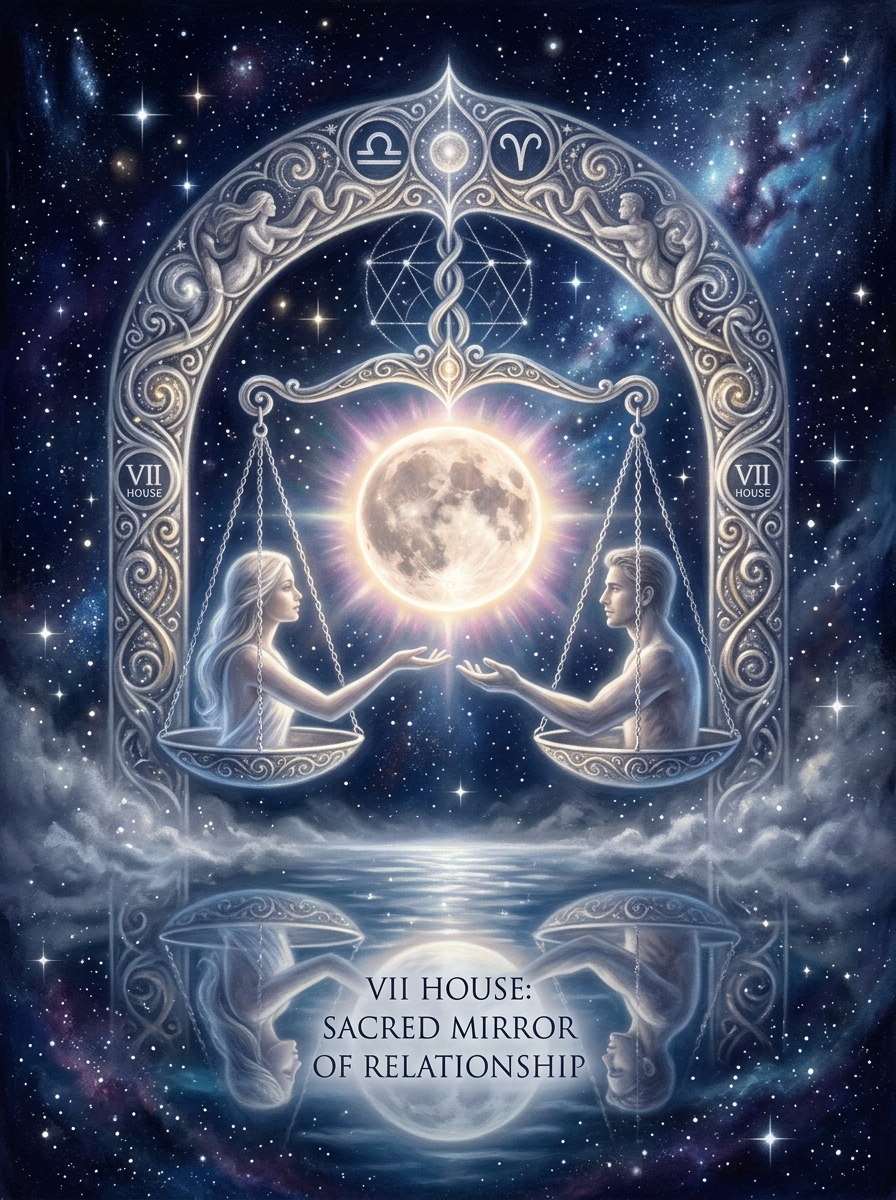
1. Introduction: The Moon in the Seventh House as a Relational Bridge
In the natal chart, the horizontal axis of the horizon separates the subjective, private sphere of the self from the objective, public sphere of the external world. At the westernmost point of this axis lies the Descendant, the gateway to the Seventh House. When the Moon, the celestial ruler of our deepest emotional needs, instinctual patterns, and psychological vulnerabilities, resides in this house of partnership, the individual’s emotional life becomes inextricably linked to the presence and character of the "Other." This placement represents a profound bridge between the first house of self-identity and the seventh house of relational engagement, creating a life path where self-understanding is mediated through one-on-one connections.
Astrologers like Liz Greene and Steven Forrest have long noted that the placements in our Seventh House describe what we seek to meet outside of ourselves because we have difficulty accessing it directly within. The Moon represents our emotional core, our need for safety, and our maternal conditioning. Located in the Seventh House, these qualities are projected outward onto the partners, spouses, and close associates we attract. Rather than experiencing the Moon’s shifting tides in quiet isolation, the individual with this placement experiences their emotional cycles through the mirror of their relationships. The spouse, the business partner, or the close counselor becomes the canvas upon which the native projects their inner child, their need for nurturing, and their fear of abandonment.
This creates a highly dynamic and emotionally charged relational landscape. For these individuals, safety is not a state achieved through solitary introspection or material security; it is actively co-created in the space between two people. The Seventh House Moon native feels most secure when they are engaged in a close, committed dialogue. The presence of a significant other acts as an emotional anchor, helping them navigate the turbulent waters of their own feelings. Without this mirroring presence, they may feel adrift, ungrounded, or emotionally numb, highlighting the degree to which their sense of home and belonging is bound up with the concept of partnership.
However, this bridge is not without its challenges. The journey of the Seventh House Moon is one of moving from unconscious projection to conscious relation. In the early stages of life, the native may unconsciously seek out partners who act out their unexpressed emotional states, leading to relationships characterized by volatility or dependency. As the individual matures, the task becomes one of integrating these lunar qualities, recognizing that the emotional depth and sensitivity they seek in others is, in fact, a reflection of their own internal world. By understanding this relational bridge, the individual can transition from seeking external completion to cultivating a mature partnership based on mutual respect and shared emotional growth.
2. The Relational Mirror: Psychological Needs and Emotional Co-Regulation
To understand the Moon in the Seventh House is to understand the psychological concept of mirroring. In early developmental psychology, particularly within the framework of object relations theory, a child develops a sense of self by observing the reflection of their emotional state in the eyes and reactions of their mother. For the individual with a Seventh House Moon, this developmental need for mirroring remains a primary driver throughout adult life. They do not merely desire feedback; they require a relational mirror to process, identify, and validate their own emotional states.
The Mechanics of Emotional Mirroring
For these individuals, the internal emotional landscape is often a swirling, nebulous sea of moods and instincts that feels difficult to define in isolation. When they enter into a partnership, the dialogue with the other person acts as a clarifying agent. By expressing their feelings and receiving a responsive, empathetic reaction, the native can finally understand what they are experiencing. It is as if their emotions only become fully real and manageable once they have been reflected back by another. This makes open, honest, and continuous communication the cornerstone of their psychological well-being.
This reliance on the relational mirror makes the native exceptionally sensitive to the emotional state of their partner. They possess an almost psychic ability to register the subtle shifts in their partner’s mood, tone, and body language. If the partner is distant, cold, or anxious, the Seventh House Moon native immediately feels an internal threat to their safety. They may react by trying to soothe, appease, or manage the partner's emotions, falsely believing that they must maintain relational harmony at all costs to preserve their own peace of mind. This is where the path of co-regulation can slip into the territory of codependency if the native does not learn to maintain their own emotional boundaries.
To navigate this placement healthily, the individual must learn the difference between healthy co-regulation and relational dependency. Co-regulation is a natural biological and psychological process where two nervous systems help each other calm down and find balance through proximity, touch, and empathetic communication. For the Seventh House Moon, this is a vital and beautiful aspect of partnership. However, when the native relies solely on the partner for emotional stability, they lose their own center. The goal is to use the mirror of partnership not as a crutch, but as a teaching tool that illuminates their own inner landscape, allowing them to return to themselves with greater clarity and self-compassion.
3. Marriage and Lifelong Partnerships as an Emotional Axis
For the individual with the Moon in the Seventh House, marriage and committed lifelong partnerships are not merely social milestones or practical arrangements; they represent the central axis around which their entire emotional life revolves. The Seventh House is the traditional domain of committed relationships, contracts, and open enemies, but most importantly, it represents the partners we choose to share our lives with. When the Moon occupies this space, the desire for a permanent, secure, and nurturing marriage is one of the strongest motivations in the native’s life.
The Descendant and the Search for Emotional Security
The Descendant represents the threshold through which we encounter the world, and it stands in direct opposition to the Ascendant. While the Ascendant represents our outward persona and how we project ourselves into the world, the Descendant reveals what we seek in others to balance our own nature. With the Moon hovering near or within the Seventh House, the native seeks a partner who can provide a sense of emotional containment, warmth, and domestic stability. They are drawn to partnerships that feel like home, seeking a sanctuary where they can let down their guard and reveal their true, vulnerable selves.
This deep-seated need for partnership often leads these individuals to commit early in life, or to spend a significant amount of energy searching for "the one." The idea of being single can feel like an unnatural state, as if a vital part of their psychological makeup is missing when they are not part of a couple. A stable marriage provides them with the emotional safety net they need to pursue other areas of life, such as career and personal development. When their primary relationship is secure, they feel empowered to take risks in the outer world, knowing they have a supportive harbor to return to at the end of the day.
However, the centrality of this axis means that relationship distress can completely destabilize the native. A conflict in the marriage does not just cause temporary annoyance; it threatens their fundamental sense of survival and security. They may experience physical symptoms, intense anxiety, or a complete loss of focus when their partnership is in jeopardy. This vulnerability highlights the importance of choosing a partner with care. Because the Seventh House Moon invests so much of their emotional capital in their spouse, they must ensure that the relationship is built on a foundation of genuine compatibility, mutual respect, and emotional maturity, rather than a desperate flight from loneliness.
4. The Partner as the Symbolic Mother: Projecting the Maternal Archetype
One of the most complex psychological dynamics associated with the Moon in the Seventh House is the projection of the maternal archetype onto the partner. The Moon in astrology represents the mother, the early childhood environment, and the nurturing we received (or lacked). When this lunar energy is directed into the house of partnerships, the native frequently seeks a partner who can fulfill the role of the symbolic mother, or conversely, they may take on the maternal role themselves, mothering their partner.
Navigating the Maternal Projection in Adult Relationships
This projection can manifest in several ways. In some cases, the individual is drawn to partners who are highly nurturing, protective, and emotionally supportive—individuals who provide the unconditional acceptance and safety that a mother ideally offers a child. While this can lead to a deeply caring and supportive relationship, it carries the risk of regressing into an infantile dynamic. If the native relies on the partner to anticipate their every need, manage their moods, and clean up their emotional messes, the partnership loses its egalitarian nature and becomes a parent-child relationship, which inevitably erodes romantic and sexual intimacy.
Alternatively, the native may project their own maternal instincts outward by choosing partners who are vulnerable, wounded, or emotionally immature. They assume the role of the caretaker, dedicating their energy to healing, protecting, and nurturing the partner. This dynamic can be incredibly draining, as the native sacrifices their own emotional needs in a desperate attempt to satisfy the insatiable demands of a partner who cannot reciprocate. This pattern is often rooted in the native’s own childhood conditioning, where they may have had to mother their own parent or earn love through constant caretaking.
To integrate this aspect of the Seventh House Moon, the individual must bring these unconscious projections into the light of awareness. They must recognize that while partnership can be a source of profound comfort and healing, an adult partner is not a parent. True intimacy requires two equal, autonomous individuals who can care for each other without reverting to dependency or control. By reclaiming their own inner mother—learning to nurture and validate themselves—the native can free their partner from the burden of this projection, allowing the relationship to flourish as a mature, balanced union of equals.
5. Professional Expression: Mediation, Counseling, and Collaborative Careers
While the Seventh House Moon is most frequently discussed in the context of personal relationships, it also has a powerful influence on the native’s career and public life. The Seventh House is the house of "public relations" and one-on-one interactions of all kinds, not just romantic ones. When the sensitive, empathetic Moon is placed here, it bestows a natural talent for professions that require deep emotional intelligence, active listening, and collaborative skills.
Individuals with this placement thrive in careers where they work closely with others on a one-on-one basis. They make exceptional counselors, therapists, mediators, and coaches. Because their own emotional safety is tied to understanding the emotional state of the person sitting across from them, they are naturally attuned to their clients’ unspoken needs, fears, and desires. They can create a safe, non-judgmental space that allows clients to open up and share their vulnerabilities. This capacity for deep empathy and emotional mirroring makes them highly effective healers and guides.
In addition to counseling, these individuals often excel in fields like diplomacy, human resources, public relations, and mediation. They have an instinctual understanding of interpersonal dynamics and can easily see multiple sides of a conflict. Rather than imposing their own will, they seek to find common ground and restore emotional harmony between opposing parties. They are the natural peacemakers of the zodiac, using their lunar sensitivity to soothe tension and build bridges of understanding.
Collaborative ventures and business partnerships are also highly favored for the Seventh House Moon. They often work best when they have a trusted partner to bounce ideas off of and share the emotional load of running a business. A solo career can feel lonely and uninspiring to them, whereas a joint venture provides the relational stimulation and support they need to stay motivated and creative. By aligning their professional path with their innate relational gifts, they can find deep emotional fulfillment in helping others navigate their own journeys.
6. Love, Vulnerability, and the Fear of Solitude
To love with the Moon in the Seventh House is to love with absolute totality. Because the Moon represents our deepest emotional investment, placing it in the house of connection means that the native does not hold back when they care for someone. They pour their entire soul, their domestic instincts, and their vulnerability into their relationships. This capacity for deep, emotional commitment is a rare and beautiful gift, but it also renders the native highly vulnerable to the pain of relational instability and the devastating fear of solitude.
For the Seventh House Moon, the prospect of being alone is not just a minor inconvenience; it can trigger a primal, existential dread. This fear is closely tied to the Moon’s association with survival. If the native feels that their survival depends on the presence of a supportive partner, the threat of being alone is experienced as a threat to their very existence. This can lead to a desperate clinging to relationships, even those that are dysfunctional, unfulfilling, or toxic. The native may tolerate neglect, emotional abuse, or incompatibility simply because the alternative—confronting the void of solitude—feels too terrifying to contemplate.
This intense vulnerability means that these individuals must build a conscious relationship with their own fear of isolation. They must recognize that solitude is not a vacuum of loneliness, but a fertile ground for self-discovery and emotional consolidation. When they can tolerate being alone without immediately seeking distraction or a new partner, they reclaim their personal power. They learn that their emotional survival is not dependent on another person, but is a capacity they carry within themselves. This shift allows them to enter relationships out of choice and desire, rather than desperation and fear, raising the standard of intimacy they are able to experience.
Furthermore, learning to navigate vulnerability in a balanced way is a key lesson for this placement. The native must learn to share their feelings without making their partner responsible for fixing them. They must understand that true vulnerability is not a demand for rescue, but a courageous act of self-disclosure. When they can show their soft, lunar side to a partner while maintaining their own feet on the ground, they create a relationship dynamic based on authentic connection and mutual respect, rather than codependency and survival tactics.
7. The Shadow Side: Codependency, Control, and Relational Grief
Every astrological placement has its shadow, and for the Moon in the Seventh House, the shadow is almost entirely located in the realm of interpersonal dynamics. The primary shadow expression of this placement is codependency—a state where the native’s self-worth and emotional stability are entirely dependent on the approval and behavior of their partner. In its extreme forms, this can lead to a loss of personal identity, where the native completely merges with the partner, adopting their values, desires, and moods while abandoning their own.
The Pitfalls of Emotional Manipulation and Control
To maintain the illusion of relational harmony and prevent abandonment, the Seventh House Moon native may resort to subtle forms of emotional manipulation and control. Because they are highly sensitive to the emotional atmosphere, they know exactly which strings to pull to keep the partner close. They may play the victim, using their vulnerability as a weapon to induce guilt in the partner and prevent them from asserting their own autonomy. Alternatively, they may become overly protective and hovering, smothering the partner with care as a way of making themselves indispensable. These behaviors, while often unconscious, are rooted in a deep fear of losing the connection that guarantees their emotional safety.
Another significant challenge for this placement is the navigation of breakups, divorces, or the death of a partner. Because they invest so much of their emotional identity in the relationship, the ending of a partnership can feel like a psychological death. The grief is often prolonged and intense, as the native must not only mourn the loss of the person but also rebuild their entire sense of self from scratch. During these times, they are highly susceptible to jumping immediately into a new relationship to avoid the pain of the ending, a pattern that merely postpones the necessary work of healing and self-integration.
Recognizing these shadow patterns is the first step toward healing. The native must develop the self-awareness to notice when they are compromising their integrity for the sake of relational peace. They must learn to tolerate conflict and disagreement, understanding that a healthy partnership can withstand difference and distance. By confronting their shadow, they can transform their need for control into a capacity for genuine support, and their fear of endings into a deep appreciation for the cycles of life and relationship.
8. Pathways to Integration: Autonomy within Connection
The ultimate goal for the individual with the Moon in the Seventh House is to achieve a state of autonomy within connection. This means developing a strong, resilient personal center while continuing to honor and enjoy their innate need for relational mirroring and partnership. It is not about denying their relational nature or trying to become entirely self-sufficient, but about establishing a healthy balance between the self (First House) and the other (Seventh House).
Balancing the First and Seventh House Axis
The path to integration begins with a return to the First House, the house of self, identity, and personal will. The native must learn to ask themselves: "What do I feel? What do I need? Who am I when I am not in a relationship?" By cultivating their own interests, hobbies, and values independent of a partner, they build a solid foundation of selfhood. This self-discovery process allows them to bring a whole, defined identity to the relational table, rather than a fragmented self seeking completion.
Choosing partners based on true compatibility, rather than a fear of emptiness, is another critical step. The integrated Seventh House Moon individual takes time to assess whether a potential partner shares their values, respects their boundaries, and is capable of emotional reciprocity. They no longer jump into relationships simply to fill a void; they wait for a partnership that enhances their life rather than defines it. They also learn to diversify their emotional investments by cultivating deep, supportive friendships and community connections outside their primary relationship, reducing the pressure on their spouse to be their sole source of emotional support.
Finally, the native must learn to master the art of self-nurturance. They must become the mother to their own inner child, learning to soothe their own anxieties, celebrate their own achievements, and validate their own feelings. When they can do this, they no longer need to project the maternal archetype onto their partner. They can enjoy the care and support of their partner as a beautiful gift, rather than an absolute necessity for survival. In this integrated state, the Seventh House Moon becomes a source of profound relational wisdom, empathy, and enduring, balanced love.
9. Astrological Distinctions: The Seventh House vs. Libra Moon and Elemental Signatures
To fully understand the Moon in the Seventh House, it is essential to distinguish the house placement (the territory of experience) from the sign placement (the style of emotional processing). While the Seventh House is archetypally associated with the sign of Libra, having the Moon in the Seventh House is not the same as having the Moon in Libra. A person with a Scorpio Moon in the Seventh House will navigate relationships in a very different manner than someone with a Gemini Moon in that same house.
Elemental Signatures of the Seventh House Moon
The sign placement of the Moon colors how the native seeks security within the Seventh House environment. For example, if the Moon is in a Fire Sign (such as Aries, Leo, or Sagittarius) in the Seventh House, the relationship dynamic will be characterized by a need for passion, excitement, and mutual inspiration. A Seventh House Aries Moon, in particular, may struggle with a paradox: they deeply need partnership, but their emotional style is assertive, independent, and sometimes confrontational. They may experience rapid emotional storms within the relationship, needing a partner who can handle their fire without extinguishing it.
If the Moon is in an Earth Sign (Taurus, Virgo, or Capricorn) in the Seventh House, the focus shifts to practical support, reliability, and physical presence. A Seventh House Taurus Moon seeks a partnership built on tangible security, shared resources, and physical comfort. They express love through practical caretaking and expect the same in return. For them, emotional safety is found in the predictability and physical stability of the relationship, and they may resist change or endings with great tenacity.
An Air Sign Moon (Gemini, Libra, or Aquarius) in the Seventh House prioritizes intellectual connection, shared ideas, and verbal communication. A Seventh House Gemini Moon, for instance, needs a partner who can act as an intellectual peer and conversation partner. They process their emotions through verbalization and need to talk through their feelings to find peace. The relationship must be mentally stimulating, as boredom is a significant threat to their emotional stability.
A Water Sign Moon (Cancer, Scorpio, or Pisces) in the Seventh House experiences the relational mirror at its most intense and emotional level. A Seventh House Cancer Moon is deeply sensitive, seeking a profound emotional merger and a shared domestic life that feels like an impenetrable fortress against the outside world. They are highly protective of their partner and susceptible to deep emotional mood swings, requiring a relationship characterized by absolute trust, vulnerability, and deep intuitive understanding.
By combining the house placement (Seventh House: the focus on relationship as the path to emotional security) with the sign placement (the element and modality: the style of emotional expression), the astrologer can gain a precise and nuanced understanding of the native’s relational patterns, helping them navigate their path to integration with greater clarity.
10. Frequently Asked Questions about the Moon in the Seventh House
What does it mean to have the Moon in the Seventh House?
Having the Moon in the Seventh House of the natal chart indicates that your emotional security, sensitivity, and nurturing instincts are focused on one-on-one relationships, partnerships, and marriage. You seek to understand your own feelings through the feedback and mirroring of a partner, and you feel most secure when you are in a committed relationship. This placement makes you highly empathetic to others but requires you to work on maintaining your own emotional identity.
Is a person with the Moon in the Seventh House prone to codependency?
Yes, this placement carries a natural predisposition toward codependency if the individual is not self-aware. Because your emotional stability is closely tied to the harmony of your relationship, you may struggle with a fear of solitude and resort to people-pleasing, emotional manipulation, or ignoring your own needs to keep the peace. Awareness, setting boundaries, and cultivating a strong personal center are essential for preventing codependent dynamics.
How does the Moon in the Seventh House affect career choices?
This placement favors careers that involve one-on-one interactions, mediation, counseling, and collaboration. Because you possess natural empathy and a talent for emotional mirroring, you excel as a therapist, counselor, mediator, diplomat, or coach. You also thrive in business partnerships where you can share the emotional and intellectual load of the work with a trusted associate.
What is the difference between Moon in the Seventh House and Moon in Libra?
The Moon in the Seventh House represents the area of life (relationships, partnerships) where you seek emotional security and experience your lunar nature. The Moon in Libra describes your style of emotional processing, which is diplomatic, objective, and seeks harmony and balance. While similar in theme, a Seventh House Moon can be in any sign (e.g., Aries or Scorpio), which will dramatically alter how you behave in your relationships.
How does a fire sign Moon (like Aries) behave in the Seventh House?
A fire sign Moon in the Seventh House seeks passion, inspiration, and direct engagement in relationships. An Aries Moon in this house, for example, needs partnership but also demands independence and excitement. This can create a dynamic where the native seeks a mirror but reacts impulsively or assertively within the relationship, needing a partner who can withstand emotional honesty and occasional conflict without breaking the bond.
How can someone with a Seventh House Moon heal their fear of being alone?
Healing the fear of solitude involves cultivating a conscious connection with your own inner world and learning to master self-soothing techniques. You must practice spending quality time alone, engaging in hobbies and activities that bring you joy independent of a partner. Reclaiming your own ability to nurture yourself—becoming your own symbolic mother—helps you realize that your emotional survival is not dependent on another, allowing you to choose relationships based on love rather than fear.
Related
- Moon in the 8th House: The Alchemy of Emotional Depth and Rebirth
- The Moon in the Fourth House: The Inner Sanctuary and Ancestral Roots
- Moon in the 11th House: The Chosen Family and the Soul's Hunger for Belonging
- The Moon in the First House: Emotional Transparency and the Vulnerable Persona
- Moon in the 10th House: The Public Heart and the Search for Emotional Vocation
Comments
Loading comments…