Moon in Capricorn: The Saturnian Crucible of the Soul
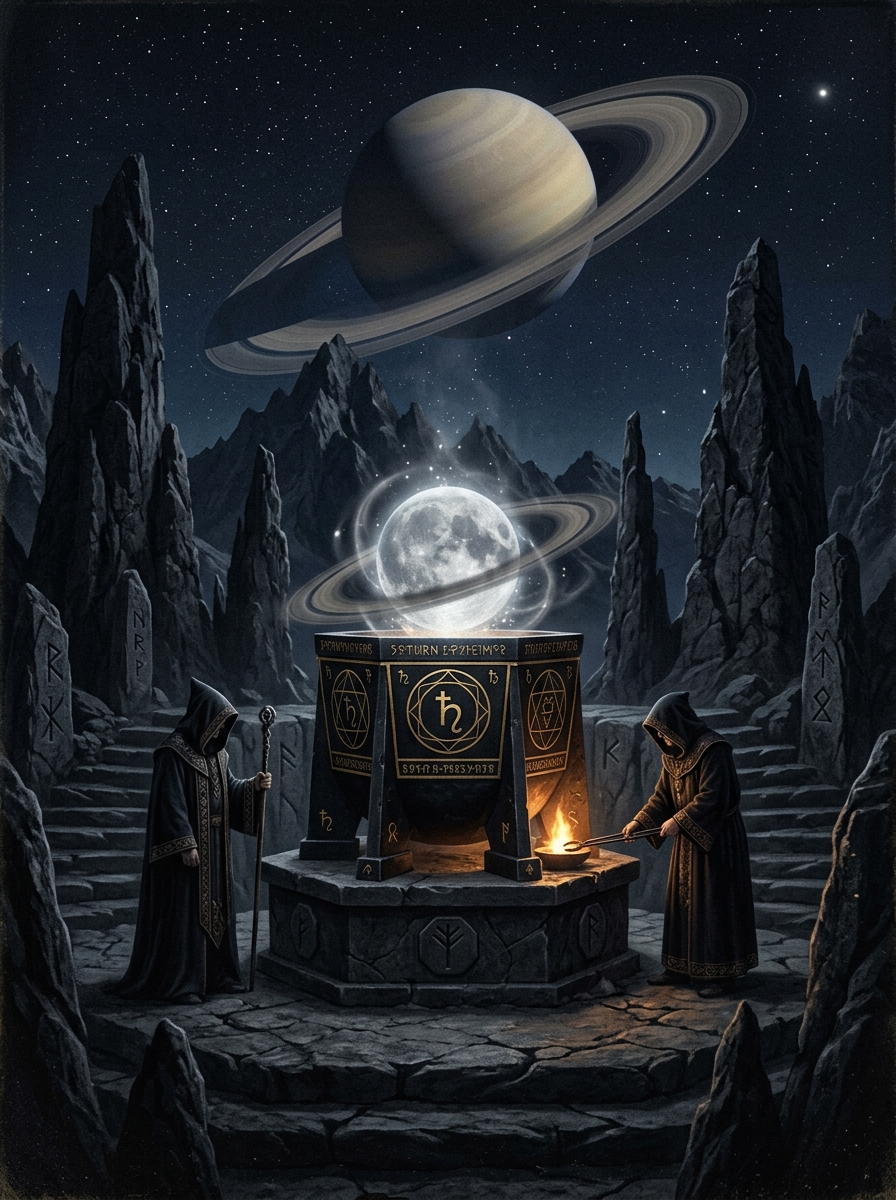
The Moon in Capricorn: The Architecture of Containment
To understand the Moon in Capricorn, one must first contemplate the nature of water when it meets the absolute cold of Saturn's domain. In the language of classical astrology, the Moon is in its detriment, or exile, in the sign of the Sea-Goat. The Moon is the natural ruler of Cancer—a sign of soft, flowing, instinctual waters, of protective shells, of unconditional maternal nurture, and of the raw, unfiltered emotional tides of the human experience. When the Moon is cast into Capricorn, the polar opposite sign, these fluid currents are forced to climb the steep, rugged, and freezing peaks of Saturnian earth. Here, emotional expression is no longer allowed to flow wild, unmapped, and spontaneous; instead, it is channeled, measured, and structured by the architecture of containment.
This placement is not an inherent curse or a psychological failure, but rather a profound evolutionary crucible. Astrologer Liz Greene often remarked on how planets in detriment force the individual to develop a highly conscious, deliberate relationship with the planetary function in question. While a Cancer Moon might naturally swim in the currents of feeling, effortlessly accessing the matrix of empathy and vulnerability, a Capricorn Moon must build a stable bridge across those waters. The landscape of the Capricorn Moon is one of high-altitude clarity, where the air is thin, the wind is biting, and survival demands discipline, realism, and absolute self-reliance. The soft, vulnerable underbelly of the crab is replaced by the tough, calcified hide of the mountain goat, climbing relentlessly toward some distant, self-imposed summit of emotional competence.
The ancient symbol for Capricorn is not merely a land goat, but the Sea-Goat—a mythological creature with the forelegs of a goat and the tail of a fish. This dual nature is crucial for understanding the Capricorn Moon. The fish tail represents the vast, deep, and chaotic waters of the collective unconscious, the realm of absolute feeling and psychic sensitivity. The goat’s upper body represents the drive to climb, to structure, to build, and to master the physical world. In the Capricorn Moon, the fish tail is often hidden beneath the rocky soil of the mountain. The individual is intensely aware of the emotional abyss below, but they choose to focus their conscious energy on the climb. They climb precisely because they fear being dragged down into the dark waters of their own sensitivity. The climb is a defense, a way to keep their head above water, to find dry land where the unpredictable tides of feeling cannot reach them.
The Exile of the Lunar Waters
In psychological terms, the Moon represents our instinctual self, our subjective filter, our habits, our relationship to the mother archetype, and the way we seek safety and comfort when threatened. Under Saturn's watchful, demanding eye, safety is not found in emotional display, but in control, competence, and accomplishment. The emotional waters do not disappear; rather, they are subjected to immense pressure and cold, freezing into solid sheets of ice. This crystallization can create a brilliant, reflective clarity, but it also risks shutting out the warmth of human connection. The individual learns early on that feelings are volatile, unpredictable, and potentially dangerous. To feel too much is to risk falling off the mountain. Therefore, the Capricorn Moon constructs an elaborate internal scaffolding—a psychic dam—to regulate the flow of emotion, ensuring that only what is useful, productive, or socially acceptable is allowed to filter through to the surface.
This containment represents a defense mechanism of the highest order. The Capricorn Moon child looks at the world and determines that emotional displays are a liability. When the emotional landscape is frozen over, it can be walked upon; it becomes stable ground. The individual prides themselves on their stoicism, their ability to keep a cool head during crises, and their capacity to absorb shock without showing a single crack in their demeanor. They become the ultimate repository of calm, steady capability, but this outer calm is often purchased at the price of inner numbness. The exile of the lunar waters means that the natural ebb and flow of human feeling—grief, longing, joy, and fear—must first pass through a strict Saturnian customs house, where they are inspected for utility and compliance with the individual’s moral and social standards. If a feeling is deemed weak, unproductive, or illogical, it is locked away in the subterranean vaults of the unconscious.
Saturn’s Frozen Peaks and the Need for Scaffolding
This need for emotional scaffolding means that individuals with this placement often feel a deep-seated anxiety when confronted with unstructured or chaotic emotional environments. They do not know what to do with raw grief, hysterical joy, or formless anger, whether in themselves or in others. They require a plan, a role, or a practical objective to ground themselves. When crisis strikes, while others are weeping or panicking, the Capricorn Moon is already organizing the logistics, managing the finances, and arranging the practical necessities of survival. This is their supreme gift: the ability to remain steadfast and functional under the most crushing pressures.
Yet, the cost of this containment is a chronic undercurrent of loneliness, a feeling that they are ultimately alone on the mountain, and that if they let go of their control for even a moment, their entire world will collapse into chaos. They build high walls not to shut others out, but to protect a deeply sensitive and fragile emotional core that they feel is too weak to survive the harsh realities of life. The mountain goat must keep climbing, believing that the next peak will bring the safety that has always eluded them. They mistake self-sufficiency for healing, building ever-greater structures of achievement to silence the quiet voice of the lonely child within. The scaffolding they built to survive the cold winters of their youth becomes a cage that limits their emotional movement in adulthood, locking them into a perpetual cycle of performance and emotional containment.
Emotional Needs and Relationship Dynamics
The emotional life of a Capricorn Moon is governed by a deep need for respect, authority, and concrete reality. They do not trust cheap emotional currency. Verbal declarations of love, dramatic displays of affection, and poetic promises hold very little weight in their eyes. They view these as fleeting, unreliable gestures that cost nothing and guarantee nothing. Instead, their emotional vocabulary is built on the solid ground of actions, duty, and endurance. To love a Capricorn Moon is to understand that their affection is demonstrated through their reliability, their willingness to support you in practical ways, and their quiet commitment to building a shared future. They are the partners who will show up at midnight to fix your flat tire, help you balance your tax returns, or work long hours to ensure the family's financial stability.
For the Capricorn Moon, love is a verb that requires labor, responsibility, and tangible proof. This can, however, lead to significant misunderstandings in relationships, particularly when they partner with individuals who possess highly active water or fire moons. A partner seeking emotional validation through verbal reassurance or constant emotional intimacy may perceive the Capricorn Moon as cold, detached, or emotionally unavailable. Conversely, the Capricorn Moon may view their partner’s emotional demands as juvenile, unstable, or manipulative, reacting by retreating further into their Saturnian fortress of silence.
When in conflict, the Capricorn Moon's default reaction is to withdraw, to gather their composure, and to analyze the situation logically. They despise emotional scenes and will refuse to engage in shouting matches or dramatic exchanges. To a partner who needs immediate emotional connection or validation during a fight, this withdrawal can feel like abandonment or stonewalling. The Capricorn Moon does not see it this way; they view their withdrawal as an act of responsible self-control, preventing themselves from saying or doing something that would cause permanent damage. They need to learn that sometimes, their partners do not want a logical post-mortem of the argument; they want to be met in the heat of the emotion, to know that the Capricorn Moon cares enough to be affected.
Action as the Ultimate Love Language
To bridge this gap, the Capricorn Moon must recognize that their tendency to translate every emotion into a task can sometimes alienate those they love. When a partner is hurting, they do not always need a solution, a plan, or a structural fix; sometimes, they simply need a witness to their pain. For the Capricorn Moon, learning to sit with another person's vulnerability without trying to organize it, fix it, or make it productive is one of the greatest relationship challenges they will face. It requires them to lower their shield and admit that they, too, are susceptible to the same messy, unquantifiable emotional needs that they so carefully suppress in their daily lives.
When they learn to trust that their partner loves them for who they are rather than what they provide, a profound shift occurs. They begin to understand that vulnerability is not a weakness, but a bridge to genuine intimacy. They can start to share the heavy weight of their responsibilities, allowing themselves to be supported instead of always playing the role of the indestructible supporter. This integration allows them to bring their immense capacity for loyalty, dedication, and protective care into a relationship without the suffocating need for absolute control. They discover that true safety in relationships is not achieved by being invulnerable, but by being fully known and accepted, cracks and all.
The Boundary as a Sanctuary
Furthermore, the Capricorn Moon needs to understand their own relationship boundaries. Because they take commitments so seriously, they are highly selective about who they let into their inner circle. Once they do, they expect the same level of integrity, loyalty, and respect in return. Betrayal is not merely an emotional wound for them; it is a structural failure, a breach of contract that is rarely forgiven. They guard their private world with fierce determination, and their home is often less of a soft, chaotic nest and more of a sanctuary—a fortress where they can finally lay down their heavy armor and rest without the fear of being judged, exposed, or taken advantage of.
In this sanctuary, they need partners who respect their silence and their need for solitude. A Capricorn Moon cannot be forced into emotional disclosure; they must feel that the environment is completely safe and structured before they will allow their defenses to drop. They require partners who possess emotional maturity, financial independence, and a strong sense of personal responsibility. When they find a partner who meets these criteria, the Capricorn Moon will commit with a depth and endurance that is rare in the modern world. They prove to be some of the most enduring, loyal, and deeply supportive partners in the zodiac, offering a love that, like Saturn itself, stands the test of time, weather, and trials.
The Archetypal Childhood: The Parentified Child and the Leaden Crown of Saturn
No analysis of the Moon in Capricorn is complete without exploring the unique childhood dynamics that shape this placement. In evolutionary astrology, the Moon represents the early environment, the maternal bond, and the core psychological patterns established in infancy. For the Capricorn Moon, childhood is rarely a time of carefree play, spontaneous expression, and unconditioned nurture. Instead, it is almost always marked by the premature assumption of responsibility—a phenomenon psychologists refer to as parentification.
The child with the Moon in Capricorn often senses early on that the adults around them are unstable, overwhelmed, or incapable of providing adequate security. Whether due to financial hardship, parental illness, emotional immaturity within the family, or an atmosphere of strict criticism, the child learns a painful but necessary lesson: If I want to be safe, I must take care of myself. I cannot afford to be a child. They step into the role of the little adult, the mediator, the caretaker, or the high achiever who never causes trouble. They wear what Liz Greene calls "the leaden crown of Saturn"—a heavy burden of duty and self-censorship that is placed upon their young head long before they have the structural strength to carry it.
This early adaptation creates a profound split in the psyche. The child suppresses their natural dependency, their playfulness, and their need to make mistakes, replacing them with a hyper-vigilant maturity. They learn that they are valued for what they do rather than who they are. Their achievements in school, their obedience, and their ability to handle adult chores become their currency for earning love and approval. The tragic consequence of this dynamic is that the adult Capricorn Moon continues to treat their own inner child with the same strictness, coldness, or neglect that they experienced in their youth, perpetuating an internal cycle of emotional deprivation and relentless pressure.
Often, the mother figure in the Capricorn Moon's life was experienced as cold, critical, overburdened, or emotionally unavailable. She may have been a figure of duty and hard work, teaching the child that survival requires sacrifice and emotional control, but failing to provide the warm, unconditional mirror of acceptance that the developing ego needs. As a result, the Capricorn Moon grows up feeling that they must earn their right to exist through constant utility. They become experts at anticipating the needs of others and meeting them, while remaining entirely blind to their own emotional starvation. The crown they wear is indeed leaden, weighing down their spirit and reminding them that in their world, play is a luxury they cannot afford, and weakness is a dangerous invitation to abandonment or criticism.
The Senex Complex vs. Puer Aeternus: Fear of Emotional Chaos and Somatic Armor
The psychological landscape of the Capricorn Moon is defined by the ongoing struggle between two powerful Jungian archetypes: the Senex (the wise old man, the elder, the builder of structures, but also the tyrant and the controller) and the Puer Aeternus (the eternal youth, the spirit of play, freedom, and spontaneous feeling). James Hillman, the founder of archetypal psychology, wrote extensively about the relationship between these two figures, noting that they are two sides of the same coin. When one is overly dominant, the other is forced into the shadow, leading to psychological rigidity, loss of creative vitality, and somatic distress.
In the case of the Capricorn Moon, the Senex is usually the dominant force. The individual identifies strongly with order, discipline, duty, and aging. They often feel old when they are young, carrying a gravity and seriousness that seems mismatched with their chronological age. The Puer—the spontaneous, emotional, playful, and vulnerable child—is viewed with suspicion, fear, and even disgust. The Senex fears that if the Puer is allowed to speak, it will bring emotional chaos, ruin their carefully constructed reputation, and destroy the safety they have worked so hard to build. This internal tyrant silences the playful child, pathologizing any desire for spontaneous fun, unstructured rest, or emotional release.
The Reichian Armor of Saturnian Control
This fear of emotional chaos does not remain confined to the mind; it manifests directly in the physical body. Wilhelm Reich, a pioneer in somatic psychology, introduced the concept of "body armor" or "character armor"—the physical manifestations of psychological defense mechanisms. The Capricorn Moon is a prime candidate for severe somatic armoring. Because they constantly suppress their grief, anger, and vulnerability, these unexpressed emotions are held in the musculature and skeletal systems of the body.
Typically, this tension localizes in the skeletal structure, the joints, the knees, and the teeth—all areas ruled by Saturn. They may suffer from chronic neck and shoulder tension, carrying the metaphorical weight of the world on their backs. They are prone to TMJ and jaw clenching, literally biting down on their feelings to prevent them from escaping. The respiratory system is also affected; the Capricorn Moon often holds their breath, keeping their chest rigid to avoid feeling the expansion and vulnerability of deep breathing. Their posture may be exceptionally rigid, acting as a physical shield against the world. To heal, the Capricorn Moon must learn to listen to these somatic warnings. Their body is telling the story that their mouth refuses to speak: the story of their exhaustion, their grief, and their desperate need to let go of the control they hold so tightly.
To release this body armor, the Capricorn Moon must engage in physical practices that encourage yielding, softening, and emotional expression. They must learn that it is safe to cry, to shake, and to be weak. As the physical armor begins to dissolve through breathwork, somatic therapy, or creative expression, the frozen emotional waters can begin to flow, allowing the integration of the Puer’s vitality and playfulness into the stable structure of the Senex. They must learn that a body that cannot bend will eventually break, and that true strength lies not in rigidity, but in flexibility and resilience.
Moon in Capricorn in Transit: Navigating the Time of Structure and Planning
When the Moon transits through the sign of Capricorn every month, or when progressional or outer planet transits trigger the natal Moon, the collective emotional tone shifts from the expressive, relational, or dramatic spheres into a phase of sobering realism, evaluation, and consolidation. A Capricorn Moon transit is not a time for spontaneous celebration or emotional indulgence; it is a time for taking inventory, reviewing goals, and building the foundations of our lives.
During these transits, there is a collective urge to get organized. We feel a sudden desire to clean our desks, review our budgets, write to-do lists, and cut out whatever is unnecessary or distracting. The emotional tide recedes, leaving behind the hard, dry shore of reality. This can manifest as a temporary mood of melancholy, pessimism, or emotional flattening. We may feel the weight of our responsibilities more acutely, or find ourselves confronting the limitations of time, energy, and resources. The transit forces us to look at our lives without the soft-focus lens of fantasy, demanding that we account for our actions and our choices.
However, if approached with awareness, a Capricorn Moon transit is an incredibly productive window. It is the perfect time to make difficult decisions, to establish healthy boundaries, and to commit to long-term projects that require discipline and endurance. It is a time for practical magic—the magic of turning dreams into concrete form through steady, methodical effort. By alignment with the Saturnian energy of the transit, we can channel our emotional energy into structured accomplishments, turning our vulnerabilities into fuel for our evolutionary growth.
During these transits, we are encouraged to ask ourselves hard questions: What structures in my life are no longer serving me? Where am I wasting energy? What responsibilities am I carrying that are not mine to bear? By cleaning out the emotional and physical clutter, we make room for the sustainable growth that Saturn promises. It is a period of emotional consolidation, where we gather our strength, fortify our boundaries, and prepare for the next climb. We learn to appreciate the beauty of simplicity, of work well done, and of the quiet peace that comes from taking responsibility for our own lives.
The Evolutionary Path: Integrating Vulnerability and Reclaiming the Inner Child
The evolutionary journey for the Capricorn Moon is not about destroying the fortress they have built, but about learning how to build a doorway in its walls. The goal is not to abandon their Saturnian discipline, responsibility, or capacity for hard work—these are invaluable gifts. Rather, it is to soften the rigid boundaries that prevent them from experiencing true intimacy, joy, and emotional nourishment. They must learn to balance the dry, structuring earth of Capricorn with the fertile, life-giving waters of the opposite sign, Cancer.
To achieve this, the Capricorn Moon must actively work to heal the parentified child within. They must learn to parent themselves with the tenderness, patience, and unconditional love that they were denied in their early years. This means creating spaces in their lives where they are allowed to fail, to play, to be unproductive, and to express their emotions without any expectation of utility or achievement. They must learn that their worth is not dependent on their accomplishments, and that they are worthy of love simply because they exist. They must take off the leaden crown and allow themselves to rest on the earth without having to justify their right to be there.
Softening the Stone
In practical terms, this integration involves developing a conscious relationship with their body. Through somatic therapies, breathwork, or gentle movement practices, they can begin to melt the Reichian armor, allowing the frozen emotional waters to thaw and flow once more. They must also learn to speak their vulnerability, starting with small, safe steps. Admitting to a trusted friend or partner that they are tired, scared, or overwhelmed is a radical act of courage for a Capricorn Moon. By doing so, they dismantle the illusion of their invulnerability, opening the door for genuine connection and support.
This softening also requires the Capricorn Moon to re-evaluate their relationship to achievement. They must learn to separate their performance from their identity. When they fail at a task, it does not mean they are a failure as a human being. They must learn to cultivate self-compassion, treating themselves with the same kindness they would offer to a child who is learning and making mistakes. By doing so, they slowly dissolve the critical voice of the internal Senex, replacing it with a supportive, wise elder who guides rather than punishes.
When the Sea-Goat finally learns to swim in the depths of its own emotional ocean as easily as it climbs the mountain peaks, it achieves its true evolutionary potential: a state of mature, grounded, and compassionate self-mastery. They become leaders who rule not through fear, control, or distance, but through integrity, wisdom, and a deep understanding of human vulnerability. They show us how to build structures that protect and nurture life, rather than cage it. They become the true builders of the world, offering a steady hand and a compassionate heart to those who are struggling to find their own footing on the mountain of life.
Frequently Asked Questions
Why does the Moon in Capricorn often feel emotionally isolated or lonely?
The Moon in Capricorn is ruled by Saturn, the planet of boundaries, isolation, and containment. Because those with this placement tend to hide their vulnerabilities and handle all of their struggles independently, they often project an aura of complete self-sufficiency. Others assume they do not need support, leaving the Capricorn Moon to carry their heavy emotional burdens alone. Their isolation is often a self-fulfilling prophecy born of their fear of being a burden, showing weakness, or being rejected when they are not performing or achieving. To break this cycle, they must take the risk of asking for help and sharing their struggles with trusted allies.
What does "detriment" mean for a Capricorn Moon?
In astrology, a planet is in detriment when it is placed in the sign opposite its natural home. The Moon rules Cancer, so it is in detriment in Capricorn. This does not mean the placement is bad, broken, or lacking in power; rather, it indicates that the natural, instinctual expression of the Moon (emotional flow, vulnerability, instinctual response) faces friction and resistance from the qualities of Capricorn (structure, discipline, containment). It requires the individual to build a conscious, deliberate relationship with their emotions rather than relying on automatic, instinctual responses. Over time, this friction can produce an extraordinary level of emotional intelligence and maturity.
How does the Capricorn Moon show love and affection?
The Capricorn Moon shows love through action, reliability, and long-term commitment. Instead of verbal declarations, flowery compliments, or dramatic displays of emotion, they express their devotion by being a stable anchor in your life. They show love by helping you solve practical problems, supporting your career ambitions, managing daily logistics, protecting you from hardship, and ensuring your physical and financial security. For them, love is a duty, a promise, and a structural foundation that must be maintained with integrity. They love with their strength, their reliability, and their presence through difficult times.
How can a Capricorn Moon heal somatic tension and body armor?
Healing somatic tension for a Capricorn Moon involves addressing the physical armor created by long-term emotional containment. Practices that target the skeletal structure, joints, and connective tissue—such as myofascial release, osteopathy, yin yoga, somatic shaking, and deep diaphragmatic breathwork—are highly effective. Additionally, working with a therapist to identify the emotional root of physical pain, particularly around the jaw (clenching), shoulders (carrying burdens), and knees (rigidity), can help release stored grief and anxiety, allowing the body to soften. Learning to yield, to rest, and to breathe deeply are critical components of their somatic recovery.
What is the relationship between the Senex and the Puer archetypes in this placement?
The Senex (the disciplined, structured, aged aspect of the psyche) is typically dominant in the Capricorn Moon, while the Puer (the spontaneous, vulnerable, youthful aspect) is suppressed. This creates a psychological tension where the individual fears emotional chaos and rejects playfulness. Healing involves integrating these two archetypes, allowing the structured maturity of the Senex to provide a safe container within which the emotional, creative spirit of the Puer can play, express itself, and make mistakes without fear of judgment. When integrated, the individual achieves a state of wise playfulness, where discipline supports freedom and structure serves life.
How can a Capricorn Moon establish healthy boundaries without shutting people out?
To establish healthy boundaries without isolating themselves, the Capricorn Moon must learn the difference between a boundary and a wall. A wall is a rigid, defensive barrier built out of fear to keep everyone away, which leads to chronic loneliness. A boundary is a flexible, conscious limit that communicates what is acceptable and what is not, allowing connection while protecting one's energy. The Capricorn Moon can practice this by communicating their needs and limitations clearly and verbally, rather than retreating into silent withdrawal when they feel overwhelmed. They must learn that setting boundaries is an act of love that preserves the relationship, rather than a rejection of it.
Comments
Loading comments…