Dream About Being Unable to Scream: The Voice Trapped in the Night
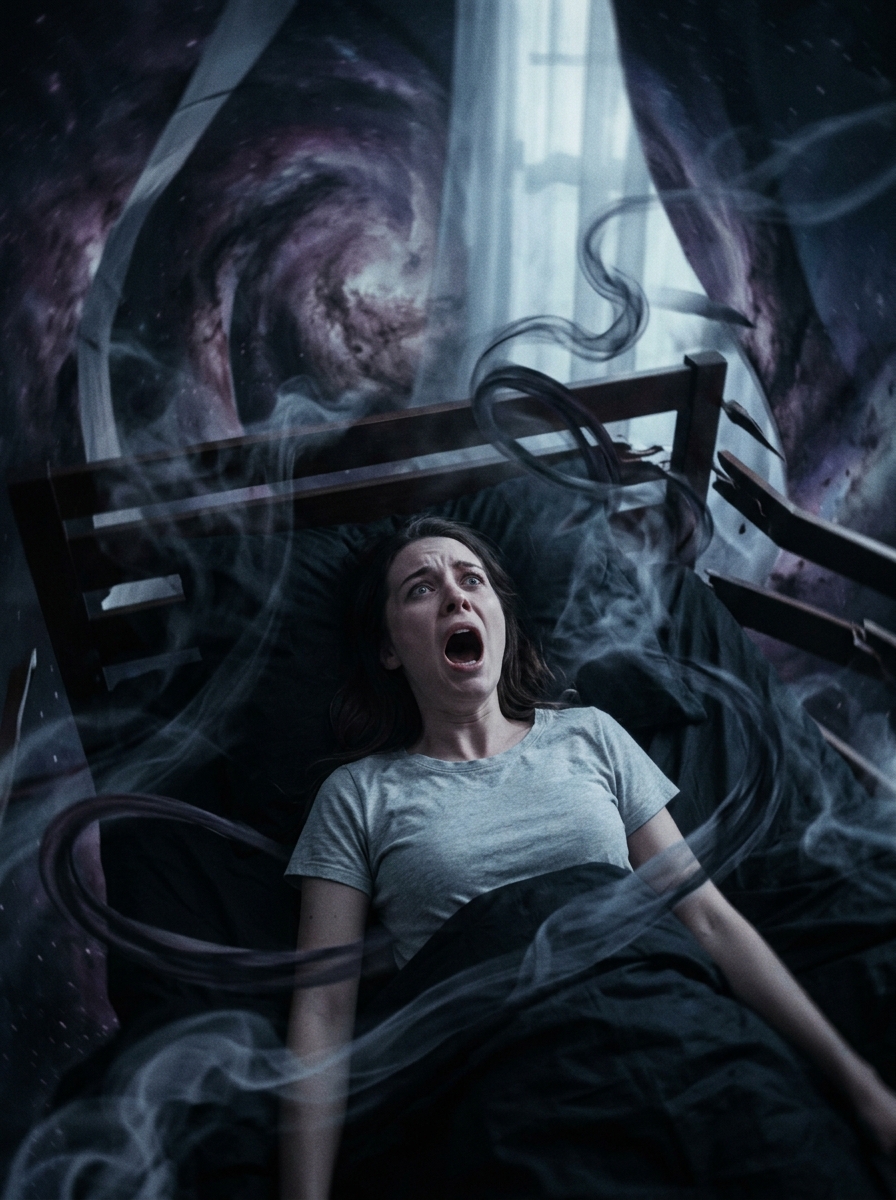
The core dynamic: expression broken at the threshold
To dream that you cannot scream is to witness your own agency fail at the moment it matters most. The scream is the most primal human alarm — a sound that bypasses language and announces, “I am here, I am in danger, I need help.” When that sound will not come, the dream is not primarily about fear. It is about interruption. The psyche stages a scene in which urgency exists but the instrument meant to broadcast it malfunctions. Unlike dreams of being chased, where the threat is external, this dream turns inward: the throat, the mouth, the breath itself becomes unreliable.
The symbolic logic is precise. The throat is where inner reality becomes audible reality. When the scream is blocked, the dream points to a rupture in that translation. Something in waking life is too dangerous, too shameful, too costly, or too exhausting to state plainly. The dream compresses that conflict into a single bodily failure: you try to assert yourself and meet obstruction. The silence is not empty — it is loaded with everything you cannot yet say.
Psychological roots: what the body already knows
From a psychological standpoint, the inability to scream in a dream most often tracks two interlocking mechanisms: repression and physiological overload. Repression here does not mean dramatic buried trauma; it means the quiet lifelong habit of making oneself manageable. People who learned early that speaking up invites punishment, ridicule, or abandonment carry that training into sleep. The dream returns as a diagnostic image: the voice that was trained out of you still wants to live, but the old wiring blocks it.
On the physiological side, the dream can be adjacent to sleep paralysis — a state in which the body is temporarily immobilized during REM transitions. During such episodes, the sleeper may feel pressure, terror, and the inability to cry out. The dream and the body become entangled, so the experience is both symbolic and neurological. A meaningful reading does not deny the body; it listens to it. If these dreams cluster during periods of exhaustion, insomnia, or repeated waking panic, the immediate message may be simpler than any metaphor: your nervous system is overloaded.
Repression as a learned silence
The quiet adaptation to keep peace often costs the ability to speak under pressure. The dream dramatizes that cost. You may know how to endure, how to appear composed, how to swallow feelings — but not how to release the sound that says, “This is too much,” or “Stop.” The dream does not diagnose; it illuminates the pattern. If you recognize it, the question becomes: where in waking life have you learned that your voice is dangerous?
When panic narrows the body
Acute panic tightens the chest, shortens the breath, and narrows cognition. The dream can replicate that physiological constriction by making speech impossible. Here the dream is less about hidden emotion and more about an overwhelmed system. If it repeats, treat it as a signal that your waking environment or internal state is demanding speech while keeping conditions unsafe for speech. The psyche responds with an image of a mouth that will not obey.
Variations that sharpen the message
Dreams are not generic symbols pasted onto private lives. The setting, audience, and nature of the threat specify what kind of blockage is at work. Three distinctions matter most.
Who is present: the relational field
If another person is in the dream, the blockage is often about a specific relationship. The other figure may be a partner, parent, boss, or stranger. What matters is the relational dynamic: you feel unseen, overpowered, or unable to make a request without consequence. If the figure is someone you know, the dream can expose a history of self-silencing around them. If the figure is faceless, the issue may be more diffuse — authority itself, social pressure, or an internal critic that arrives before you can speak.
What threatens you: external versus internal danger
When the threat is visible — an attacker, a monster, a falling object — the dream often points to an identifiable waking stressor: a conflict, a deadline, a fear of judgment. When there is no visible threat, the dream turns inward. The danger may be dread, anticipatory shame, or an unnamed truth you have not yet faced. The mind knows something is wrong but cannot yet picture it clearly. That often happens when a person senses a problem before language catches up — a relationship gone cold, a job gone corrosive, a body sending warning signs. The dream’s vagueness is its honesty.
How the sound fails: distortion versus silence
A scream that comes out as a whisper, a rasp, or no sound at all indicates that self-expression is not merely blocked but altered. You are trying to communicate through a compromised channel. This can happen when someone is chronically minimized, interrupted, or made to doubt their own perceptions. The dream shows the emotional effect: you are present, but your signal is not reaching the world intact.
Spiritual and archetypal resonance: voice, will, threshold
In symbolic terms, the dream of being unable to scream concerns the link between voice and will. The scream is older than argument, more honest than explanation. It is the sound of a self insisting on its own boundary. When the dream blocks it, the blockage may signal a threshold moment: you are being asked to change, but cannot yet do so by force.
The throat is a borderland where inner truth becomes shared truth. Spiritually, the dream may ask not “Why can’t I speak?” but “What price have I paid for silence?” Some people silence themselves to preserve peace; others to preserve belonging; some because they have learned that truth arrives too late to matter. The dream does not demand that you become louder. It points toward cleaner speech — more exact, more timely, less entangled with fear.
A tarot lens can sharpen this reading if used sparingly. The dream resonates with The Moon when the situation is obscure and fear moves through the body faster than thought. It can echo The Hanged Man when helplessness is not punishment but suspension — a time when action is paused and perception deepens. And it can brush against The Tower when the scream is the part of you that knows collapse is coming before waking life admits it. None of those cards mean the same thing; the dream touches one more than the others depending on context.
What to do after the dream
The most useful response is not to overinterpret but to ask a single question: where in waking life have I become unsayable? The answer may be relational, professional, familial, or bodily. If the dream came during poor sleep, anxiety, or waking immobility, take the physiological possibility seriously. A dream that feels like panic may be partly a body event.
If the pattern repeats, treat it as a message about pressure and expression — not as a prophecy. Dreams rarely tell you exactly what to do; they tell you what part of the psyche is straining. That is enough. Journal the dream, note who was present, name the emotion before the scream failed. If you want a deeper framework for reading recurring symbolic pressure, our About Aurora Arcana page explains how we approach tarot and astrology as interpretive tools rather than rigid answers.
A dream about being unable to scream is unsettling because it strips away one of the most basic human powers: the ability to make distress audible. But its message is often clarifying. Something in you is trying to break through silence. The dream is the soundless proof that the inner self has not gone numb — it is still trying to be heard.
Related
- Dream About Falling: When the Psyche Loses Its Handhold
- Dream About Drowning: What the Water Is Trying to Say
- Dream About Teeth Falling Out: Loss, Speech, and the Body’s Unspoken Alarm
- When Teeth Fall in Dreams
- Dream About a Broken Phone: When Contact Fractures in the Night
- Dream About Vomiting: When the Psyche Refuses What It Can’t Hold
Comments
Loading comments…