The Dominant Element in Your Birth Chart: A Depth Psychological Guide to Elemental Astrology
Historical and Philosophical Foundations of the Elements
To understand elemental dominance in astrology, one must trace the four elements back to their foundations in Western philosophy and medicine. The elements—Fire, Earth, Air, and Water—were once understood as the literal building blocks of the cosmos. This lineage begins with the pre-Socratic philosopher Empedocles, who proposed the theory of the "four roots." Empedocles posited that all matter is composed of these four substances, which are brought together and pulled apart by the dual forces of Love and Strife. For Empedocles, health and cosmic harmony were the results of balanced elemental proportions, while disease and chaos arose from disproportion. These four roots were not static elements, but dynamic forces that defined the psychological and material universe.
This cosmology was formalized by Plato in the Timaeus. Plato associated each element with a Platonic solid: Fire with the sharp, mobile tetrahedron; Earth with the stable hexahedron (cube); Air with the octahedron; and Water with the icosahedron. In the Platonic view, these geometric shapes dictated how elements interacted, establishing a structural link between physical properties and cosmic order, reinforcing the idea that the soul is built on mathematical harmony.
Aristotle expanded this by defining the elements by primary qualities: hot, cold, wet, and dry. Fire is hot and dry, characterized by upward transformation. Air is hot and wet, exhibiting expansion and connection. Water is cold and wet, marked by receptivity and inward flow. Earth is cold and dry, representing stability. This thermodynamic model allowed ancient thinkers to explain physical reactions, meteorological events, and seasonal shifts, establishing a unified theory of the natural world that persisted for centuries.
In ancient medicine, Hippocrates and Galen applied this framework through the theory of the four bodily humors. Human temperament was governed by four fluids: choler (yellow bile, Fire), melancholy (black bile, Earth), blood (Air), and phlegm (Water). An excess of yellow bile produced a choleric, hot-tempered personality; black bile led to a melancholic disposition; blood resulted in a sanguine, social temperament; while phlegm created a phlegmatic, calm individual.
When Carl Jung formulated his model of psychological types in the early twentieth century, he mapped these four classical elements directly onto his four psychological functions: Intuition (Fire), Sensation (Earth), Thinking (Air), and Feeling (Water). Modern depth astrologers, such as Liz Greene and Steven Forrest, have built upon Jung's work, treating the dominant element in a birth chart as the foundational landscape of the individual's psychological ego-structure and unconscious drives. Rather than viewing elements as mere ancient superstitions, modern practitioners use them as a map of cognitive bias and energetic flow, helping clients recognize where their psychic energy naturally congregates and how it shapes their perception of reality.
How to Calculate the Dominant Element in Your Birth Chart
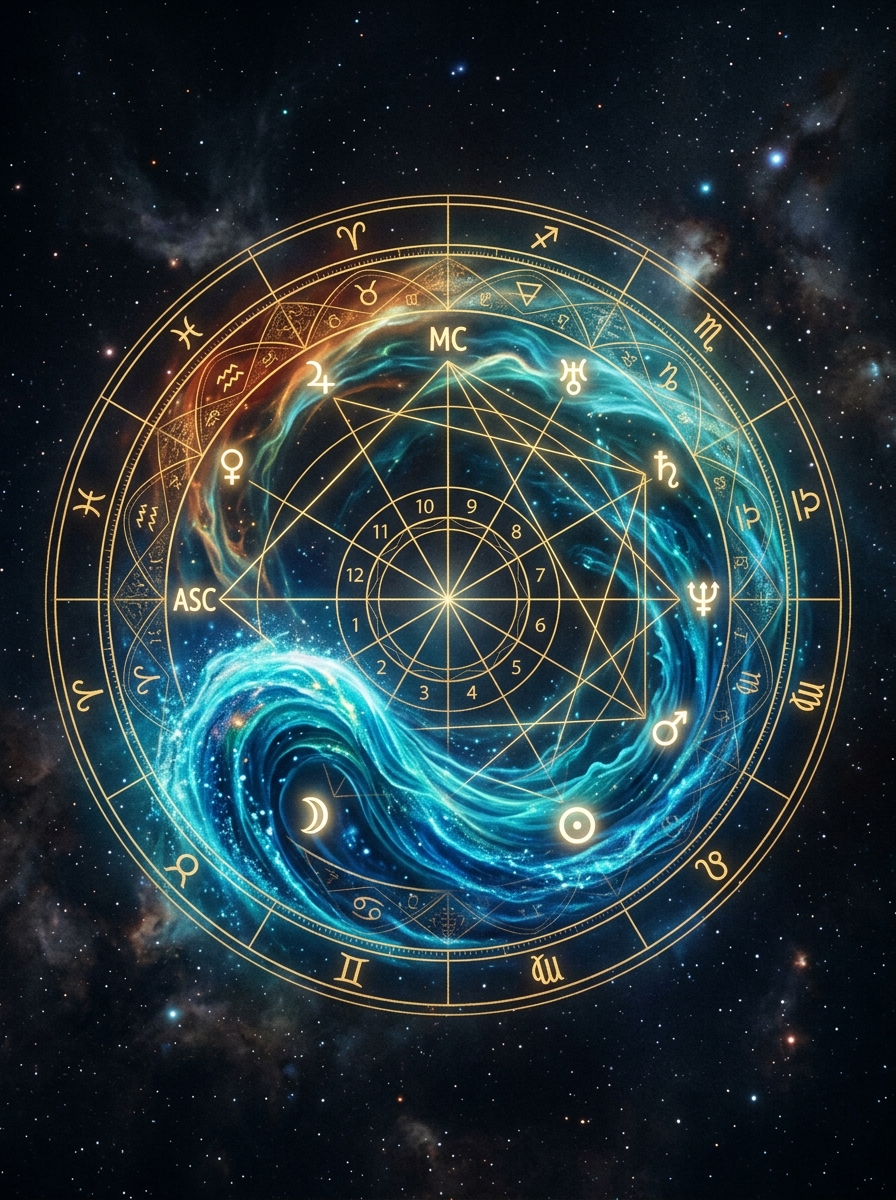
Determining the dominant element in a birth chart involves assessing the distribution of the ten primary astrological bodies—the Sun, Moon, Mercury, Venus, Mars, Jupiter, Saturn, Uranus, Neptune, and Pluto—along with the Ascendant. Each factor falls within one of the twelve signs, which are divided into the four elemental triplicities. Aries, Leo, and Sagittarius are Fire signs; Taurus, Virgo, and Capricorn are Earth signs; Gemini, Libra, and Aquarius are Air signs; and Cancer, Scorpio, and Pisces are Water signs. Categorizing where these bodies reside maps the native's elemental signature. However, because different planets exert varying degrees of influence on daily consciousness, astrologers utilize distinct systems to calculate dominance. This mapping allows us to see the fundamental energetic disposition of the individual, serving as the backdrop for all other chart dynamics.
The Standard Point System
The simplest method is the standard point system, which assigns equal weight to every astrological factor. In this model, the ten planets and the Ascendant are each granted exactly one point. For example, if a native has their Sun, Mercury, and Venus in Scorpio (Water), Moon and Mars in Taurus (Earth), Jupiter and Saturn in Gemini (Air), Uranus and Neptune in Sagittarius (Fire), Pluto in Scorpio (Water), and Ascendant in Cancer (Water), the elemental breakdown is: Water receives 5 points; Earth receives 2 points; Air receives 2 points; and Fire receives 2 points. Under this flat system, Water is the dominant element. While easy to compute, this system is criticized for its lack of psychological nuance. It treats slow-moving, generational outer planets like Pluto or Neptune with the same personal significance as the Sun or Ascendant, skewing results toward elements that reflect collective trends rather than individual temperament. Thus, flat systems are best used for a quick overview rather than deep psychological analysis.
The Weighted Luminary Method
To resolve these limitations, modern psychological astrologers favor weighted calculation systems. These systems recognize that the Sun, Moon, and Ascendant—collectively known as the 'Big Three'—represent the core of the conscious personality and the primary emotional and physical containers of the native. In a typical weighted system, these three primary points are assigned three points each. The personal planets (Mercury, Venus, and Mars), representing the immediate instruments of the ego, receive two points each. The social planets (Jupiter and Saturn) receive one point each, while the outer, transpersonal planets (Uranus, Neptune, and Pluto) are assigned either one point or half a point. Using this weighted methodology, the previous example changes significantly. The Water score rises because the Sun and Ascendant are in Water signs, while the generational planets in Fire are minimized. By utilizing a weighted method, the resulting dominant element aligns much more closely with Carl Jung’s concept of ego-consciousness, highlighting the elements that the individual actively uses to navigate their daily life, rather than the background cosmic weather of their generation.
The Dynamic Synthesis: Dominant Elements and Personal Signs
The true complexity of astrological interpretation emerges when we synthesize the dominant element with the specific signs of the Sun, Moon, and Ascendant. In psychological astrology, the 'Big Three' represent the primary actors in the psyche: the Sun is the central ego-identity; the Moon is the instinctual, emotional interior; and the Ascendant is the persona and physical vehicle. However, the dominant element represents the overall energetic climate in which these actors operate. When the dominant element aligns with the elements of the Big Three, the personality feels cohesive. When they conflict, it creates a dynamic psychological tension that can lead to internal friction and profound creative breakthroughs.
Consider an individual with a Sun and Moon in Pisces (a highly sensitive Water sign) and a Cancer Ascendant. At first glance, one might assume this person is purely fluid and oriented toward subjectivity. However, if their chart contains a massive stellium of planets in Earth signs, their dominant element is actually Earth. Psychologically, this creates an intriguing polarity: their core identity and emotional processing seek emotional expression, but their operational reality is anchored by an overriding need for order, material security, and practical stability. This person will not experience their Pisces Sun in a vacuum; instead, their watery sensitivity will be filtered through the heavy, pragmatic lens of their dominant Earth. They may manifest their Piscean imagination through concrete projects, such as building a therapeutic practice or creating tangible art. This grounding prevents them from becoming overwhelmed by the oceanic waves of their Pisces placements, acting as an anchor.
Steven Forrest emphasizes that the dominant element acts as the environment for the Sun’s development. If a native has a fiery Leo Sun but a dominant Water temperament, the expressive qualities of Leo must learn to navigate the quiet, protective qualities of Water. Instead of a loud display of creativity, this Leo Sun may shine inwardly, expressing itself through deep emotional authenticity. The dominant element functions as a psychological modifier; it is the atmosphere of the room in which the Sun, Moon, and Ascendant reside. When an individual becomes aware of this relationship, they can stop fighting the apparent contradictions in their character and instead learn to use their dominant element as a supportive medium for their core planetary placements. It changes the temperature of their self-expression, adding a layer of introverted depth to what is normally an extroverted sign.
This is also crucial for the Ascendant. An intellectual Gemini Ascendant (Air) with a dominant Earth signature may appear conversational and curious initially, but will soon reveal a heavy, pragmatic undercurrent. The Gemini Ascendant acts as a communicative interface, but their actions remain rooted in earth-bound reality. Conversely, a Scorpio Ascendant (Water) with a dominant Air signature presents an intense facade, yet operates through a highly analytical, detached process. Understanding this interplay prevents one-dimensional chart readings, allowing a nuanced exploration of the psyche.
Temperaments of Fire and Earth
The physical and motivational foundations of the personality are represented by the elements of Fire and Earth. Fire provides the vital inspiration and drive to act, while Earth offers the structure, pragmatism, and somatic awareness to manifest those impulses in the physical world. Understanding these temperaments helps us see how inspiration and materialization cooperate within the psyche.
Dominant Fire: Aries, Leo, Sagittarius
A chart dominated by the element of Fire—represented by Aries, Leo, and Sagittarius—is charged with a radiant, self-generating energy. Fire corresponds to Carl Jung's psychological function of Intuition, which he defined as the capacity to perceive possibilities, future trends, and the underlying potential in any situation. Individuals with dominant Fire do not wait for life to happen; they project energy outward, seeking to shape their environment through will and action. They are driven by an innate need for freedom and adventure, and their vitality serves as a catalyst that mobilizes others and breathes life into dormant projects.
The three fire signs express this vital force in distinct ways. Aries, as cardinal fire, represents the spark of initiation—the raw impulse to begin, to conquer obstacles, and to assert the self. Leo, as fixed fire, represents the steady hearth—the stabilization of the ego, the cultivation of personal creativity, and the desire to be witnessed. Sagittarius, as mutable fire, represents the guiding beacon—the quest for meaning, philosophical expansion, and the pursuit of distant horizons. Professionally, they naturally gravitate toward career paths that offer autonomy and challenge, excelling in entrepreneurship, pioneering fields, and leadership.
However, the brilliant light of Fire casts a deep shadow. Because Fire is self-generating and urgent, its primary shadow traits are impatience, self-centeredness, and a lack of relational awareness. Dominant Fire individuals can become so consumed by their own visions that they fail to consider the emotional needs of those around them. They may run roughshod over others, leaving a trail of exhausted colleagues and alienated partners. The urgency of Fire makes waiting feel like a form of death; consequently, they struggle with routine tasks and the slow, organic process of maturation. The evolutionary task of the fire-dominant individual is to build a containment structure—a psychological hearth that allows their passion to burn steadily without consuming their relationships.
Dominant Earth: Taurus, Virgo, Capricorn
A birth chart dominated by the Earth element—encompassing Taurus, Virgo, and Capricorn—anchors the psyche in tangible reality. Earth corresponds to Jung's function of Sensation, concerned with the direct perception of physical facts, somatic experiences, and material properties. For individuals with a dominant Earth signature, truth is found in what can be touched, built, measured, and sustained. These individuals possess a natural pragmatism, a respect for structure, and a deep appreciation for the natural laws of time and effort. They are the architects and builders of the material plane.
The three earth signs represent different stages of material integration. Taurus, as fixed earth, represents the fertile soil and the sensory body; it is oriented toward stability, comfort, and resources. Virgo, as mutable earth, represents the craftsman's workshop; it focuses on refinement, detail, utility, and physical health. Capricorn, as cardinal earth, represents the mountain peak and social structure; it is driven by ambition, organization, and the mastery of social institutions. Professionally, they thrive in careers requiring precision and tangible outcomes, such as finance, real estate, engineering, and healthcare, preferring steady progress to chaotic environments.
Yet, the stability of Earth can easily harden into rigidity, which is its primary shadow. When Earth dominates a chart, the individual may struggle with change, clinging to outmoded structures simply because they represent security. Their pragmatism can devolve into a cynical materialism, where only what is physically demonstrable is deemed valuable, leading to a profound spiritual and emotional dryness. Liz Greene has noted that dominant Earth individuals are particularly vulnerable to a melancholic depression that arises when the soul feels trapped in a relentless cycle of duty and survival. The path of growth lies in learning to trust the unseen, embracing impermanence, and recognizing that the spirit is just as real as the physical structures they build.
Temperaments of Air and Water
The mental and emotional dimensions of the human experience are governed by the elements of Air and Water. Air provides the cognitive objectivity, curiosity, and relational networks required to conceptualize reality, while Water offers the emotional sensitivity, deep intuition, and empathy that allow us to feel and connect with the soul.
Dominant Air: Gemini, Libra, Aquarius
When Air is the dominant element in a birth chart—represented by Gemini, Libra, and Aquarius—the psyche is oriented toward the mental plane, communication, and social connection. Air corresponds to the Jungian function of Thinking, which involves the objective, logical evaluation of information, categorization of concepts, and the search for universal principles. Individuals with dominant Air live in a world of ideas and relationships. They possess an innate curiosity that drives them to collect data and seek out diverse perspectives, viewing life as a vast network of connections waiting to be understood.
The three air signs manifest this intellectual energy through different relational and conceptual scales. Gemini, as mutable air, operates on a local level, representing curiosity, cognitive agility, and daily communication. Libra, as cardinal air, operates on an interpersonal level, seeking balance, harmony, and the cognitive mapping of relationships and justice. Aquarius, as fixed air, operates on a systemic level, concerned with humanitarian ideals, social structures, and objective, futuristic concepts. Professionally, they excel in writing, academic research, teaching, software development, public relations, and strategic planning.
Despite their intellectual brilliance, air-dominant individuals must contend with the shadow of emotional detachment and over-rationalization. Because their primary mode is mental, they tend to filter all experiences, including deep emotions, through the intellect. When faced with grief or anger, their immediate impulse is to analyze the feeling rather than actually experience it. This can lead to a profound disconnect from their own bodies, leaving them vulnerable to anxiety and sleep disorders. In relationships, this detachment can make them appear cold or emotionally unavailable. As Crowley observed, the intellect is a dissecting tool; when applied indiscriminately, it can sever the threads of genuine connection. The evolutionary challenge for dominant Air is to descend from abstraction, drop into the body, and accept that some aspects of life can only be felt, not understood.
Dominant Water: Cancer, Scorpio, Pisces
A birth chart dominated by the Water element—represented by Cancer, Scorpio, and Pisces—submerges the psyche in the vast ocean of feeling, intuition, and the unconscious. Water corresponds to Carl Jung's function of Feeling, which is the capacity to evaluate life based on subjective values, emotional resonance, and interpersonal dynamics. For individuals with a dominant Water signature, the world is experienced as a shifting landscape of emotional currents, subtle vibrations, and atmospheric shifts. They possess an extraordinary capacity for empathy, allowing them to absorb and reflect the unspoken emotions of others.
The water signs express this emotional receptiveness in unique psychological keys. Cancer, as cardinal water, represents the protective tide, focused on nurturing, emotional security, and the creation of safe boundaries. Scorpio, as fixed water, represents the deep well, seeking psychological truth, intimacy, and emotional transformation through crisis. Pisces, as mutable water, represents the ocean itself, oriented toward universal empathy, mystical dissolution, and artistic imagination. Professionally, dominant Water individuals are naturally drawn to the healing and creative arts, making exceptional therapists, counselors, social workers, artists, and spiritual guides.
However, the depth of Water carries the constant danger of flooding, which represents its primary psychological shadow. Because dominant Water individuals are highly sensitive and porous, they can easily become overwhelmed by their own emotions and the psychic debris of their environment. This emotional overload often manifests as volatility, moodiness, and a tendency to slide into a victim mentality. When the demands of the material plane or the harshness of conflicts become too intense, Water's immediate impulse is escapism. This can manifest as addiction or a chronic withdrawal from physical reality. Furthermore, without the structure of Earth, Water struggles to establish healthy boundaries. The path of integration involves learning to build emotional containers and grounding themselves in physical routines.
Elemental Balance vs. Imbalance
In analyzing a birth chart, the distribution of elements reveals whether a psyche is designed for versatility and adaptability or for intense specialization and singular drive. No distribution is inherently superior; rather, each offers a distinct set of evolutionary advantages and psychological trade-offs. Comparing a balanced chart and a skewed distribution shows how an individual operates, makes decisions, and experiences psychological tension.
The Fluidity of the Balanced Chart
A balanced chart is one in which the points are distributed relatively evenly across all four elements—for example, a configuration like 3-3-2-2 or 3-3-3-2. Psychologically, this distribution indicates a highly adaptable, multi-dimensional temperament. Individuals with balanced charts can move between different psychological states with relative ease. They can analyze a problem logically (Air), organize a practical solution (Earth), inspire a team to action (Fire), and empathize with the emotional needs of those involved (Water). Because they possess internal resources in every element, they are less likely to experience severe psychological blind spots or project their missing qualities onto others. They are natural mediators and generalists, capable of functioning well in a variety of environments. However, this versatility can sometimes manifest as a lack of focus or drive. Without a single dominant element to provide a clear sense of identity, the balanced individual may feel pulled in too many directions, struggling to commit to a single career path or creative calling. They may become jack-of-all-trades but masters of none, experiencing a vague sense of drift because no single element is strong enough to dominate the ego's trajectory.
The Concentrated Power of the Skewed Chart
In stark contrast, a highly skewed elemental distribution—such as 7-2-1-0 or 6-4-0-0—creates a psyche of intense focus, specialization, and singular drive. When an individual has a massive concentration of planets in a single element, that element becomes the primary organizer of their reality. A person with seven points in Fire and almost nothing elsewhere is a pure force of nature: a visionary, a pioneer, or an instigator who lives in a constant state of action. This concentration grants them an extraordinary capacity for mastery in their chosen field, as all their psychic energy is channeled through a single, powerful lens. They are the specialists who change the world through their obsessive focus. Yet, this concentrated power comes at a high psychological cost. The skewed individual suffers from severe developmental blind spots and is highly vulnerable to projection. They may find the daily demands of the other elements—such as managing finances for a Fire-dominant person—to be profoundly alien and exhausting. Their relationships are often marked by intense friction, as they struggle to understand people who operate in different elemental keys. Cultivating consciousness around these imbalances is critical; without it, the skewed native is prone to running their life off the rails.
The Significance of Missing Elements
One of the most valuable insights in elemental astrology is the identification of an elemental void—a complete absence of planets (or having only outer planets like Uranus, Neptune, and Pluto) in one of the four elements. A void does not mean the individual lacks the capacity for that element's qualities; it indicates that the energy of that element is unconscious, unintegrated, and difficult to access at will. This absence creates a unique psychological landscape characterized by blind spots, compensation mechanisms, and evolutionary challenges.
The Psychology of Elemental Voids
From a Jungian perspective, a missing element often resides in the shadow, leading to two primary psychological responses: projection and overcompensation. In the case of projection, because the individual cannot access the missing energy within themselves, they unconsciously seek out partners, friends, or mentors who embody that element in an exaggerated form. An individual with an Earth void, for example, may repeatedly marry highly pragmatic, financially stable, and structured partners, relying on them to manage the material details of life. While this temporary alliance provides stability, it can eventually lead to resentment. The second defense mechanism is overcompensation. Here, the native becomes obsessed with demonstrating the qualities of the missing element, often in a rigid or artificial manner. A person with an Air void may collect advanced degrees and attempt to speak with extreme intellectual precision, yet their thoughts remain disorganized and they struggle to grasp abstract concepts.
Remediation and Balancing Practices
To balance an elemental void, the individual must engage in conscious, deliberate remediation practices. These practices are not intended to force the missing element to become dominant, but to establish a functional, healthy relationship with its energy. For a Fire void, somatic practices that stimulate energy—such as breathwork or martial arts—can help activate the body's vital spark. For an Earth void, physical practices like gardening, walking barefoot on the earth, cooking, and maintaining a strict budget or daily routine are essential. These practices force the mind to connect with the physical laws of cause and effect. For an Air void, reading, journaling, solving puzzles, and consciously practicing objective detachment during emotional conflicts can help build mental pathways. Finally, for a Water void, depth psychotherapy, creative writing, listening to evocative music, and somatic emotional release can help the native access their buried feelings. By incorporating these activities into their daily lives, individuals can bridge the gap created by their elemental voids, transforming a psychological blind spot into a source of profound self-awareness and personal growth.
Frequently Asked Questions
Here are some of the most common questions regarding the calculation, interpretation, and integration of dominant elements in the birth chart.
How do outer planets (Uranus, Neptune, and Pluto) affect my dominant element calculation?
Outer planets represent collective, transpersonal forces rather than personal traits. Because they spend years in a single sign, their elemental placement is shared by an entire generation. In standard calculation systems, these outer planets can falsely inflate an element's score, making it seem like you have a personal dominance in an element that actually represents a generational trend. Modern psychological astrologers typically assign very low weight (0.5 or 1 point) or exclude them entirely when determining the dominant element of the individual ego, unless an outer planet conjuncts a personal point like the Ascendant or Moon.
Can my dominant element change over the course of my life?
Your natal birth chart is a snapshot of the heavens at the exact moment of your birth, meaning your baseline dominant element remains fixed throughout your lifetime. However, your expression of this temperament evolves. Through the astrological technique of secondary progressions, your planets slowly move forward in the zodiac over time. For example, a person born with a dominant Earth signature may experience their progressed Sun moving into Fire signs, bringing a temporary phase of high energy, initiative, and creative risk-taking that lasts for years. Transits from outer planets can also temporarily highlight a missing or minor element, demanding that you develop its qualities.
What happens if my Sun sign element conflicts with my dominant element?
When your Sun sign element conflicts with your dominant element, it indicates a creative tension between your core evolutionary purpose (the Sun) and the energetic environment in which you operate (the dominant element). For example, if you have a fiery Leo Sun but a dominant Water signature, your Sun's desire for visibility and self-expression must learn to express itself through the quiet, receptive, and emotional medium of Water. As you mature, this integration often produces a deeply sensitive, empathetic form of leadership—a fire that warms and heals rather than burns. This conflict prevents a one-dimensional character, forcing you to develop a more complex, multi-layered approach to life.
How can I support a child who has a severe elemental void in their birth chart?
Astrological parenting involves recognizing a child's elemental temperament and helping them navigate voids without forcing them to change their nature. For a child with a Fire void, offer gentle encouragement and help them break tasks into small steps to build confidence. For an Earth void child, establish consistent daily routines, engage them in tactile play (like clay or sand), and help them organize their toys. For an Air void child, explain rules clearly and logically. For a Water void child, create a safe space for emotional expression and validate their feelings. By providing this tailored environmental support, you help them build natural bridges to their unconscious elements without inducing anxiety.
Comments
Loading comments…