Challenge Number 6: Duty, Love, and the Long Road to Unconditional Acceptance
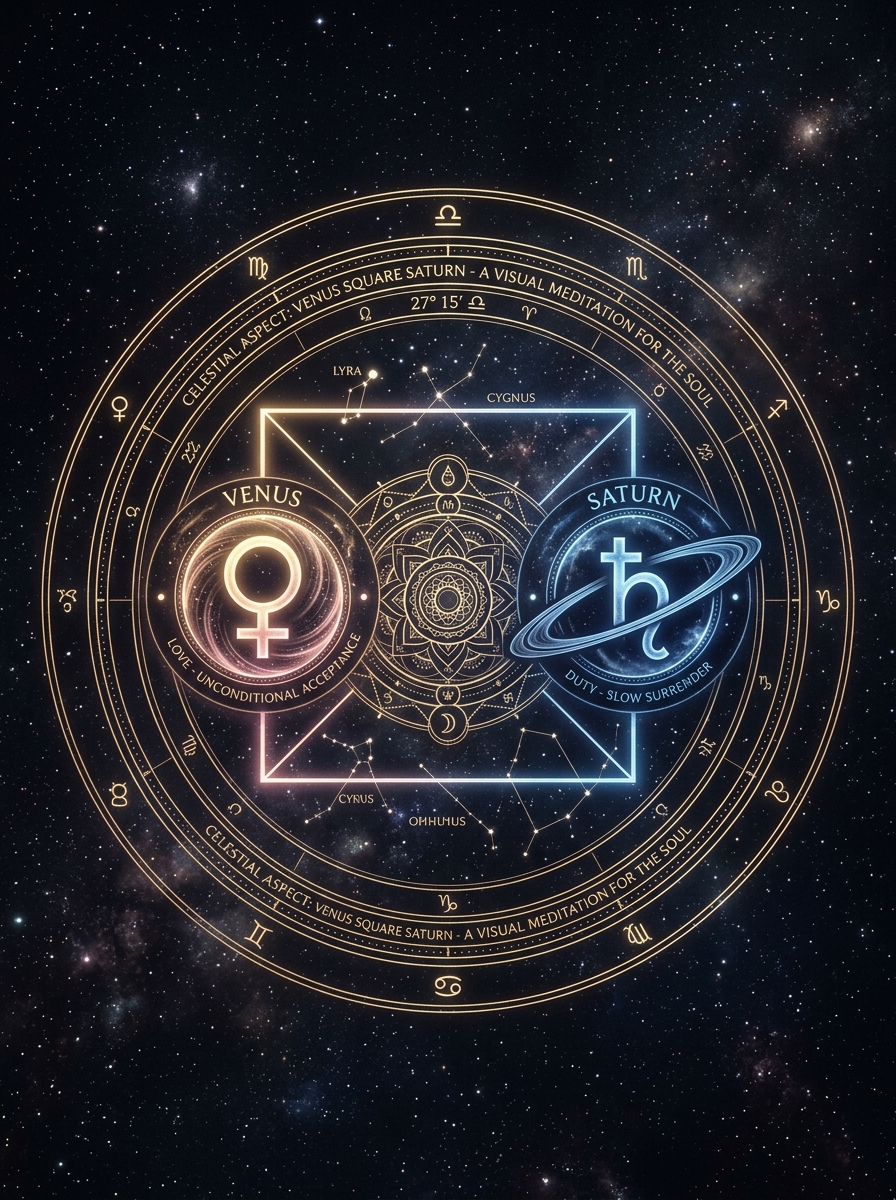
The Initiatic and Esoteric Meaning of Challenge Number 6
Every numerological challenge is, at its core, a contract the soul makes with itself — a deliberate friction built into the architecture of a life so that the friction might be transmuted into wisdom. Challenge Number 6 is perhaps the most quietly demanding of all these contracts. It doesn't announce itself with the dramatic ruptures of a 5 Challenge or the blistering ambition of an 8 Challenge. It arrives instead in the texture of ordinary life: in the way you feel responsible for your mother's happiness, in the silent resentment that pools beneath your smile at family dinners, in the exhausting effort of maintaining a surface of perfection while your interior world churns with anxiety.
The number 6 is governed, in the Western esoteric tradition, by Venus — the planet of love, beauty, relationship, and value. In the Rider-Waite-Smith Tarot, the Lovers card (Key VI) depicts a scene of radical choice: a man and a woman stand beneath the angel Raphael, but the gaze of the man moves toward the woman while the woman's gaze moves toward the divine above. Waite read this card as the tension between a lower, conventional love and a higher, spiritualized union. The Challenge Number 6 lives inside that same tension. You are the man looking sideways, and the question your life will ask you, again and again, is whether you can learn to integrate both impulses — the human, messy, contingent love for actual people in their actual flaws, and the transcendent, idealized love you carry in your chest like a lantern that nothing in the physical world can quite match.
Aleister Crowley, writing in The Book of Thoth, described the number 6 as the sphere of Tiphareth — the center of the Tree of Life, the point of balance and beauty, associated with the solar principle of harmonizing and redeeming. What Crowley understood, and what the Challenge Number 6 is trying to teach you, is that this harmonizing function is not passive. It is not achieved by smoothing things over, appeasing people, or sacrificing your own legitimate needs on the altar of domestic peace. It is achieved through genuine integration: the painful, painstaking work of bringing the ideal into contact with the real without destroying either one.
The soul carrying the 6 Challenge is often an extraordinarily gifted helper, mediator, and caretaker. These gifts are real and they are needed by the world. The challenge is not to extinguish them but to learn their proper scope — to discover where care becomes control, where love becomes merger, and where service becomes self-betrayal. The path through the 6 Challenge is a path of differentiation: learning to be in relationship without losing the thread back to yourself.
How the Challenge Number Is Calculated
In traditional Pythagorean numerology, the challenge numbers are derived from the digits of your birth date. The minor challenges are the absolute differences between the digits of the day, month, and year of your birth; the major challenge is the difference between the two minor challenges. If your major or minor challenge reduces to 6, the lessons described here are woven into your life's blueprint. Some people carry the 6 Challenge once; others carry it as both a minor and major challenge, which suggests an especially concentrated dose of these themes.
The Wound of Original Harmony: Family of Origin and Childhood Parentification
No challenge number is more directly connected to childhood family dynamics than the 6. Where it lives in the numerological chart, you will almost always find a story about early relational wounding — specifically, the phenomenon psychologists call parentification. Parentification occurs when a child is consciously or unconsciously assigned the emotional labor of an adult: soothing a depressed parent, mediating between fighting caregivers, becoming the family's emotional regulator, the one who senses tension before it becomes conflict and rushes to smooth it over.
Children who take on this role do so for reasons that are, in their early logic, entirely loving. They sense that someone is in pain, they want to help, and they discover that helping — or at least attempting to help — provides a measure of safety. The child learns: I am most secure when I am useful. I am most loved when I am needed. That equation becomes encoded at a level beneath conscious thought, and it travels with the person into every subsequent relationship.
Liz Greene, in her foundational work on psychological astrology, observed that the archetype of the Wounded Healer tends to produce individuals who are drawn to others in pain not despite their own unhealed wounds but precisely because of them. The 6 Challenge native is a classic Wounded Healer in the making. Their early family environment seeded in them a deep conviction that love is transactional — that it must be earned through service, that it is conditional on how well they perform the role of harmonizer, helper, caretaker. Dismantling this conviction is the central psychological project of the 6 Challenge.
Recognizing Parentification Patterns in Adult Life
The patterns laid down in the family of origin don't stay in the family of origin. They migrate. You'll find them in:
- Romantic partnerships where you consistently choose partners who need "saving," whether from addiction, emotional immaturity, financial chaos, or directionlessness.
- Friendships that feel asymmetrical — you are perpetually the therapist, the advice-giver, the crisis manager, and the one who never seems to need anything in return.
- Professional contexts where you over-function, cover for colleagues, take on tasks that aren't yours, and feel secretly resentful that no one reciprocates.
- Family-of-origin relationships that continue to exert enormous gravitational pull well into adulthood, where you may still be managing a parent's emotional life, mediating sibling conflicts, or making life decisions based on what will cause the least disruption to the family system.
The first and most important step in working with the 6 Challenge is recognition without self-condemnation. These patterns are not character flaws. They are survival adaptations that worked brilliantly in the environment where they were forged. The question the 6 Challenge asks is not "What is wrong with you?" but "Which of these old tools still serve you, and which have you outgrown?"
The Savior Complex: Codependency, Martyrdom, and the Illusion of Control
The savior complex is one of the 6 Challenge's signature expressions, and it is worth examining with ruthless honesty because it wears the clothes of virtue. From the outside — and often from the inside — it looks like selfless generosity. You are there for everyone. You give your time, your energy, your emotional bandwidth without complaint. You anticipate needs before they're spoken. You are, by most conventional measures, an extraordinarily good person.
But running beneath this generosity, if you look carefully, is something that has less to do with the other person's genuine wellbeing and more to do with your own anxiety. The savior impulse is, at its root, a control mechanism. If I fix this person, the implicit logic goes, then I won't have to feel the helplessness of watching them struggle. If I manage this situation perfectly, then I won't have to tolerate the discomfort of uncertainty. The help is real, but it is also — and this is the part that takes courage to acknowledge — a way of managing your own distress.
Carl Jung would recognize this as a shadow dynamic. The 6 Challenge native often has a conscious identity built around competence, care, and responsibility. What is in the shadow — what has been split off and denied — is the acknowledgment of their own needs, their own vulnerability, their own desire to be held and supported. The savior persona is partly constructed to ensure that the savior never has to occupy the position of the one who needs saving. That position feels, at a deep level, dangerous.
Martyrdom as an Unconscious Power Bid
Martyrdom is the savior complex's bitter fruit. When you give more than is sustainable for long enough, resentment accumulates. But because your identity is built around selfless giving, you may not feel entitled to express that resentment directly. Instead, it emerges sideways: in exhaustion, in passive-aggressive comments, in a quiet withdrawal of warmth, in illness that finally forces others to care for you. Steven Forrest, in his astrological writing, has noted that certain chart signatures are drawn to martyrdom not because they enjoy suffering but because suffering seems to be the only socially acceptable way to have their needs acknowledged. The 6 Challenge can generate exactly this dynamic.
The way out of martyrdom is not to give less — it is to give differently. It is to give from a place of genuine surplus rather than anxious compulsion, and to receive with the same grace with which you offer. This requires a fundamental renegotiation of your inner contract around worth and love.
The Pygmalion Complex in Romance: Idealized Soulmates vs. Human Connection
The myth of Pygmalion — the sculptor who carved a perfect woman from ivory and fell in love with his own creation — is a precise psychological portrait of one of the 6 Challenge's most characteristic romantic patterns. The 6 Challenge native often enters relationships carrying a vivid internal image of what love should look like: harmonious, elevated, reciprocal in exactly the right proportions, emotionally intelligent, spiritually resonant. This ideal is not in itself a problem. It speaks to the genuine depth of the 6 soul's capacity for love and its sincere desire for meaningful connection.
The problem arises when the ideal is projected onto an actual human being who, inevitably, cannot sustain the projection indefinitely. In the early stages of a relationship, the 6 Challenge native may experience something that feels like recognition — the sense of having finally found the one who matches the interior image. This is often a genuine experience of energetic resonance, but it is also, partly, a projection. The beloved is not yet fully seen as a separate, autonomous human being with their own contradictions. They are being experienced, to some degree, as the avatar of an ideal.
When the projection begins to crack — as it always does, because human beings are not statues and refuse to hold still for our projections — the 6 Challenge native faces a fork in the road. One path is disillusionment and withdrawal, the search for someone else who might more perfectly embody the ideal. The other path is the more difficult and ultimately more rewarding one: staying present through the crack, learning to love the actual person rather than the projection, and discovering that genuinely seeing someone — in their humanness, their limits, their surprising contradictions — is a form of intimacy far richer than any idealization.
Choosing Partners for Their Potential
A specific and painful sub-pattern within the Pygmalion complex is the tendency to choose partners not for who they are but for who you sense they could become. You see the potential, the unlived gifts, the hidden wholeness, and you commit not to the present-tense person but to the future-tense version you intend to help call forth. This is, again, a genuinely loving impulse. It is also, when it becomes a consistent pattern, a way of avoiding the intimacy of actually being with someone as they are.
Liz Greene, writing on Venus-Neptune contacts in the birth chart, described this as the idealized love that dissolves under the acid of daily reality. The 6 Challenge version of this dissolution can be especially painful because it is so wrapped up in the native's sense of purpose: they genuinely believed their love could transform the other person. When it doesn't — or when the other person resists the transformation — the 6 Challenge native must reckon with the question of whether they were truly in relationship with another person or with a project.
The Road to Individuation: Releasing Ancestral Guilt and Setting Boundaries
Jung's concept of individuation — the lifelong process by which a person becomes more fully themselves, integrating the contents of the unconscious into a coherent, differentiated selfhood — is the best frame I know for describing what the 6 Challenge is ultimately asking you to do. Individuation, as Jung conceived it, is not a project of self-absorption or withdrawal from relationship. It is, in fact, precisely the opposite: only a genuinely individuated person — one who knows where they end and another begins, one who has made contact with their own shadow — can be in authentic relationship. The person who has not individuated can only merge, project, or perform.
The 6 Challenge's version of individuation has a particularly important component: the release of ancestral guilt. Many people carrying the 6 Challenge are, in some sense, carrying guilt that does not belong to them. It may have been absorbed from a parent who carried their own unprocessed shame and unconsciously transmitted it. It may be a residue of family systems dynamics — the parentified child absorbs the emotional toxins of the family system as a kind of sacrifice, carrying what no one else could metabolize. Whatever its origin, this guilt has a specific quality: it is pervasive, it is hard to trace to any specific wrongdoing, and it generates a sense that your very existence is contingent on your continued usefulness to others.
The Practice of Differentiation
Differentiation, in the language of family systems therapy, is the ability to maintain a clear sense of self within an emotionally intense system — to be connected without being fused, to care without being consumed. For the 6 Challenge native, differentiation is a life practice rather than an achievement. It involves:
- Learning to pause before automatically saying yes to requests that drain you, and asking yourself: Am I saying yes from love, or from fear of what happens if I say no?
- Noticing the body's signals — the constriction in the chest, the weight in the stomach, the subtle withdrawal of energy — that indicate you are giving from depletion rather than abundance.
- Practicing tolerating the discomfort of allowing others to struggle without immediately rushing to rescue them. This is not cruelty; it is respect for other people's capacity to grow through their own difficulties.
- Building a relationship with your own needs — identifying what you actually want, feel, and need, separate from what others want from you.
Setting boundaries is not a selfish act. It is an act of relational integrity. A boundary is not a wall; it is a membrane, one that allows genuine exchange while preventing merger. The 6 Challenge person who has not yet learned to set limits often secretly fears that if they do, love will be withdrawn. The work is discovering, experientially, that authentic love — the kind worth having — does not depend on your unlimited availability.
Venusian Reclamation: Quieting the Inner Critic and Practicing Self-Forgiveness
Venus, as the ruler of the 6 frequency, is associated not only with love extended outward to others but with the entire domain of self-value: the sense of being worthy of love, pleasure, beauty, and rest simply by virtue of existing. The 6 Challenge, in its unlived form, tends to produce a profound deficit in this Venusian self-regard. The inner critic is almost always overactive, scanning constantly for evidence of inadequacy, holding up every act against a standard of perfection that no human being could satisfy.
The inner critic of the 6 Challenge tends to be particularly focused on relational failures. You should have said the right thing. You should have handled that better. You should have known they needed you. You shouldn't have shown anger, impatience, need. This is the inner Pygmalion turned inward — applying to the self the same impossible standard that has been applied to relationships. And it creates the same result: a self that is never quite acceptable as it is, always needing to be improved, refined, made worthy of love.
The Practice of Self-Compassion
Self-forgiveness is not a technique; it is a reorientation of fundamental relationship with oneself. It begins with the recognition — genuinely felt, not just intellectually understood — that the very perfectionism you have been applying to yourself is the same perfectionism you are being challenged to release in your relationships with others. The 6 Challenge is, in this sense, a perfect mirror: it confronts you with the distance between your ideals and reality both outwardly, in your experience of other people's imperfection, and inwardly, in your experience of your own.
Some practices that have proven genuinely useful for 6 Challenge natives navigating this terrain:
- Journaling specifically about moments of genuine sufficiency — times when you were, in fact, enough. Not heroically selfless, not perfectly attuned, just sufficient. Building an evidence base for your own adequacy counters the inner critic's confirmation bias.
- Deliberately receiving care — accepting help, compliments, and affection without deflecting or minimizing. Practice saying "thank you" and letting it land.
- Working with the Lovers card in a tarot practice — sitting with Key VI, exploring the tension it depicts, and asking yourself where in your life you are choosing between the conventional and the authentic, between performed virtue and genuine love.
- Therapeutic or inner work focused specifically on the parentified child — parts work, EMDR, somatic therapy, or depth-psychological approaches that allow the child who learned to earn love through performance to experience being valued outside of performance.
The Venusian reclamation the 6 Challenge calls for is not about becoming self-centered. It is about becoming self-complete enough to love freely — to give without depletion, to connect without merger, to hold high standards without withholding the basic warmth and acceptance that every human being, including yourself, requires to flourish.
Practical Integration: Living the 6 Challenge Consciously
The difference between someone who is unconsciously driven by the 6 Challenge and someone who is working it consciously is not a difference in values or in the depth of their caring. The values remain the same — love, harmony, service, beauty, responsibility. What changes is the relationship to those values: how freely they are chosen, how sustainably they are enacted, how honestly they are examined.
Conscious living with the 6 Challenge looks like this: You still show up for the people you love, but you show up from a place of real choice rather than anxious compulsion. You still hold a high vision of what relationships can be, but you no longer punish actual people for failing to be that vision. You still care about justice and harmony in your family and community, but you have released the belief that it is your sole responsibility to manufacture it.
Practical Anchors for the 6 Challenge Journey
Here are specific, actionable anchors for integrating the lessons of the 6 Challenge in daily life:
In relationships: Before taking on a new caretaking role, ask yourself three questions: Is this person asking for this? Am I the appropriate person to provide it? What will I need in order to feel sustained in offering this? These questions interrupt the automatic rescue impulse and create space for a more conscious choice.
In family-of-origin dynamics: Identify one pattern from your family of origin that you are still enacting — one role you still play, one piece of emotional labor you are still providing — and practice stepping back from it incrementally. Notice what fear arises when you do. That fear is the material.
In self-relationship: Give yourself the same quality of compassionate attention you extend to others. Schedule time for activities that have no purpose other than your own pleasure and renewal. Treat this time as non-negotiable, exactly as you would treat a commitment to someone you love.
In the inner life: Work with the archetypal imagery associated with Venus and the number 6 — the Lovers, the Empress (Key III, also Venusian), the Hierophant (Key V, another 6-adjacent frequency). Let these images speak to the parts of you that language doesn't reach easily.
Frequently Asked Questions About Challenge Number 6
What is the core lesson of the Numerology Challenge Number 6?
The core lesson of the 6 Challenge is learning to love authentically rather than transactionally. People with this challenge have often internalized, through early family experience, the belief that love must be earned through service, harmony-keeping, or caretaking. The lesson is to discover — through lived experience, not just intellectual understanding — that genuine love, both given and received, does not require this kind of payment. You are lovable as you are, not only as you perform.
How does the 6 Challenge differ from the Life Path Number 6?
The Life Path Number 6 describes your primary soul purpose and direction — the overarching theme of contribution and service that your life is organized around. The Challenge Number 6 describes a specific obstacle or friction point within that journey. A person can have a Life Path 6 and a Challenge Number 6, which would suggest an especially concentrated relationship with these themes, or they might have a different Life Path and carry the 6 Challenge as a particular lesson within a differently structured life purpose. Both are expressions of the 6 frequency, but the Challenge is about the friction rather than the gift.
How do I know if I'm moving through my 6 Challenge or still stuck in it?
The most reliable indicator is the quality of your inner experience rather than your outward behavior. Someone still stuck in the 6 Challenge typically feels a persistent low-grade resentment beneath their caretaking, a sense of never being quite appreciated enough, and a recurring pattern of disappointment in relationships when others fail to meet their idealized expectations. Someone moving through the Challenge starts to notice more genuine spaciousness: they can say no without prolonged guilt; they can witness another person's difficulty without needing to immediately solve it; they can receive care with real openness; and their relationships feel more like genuine encounters between two autonomous people rather than roles in a script they have written.
Can the 6 Challenge affect professional life as well as personal relationships?
Absolutely. The 6 Challenge is not confined to family and romance. In professional contexts, it commonly manifests as chronic over-functioning — taking on responsibilities that belong to others, managing colleagues' emotional states, having difficulty delegating because no one else will do it "right," and harboring quiet resentment when the extra effort is not recognized. It can also create difficulty with authority figures who seem imperfect or unjust: the 6 Challenge native has a sharp eye for hypocrisy and can become preoccupied with the gap between how things should be and how they actually are in organizational life. The professional integration of the 6 Challenge involves learning to work within imperfect systems without either over-adapting or over-reacting, and to channel the genuine gifts of care and quality without sacrificing your own integrity or wellbeing.
What role does self-care play in working with the 6 Challenge?
Self-care, for the 6 Challenge native, is not a luxury or an afterthought — it is, literally, the practice ground for the central lesson. Every time you choose to rest before you are depleted, every time you let yourself receive nourishment, every time you engage in beauty, pleasure, or creative expression for its own sake, you are practicing the Venusian reclamation that the 6 Challenge requires. The inner critic will tell you this is selfish, indulgent, or unproductive. The work is to recognize the inner critic's voice as the voice of the old contract — the one that says you must earn your place — and to act differently anyway. Over time, with repetition, the new experience begins to overwrite the old encoding.
Is the 6 Challenge ever fully resolved?
In the numerological tradition, challenges are less about resolution than evolution. You don't "solve" the 6 Challenge and graduate from it. You develop an increasingly conscious and skillful relationship with its themes. What changes is not that the territory disappears but that you know it better — you recognize the signposts, you know which paths lead to the old patterns, and you have developed real capacity to choose differently. The 6 Challenge, worked consciously over a lifetime, has the potential to produce something genuinely rare: a person who can love with both depth and spaciousness, who can hold high standards while offering genuine mercy, who can serve without self-erasure. That person, standing in the full brightness of integrated 6 energy, is one of the most beautiful human types that numerology describes.
Comments
Loading comments…